





In June 2003, THE EQUITY published a story related to a particular bird species. The article, and an unexpected visitor, inspired a related essay that was probably also intended for the same paper. But somehow the second story lost its way, not making an appearance until nineteen years later. I’d like to share it here now. The author of the second article, Bob Bretzlaff, titled it “The Shrike”.
Sue Lisk
One of the nice things about farming and working in the outdoors is that Mother Nature has a habit of sending interesting little surprises to take our minds off the daily stress and worries of work. Heaven only knows there were enough of the latter this year, with the BSE (Mad Cow Disease) gloom and a huge road construction project in front of my house, not to mention the usual mood swings of weather to deal with. Fortunately, I had a small visitor this year to add some brightness to an otherwise depressing summer.
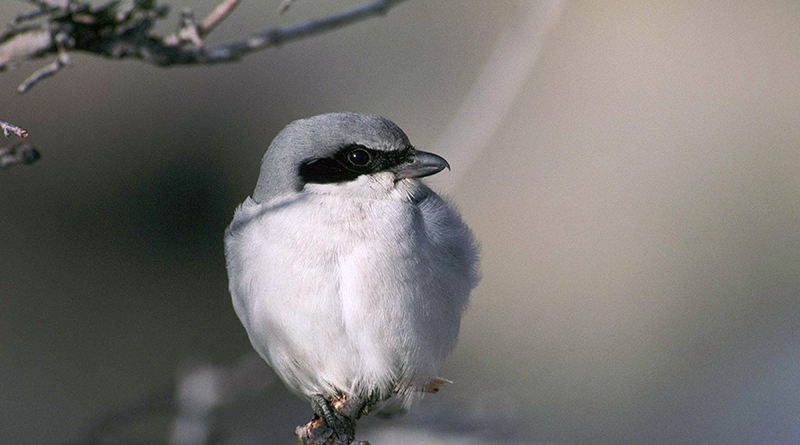
In June I read an article in THE EQUITY about a bird called the Loggerhead Shrike. Once a regular inhabitant of our countryside, it is now on the verge of becoming extinct in eastern North America, for reasons that are not yet clear. The author gave a detailed account of the bird’s story, and mentioned that Gérard Desjardins, the head of the Outaouais Bird Club in Gatineau, was surveying the Pontiac for any traces of the bird.
I have always been a naturalist with a keen eye for birds, and I remembered that I had recently seen a shrike along the road near my place. I looked for it again, and there it was. I decided that it was a Loggerhead Shrike, not the more common Northern Shrike that passes through this area on its annual migration. I called Gérard, and he came with another bird expert, with telescopic lenses and cameras in tow. Sure enough, it was a Loggerhead.
Mind you, it takes a lot to get a middle-aged man excited about anything, but those guys were jumping through the roof that day. It was the first sighting of a Loggerhead in the Outaouais in over 20 years, and the first in Quebec in seven years. Ontario has only about a dozen pairs, somewhere in western Ontario.
Gérard advised me not to report the sighting to the ‘bird watching world’ or else I would have 100 cars full of bird watchers from the city on my doorstep the next day. He and his colleagues came back several times to study the bird, and they discreetly allowed a few other birders to drop by for brief visits. A biologist from the Canadian Wildlife Service came to see me and left some pamphlets. I offered to sell my farm to the government for 2 million dollars so that they could create a bird sanctuary. They had a good laugh over that one.
The only disappointment was that the experts concluded, after searching in vain for a nest and watching the shrike’s activities, that he probably did not have a mate. They felt that he was not working hard enough, and was singing too much (like human bachelors, I suppose). Gérard said that if the bird was alone, he would probably move on in a few weeks. Alas, that was the case, and my little friend went on his way, but not before he had brightened the spirits of a number of humans. It was sad to realize that this was probably the last time in our lives we would see this species of bird again.
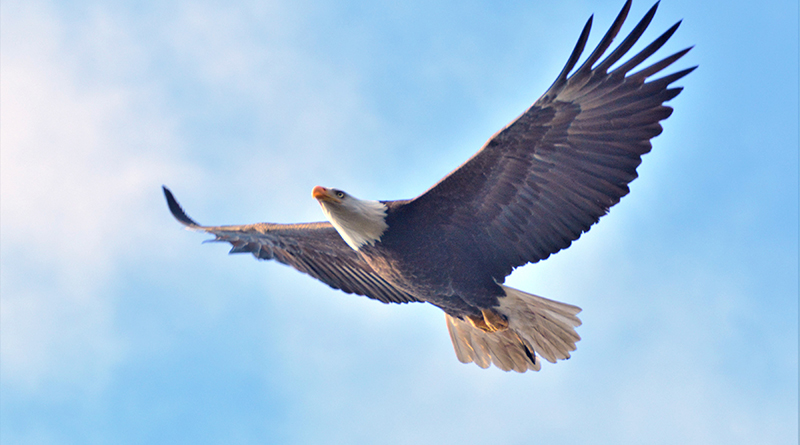
One evening when I was out looking for the shrike, I noticed a Bald Eagle taking off from a nearby hay field, where it had been feeding on a tasty treat left behind by hay-cutting equipment. I watched as the eagle gradually climbed higher and higher, the master of its domain, until it was just a speck and eventually disappeared. I never cease to marvel at the presence of these birds. I first saw them many years ago nesting in northern Canada, and now they are re-establishing their range in eastern Canada, including in the Pontiac.
It is easy to see why the eagle was chosen by Imperial Rome as the symbol at the head of its legions. At the time of the creation of the United States of America, there was actually a debate about choosing the wild turkey as the national bird of their new country. I am sure that anyone who has seen an eagle in flight will be in agreement with the choice the Americans eventually made.
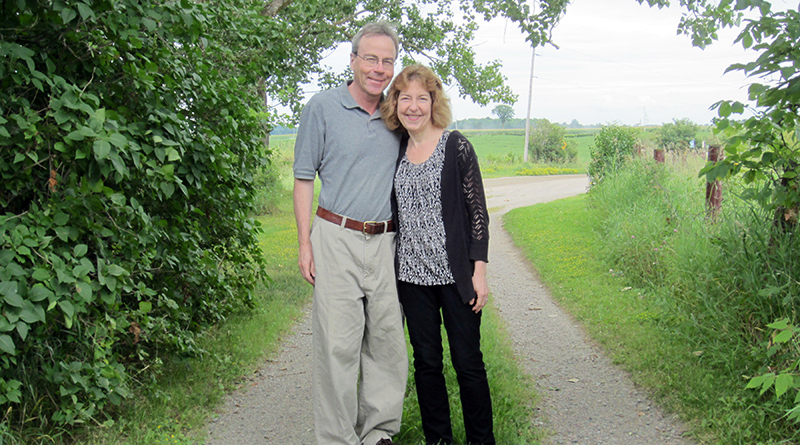
Bob Bretzlaff, a farmer, geologist, and lifelong resident of Shawville, passed away in April 2021.