





Jorge Maria
Pontiac Sept. 29, 2021
For the first time ever, National Truth and Reconciliation Day is being held on Sept. 30.
The day serves as a chance to reflect on Indigenous history.
Chief Dylan Whiteduck of Kitigan Zibi First Nation said Truth and Reconciliation Day “is an important first step.” A federal holiday is one of the 94 Calls to Action, he noted. He had no patience, however, for governments that were hesitant in moving to designate it a statutory holiday.
“The importance of the day is for people to educate themselves,” on Indigenous history, Chief Whiteduck said.
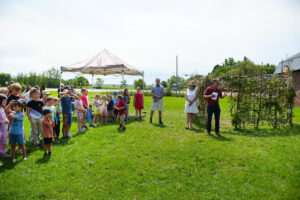
Soon after the first discovery of unmarked graves at a former residential school, Reverend Susan Lewis of the St. Paul’s Anglican Church hung an orange shirt outside the church. With time and the help of Caitlin Foy, a community outreach coordinator at the Connexions Resource Centre, the display expanded to include red dresses, signifying missing and murdered Indigenous women and empty water jugs meant to highlight the lack of clean drinking water in many Indigenous communities.
For Truth and Reconciliation Week, the symbols are back out front again to recognize Indigenous history.
In an interview with The Equity, Whiteduck outlined his thoughts on Truth and Reconciliation Day: If non-Indigenous people are to do anything with the day, it should be used as an opportunity to educate themselves not just about the history of residential schools but also the contributions and impact that the First Peoples had on the lives of settlers.
Lewis agreed. Without Indigenous people the first settlers, “wouldn’t have gotten through the winter,” she said.
Indigenous people are “deeply spiritual beings connected to the earth and we can learn a lot from them,” Reverend Lewis added.
Lewis also highlighted why the day was important now. “I think it is important for Canadians to recognize Indigenous history since colonization,” she said. “This is an important first step, in my opinion, for people understanding this is very serious.”
While the day is not yet a statutory holiday in Canada, many First Nations across the country intend to make it one for their members going forward according to Whiteduck. For KZ, as it is known locally, the First Nation is holding a National Day of Truth and Reconciliation Walk, ending with a meal, drumming and dancing.
If it wasn’t for COVID, the community would have a much larger gathering. Next year will be much bigger, he said.
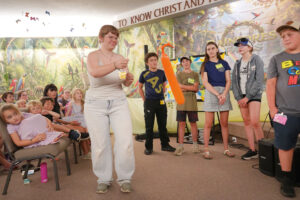
St. Paul’s continues to hold educational events and sermons that touch on Indigenous history. On Thursday, the church will hold a Kerios blanket exercise. Developed by the Indigenous community, the blanket ceremony as it is also known, outlines the history and colonization of Indigenous people.
“Because of the recent discoveries, I feel a lot of hearts have started to change,” said Lewis.