





Donald Teuma-Castelletti
SHAWVILLE June 13, 2018
This coming Sunday marks an important date in the United Church’s year, and the Shawville congregation will be paying homage to a historically neglected part of Canada’s culture.
To coincide with Aboriginal Sunday in the United Church calendar, the Shawville United Church will feature a reconciliation service on June 17, with representatives from the local Indigenous community.
“We’re not doing any study events, it’s more exposure events,” explained Rev. Dr. Richard Hollingsworth, minister for Shawville United Church. “Exposing our congregation and having them to speak with Indigenous people.”
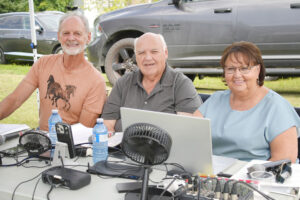
Rev. Hollingsworth said the idea was first brought forward to him by Rick Valin. Indigenous culture will be represented by the Broken Arrow Drummers, who could be seen, and heard, practicing for the service on May 26. On that day, members Sebastien Beaudoin, Denis Dupont and Trevor Pearce practiced in front of the church, as they played their instruments and sang.
“The United Church has been long a part of the reconciliation process with our Indigenous people and we were the first church to come to some agreement with Indigenous people about payment for what happened with the residential schools,” he explained. “A number of years ago we set up The Healing Fund to help those that were abused in the schools.”
Dedicated to helping those abused by the residential school system, The Healing Fund will provide financial support to projects meant to help the Indigenous community heal or help with cultural restoration. The fund was first introduced in 1994 in acknowledgment of the injustices perpetrated by the residential school system.
Rev. Hollingsworth detailed that the event is meant to show respect for the community and culture, especially by incorporating traditional song via the talent of the Broken Arrow Drummers.
“We in Shawville recognize that we do have a church building that’s located [on Indigenous land] – and we’re not quite sure on who’s property, we do know it’s on Algonquin claim territory, so we note that in our bulletins on Sunday morning,” he continued. “We just recognize that there have been people here long before we were here. We try to work with those Indigenous people that are in our communities.”