





Jeremy Morse
Outaouais April 27, 2022
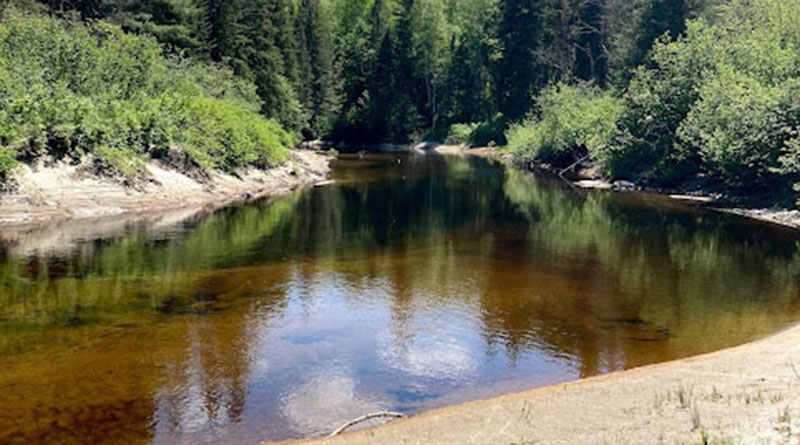
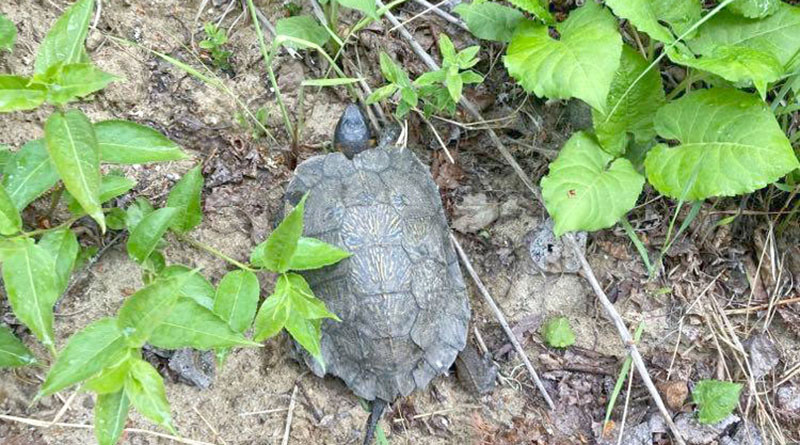
In the summer of 2020, a conservation team surveyed the Coulonge and Noire rivers in search of one of Canada’s at-risk turtle species.
Wood turtles are considered “threatened” nationwide, but provincially they are classified as “vulnerable” and “endangered” in Quebec and Ontario respectively.
The team responsible for the survey is collaborative effort . . .
between the Canadian Parks and Wilderness Society’s Ottawa Valley chapter (CPAWS-OV), the Conseil régional de l’environnement et du développement durable de l’Outaouais (CREDDO) and Guardians from the Kitigan Zibi Anishinabeg community.
“We can see ourselves as a big team, working ultimately to protect wood turtle habitat,” said Mathieu St-Laurent-Addison, conservation projects coordinator for CPAWS-OV.
During last summer’s survey, a population of wood turtles was discovered in the Coulonge River’s east branch.
CPAWS-OV and CREDDO submitted a joint application to Environment and Climate Change Canada’s (ECCC) Habitat Stewardship Program to help fund their conservation efforts.
In the Outaouais, wood turtles are mostly threatened by industrialization, illegal pet trafficking and road mortalities. “We would like for people to pay attention and slow down while they’re driving in sensitive wood turtle habitat and especially during nesting season.”
This spring, the team hopes to push this message by installing a series of signs and information panels in the wood turtle’s protected habitat. St-Laurent-Addison explained how their greatest challenge has been trying to change environmental attitudes and correcting misconceptions surrounding habitat protection.
“Some people attribute forest road maintenance, and territory access as wood turtle issues. They think that the species’ protected habitat makes it difficult for them to practice their activities and access their cabins or camps.”
In reality, the protected area would prevent destructive industrial projects from operating during certain months.
“There’s no forestry, mining or energy projects that can take place during those times of the year,” said St-Laurent-Addison.
“When the wood turtles are hibernating in the river, industrial companies can apply for authorizations to go on with some projects in wood turtle habitat.”
With ECCC’s contribution, St-Laurent-Addison hopes that the team’s conservation efforts can continue to make an impact.
“It’s a great opportunity to protect one of the last areas with wood turtles in the Outaouais.”