


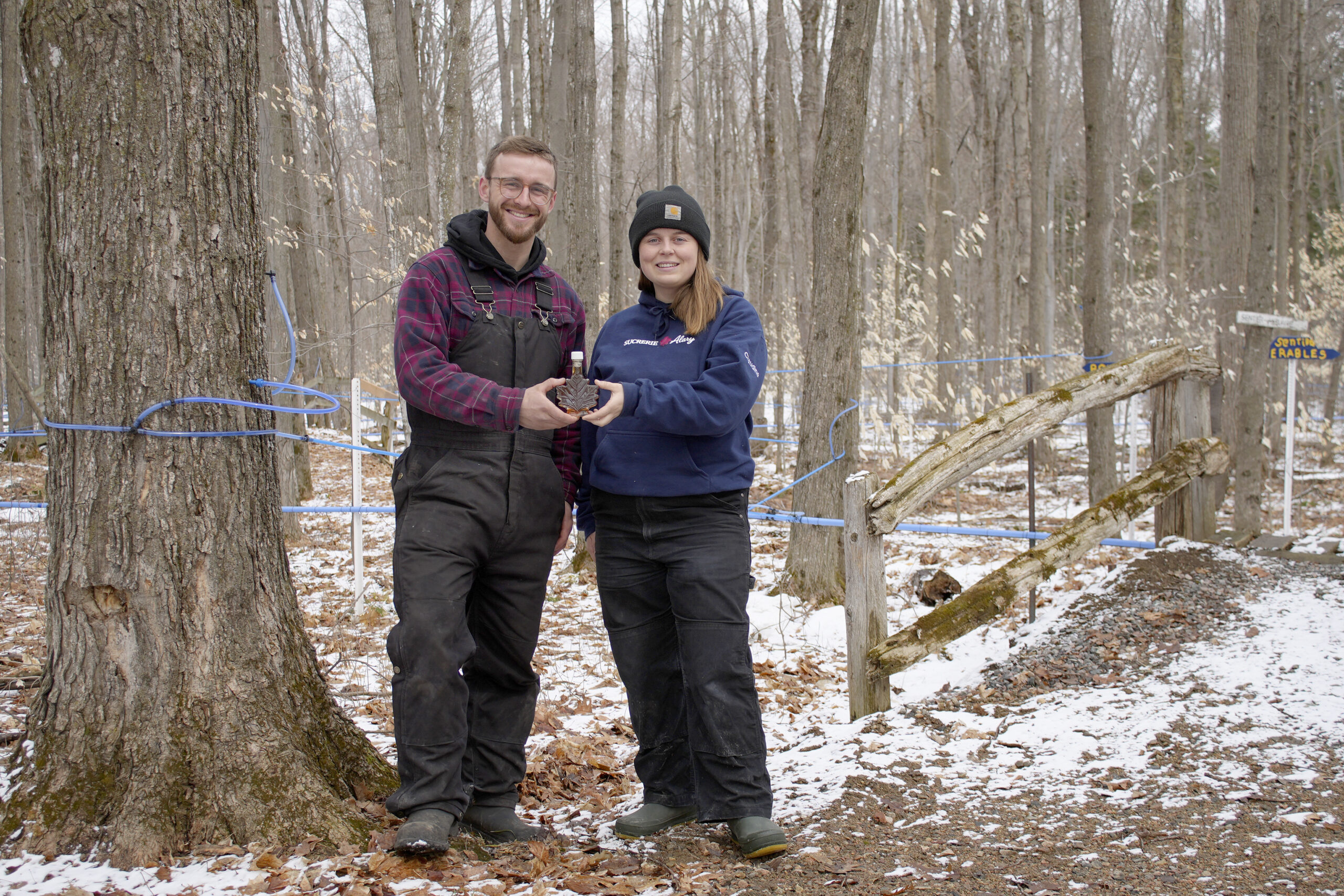



Claudine and Thomas Alary don’t mess around when it comes to maple syrup.
As the pair are selling the last of this spring’s syrup at Luskville’s Sucrerie Alary, they are also in the middle of a bittersweet transition. The young siblings are preparing to take over operations of the family business – a tradition nearly five decades in the making.
The sugar shack has been a staple along Highway 148 for 49 years, but it hasn’t always looked the way it does today.
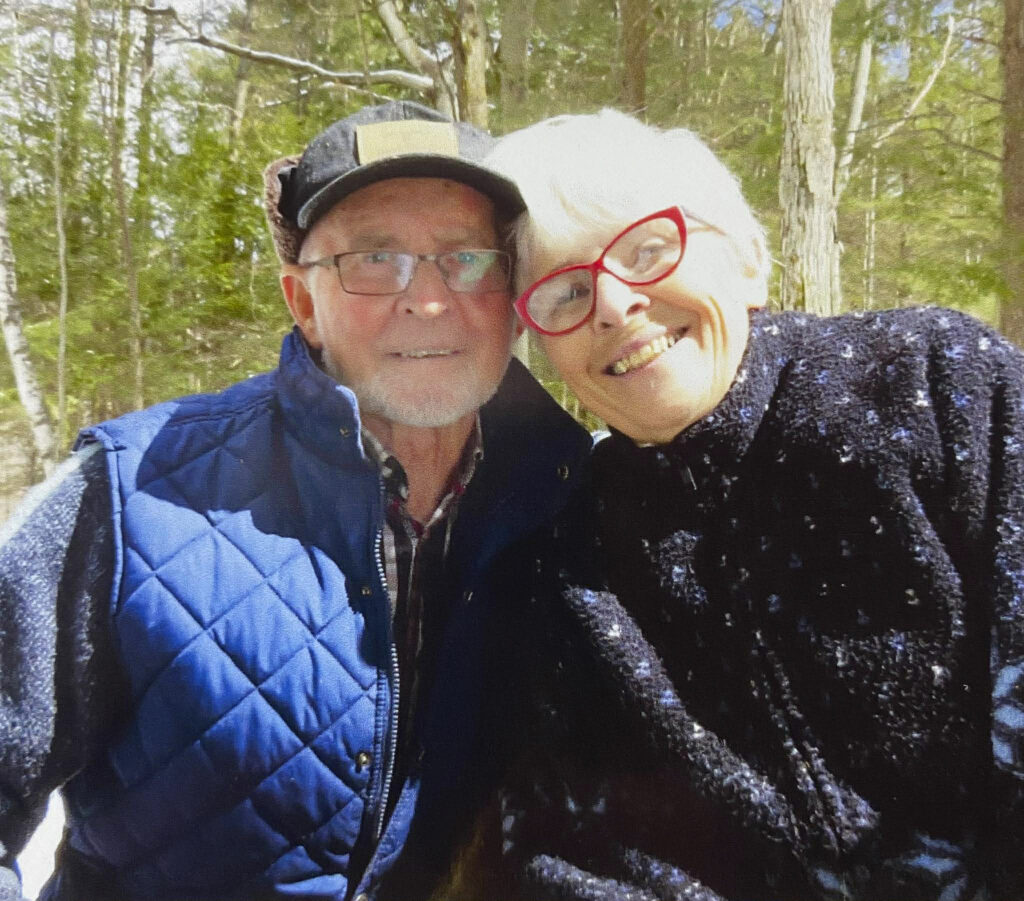
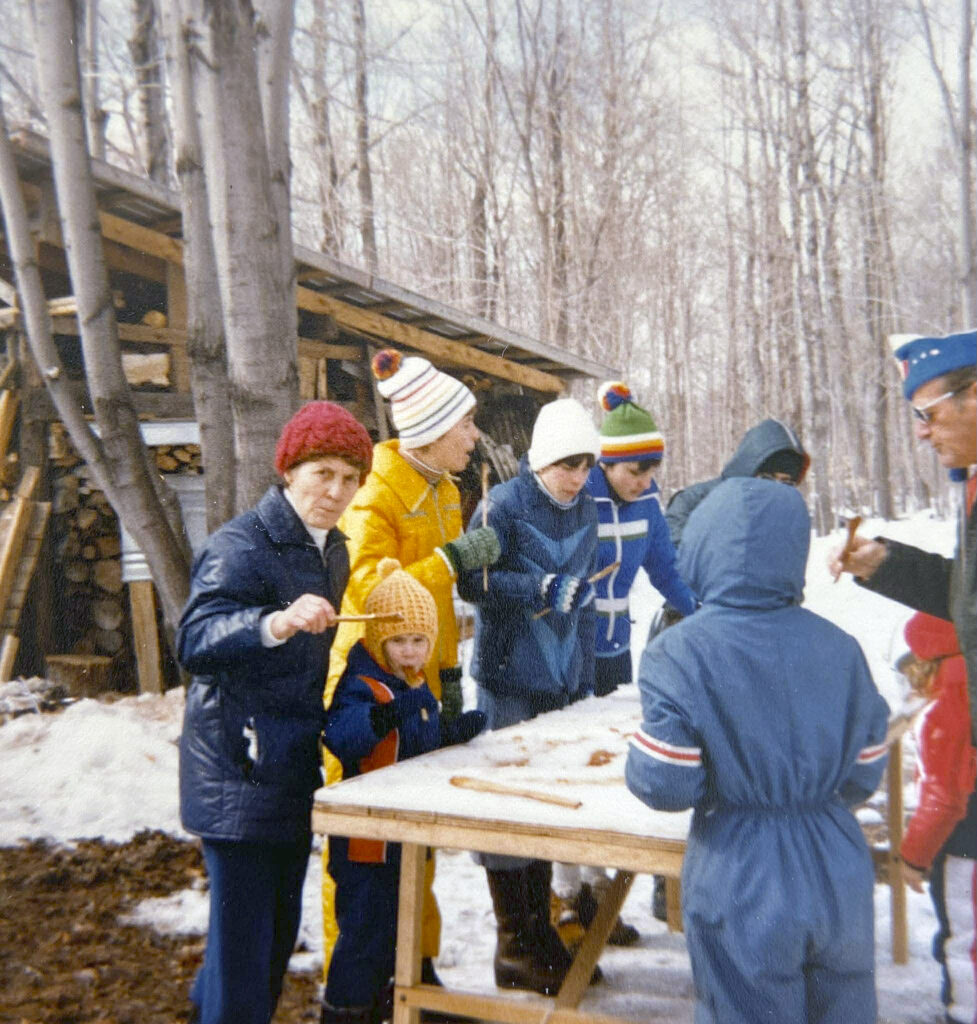
Grandparents Hélène and Pierre-Yvon Alary started production in 1977, working out of a silo across the street. Over time, operations moved to their current location, growing into a family-run sugar shack that sells maple syrup and other maple products while offering visitors a chance to enjoy a taffy on snow, a cozy fire or a quiet walk in the forest.
The early years of the business were anything but easy. Pierre-Yvon, who was working as a teacher at the time, would get up early in the morning to boil sap before heading to work. Hélène took over during the day, keeping the fire going until Pierre-Yvon returned to continue production until late at night.
Hélène said at the start they didn’t have a lot, so they sometimes had to get creative to find solutions. On a particularly chilly day, she was trying to heat up sap so it could flow through a pipe toward the boiler.
“We didn’t have any electricity, so I couldn’t put a heat lamp on. I went back home, I got a tomato juice can, and I put a candle into it and I heated up my [sap],” she said.
Over the years, the business evolved. By the 1990s, it had expanded from 200 to around 1,500 taps – a small operation in the world of maple syrup production, but enough to keep the Alary’s hands full.
In the 2000s, the family built a tubing system to collect sap, as well as a larger boiler to accommodate the increase in production. In 2011 the family acquired a reverse osmosis machine, condensing the runny sap into a thicker liquid and making it easier to boil.
Ordinarily, you would need 43 litres of sap to make one litre of syrup – but with the osmosis machine you can create a thicker substance. Only 10.75 litres are required to make a litre of syrup, making it less time-consuming to produce the sticky stuff.

“It’s saving wood, it’s saving time, saving mental energy. Back in the day, my grandma would have been out there stoking the fire [ . . . ] It just means the syrup is boiling in a more efficient way,” said Thomas.
In recent years, Hélène said the work has become tougher, forcing her to reconsider her role.
“I’m 80, so I’m not young anymore. Everything is heavy now, and you’re not as quick as you used to be. This is mostly why we’re transferring. If we were capable, we’d wait until they were a bit older.” Hélène said.
Next year, Claudine, a biology major, and Thomas, a diesel mechanic, will step forward into an ownership role, taking the reins for the first time. They already have big visions for the future of the business.
Thomas said he plans on digitally mapping out the forest to maximize sap collection efficiency.
“The tree that’s next to the pumping station, let’s say I can collect 100 per cent of the sap it gives me, but the tree in the very back, maybe I can only collect 30 per cent of what it gives me because my vacuum isn’t getting there to be able to bring the sap back.”
Claudine has been using her science brain to map out a history of their forest’s sap collection. She has been going through 49 years of her grandfather’s journals, putting the numbers into spreadsheets to map out production trends over time.
“He used to keep diligent notes. Every single day, he’d be like, ‘On Mar. 20 I tapped 40 trees, and then minimum and maximum temperature’,” she said.

Claudine is also using her social media savvy to try and reach new customers beyond their loyal local base. Recently, she has been posting old photographs of the business to establish a photographic timeline of its history, posts she said have been very successful.
“When you click on our Facebook profile, we wanted to show that it’s not just three pictures. Once we got it moving with a couple of Facebook posts, we got more Google reviews. And now we get a Google review almost every week,” she said.
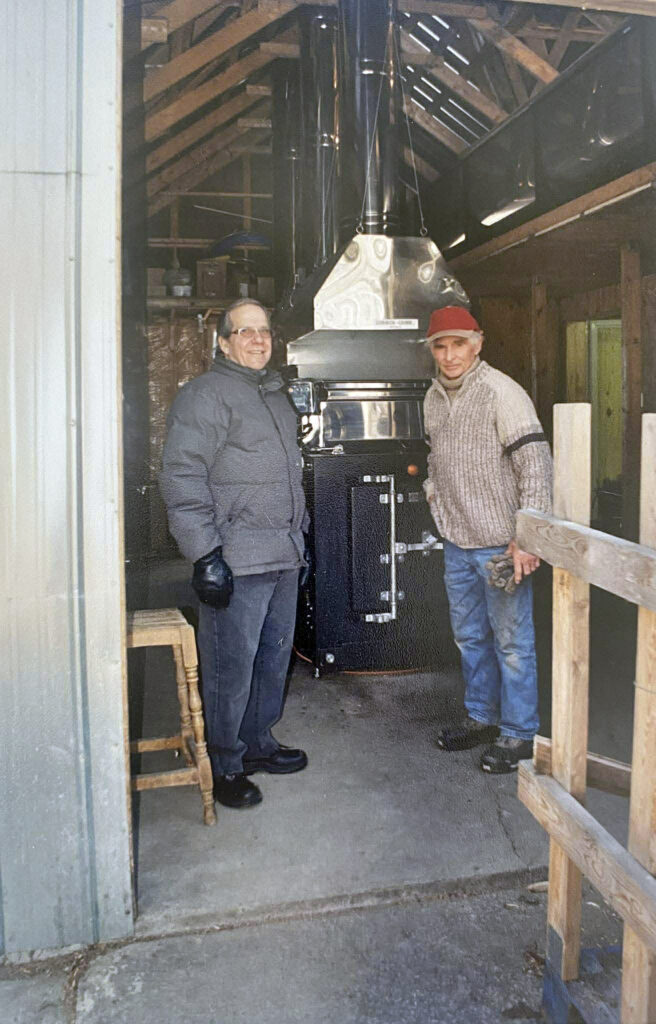
Claudine and Thomas want to create more of an educational approach to maple syrup. They say customers want more of an experience when they visit the sugar shack, and to feel a connection with the people who are producing the sweet stuff.
“I think where we can expand the business is not only with the maple syrup, but in education or the other products that we sell. We can get more clients, but really where we can expand what the client knows about maple syrup,” Thomas said.
“I like to talk to the clients about how maple syrup should be sold like wine is sold, where we talk about terroir, where we talk about a certain kind of grape that was used [ . . . ] There’s no difference between that and maple syrup.”
Pierre-Yvon, reflecting on the future of the business, said while the technological advances have helped the business, there’s some parts of the work that will never change.
“To repair a line, you have to go do it. Your phone won’t do that [ . . . ] There will always be physical work,” he said, adding that he’s not sad to step back knowing that the business is still in the family.
For Claudine and Thomas, stepping into their legacy means approaching it in their own way. While their grandparents relied on experience and instinct, the siblings bring a different set of tools.
“They have so much more lived knowledge, whereas maybe we’re doing a little more of the scholarly stuff. We can be scientific about it, we can calculate angles and degrees,” Claudine said.
Thomas said while they might be taking a slightly different approach, they’re still sticking to a time-tested formula his grandparents knew all too well.
“What we replicate here is the love for the maple syrup, the family, the community. If people want to come and just sit on the swings with the kids, eat one taffy on snow, have a walk in the bush, that’s all I want, for them to say, ‘Hey, every year we come here, it’s a beautiful family moment,” he said.
Claudine et Thomas Alary ne plaisantent pas quand il s’agit de sirop d’érable.
Alors que le duo vend les dernières réserves du sirop de ce printemps à la Sucrerie Alary de Luskville, il est également au cœur d’une transition douce-amère. Les jeunes frère et sœur se préparent à prendre les rênes de l’entreprise familiale – une tradition de près de cinq décennies.
La cabane à sucre est un incontournable le long de la route 148 depuis 49 ans, mais elle n’a pas toujours eu l’allure qu’elle a aujourd’hui.
Les grands-parents Hélène et Pierre-Yvon Alary ont commencé la production en 1977, travaillant depuis un silo de l’autre côté de la rue. Au fil du temps, les opérations ont déménagé à leur emplacement actuel, devenant une cabane à sucre familiale qui vend du sirop d’érable et d’autres produits de l’érable tout en offrant aux visiteurs la chance de déguster de la tire sur neige, de profiter d’un feu chaleureux ou d’une promenade tranquille en forêt.
Les premières années de l’entreprise ont été tout sauf faciles. Pierre-Yvon, qui travaillait comme enseignant à l’époque, se levait tôt le matin pour faire bouillir la sève avant de partir travailler. Hélène prenait le relais pendant la journée, maintenant le feu jusqu’au retour de Pierre-Yvon pour continuer la production jusque tard dans la nuit.
Hélène a dit qu’au début, ils n’avaient pas grand-chose, ils devaient donc parfois faire preuve de créativité pour trouver des solutions. Par une journée particulièrement froide, elle essayait de chauffer la sève pour qu’elle puisse s’écouler dans un tuyau vers l’évaporateur.
« Nous n’avions pas d’électricité, je ne pouvais donc pas brancher de lampe chauffante. Je suis rentrée à la maison, j’ai pris une boîte de jus de tomate, j’y ai mis une bougie et j’ai chauffé ma [sève] », a-t-elle dit.
Au fil des ans, l’entreprise a évolué. Dans les années 1990, elle était passée de 200 à environ 1 500 entailles – une petite opération dans le monde de la production de sirop d’érable, mais suffisamment pour occuper la famille Alary.
Dans les années 2000, la famille a construit un système de tubulures pour collecter la sève, ainsi qu’un évaporateur plus grand pour s’adapter à l’augmentation de la production. En 2011, la famille a acquis une machine d’osmose inverse, condensant la sève liquide en un liquide plus épais et facilitant son ébullition.
Normalement, il faudrait 43 litres de sève pour faire un litre de sirop – mais avec la machine d’osmose, on peut créer une substance plus épaisse. Seuls 10,75 litres sont nécessaires pour faire un litre de sirop, ce qui rend la production de cette substance collante moins chronophage.
« Cela économise du bois, du temps, de l’énergie mentale. À l’époque, ma grand-mère était dehors à attiser le feu [ . . . ] Cela signifie simplement que le sirop bout de manière plus efficace », a dit Thomas.
Ces dernières années, Hélène a dit que le travail est devenu plus difficile, la forçant à reconsidérer son rôle.
« J’ai 80 ans, donc je ne suis plus jeune. Tout est lourd maintenant, et on n’est plus aussi rapide qu’avant. C’est surtout pour cela que nous transférons. Si nous étions capables, nous attendrions qu’ils soient un peu plus âgés », a dit Hélène.
L’année prochaine, Claudine, étudiante en biologie, et Thomas, mécanicien diésel, accéderont au rôle de propriétaires, prenant les rênes pour la première fois. Ils ont déjà de grandes visions pour l’avenir de l’entreprise.
Thomas a dit qu’il prévoit de cartographier numériquement la forêt afin de maximiser l’efficacité de la collecte de sève.
« L’arbre qui est à côté de la station de pompage, disons que je peux collecter 100 % de la sève qu’il me donne, mais l’arbre tout au fond, je ne peux peut-être collecter que 30 % de ce qu’il me donne parce que mon vide n’atteint pas cet endroit pour ramener la sève. »
Claudine a utilisé son esprit scientifique pour cartographier l’historique de la collecte de sève de leur forêt. Elle a parcouru 49 ans de journaux de son grand-père, mettant les chiffres dans des feuilles de calcul pour cartographier les tendances de production au fil du temps.
« Il tenait des notes diligentes. Chaque jour, il disait : « Le 20 mars, j’ai entaillé 40 arbres, et puis la température minimale et maximale » », a-t-elle dit.
Claudine utilise également ses compétences en médias sociaux pour essayer d’atteindre de nouveaux clients au-delà de leur base locale fidèle. Récemment, elle a publié d’anciennes photographies de l’entreprise pour établir une chronologie photographique de son histoire, des publications qui, selon elle, ont eu beaucoup de succès.
« Quand vous cliquez sur notre profil Facebook, nous voulions montrer que ce n’était pas seulement trois photos. Une fois que nous avons lancé le mouvement avec quelques publications Facebook, nous avons eu plus d’avis Google. Et maintenant, nous recevons un avis Google presque chaque semaine », a-t-elle dit.
Claudine et Thomas veulent créer une approche plus éducative du sirop d’érable. Ils disent que les clients veulent vivre une expérience plus complète lorsqu’ils visitent la cabane à sucre et ressentir un lien avec les personnes qui produisent cette douceur.
« Je pense que là où nous pouvons développer l’entreprise, ce n’est pas seulement avec le sirop d’érable, mais aussi par l’éducation ou les autres produits que nous vendons. Nous pouvons avoir plus de clients, mais c’est surtout là que nous pouvons élargir ce que le client sait du sirop d’érable », a dit Thomas.
« J’aime parler aux clients de la façon dont le sirop d’érable devrait être vendu comme le vin est vendu, où l’on parle de terroir, où l’on parle d’un certain type de raisin qui a été utilisé [ . . . ] Il n’y a pas de différence entre cela et le sirop d’érable. »
Pierre-Yvon, réfléchissant à l’avenir de l’entreprise, a dit que même si les avancées technologiques ont aidé l’entreprise, il y a des aspects du travail qui ne changeront jamais.
« Pour réparer une ligne, il faut y aller et le faire. Votre téléphone ne le fera pas [ . . . ] Il y aura toujours du travail physique », a-t-il dit, ajoutant qu’il n’est pas triste de prendre du recul sachant que l’entreprise reste dans la famille.
Pour Claudine et Thomas, prendre la relève de leur héritage signifie l’aborder à leur manière. Alors que leurs grands-parents se fiaient à l’expérience et à l’instinct, les frère et sœur apportent un ensemble d’outils différent.
« Ils ont tellement plus de connaissances vécues, alors que nous faisons peut-être un peu plus de travail académique. Nous pouvons être scientifiques, nous pouvons calculer des angles et des degrés », a dit Claudine.
Thomas a dit que même s’ils adoptent une approche légèrement différente, ils s’en tiennent toujours à une formule éprouvée que leurs grands-parents connaissaient très bien.
« Ce que nous reproduisons ici, c’est l’amour pour le sirop d’érable, la famille, la communauté. Si les gens veulent venir s’asseoir sur les balançoires avec les enfants, manger une tire sur neige, se promener dans la forêt, c’est tout ce que je veux, qu’ils disent : « Hé, chaque année nous venons ici, c’est un beau moment en famille » », a-t-il dit.