





Nestled between L’Île-du-Grand-Calumet and the Ontario shore is a collection of islands that not many have been able to step foot on.
There are three big islands – Lafontaine, Green, and French – which together amount to roughly 1,000 acres, and dozens of smaller islands, too many to count. They pack that stretch of the Ottawa River so densely that when looking at it on a map, it’s not clear the river passes through them.
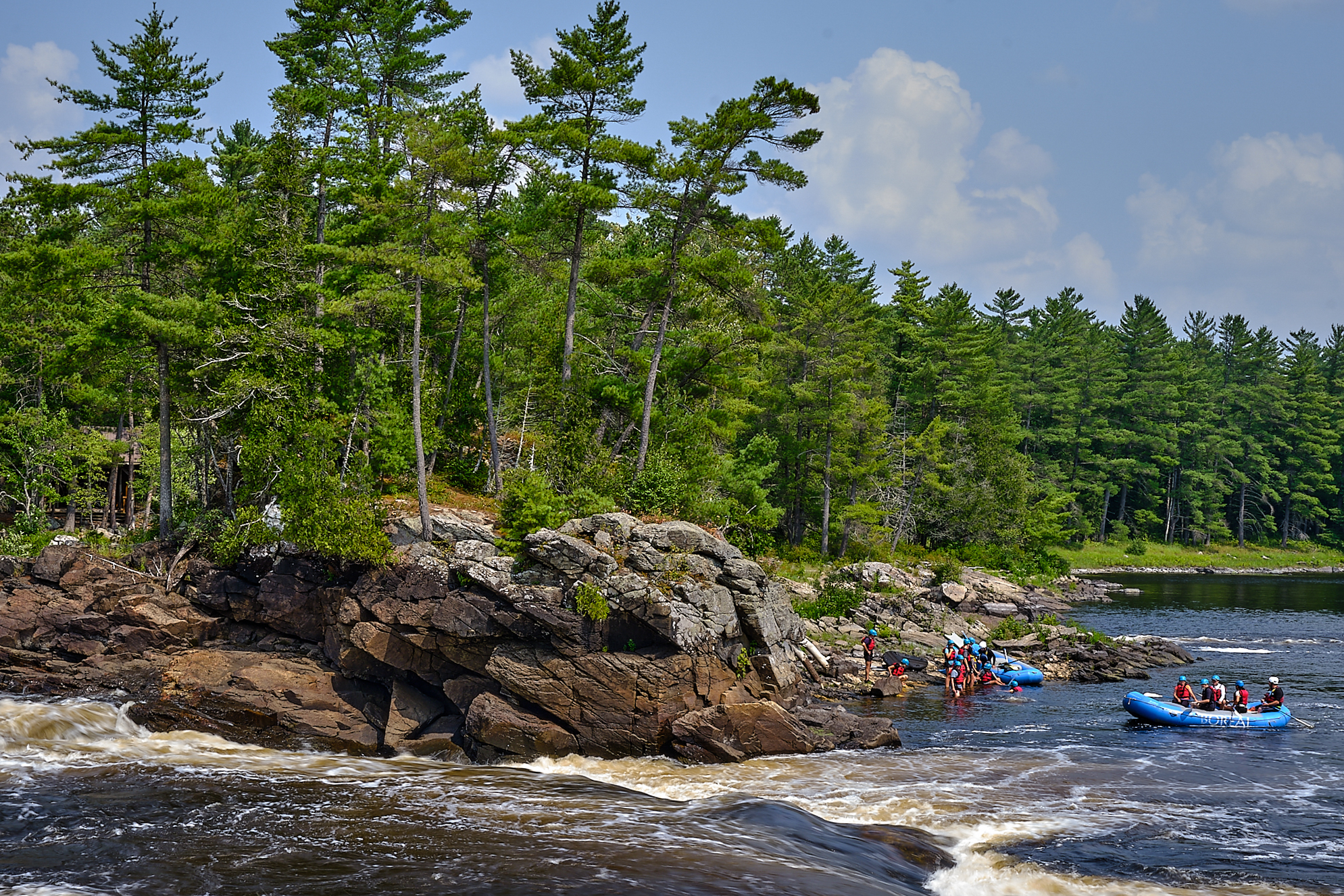
They are undeveloped and rich in biodiversity, with rough foot paths, internal lakes for swimming, waterfalls and high cliffs overlooking the rapids.
The land on both sides of this stretch of the Ottawa River is private, much of it owned by Ontario rafting company Wilderness Tours, but the islands are Crown land.
This archipelago, known colloquially as the Rocher Fendu park, is at the centre of an internationally renowned stretch of rapids that for decades has drawn paddlers from around the world keen to run the network of river channels created by these islands.
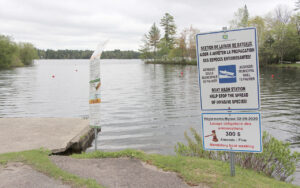
But unless you’re in a raft or are a skilled whitewater kayaker or canoeist, these islands remain largely inaccessible. They are not connected to the mainland by any bridge, and anybody wishing to reach them by motorboat will be hard pressed to find a public boat launch that would make it possible to access the islands without having to pass through rapids.
Even the paddlers who do spend a lot of time on this stretch of the river don’t often get out of their boats to explore them. But a new trip offering on the Ottawa River is hoping to change that.
Danny Peled and Ty Smith know this stretch of the river intimately. They spent their formative years working as raft guides for Esprit Rafting, taking hundreds of people through this world-class stretch of whitewater. Last year, they joined forces to purchase the rafting portion of Esprit and launched a unique river trip experience under the name Boreal River Expeditions.
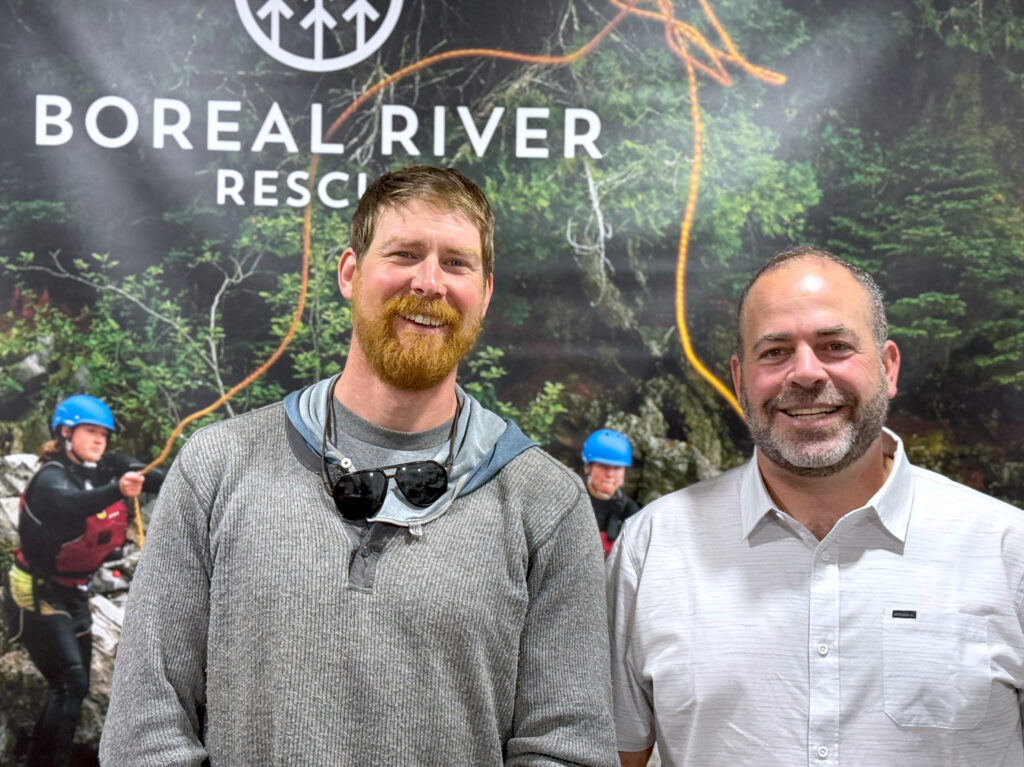
Instead of continuing to run day trips, as their predecessor had and the rest of the rafting businesses on the Ottawa do, Peled and Smith have designed a different kind of experience.
Using Esprit’s waterfront property on L’Île-du-Grand-Calumet, they will host small groups, between five and 25 people, for four days of camping, rafting, and exploring across the river’s many channels, including the mysterious islands.

“It’s like real wilderness camping, you know, we use camping equipment, people sleep in tents, there’s no electricity,” Peled said. “Our guides are really experts at helping any participant regardless of the experience, be very comfortable in that environment.”
Since 2008, Peled has been running a whitewater adventure company that takes people on rafting trips down the Mutehekau (Magpie) river in Quebec, and the Pacuare river in Costa Rica. And now, in a collaboration with Smith, he’s adding the Ottawa River to that list.
“It’s definitely a departure from what Esprit did,” Smith said. “Other people aren’t doing it on the river, and that river site is so beautiful and special. It’s one of the few places in the world that you’re close to such big centres, particularly a nation’s capital, that has a multi-day whitewater expedition experience.”
Part of the reason this stretch of rapids is so well known is because in the summer, the water is warm and deep, and the river’s various channels offer different levels of challenges, making it accessible for all skill levels.
“The Ottawa is truly one of the best rivers in the world for this sort of activity. And it’s very restricted in terms of the access for companies. This was a once in a lifetime opportunity,” Peled said of the opportunity to purchase the land from Esprit owner Jim Coffey.
“At any point in the previous 15 years, if Jim had approached us, we would have jumped on it.”
‘There’s a gold mine sitting there’
Peled and Smith are not the first to recognize the tourism and adventure potential of this cluster of islands.
Since Wilderness Tours founder Joe Kowalski first set foot in the region in the 1970s, he’s been dreaming of turning this stretch of the river into a protected park. First, he approached Parks Canada. When that pitch was rejected, he decided to buy much of the land along the shoreline himself.

He bought his first piece of land on L’Île-du-Grand-Calumet in 1982, and in 1989 he made his first of many pitches to Pontiac mayors trying to convince them of his vision of turning the islands into a park.
“It’s nice that it’s preserved, but, you know, I want to share the magic that’s found in our area,” Kowalski told THE EQUITY. “The only way to do it is with wire suspension bridges to be able to get people across the river walking in any kind of weather.”
These suspension bridges are critical to his vision for creating what he calls the Whitewater National Park — a provincial park, which in Quebec is referred to as “National”.
By building a collection of suspension bridges between the islands, and connecting them to both Quebec and Ontario shores, the islands would become accessible to not only the whitewater community, but also hikers, skiers, snowmobilers, and anybody else who wanted to explore them.
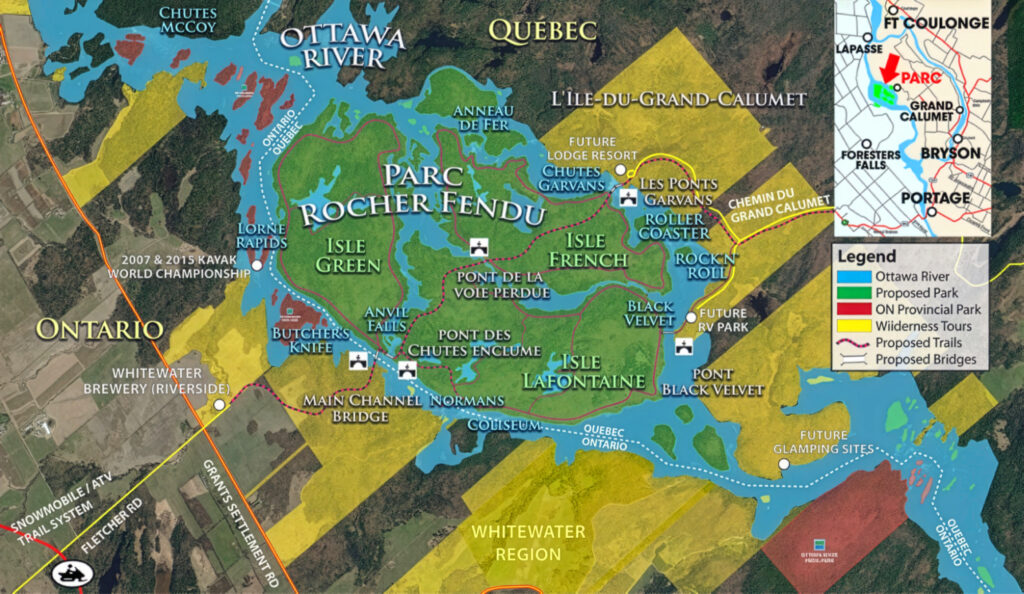
By Kowalski’s estimates, this kind of tourism project could bring in as many as one million visitors a year, through all seasons.
“The two great eras of prosperity for the Pontiac, and actually, for our [Ontario] side of the river as well, was the fur trade, and then the timber trade,” Kowalski said.
“But they don’t last because by their nature, they deplete the resource. They trap all the beavers, and they cut down all the trees. Whereas what I’m proposing is renewable. It’s sustainable. [ . . . ] It’ll be fabulous for both sides of the river. Tourism is sort of the precursor to residential development. [ . . . ] Prosperity is a rising tide that lifts all boats.”
Earlier this spring, Kowalski made this pitch to MRC Pontiac’s newly formed Regional Park Committee, something he said he has done “a zillion million” times since he first moved to the Ottawa Valley.
In 2021, the MRC commissioned several pre-feasibility studies to get a better portrait of the tourism potential of the site, as well as the historic and cultural significance of this stretch of the river, but the project didn’t go beyond that at the time.
Now, Warden Jane Toller says the new committee is once again interested in the proposal, and sees the potential for developing some form of conservation area on the islands, but is in the early days of exploring what exactly this should look like.
“From the moment I saw [Joe’s] first plan, I did not support it, because for me it was turning this fragile area into a Disney World,” Toller said, noting she does not believe allowing snowmobile or four-wheeler access on the islands would fit with the MRC’s vision.
“We also think it’s extremely important that we have primary access from the Quebec side,” she said. “We see this as an opportunity for Calumet Island, and so that’s of primary importance. The second thing is protecting but celebrating and allowing people to enjoy the biodiversity.”
Esprit Rafting founder Jim Coffey has echoed Toller’s concern with any park including a bridge to Ontario.
“As soon as there’s a bridge from the islands to Ontario, the Pontiac has lost,” Coffey told THE EQUITY.
Coffey’s vision for the islands involves no bridges, no bathrooms, no garbage cans, just a simple boat service that would shuttle visitors from Calumet Island to the Rocher Fendu islands and back to mainland again, without them leaving a trace.
“In one way this keeps [the islands] natural, which is great. And another way, it means that there’s not millions of dollars of infrastructure that needs to be built on those islands,” he said. “You know, there’s a gold mine sitting there, but it takes some creativity and belief in the natural area that’s there. I can tell you, it’s spectacular.”
For now, Peled and Smith are the only river company intentionally finding ways to get their guests out onto these islands, and it’s exactly Coffey’s philosophy of ‘leave no trace’ that they plan to emulate.
“Conservation of the river is kind of our core goal,” Peled said.
He said he and Smith are supportive of the idea of some form of conservation on the islands.
“Ideally, there probably would be some sort of management in a way that allowed public access, you know, free access, and so that’s something we want to support.”
Entre L’Île-du-Grand-Calumet et la rive ontarienne se trouve un archipel d’îles où peu de gens ont pu s’aventurer.
On y trouve trois grandes îles – Lafontaine, Green et French – qui totalisent environ 1 000 acres, ainsi que des dizaines d’îlots, trop nombreux pour être comptés. Elles occupent ce tronçon de la rivière des Outaouais si densément qu’en les regardant sur une carte, il n’est pas évident que la rivière les traverse.
Elles sont vierges et riches en biodiversité, avec des sentiers sommaires, des lacs intérieurs pour la baignade, des cascades et de hautes falaises surplombant les rapides.
Les terres des deux côtés de ce tronçon de la rivière des Outaouais sont privées, une grande partie appartenant à la compagnie de rafting ontarienne Wilderness Tours, mais les îles sont des terres de la Couronne.
Cet archipel, communément appelé le parc du Rocher Fendu, est au cœur d’un tronçon de rapides de renommée internationale qui, pendant des décennies, a attiré des pagayeurs du monde entier désireux de parcourir le réseau de chenaux fluviaux créé par ces îles.
Mais à moins d’être dans un radeau ou d’être un kayakiste ou canoéiste d’eaux vives expérimenté, ces îles restent largement inaccessibles. Elles ne sont reliées au continent par aucun pont, et quiconque souhaitant les atteindre en bateau à moteur aura du mal à trouver une rampe de mise à l’eau publique qui permettrait d’accéder aux îles sans avoir à traverser des rapides.
Même les pagayeurs qui passent beaucoup de temps sur ce tronçon de la rivière ne sortent pas souvent de leurs embarcations pour les explorer. Mais une nouvelle offre d’excursion sur la rivière des Outaouais espère changer cela.
Danny Peled et Ty Smith connaissent intimement ce tronçon de la rivière. Ils ont passé leurs années de formation à travailler comme guides de rafting pour Esprit Rafting, emmenant des centaines de personnes à travers ce tronçon d’eaux vives de classe mondiale. L’année dernière, ils ont uni leurs forces pour acquérir la portion rafting d’Esprit et ont lancé une expérience d’expédition fluviale unique sous le nom de Boreal River Expeditions.
Au lieu de continuer à proposer des excursions d’une journée, comme le faisait leur prédécesseur et comme le font les autres entreprises de rafting sur l’Outaouais, Peled et Smith ont conçu un autre type d’expérience.
En utilisant la propriété riveraine d’Esprit sur L’Île-du-Grand-Calumet, ils accueilleront de petits groupes, entre cinq et 25 personnes, pour quatre jours de camping, de rafting et d’exploration à travers les nombreux chenaux de la rivière, y compris les îles mystérieuses.
« C’est comme du vrai camping sauvage, vous savez, nous utilisons du matériel de camping, les gens dorment dans des tentes, il n’y a pas d’électricité », a déclaré Peled. « Nos guides sont de véritables experts pour aider tout participant, quelle que soit son expérience, à être très à l’aise dans cet environnement. »
Depuis 2008, Peled dirige une entreprise d’aventure en eaux vives qui emmène les gens faire des excursions de rafting sur la rivière Mutehekau (Magpie) au Québec et sur la rivière Pacuare au Costa Rica. Et maintenant, en collaboration avec Smith, il ajoute la rivière des Outaouais à cette liste.
« C’est vraiment un départ par rapport à ce qu’Esprit faisait », a déclaré Smith. « D’autres ne le font pas sur la rivière, et ce site fluvial est si beau et si spécial. C’est l’un des rares endroits au monde où l’on est proche de si grands centres, en particulier d’une capitale nationale, et qui offre une expérience d’expédition en eaux vives de plusieurs jours. »
L’une des raisons pour lesquelles ce tronçon de rapides est si connu est qu’en été, l’eau est chaude et profonde, et les différents chenaux de la rivière offrent des niveaux de défis variés, le rendant accessible à tous les niveaux de compétence.
« L’Outaouais est vraiment l’une des meilleures rivières au monde pour ce genre d’activité. Et l’accès pour les entreprises y est très restreint. C’était une occasion unique dans une vie », a déclaré Peled à propos de l’opportunité d’acheter le terrain au propriétaire d’Esprit, Jim Coffey.
« À tout moment au cours des 15 dernières années, si Jim nous avait approchés, nous aurions sauté sur l’occasion. »
« Il y a une mine d’or qui dort là »
Peled et Smith ne sont pas les premiers à reconnaître le potentiel touristique et d’aventure de cet archipel d’îles.
Depuis que Joe Kowalski, fondateur de Wilderness Tours, a mis les pieds dans la région dans les années 1970, il rêve de transformer ce tronçon de la rivière en parc protégé. Il a d’abord approché Parcs Canada. Lorsque cette proposition a été rejetée, il a décidé d’acheter lui-même une grande partie des terres le long du rivage.
Il a acheté son premier terrain sur L’Île-du-Grand-Calumet en 1982, et en 1989, il a fait la première de ses nombreuses propositions aux maires du Pontiac pour les convaincre de sa vision de transformer les îles en parc.
« C’est bien que ce soit préservé, mais, vous savez, je veux partager la magie que l’on trouve dans notre région », a déclaré Kowalski à THE EQUITY. « La seule façon de le faire est d’avoir des ponts suspendus en fil pour permettre aux gens de traverser la rivière à pied par tous les temps. »
Ces ponts suspendus sont essentiels à sa vision de créer ce qu’il appelle le Parc national des eaux vives — un parc provincial, qui est désigné « national » au Québec.
En construisant une série de ponts suspendus entre les îles et en les reliant aux rives du Québec et de l’Ontario, les îles deviendraient accessibles non seulement à la communauté des eaux vives, mais aussi aux randonneurs, aux skieurs, aux motoneigistes et à toute autre personne souhaitant les explorer.
Selon les estimations de Kowalski, ce type de projet touristique pourrait attirer jusqu’à un million de visiteurs par an, toutes saisons confondues.
« Les deux grandes époques de prospérité pour le Pontiac, et en fait, pour notre côté [ontarien] de la rivière également, ont été le commerce des fourrures, puis le commerce du bois », a déclaré Kowalski.
« Mais cela ne dure pas parce que, par nature, ces commerces épuisent la ressource. Ils piègent tous les castors et coupent tous les arbres. Alors que ce que je propose est renouvelable. C’est durable. […] Ce sera fabuleux pour les deux côtés de la rivière. Le tourisme est en quelque sorte le précurseur du développement résidentiel. […] La prospérité est une marée montante qui soulève tous les bateaux. »
Plus tôt ce printemps, Kowalski a fait cette proposition au nouveau Comité du parc régional de la MRC de Pontiac, quelque chose qu’il a dit avoir fait « un milliard de fois » depuis qu’il a déménagé dans la Vallée de l’Outaouais.
En 2021, la MRC a commandé plusieurs études de préfaisabilité pour obtenir un meilleur portrait du potentiel touristique du site, ainsi que de la signification historique et culturelle de ce tronçon de la rivière, mais le projet n’a pas dépassé ce stade à l’époque.
Maintenant, la préfète Jane Toller affirme que le nouveau comité s’intéresse à nouveau à la proposition et voit le potentiel de développer une forme de zone de conservation sur les îles, mais elle en est aux premiers jours de l’exploration de ce à quoi cela devrait ressembler exactement.
« Dès l’instant où j’ai vu le premier plan [de Joe], je ne l’ai pas appuyé, car pour moi, c’était transformer cette zone fragile en Disney World », a déclaré Mme Toller, notant qu’elle ne croit pas que permettre l’accès aux motoneiges ou aux VTT sur les îles correspondrait à la vision de la MRC.
« Nous pensons également qu’il est extrêmement important d’avoir un accès principal depuis le côté québécois », a-t-elle déclaré. « Nous considérons cela comme une opportunité pour l’Île-du-Grand-Calumet, et c’est donc d’une importance primordiale. La deuxième chose est de protéger, mais aussi de célébrer et de permettre aux gens de profiter de la biodiversité. »
Jim Coffey, fondateur d’Esprit Rafting, a fait écho à la préoccupation de Mme Toller concernant tout parc incluant un pont vers l’Ontario.
« Dès qu’il y aura un pont des îles vers l’Ontario, le Pontiac aura perdu », a déclaré Coffey à THE EQUITY.
La vision de Coffey pour les îles n’implique ni ponts, ni salles de bain, ni poubelles, juste un simple service de bateau qui transporterait les visiteurs de L’Île-du-Grand-Calumet aux îles du Rocher Fendu et les ramènerait au continent, sans qu’ils ne laissent de trace.
« D’une part, cela maintient [les îles] naturelles, ce qui est excellent. D’autre part, cela signifie qu’il n’y a pas des millions de dollars d’infrastructures à construire sur ces îles », a-il dit. « Vous savez, il y a une mine d’or qui dort là, mais il faut de la créativité et croire en la richesse naturelle de la région. Je peux vous dire, c’est spectaculaire. »
Pour l’instant, Peled et Smith sont la seule compagnie fluviale à trouver intentionnellement des moyens d’emmener leurs clients sur ces îles, et c’est précisément la philosophie de Coffey, « ne laisser aucune trace », qu’ils prévoient d’imiter.
« La conservation de la rivière est en quelque sorte notre objectif principal », a déclaré Peled.
Il a dit que lui et Smith soutiennent l’idée d’une forme de conservation sur les îles.
« Idéalement, il y aurait probablement une forme de gestion qui permettrait un accès public, vous savez, un accès gratuit, et c’est donc quelque chose que nous voulons soutenir. »