


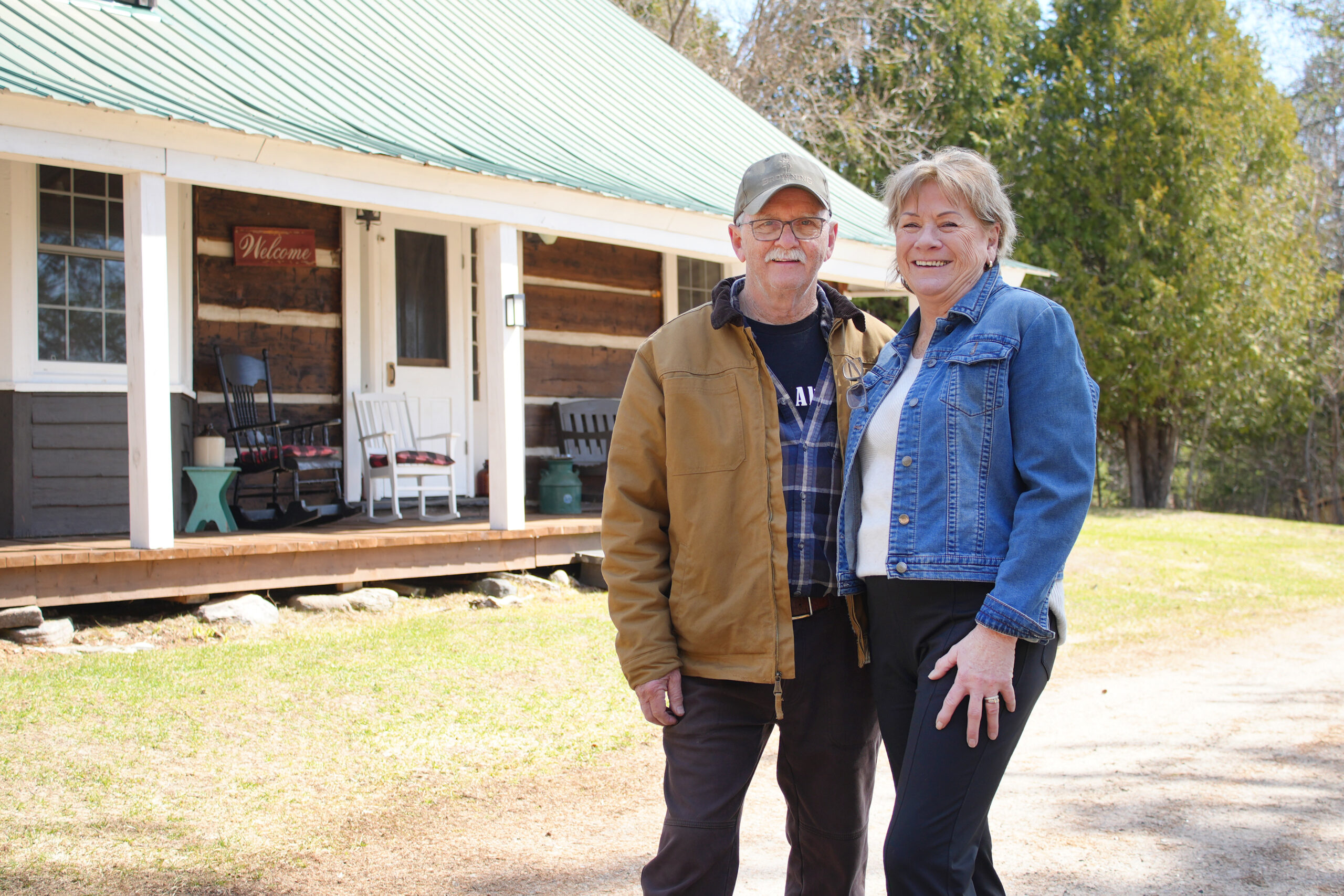



When Jerry and Joanne Dubeau bought the Otter Lake Depot in 2007, the building had been sitting empty for more than a decade.
The back of the house was near collapse. The floors slanted from years of neglect. The yard had grown unruly, while bats and flying squirrels had begun to claim the space as their own.
Beneath the mess, though, the Dubeaus could still see the bones of something remarkable: hand-hewn timber beams cut nearly two centuries earlier, when the depot served a network of lumber camps that once lined the Picanoc River.
One of the Pontiac’s oldest surviving buildings, the timber-frame depot was built in 1839 to support the Gilmour and Hughson Lumber Company, one of the major logging operations in the Ottawa Valley during the region’s lumber boom. As the industry declined through the 20th century, the building passed through several owners before eventually landing in the hands of the Dubeaus.
Now, as the Outaouais turns increasingly toward tourism, the Dubeaus have restored the building not simply as a nod to the past, but as a way of preserving and sharing the region’s logging heritage with a new generation.
Jerry and Joanne Dubeau grew up in Otter Lake. They knew what pretty much everyone else in town knew about the building: Once a supply depot for a logging operation, the Depot once played host to Prince Arthur during an 1869 hunting expedition into the region.
When the building came up for sale, the recently-retired Jerry Dubeau couldn’t pass up the chance. A history enthusiast, he’d always liked the building – and besides, he suddenly had a lot more time on his hands. So he raised the idea to wife Joanne.
“It took a lot of convincing,” he laughed. “Joanne said, ‘You’re crazy.’”
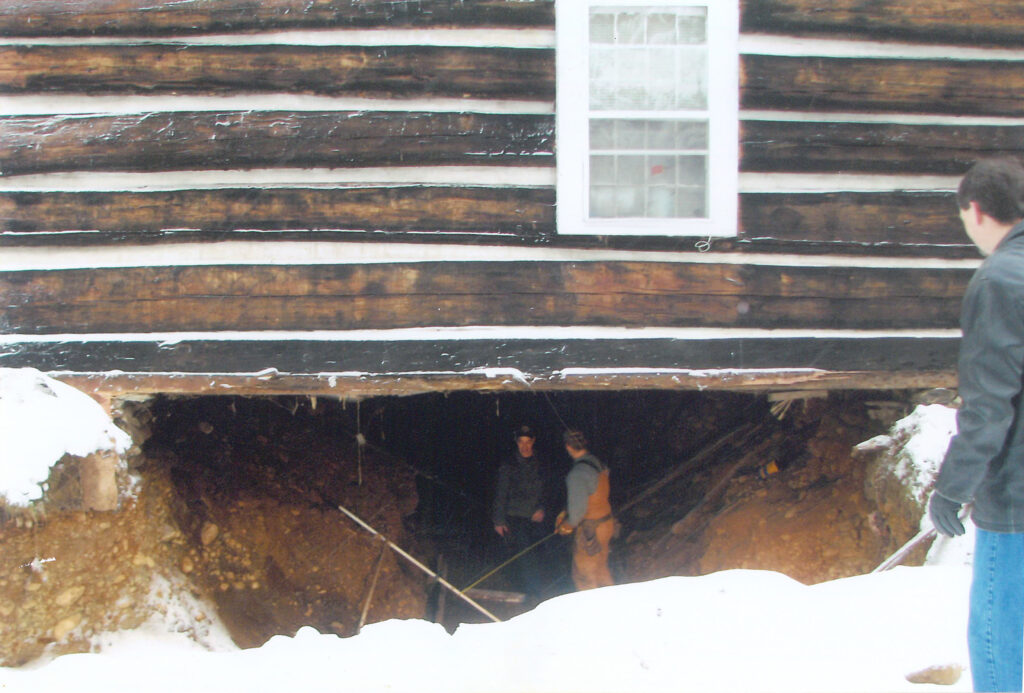
But by the time the Dubeaus acquired the Depot, the years of neglect had taken a serious toll on the building. The nine wooden joists supporting the building had begun to rot, causing the entire house to lean to one side.
“I knew it was in bad shape because [the previous owners] never did any repairs, but I didn’t think it was that bad,” Jerry said.

Before they could get to work on the interior, the Dubeaus first had to stabilize the structure. With some help from family and friends, they dug under the building, replacing the support beams and logs holding up the nearly two-century-old frame. They also replaced two logs on the side of the building.
Then, they emptied the house of junk – rooms full of it. The building’s last longtime resident, Chris Collins, had used the place as a summer party venue, leaving behind liquor bottles, assorted fishing trophies and a chest of old Playboy magazines.
“You couldn’t see,” said Joanne of the mess. “I got pissed off one day, and I said, ‘That bedroom, we’re starting. We’re moving everything out and we’re gonna get rid of it.’”
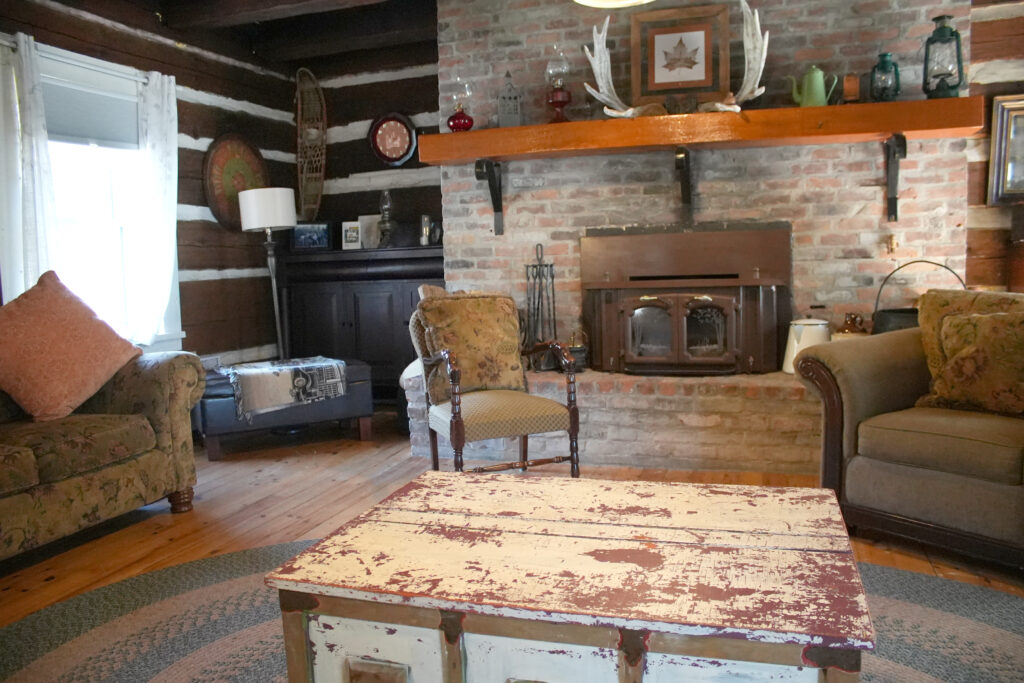
Once they had some room to work with, the Dubeaus got to work uncovering some of the building’s original features. Layers of flooring were pulled up, revealing the original boards. Lath and plaster on the walls and ceiling was peeled back to show the original beams – white and red pine from trees that had been downed and hewn on that very property nearly two centuries ago.
According to the province of Quebec’s heritage building registry, the building is a rare surviving example of 19th century construction techniques, and is “one of the last depots still preserved that are linked to forestry and its lifestyle.”
Then, the Dubeaus got to work making the upstairs livable. Only used for storage, it was little more than a crawl space, so they raised the ceiling, made two bedrooms, as well as a living area with two bay windows with nice views of the surrounding countryside.
There were some unique challenges to restoring an old building left unoccupied for over a decade. For starters, they had some unexpected neighbours – chief among them bats and flying squirrels, who appeared equally as unhappy to now be sharing the abode.
“The first year, it was around Christmas time, I trapped seven of them,” Jerry said.

In 2014, seven years after the Dubeaus bought the property, they were ready to open the building as an event venue. They hosted their first wedding that year, kicking off over a decade of memories the couple has made possible thanks to their work.
A second life for the Old Depot
While the logging industry declined over the 20th century, traces of that history still shape the Pontiac’s identity. Today, municipalities increasingly rely on the area’s lakes, forests, and heritage sites to bring in visitors.
Dennis Blaedow, former president of the Chutes Coulonge and Tourism Pontiac, said many visitors still have an interest in the logging heritage. He said sites like these help connect visitors to a crucial chapter in the region’s past.
“Our county, in the 1800s, was the richest in Canada because of the logging at the time, but now we’ve swung around to being [among] the poorest,” he said. “The more offerings that we have, the more we can capitalize,” he said.
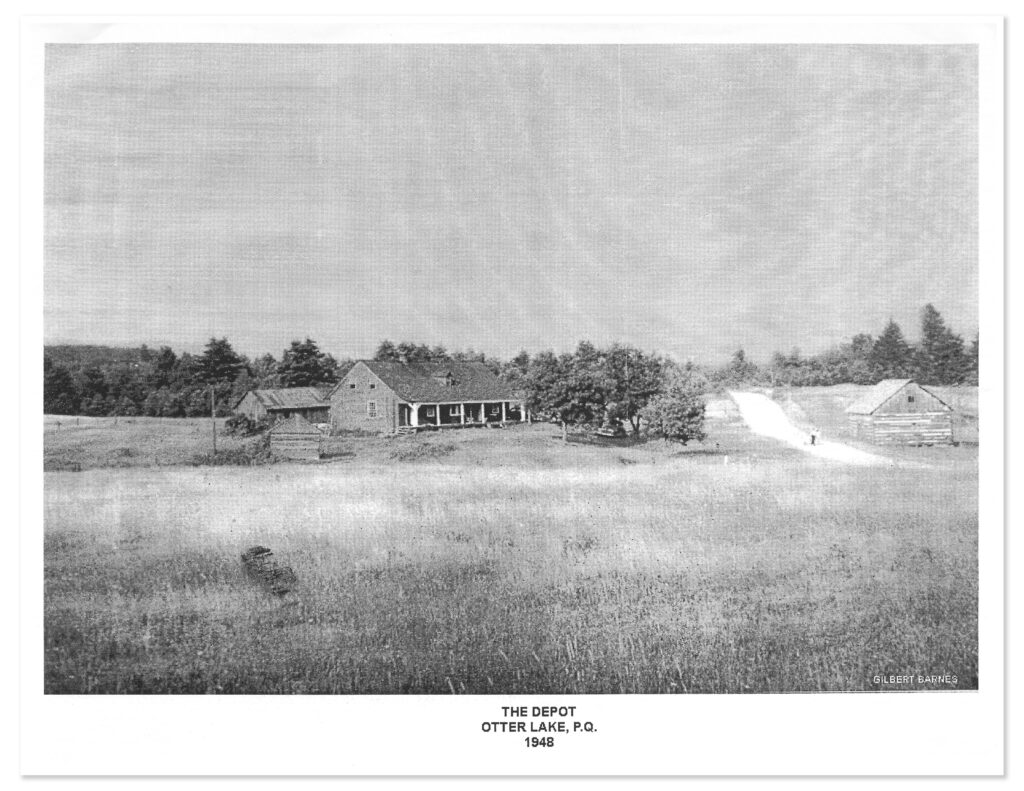
As their work continued, the Dubeaus learned more about the Depot’s role in Otter Lake’s early history. In addition to supplying lumber camps, the property also housed the community’s first post office, a forge and a general store. It is believed that the Depot, once situated on an open plain with a farm, is the source of the name “Farm Lake”, which sits just across the road.
The Municipality of Otter Lake officially registered the building as a heritage property in 2010. Mayor Jennifer Quaile said the building represents a collective identity that many in the community share.
“It’s a monument, or a testimony to the past,” she said. “So many of us, our ancestors were in the logging industry working for those logging companies.”
Older community members are now able to relive memories of their youth, such as 88-year-old Otter Lake native Elaine Burke. She jokes that her connection to the Depot began before she was even born — according to her parents, she was conceived there. Her dad was a friend of the Collins family, and the pair spent a lot of time around them.
“We were there all the time,” she said, recalling BBQs at the Depot. She often wanted to go off fishing with her dad and Collins, who was around her age.
“He was with him pretty near more than I was, and that would really piss me off,” she said.
Nearly two centuries after it was built, the Old Depot still stands looks over the north point of Farm Lake, hosting visitors wanting a first-hand piece of Pontiac history. Original floorboards still bear the scuffs and scratches of nearly two centuries of use, while photographs and news clippings remind visitors of the history. Although its logging days are through, it remains part of the fabric of Otter Lake, thanks to the Dubeaus’ work.
Burke returned to the Depot for her 80th birthday party. Having seen the neglected state of the building when Collins was there, she was pleased to see it given new life, and to once again make memories at the old Depot.
“They’ve done such a wonderful job renovating it all. It was a great place to have a party,” she said.
Nearly two decades after embarking on the project, the couple still considers it a work in progress. Sometimes, Jerry said, as he works he thinks about how close the Depot came to disappearing.
“It would have been down for sure,” he said. “It would have been sad for the town too.”
Lorsque Jerry et Joanne Dubeau ont acheté le Dépôt d’Otter Lake en 2007, le bâtiment était inoccupé depuis plus d’une décennie.
L’arrière de la maison était sur le point de s’effondrer. Les planchers s’inclinaient à cause des années de négligence. La cour était envahie par la végétation, tandis que les chauves-souris et les écureuils volants avaient commencé à s’approprier les lieux.
Malgré le désordre, les Dubeau pouvaient encore distinguer la structure d’un bâtiment remarquable : des poutres en bois équarries à la main, coupées près de deux siècles plus tôt, à l’époque où le dépôt desservait un réseau de camps forestiers qui bordaient autrefois la rivière Picanoc.
L’un des plus anciens bâtiments encore existants du Pontiac, ce dépôt à ossature de bois a été construit en 1839 pour la Gilmour and Hughson Lumber Company, l’une des principales exploitations forestières de la vallée de l’Outaouais durant l’âge d’or de l’industrie du bois dans la région. Au fur et à mesure que l’industrie déclinait au cours du 20e siècle, le bâtiment est passé entre les mains de plusieurs propriétaires avant d’atterrir finalement entre celles des Dubeau.
Maintenant, alors que l’Outaouais se tourne de plus en plus vers le tourisme, les Dubeau ont restauré le bâtiment non seulement en guise de clin d’œil au passé, mais aussi comme un moyen de préserver et de partager le patrimoine forestier de la région avec une nouvelle génération.
Jerry et Joanne Dubeau ont grandi à Otter Lake. Ils savaient ce que presque tous les habitants de la ville savaient sur le bâtiment : autrefois un dépôt de ravitaillement pour une exploitation forestière, le Dépôt a accueilli le prince Arthur lors d’une expédition de chasse dans la région en 1869.
Quand le bâtiment a été mis en vente, Jerry Dubeau, récemment retraité, n’a pas pu laisser passer l’occasion. Passionné d’histoire, il avait toujours aimé le bâtiment – et en plus, il avait soudainement beaucoup plus de temps libre. Il a donc soumis l’idée à sa femme Joanne.
« Il a fallu beaucoup la convaincre », a-t-il ri. « Joanne a dit : « Tu es fou. » »
Mais au moment où les Dubeau ont fait l’acquisition du Dépôt, les années de négligence avaient gravement endommagé le bâtiment. Les neuf solives en bois soutenant le bâtiment avaient commencé à pourrir, faisant pencher toute la maison d’un côté.
« Je savais qu’il était en mauvais état parce que [les propriétaires précédents] n’avaient jamais fait de réparations, mais je ne pensais pas que c’était si grave », a déclaré Jerry.
Avant de pouvoir commencer les travaux intérieurs, les Dubeau ont d’abord dû stabiliser la structure. Avec l’aide de leur famille et de leurs amis, ils ont creusé sous le bâtiment, remplaçant les poutres de soutien et les rondins qui soutenaient la structure vieille de près de deux siècles. Ils ont également remplacé deux rondins sur le côté du bâtiment.
Ensuite, ils ont vidé la maison de tout ce qu’elle contenait – des pièces entières de débris. Le dernier résident de longue date du bâtiment, Chris Collins, avait utilisé l’endroit comme lieu de fête estivale, laissant derrière lui des bouteilles d’alcool, divers trophées de pêche et un coffre de vieux magazines Playboy.
« On ne pouvait rien voir », a dit Joanne à propos du désordre. « Un jour, j’en ai eu marre, et j’ai dit : « Cette chambre, on commence. On va tout sortir et on va s’en débarrasser. » »
Une fois qu’ils ont eu de l’espace pour travailler, les Dubeau se sont attelés à découvrir certaines des caractéristiques originales du bâtiment. Des couches de revêtement de sol ont été retirées, révélant les planches d’origine. Le lattis et le plâtre des murs et du plafond ont été retirés pour laisser apparaître les poutres d’origine – du pin blanc et rouge provenant d’arbres qui avaient été abattus et équarris sur cette même propriété il y a près de deux siècles.
Selon le registre des bâtiments patrimoniaux du Québec, le bâtiment est un exemple rare et subsistant des techniques de construction du 19e siècle, et est « l’un des derniers dépôts encore préservés qui sont liés à la foresterie et à son mode de vie. »
Ensuite, les Dubeau se sont attelés à rendre l’étage habitable. Utilisé uniquement pour le rangement, il n’était guère plus qu’un vide sanitaire, ils ont donc surélevé le plafond, créé deux chambres à coucher, ainsi qu’un salon avec deux baies vitrées offrant de belles vues sur la campagne environnante.
La restauration d’un vieux bâtiment inoccupé depuis plus d’une décennie présentait des défis uniques. Pour commencer, ils avaient des voisins inattendus – dont principalement des chauves-souris et des écureuils volants, qui semblaient tout aussi malheureux de devoir partager leur demeure.
« La première année, c’était vers Noël, j’en ai piégé sept », a dit Jerry.
En 2014, sept ans après que les Dubeau ont acheté la propriété, ils étaient prêts à ouvrir le bâtiment comme lieu d’événements. Ils ont organisé leur premier mariage cette année-là, marquant le début de plus d’une décennie de souvenirs que le couple a rendus possibles grâce à leur travail.
Une seconde vie pour l’ancien Dépôt
Bien que l’industrie forestière ait décliné au cours du 20e siècle, des traces de cette histoire façonnent encore l’identité du Pontiac. Aujourd’hui, les municipalités comptent de plus en plus sur les lacs, les forêts et les sites patrimoniaux de la région pour attirer les visiteurs.
Dennis Blaedow, ancien président des Chutes Coulonge et de Tourisme Pontiac, a déclaré que de nombreux visiteurs s’intéressent toujours au patrimoine forestier. Il a ajouté que des sites comme ceux-ci aident à relier les visiteurs à un chapitre crucial du passé de la région.
« Notre comté, dans les années 1800, était le plus riche du Canada en raison de l’exploitation forestière de l’époque, mais maintenant nous sommes devenus [parmi] les plus pauvres », a-t-il dit. « Plus nous avons d’offres, plus nous pouvons capitaliser », a-t-il dit.
Au fur et à mesure que leurs travaux se poursuivaient, les Dubeau en ont appris davantage sur le rôle du Dépôt dans l’histoire ancienne d’Otter Lake. En plus d’approvisionner les camps forestiers, la propriété abritait également le premier bureau de poste, une forge et un magasin général de la communauté. On pense que le Dépôt, autrefois situé sur une plaine ouverte avec une ferme, est à l’origine du nom « Farm Lake », qui se trouve juste en face de la route.
La Municipalité d’Otter Lake a officiellement enregistré le bâtiment comme propriété patrimoniale en 2010. La mairesse Jennifer Quaile a déclaré que le bâtiment représente une identité collective que beaucoup de membres de la communauté partagent.
« C’est un monument, ou un témoignage du passé », a-t-elle dit. « Beaucoup d’entre nous, nos ancêtres étaient dans l’industrie forestière, travaillant pour ces compagnies forestières. »
Les membres plus âgés de la communauté peuvent maintenant revivre les souvenirs de leur jeunesse, comme Elaine Burke, originaire d’Otter Lake et âgée de 88 ans. Elle plaisante en disant que sa connexion avec le Dépôt a commencé avant même sa naissance — selon ses parents, elle y a été conçue. Son père était un ami de la famille Collins, et tous deux passaient beaucoup de temps là-bas.
« Nous étions là tout le temps », a-t-elle dit, se remémorant les barbecues au Dépôt. Elle voulait souvent aller pêcher avec son père et Collins, qui avait à peu près son âge.
« Il était avec lui presque plus que moi, et ça me mettait vraiment en colère », a-t-elle dit.
Près de deux siècles après sa construction, l’ancien Dépôt surplombe toujours la pointe nord du lac Farm, accueillant des visiteurs désireux de découvrir un morceau de l’histoire du Pontiac. Les planchers d’origine portent encore les éraflures et les marques de près de deux siècles d’utilisation, tandis que des photographies et des coupures de journaux rappellent l’histoire aux visiteurs. Bien que ses jours d’exploitation forestière soient révolus, il fait toujours partie du tissu d’Otter Lake, grâce au travail des Dubeau.
Mme Burke est retournée au Dépôt pour sa fête du 80e anniversaire. Ayant vu l’état de négligence du bâtiment lorsque Collins y était, elle a été ravie de le voir reprendre vie, et de pouvoir à nouveau créer des souvenirs à l’ancien Dépôt.
« Ils ont fait un travail formidable pour tout rénover. C’était un excellent endroit pour faire la fête », a-t-elle dit.
Près de deux décennies après s’être lancé dans le projet, le couple le considère toujours comme un travail en cours. Parfois, a dit Jerry, en travaillant, il pense à quel point le Dépôt a failli disparaître.
« Il aurait été démoli, c’est certain », a-t-il dit. « Cela aurait été triste pour la ville aussi. »