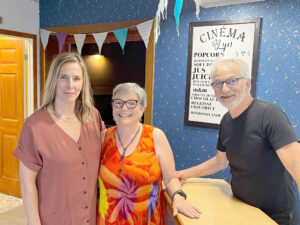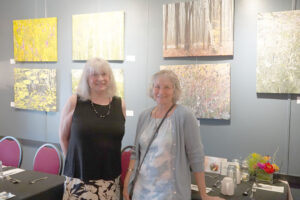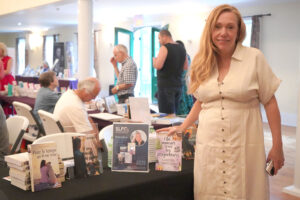






The Municipality of Sheenboro’s new archives were officially opened on Friday afternoon in front of a crowd of a few dozen.
The archives, which are located in the basement of the Sheenboro municipal building at 59 Sheen Road, are home to a collection of musical recordings, newspaper and magazine clippings, and photographs, to name only a few of the contributions donated by community members.
Two years ago, a three-person committee began the work of creating a publicly accessible archive to document and honour the cultural heritage and unique history of the Upper Pontiac.
Lorna Brennan Agnesi is on the committee, and she told THE EQUITY last week they wanted to start an archive in Sheenboro because residents never had a place where they could celebrate the history that means so much to them.
“We never had a museum or anything in Sheenboro,” she said.
She addressed those gathered for the launch with a short but emotional speech.
“Sheen is so rich in history, and now we have a . . .
place to share our heritage,” she said.
“I’m so excited, I can’t stop smiling.”
MRC Pontiac warden Jane Toller was on hand to cut the ribbon and say a few words. Mayors from Thorne, Mansfield, Allumette Island, and Chichester were also in attendance.
Joann McCann, another committee member and a historian who wrote her Master’s thesis on Oiseau Rock, also delivered a speech, highlighting some crucial points from the region’s history.
She noted the original residents of Sheenboro were Algonquin and Anishinaabe, but the logging industry soon brought an influx of Europeans to the Ottawa Valley.
By 1871, three-quarters of Sheenboro’s population were Irish. McCann noted the Irish culture lives on today, notably through song and square dance.
“Sheenboro also has a very unique musical culture,” she said, adding that her grandfather worked in the logging camps where step-dancing and fiddle music kept workers entertained in their time off.
Even to this day, music is crucial to the region’s culture and identity, McCann said. “There’s not a celebration that goes by where there’s no music.”
The archives house some local musical recordings from over the years, as well as binders full of lyrics, sheet music, and hymns.
Agnesi also spoke about this musical culture, reminiscing about dances in Sheen Hall, kitchen parties with all her neighbours, and all the musical competitions the Sheenboro Shamrocks, a group featuring the village’s best folk musicians, won at various local fairs.
After thanking the office of Pontiac MNA André Fortin, which donated $2,500 to the project, Agnesi ended her speech on Friday afternoon with a wish.
“Like the Sheen way, keep the music going!”
Attendees were treated to tea, coffee, snacks and, appropriately, some lively acoustic tunes by a pair of local musicians.
The duo, one on guitar and one on acoustic bass, played classics like John Denver’s Take Me Home, Country Roads, some tunes from Sheenboro’s logging history, and even accompanied local farmer John Brennan on an Irish-inspired ballad he had composed himself.
For about twenty minutes, the upstairs of Sheenboro’s municipal building could have been mistaken for a square-dancing hall, as couples and friends alike pranced and swayed to the sweet sounds of the music.
McCann said Sheenboro residents have good reason to celebrate. She told THE EQUITY they are proud of their history, and the new archives give them a place to celebrate it.
“We’re the Upper Pontiac, and we have a unique history,” she said. “There’s a real sense of pride of being from here.”
Attendees took time to reminisce amongst each other about Sheenboro lore from over the years.
Vincent Agnesi recalled a local saying he learned after moving to Sheenboro from Gaspésie.
“Sheen is the end of the road. The next stop is heaven,” the saying goes, referring to the Sheenboro Road, which turns from asphalt into dirt just north of the village.
McCann also noted some of the less rosy parts of the region’s history, including the wrenching of the land from the Indigenous people who first inhabited it.
She thinks the opening of the archives can be a step toward reconciliation.
“I think it’s time for the archives to cover the Indigenous history,” she said, adding that there are three known Indigenous burial grounds in the area, including at nearby Fort William.
Committee members say the archives’ collection is still modest, and that they are looking for donations.
Members are asking families to bring in any newspaper clippings, photographs, musical recordings, family trees, or any artifacts at all, to be brought into the archives to be scanned and returned.