





Zainab Al-Mehdar
Pontiac March 30, 2022
Elected officials and community groups have expressed concern regarding the proposed site by the Quebec government of the future university-affiliated hospital centre in the Outaouais (CHAU).
On March 21 a press conference was held in front of 200 boulevard de la Technologie (the proposed site) by the Coalition for an Accessible and Sustainable Hospital Center in Outaouais (CCHADO ).
The CCHADO is a citizens group composed of . . .
experts, organizations, public figures and individuals from various backgrounds that include social, economic and civic. The group was launched in the fall of 2021, and is advocating for a central site for the CHAU in the Outaouais, close to public and active transportation networks and far from natural environments.
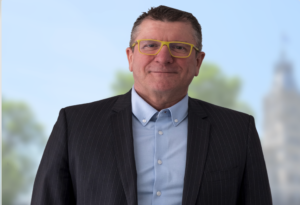
“A good location for our future hospital is not a luxury or a whim, it is a necessity for the region. If civil society in the Outaouais is so mobilized on this issue, it is because the consequences of a bad location will be real and lasting,” said former Gatineau Mayor Marc Bureau, in a press release. Bureau is also president of the Conseil régional en environnement et en développement durable de l’Outaouais (CREDDO).
Bureau added that citizen groups want to be part of the consultation process and want to be heard in regards to choosing an adequate site for this major infrastructure. “The Quebec government should start taking us seriously,” he said.
In an interview with THE EQUITY, MNA André Fortin explained that the government has gone about identifying a site unilaterally and without consulting community groups. “What we’re asking for right now, is transparency in the process. And we think that that can allow us to pick a site that is probably much more in tune with the needs of the population.”
When looking at accessibility, and the proposed site’s proximity and attractiveness to potential workers, the suggested site does not seem to meet any of the criteria, explained Fortin.
Although it is a provincial decision, Fortin argues that it needs to be done with the city and done transparently.
When asked if the construction of the hospital will impact the quality of care at the Pontiac Hospital, Fortin explained that it does not directly impact it, but seeing as the Wakefield hospital no longer offers the services it used to and the Hull Hospital has faced closures, it raises some red flags in terms of the government’s commitment to maintain services in rural areas.
In an email response from CISSSO, media relations officer Patricia Rhéaume noted that discussions are still ongoing and that the site selection process is still underway.
“The analysis is based on objective criteria such as the proximity of a road, the environmental impacts, the impacts on the community and the composition of the soil. Following the analysis of the sites, the committee will make a recommendation to the government regarding the choice of site. The organization will keep the population informed of the results of the process as soon as the choice is official and announced.”
Nothing has been made official yet.
When it comes to attracting health care workers, Quebec needs to do more for this region due to its proximity to Ontario and its relatively better working conditions and salary, highlighted Fortin. Since there hasn’t been anything finalized, he will continue to work on this file and plans to mobilize and work with interest groups to get more transparency on the project and find the best possible location.
“A hospital is necessary in the region, but it will only work if we find the right number of healthcare professionals to work in that,” said Fortin.
The suggested location is the furthest possible site from the Pontiac, explained Fortin, and what he hopes to achieve is advocating for it to be as close to the Pontiac and Aylmer so those specialized services can be used by many community members.
One doctor in the Pontiac had an opposing view and saw that the opportunity to have one centralized location would greatly benefit residents looking for specialized care.
Dr. John Wootton, a physician at the Lotus Medical Clinic in Shawville explained that having specialty services split between two campuses makes it complicated to care for people with multi-system problems.
“The announced location of the hospital, which I understand is met with some resistance, is at least on this side of the river. And I think that’s the most important thing for the Pontiac,” said Dr. Wootton.
He added that consolidating the specialties onto one campus is “excellent and overdue,” and will allow the development of services and believes that will be a benefit for everybody.
What he hopes from the creation of the new hospital is the ability for better outreach into the peripheral areas. “We have a limited number of specialists on site that are part of our staff, but other specialties are only present on an intermittent basis. That could improve,” said Dr. Wootton.
With the loss of local autonomy, since the centralization of services, Dr. Wootton highlighted, “I hope that in tandem with the consolidation of services in the new hospital that they also work on decentralizing some administrative management in the periphery, because the last few years have demonstrated that if you don’t have local management you’ll lose services.”