





Sophie Kuijper Dickson
Pontiac April 6, 2022
Last week, Quebec Health Minister Christian Dubé announced plans for sweeping reforms intended to address some of the many crises that the pandemic has highlighted in the province’s healthcare system.
The new plan puts forward 50 measures that the government believes will improve working conditions for healthcare employees and make it easier for residents to access appropriate health services.
Measures include recruiting 1,000 new nurses from abroad, hiring 3,000 clerks to . . .
reduce the administrative workload on clinical staff and eliminating mandatory overtime – these in an attempt to reduce the nursing shortages that have plagued the province for years.
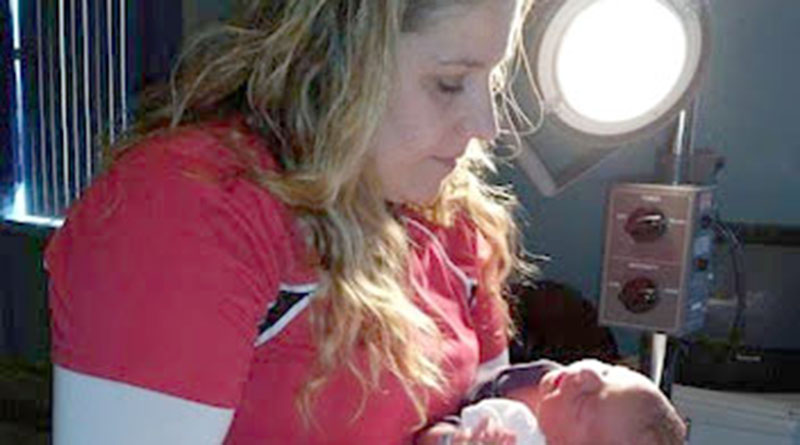
But Pontiac Hospital nurse Trish White doesn’t think these reforms will be enough to keep Quebec’s health force employed in Quebec.
White worked in the obstetrics centre at the hospital for six years before it closed in February 2020 because it couldn’t retain enough nurses specifically trained for pregnancy and childbirth. Since its closure, she has shifted to the emergency ICU department.
She has observed that most nurses begin their careers at the Shawville hospital where the smaller scale allows them to gain training in a diversity of services. Often, they then transfer to an Ontario hospital for a pay upgrade.
“It’s hard to keep nurses here when we’re right on the border with Ontario, where you can get $10,000 to $15,000 more per year,” White explained, adding that bringing in more nurses will not do anything to fix the system until the pay gap between Ontario and Quebec nursing salaries is addressed.
She also believes that the low nurse to patient ratios she’s seen at Pontiac Hospital likely affect decisions to transfer from Quebec to Ontario, where she’s heard nurses have fewer patients to care for at one time.
“As anybody in the Pontiac knows, we have a very different situation,” said André Fortin, Liberal MNA for the Pontiac. “There really is nothing in this plan to address region-specific issues that may be different from what the rest of the province needs.”
Fortin said he’s been putting pressure on the government every time it tables a new budget to implement the Outaouais-specific salary increases that it campaigned on in 2018.
“They’ve promised this for four years, they haven’t done it, and we’re still in this situation where we don’t have enough nurses,” he said.
In February, Fortin tabled a petition at the Quebec National Assembly calling for the obstetrics unit to be reopened. It was signed by over 1,000 people from the region.
In his response letter, received at the end of last month, junior health minister Lionel Carmant said that immediate reopening was still not possible due to lack of trained staff. However, he said discussions were underway to find alternative means of bringing birthing services back to the Pontiac region, such as offering accelerated training in the region.
But, like White, Fortin doesn’t believe any such strategy will work until the problem of salary discrepancy between provinces is addressed.
He said he has plans to meet with community members in the coming weeks to restart more visible advocacy actions to draw government attention back to the Outaouais.
A Bryson native now living in Shawville, White said she is committed to the Pontiac Hospital because she does not want to travel anymore. Beyond that, it is her home.
“It’s a homey place here, right, so I’m not going to a hospital where I don’t know anybody,” she said, adding that the only reason she would ever consider leaving would be to join an obstetrics team elsewhere.
“That’s where I was trained and that’s where my heart is,” she said.
In addition to the initiatives to reduce nursing shortages in the province, the government’s plan proposed a new pay structure that would encourage family doctors to take on more patients, as well as a phone directory system intended to accelerate patient connection with specialized health services.
Fortin does not believe this is the direction in which the province’s system should be moving.
“Government is abandoning this idea that every Quebecer should have a family doctor,” Fortin said. “To us, this is a big setback in terms of quality health care.”
CISSSO reports close to 35,000 people currently waiting for a family doctor in the Outaouais region.