




Donald Teuma-Castelletti
BRISTOL May 24, 2018
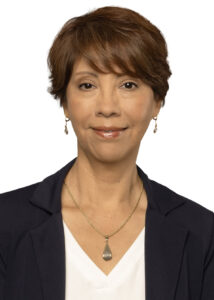
Pontiac residents looking to understand growing up in a much different part of Canada had to chance to last Thursday, when former Nunavut MP Leona Aglukkaq visited a church in Bristol.
Hosted by the St. Andrew’s Knox United Church, over 30 people gathered in the pews on the evening of May 24, as they learned about Canada’s youngest territory and what it’s like to live there.
“In the North, it is the arctic,” said Aglukkaq, as she set out to differentiate her home from the rest of Canada.
Aglukkaq began the talk with a history on the evolution of Nunavut, and how it came to be separate from the Northwest Territories. As well, she was quick to highlight that the Inuit people are not the same as Indigenous, in the sense that they have not been bound under previous treaties with the government, nor granted Indian Status.
“What makes Nunavut unique is it’s the Indigenous people who are in charge of their developments,” she continued.
What that means is that Nunavut was created for, and by, the Inuit people – and while seeking to develop their own territory, the people wanted to ensure that their land would stay under their control. In the roughly 30 years that it took for Nunavut to become its own, various laws and agreements were made to ensure that the owners of the land would have 100 per cent their say in what happens on it, with everything from employment within government to the managing of natural resources.
For the people of Nunavut, their resources were an important aspect to hold onto because of the relationship with the land. While the Inuit culture is not based on farming, it thrives on hunting seals and polar bears. As well, their land is rich in many valuable minerals, like gold and diamonds.
After setting the tone for what Nunavut is and is not, she began to delve into growing up there and what life is actually like in the arctic.
Aglukkaq comes from an area called Thom Bay, where she said her family lived off the land and the water, hunting and trapping while she was young. Over the course of growing up, she saw the rise of small communities in that area and the beginning of change for growing up Indigenous.
“I suppose you could say I was lucky,” said Aglukkaq. “I didn’t have to leave home to go to school.”
While she grew up just after the age of residential schooling – when Indigenous children would be taken from their parents to attend school, often hundreds of kilometres from home – her older sister was not as lucky.
When Aglukkaq had finished school, she began her career in public service, and as the years went by she eventually earned herself a role amongst the group dividing up the Northwest Territories. The change came so rapidly at that point, there was a constant learning curve to every role and many new positions opened up as Nunavut looked to stand on its own two feet.
“It was a very busy time, I believe in about a year, we had to recruit 600 people,” she said.
Still, it was such work that helped carve out the territory, and Aglukkaq said it was all invaluable experience and overwhelming, but a period in her career that she would not change at all.
Much of that valuable experience came from establishing Inuit culture as a staple of Nunavut, as the people set out to incorporate their knowledge into day-to-day and government practices. Part of the reason it took so long for Nunavut to be its own, she explained, is because there was much negotiation in land ownership and protection of the environment.
From there, Aglukkaq spoke to what the territory is today and what it is still growing into.
As well, she spoke to campaigning in Nunavut – you can’t have lawn signs without any lawns – and the price of groceries, amongst many other topics.
Guests then took the time to pose many questions to Aglukkaq, asking everything from the effect of climate change on the province to the development of education opportunities, as well as the potential for greenhouses.
Following the talk, Aglukkaq joined the group in the church basement for refreshments, and to show various tools and clothing from her home.
The visit to Bristol came to fruition by mutual connections within the church community – brought together by hockey of all things. While the grandchildren in the Rusenstrom clan played hockey with Aglukkaq’s son, there came a connection through the location of Baker Lake, a community in Nunavut.
A few years back, the St. Andrew’s Knox United Church had raised funds to donate to a food bank in Baker Lake. Much to their surprise, Aglukkaq held the same location close to her heart and was able to offer an update on the food bank. Over the last few years, the food bank has grown to offer much more to the community, including a thrift shop.
Aglukkaq was a member of the Nunavut Legislative Assembly for Nattilik from 2004 until 2008, before being elected MP for Nunavut in October 2008. While MP, she served as the Minister of Health from Oct. 30, 2008 until July 15, 2013 and the Minister of the Environment from July 15, 2013 until Nov. 4, 2015. She was defeated in the most recent election by the Liberal candidate, ending her run in office on Oct. 19, 2015.