





The closure of the provincial wildlife protection office in Campbell’s Bay is raising concerns about weakening on-the-ground enforcement across the Pontiac region.
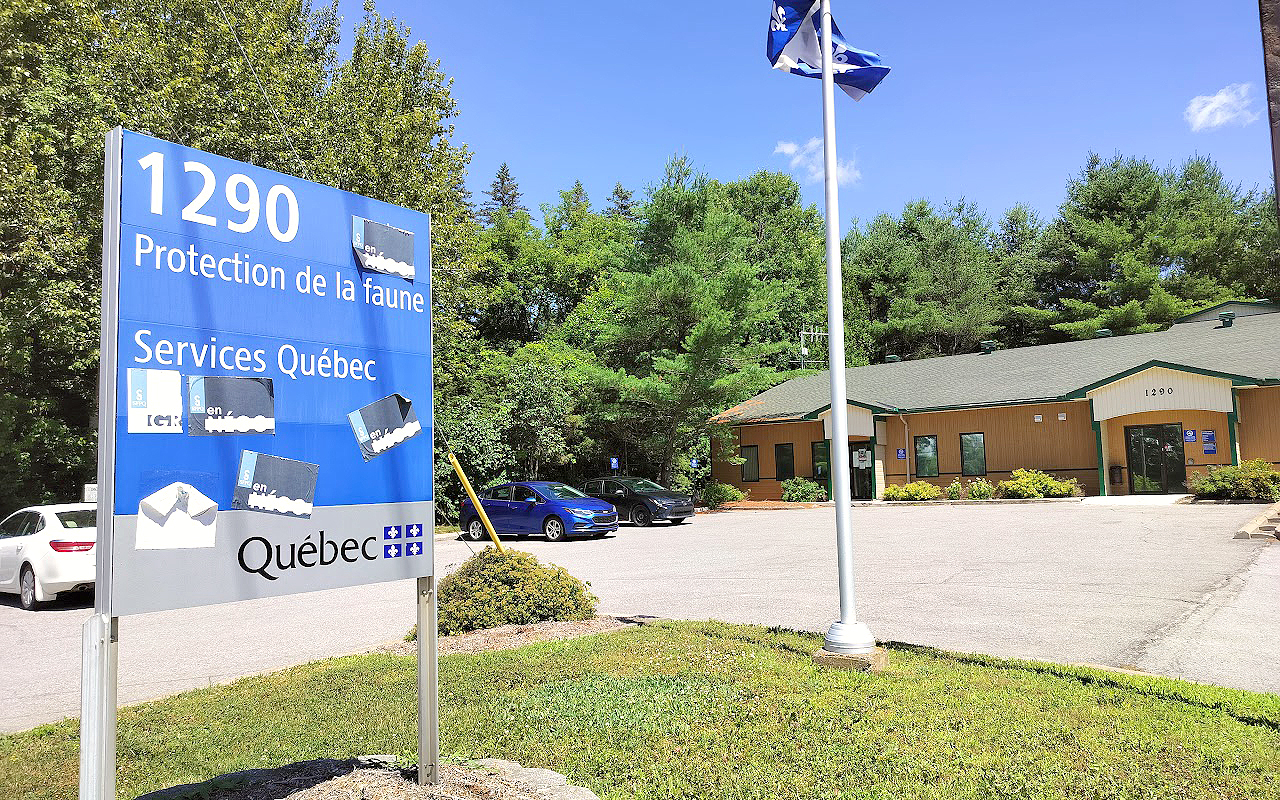
The office closed at the start of March after Quebec’s environment ministry chose not to renew its lease at 1290 Hwy. 148. Ministry spokesperson Ève Morin Desrosiers said the decision was made “with the goal of healthy management of provincial resources.”
Desrosiers said that in recent years the office had been reduced to a single part-time administrative employee. She said responsibility for the territory will now shift to the ministry’s southwest district office, which covers both the Outaouais and Laurentides regions and employs 51 staff, including 42 wildlife protection officers.
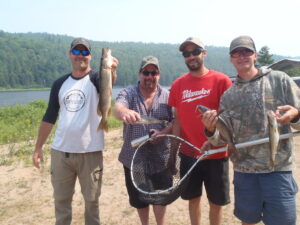
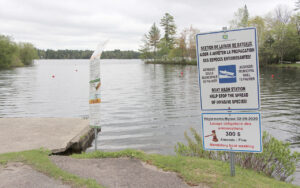
Environmental crimes such as poaching, overfishing and illegal dumping can harm wildlife populations and disrupt ecosystems. According to the Quebec government, illegal activities interfere with sustainable wildlife management and threaten both species and their habitats, while pollution and invasive species can degrade water quality, spread disease and further destabilize ecosystems.
According to the Quebec government, wildlife protection officers are important to preventing these outcomes. Their work consists of working to track down poachers, carrying out protection and prevention measures for threatened wildlife species, and ensuring natural habitats are not destroyed.
Martin Perreault, president of Quebec’s wildlife protection agents’ union, said the Campbell’s Bay closure reflects a broader trend of consolidating services in urban centres. Over the past year, offices in Bas-Saint-Laurent and Gaspésie have also shut down in favour of centralized operations.
The Outaouais region once had wildlife protection offices in both Rapides-des-Joachims and Campbell’s Bay. Now, Perreault said, agents covering the more than 50,000-square-kilometre territory are based in Gatineau, Maniwaki and as far away as Saint-Jérôme.
He said the shift leaves the Outaouais with less effective surveillance.
“They are saying to the population, ‘Even if there’s no one locally, it doesn’t matter – we have about 50 agents in the district who can cover the territory.’ But that’s not true,” Perreault said. “Agents in Saint-Jérôme will not be able to cover Campbell’s Bay.”
Bill Boisvert, president of ZEC St-Patrice, said response times were much faster when officers were based locally. “The same afternoon they were in the bush,” he said.

Now, he said, it can be harder to get officers on-site. “Sometimes we would call Maniwaki, and Maniwaki couldn’t come because it was too busy.”
Desrosiers wrote in a statement that the environment ministry deploys officers “at the right time and in the right place,” and that advanced technologies allow for more targeted interventions. “The ministry aims to maintain strong, efficient and agile teams of wildlife protection officers to meet operations needs, ensure effective interventions and carry out its mandate to protect wildlife,” the statement reads in part.
CBC News and Radio-Canada have reported concerns that the Campbell’s Bay office closure could lead to increased poaching on the territory, a concern that is also shared by Boisvert. But he said he is already seeing gaps in enforcement for illegal hunting.
“We haven’t got enough game wardens,” he said, adding that he has seen a decline of officers on the territory since he started working at the ZEC around 15 years ago.
Desrosiers said that reports of illegal activities received through the SOS Poaching / Wildlife Emergency phone line are processed within a maximum of 24 hours, and that reports involving nuisance wildlife requiring urgent, immediate action are handled within a maximum of one hour.
“When a report is received at the SOS Poaching – Wildlife Emergency call centre, it is assessed based on several factors to determine the appropriate response. These include the nature of the report (such as poaching or the presence of a nuisance animal), the level of risk to public safety, and whether an on-the-ground intervention is required,” the statement reads.
Perreault said while poaching may increase as a result, it may not show up in the official data because there will be no officers on the ground to see it. He said people may feel discouraged to call in an act of poaching if they know there is a long response time.
“The poaching could be increasing, but if we look at the statistics we won’t be able to see it,” he said. “If the population knows that we may not be able to help, people are going to give up calling us.”

La fermeture du bureau provincial de protection de la faune de Campbell’s Bay suscite des inquiétudes quant à l’affaiblissement de l’application de la loi sur le terrain dans toute la région du Pontiac.
Le bureau a fermé début mars après que le ministère de l’Environnement du Québec a choisi de ne pas renouveler son bail au 1290, route 148. La porte-parole du ministère, Ève Morin Desrosiers, a déclaré que la décision avait été prise « dans l’objectif d’une saine gestion des ressources provinciales ».
Mme Desrosiers a indiqué qu’au cours des dernières années, le bureau avait été réduit à un seul employé administratif à temps partiel. Elle a ajouté que la responsabilité du territoire sera désormais transférée au bureau de district du sud-ouest du ministère, qui couvre les régions de l’Outaouais et des Laurentides et emploie 51 personnes, dont 42 agents de protection de la faune.
Les crimes environnementaux tels que le braconnage, la surpêche et le déversement illégal peuvent nuire aux populations fauniques et perturber les écosystèmes. Selon le gouvernement du Québec, les activités illégales nuisent à la gestion durable de la faune et menacent à la fois les espèces et leurs habitats, tandis que la pollution et les espèces envahissantes peuvent dégrader la qualité de l’eau, propager des maladies et déstabiliser davantage les écosystèmes.
Selon le gouvernement du Québec, les agents de protection de la faune sont importants pour prévenir ces conséquences. Leur travail consiste à traquer les braconniers, à mettre en œuvre des mesures de protection et de prévention pour les espèces fauniques menacées et à veiller à ce que les habitats naturels ne soient pas détruits.
Martin Perreault, président du syndicat des agents de protection de la faune du Québec, a déclaré que la fermeture de Campbell’s Bay reflète une tendance plus large de consolidation des services dans les centres urbains. Au cours de la dernière année, des bureaux au Bas-Saint-Laurent et en Gaspésie ont également fermé au profit d’opérations centralisées.
La région de l’Outaouais avait autrefois des bureaux de protection de la faune à Rapides-des-Joachims et à Campbell’s Bay. Maintenant, a dit M. Perreault, les agents couvrant le territoire de plus de 50 000 kilomètres carrés sont basés à Gatineau, Maniwaki et même à Saint-Jérôme.
Il a déclaré que ce changement laisse l’Outaouais avec une surveillance moins efficace.
« On dit à la population : “Même s’il n’y a personne localement, ce n’est pas grave – nous avons environ 50 agents dans le district qui peuvent couvrir le territoire.” Mais ce n’est pas vrai », a déclaré M. Perreault. « Les agents de Saint-Jérôme ne pourront pas couvrir Campbell’s Bay. »
Bill Boisvert, président de la ZEC St-Patrice, a déclaré que les temps de réponse étaient beaucoup plus rapides lorsque les agents étaient basés localement. « Le même après-midi, ils étaient dans le bois », a-t-il dit.
Maintenant, a-t-il dit, il peut être plus difficile de faire venir les agents sur place. « Parfois, nous appelions Maniwaki, et Maniwaki ne pouvait pas venir parce qu’ils étaient trop occupés. »
Mme Desrosiers a écrit dans une déclaration que le ministère de l’Environnement déploie ses agents « au bon moment et au bon endroit », et que les technologies avancées permettent des interventions plus ciblées. « Le ministère vise à maintenir des équipes d’agents de protection de la faune solides, efficaces et agiles pour répondre aux besoins opérationnels, assurer des interventions efficaces et remplir son mandat de protection de la faune », peut-on lire en partie dans la déclaration.
CBC News et Radio-Canada ont fait état de préoccupations selon lesquelles la fermeture du bureau de Campbell’s Bay pourrait entraîner une augmentation du braconnage sur le territoire, une inquiétude également partagée par M. Boisvert. Mais il a déclaré qu’il constatait déjà des lacunes dans l’application de la loi en matière de chasse illégale.
« Nous n’avons pas assez de gardes-chasse », a-t-il dit, ajoutant qu’il a constaté un déclin du nombre d’agents sur le territoire depuis qu’il a commencé à travailler à la ZEC il y a environ 15 ans.
Mme Desrosiers a déclaré que les signalements d’activités illégales reçus via la ligne téléphonique SOS Braconnage / Urgence faune sont traités dans un délai maximal de 24 heures, et que les signalements concernant la faune importune nécessitant une action urgente et immédiate sont traités dans un délai maximal d’une heure.
« Lorsqu’un signalement est reçu au centre d’appels SOS Braconnage – Urgence faune, il est évalué en fonction de plusieurs facteurs pour déterminer la réponse appropriée. Ces facteurs comprennent la nature du signalement (comme le braconnage ou la présence d’un animal importun), le niveau de risque pour la sécurité publique et la nécessité d’une intervention sur le terrain », peut-on lire dans la déclaration.
M. Perreault a déclaré que si le braconnage pouvait augmenter en conséquence, cela pourrait ne pas apparaître dans les données officielles parce qu’il n’y aura pas d’agents sur le terrain pour le constater. Il a ajouté que les gens pourraient se sentir découragés de signaler un acte de braconnage s’ils savent qu’il y a un long temps de réponse.
« Le braconnage pourrait augmenter, mais si nous regardons les statistiques, nous ne pourrons pas le voir », a-t-il dit. « Si la population sait que nous pourrions ne pas être en mesure d’aider, les gens vont cesser de nous appeler. »