





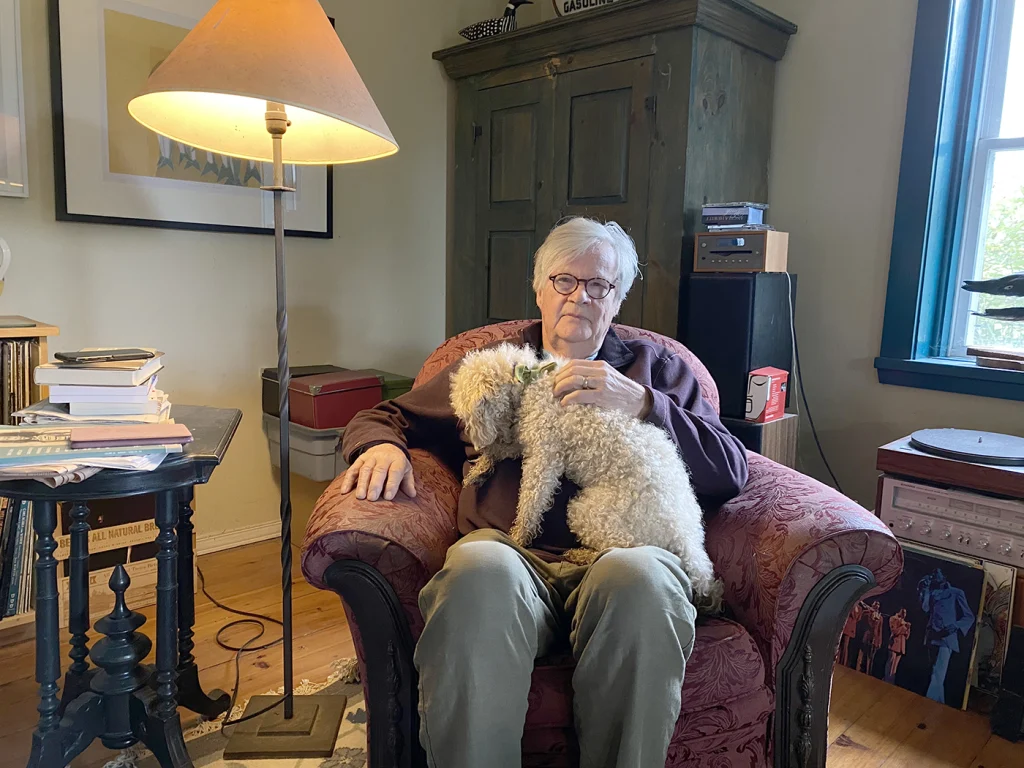
Geoffrey James doesn’t miss the presence of a Tim Hortons in the Pontiac.
He is “totally bored” with the chain, to use his words, and not just because he can rarely find the chili he relies on as his go-to menu item. His boredom is in fact more of a disdain for the way the corporation, now Brazilian-owned, has penetrated small towns across Canada, and in many cases eroded what he considers to be their authenticity.
James, a British expat of Welsh origins, is a career photographer with a home on the southern tip of Calumet Island. Here, he’s spent most summers since 1981, when he and his wife, a longtime curator at the Art Gallery of Ontario, bought what was at the time an abandoned log cabin, overgrown with brambles.
James has had shows at the Museum of Modern Art in New York City and the National Art Gallery of Canada in Ottawa – to name but a few of the art world institutions that have hosted his photographs – and won numerous awards for his work, including the Governor General’s Award and a Guggenheim Fellowship.
The subjects of his photographic investigations have ranged from Italian gardens to the last days of the Kingston Penitentiary, before it closed in 2013. Throughout his career, his lens has found focus, over and over again, on landscapes that offer evidence of human activity over time, both in places humans continue to occupy, and places humans have left behind. And his latest book, which hit shelves this month, is no exception to his commitment to this lifelong curiosity.
The Montreal-based photographer’s disdain for the Tim Hortons franchise is part of a deeper concern that lies at the heart of this book, which investigates the impacts industrialization, corporatization and rapid urban development have had on traditional notions of Canadian identity, grounded in landscape and access to nature.
“I think that most books about Canada tend to be a little bit stereotyped, clichéd, you know, we’re always falling back on the landscape,” he said. “And this book, I think, is more about what we have done to the landscape. Big difference right?”
The book, titled Canadian Photographs, includes more photographs of the Pontiac than of any other singular subject or location.
“I’ve been going into Shawville for 40 years, and it hasn’t suffered the fate of so many small towns, which is that the big box stores come in and the Main Streets seem to be hollowed out,” he said.
“So it’s an interesting town to me. It seems a very difficult region to do business in, it’s not highly developed in terms of tourism, but it’s still a real town, unlike some places.”
James’ book contains portraits of landscapes, and people, from across this country – from a crowd gathered outside Toronto’s City Hall to mourn the passing of former mayor Rob Ford, to miners’ houses in Copper Cliff, Ont., to small towns and empty landscapes which James shot through a train window as he was passing through them.
Dispersed throughout the collection are nine photographs taken in the Pontiac.
Four of the nine seem somewhat depleted, lacking in human life: a long shot of the old Elvis cut-out mounted to the side of the snow-covered Quyon fairgrounds, a red log fishing camp standing empty, the cots inside the fishing camp also empty, and a home in Fort Coulonge that offers no sign of life except a satellite dish mounted on its roof.
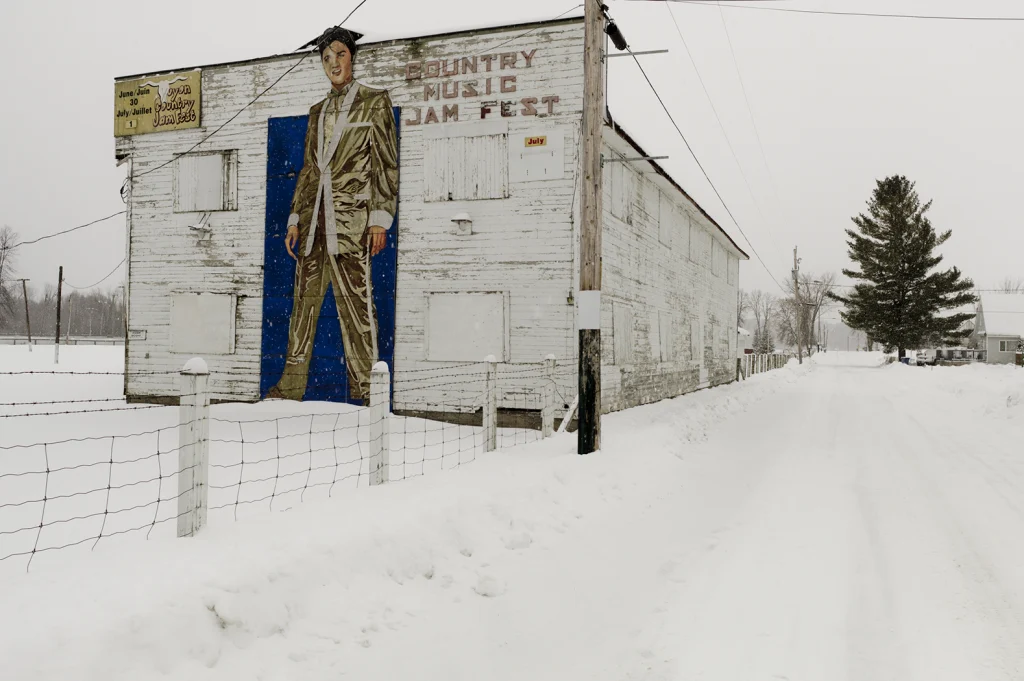
“I’m interested in the history of the region, and what remains of it,” James said. “I think surprisingly little.”
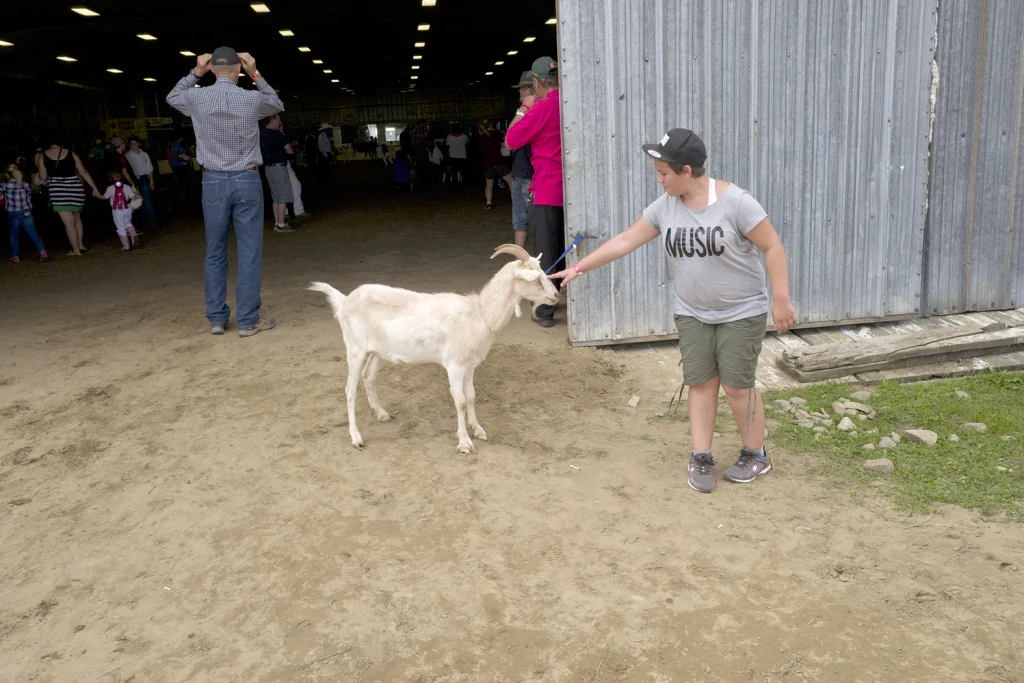
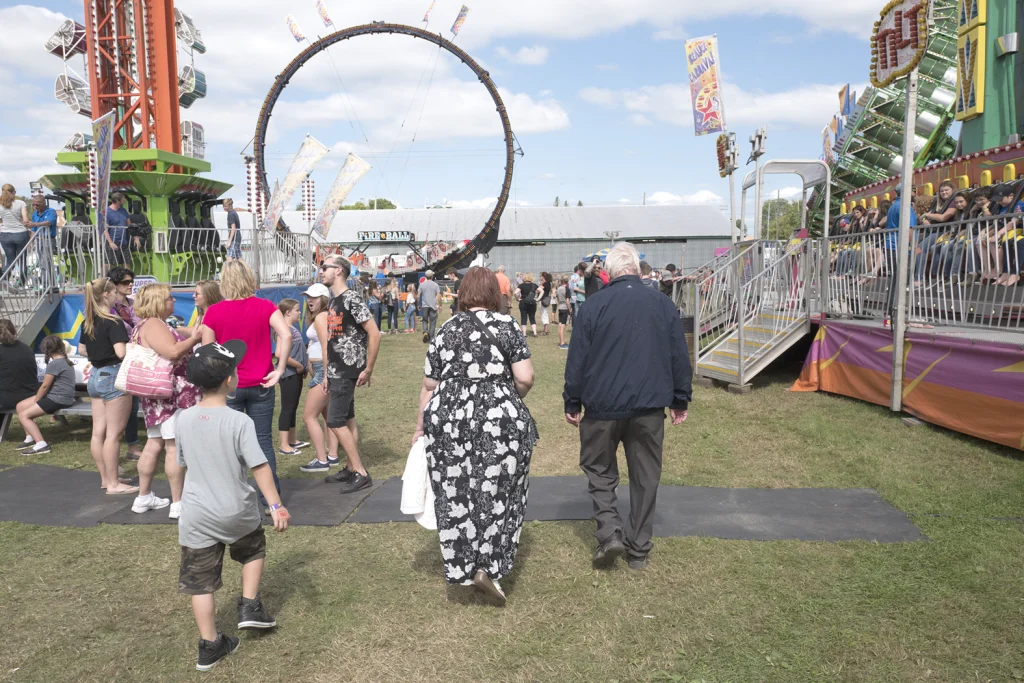
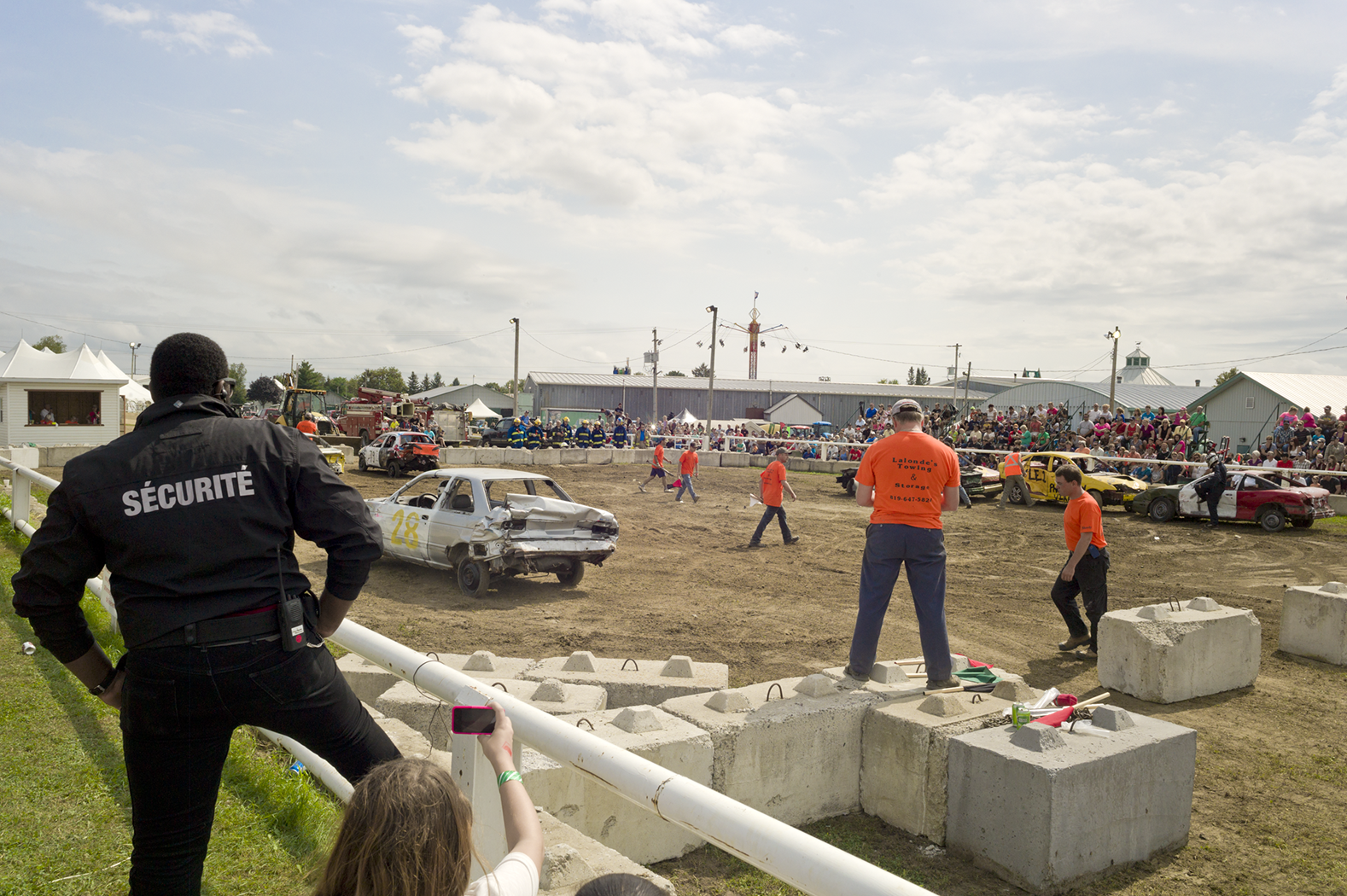
The other five images offer glimpses into a weekend at the Shawville Fair.
“I just love going to that fair and I think it’s a wonderful reflection of the best of the region. You know, the 4-H clubs, the demolition derby and all of that stuff. It’s just fabulous,” James said.
“The book has a critical aspect to it I think, but [the fair] is very much a celebration for me.”
Readers who would like to see all nine of James’ Pontiac photos can do so at theequity.ca, and those who would like to learn more about the book can do so at www.figure1publishing.com/book/canadian-photographs/.