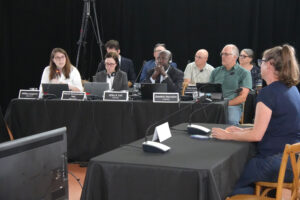




For many years now, I have been encouraging readers to ask the tough questions to your wanna-be politicians. I always enjoyed attending all candidates debates that were held in our county. Some years, some candidates looking to be the next provincial or federal member didn’t show up. That wanna-be seldom got elected.
While some of the candidates already had an answer partially in their head before the question had been fully asked, some candidates just couldn’t think of a good response before their time limit to answer was up. Some politicians will only accept questions submitted in advance so they have time to research an answer.
When you watch some question-and-answer sessions on TV, you may notice that the politician at the mic points to a certain reporter to ask their question next. Sometimes that reporter was planted by the party to ask a specific question that the politician at the mic knew ahead of time. Although the room was full of real reporters, some were never given a chance to ask their question – maybe they were from an unfriendly news group? Some politicians will not even allow reporters access to their transportation – planes, trains and tour buses.
Politics can be a very rotten occupation. That’s why I like local all candidates debates. Questions are not planted, and if a politician cannot answer questions from their own constituents, how could they stand up on the world stage or in the House and give a logical answer on a subject from out of the blue?
About 40 years ago, a new federal minister of agriculture visited our county (a little late) at a local hotel. Some of the local farmers had a few wobbly pops before the minister got there. One very specific question was asked about beef marketing that the ag minister didn’t have an answer for. The new ag minister humbly said, “I don’t know, but I will find out and the next time we meet, I’ll have the answer.” About six months later, that minister was in the same town and looked straight at the farmer who had asked the question six months earlier and gave a very detailed answer. The honesty of that ag minister was never forgotten.
A few months after that, that same minister was asked by his party to get rid of collective marketing. He resigned rather than work at eliminating the wheat board and the supply management system. He understood that those collective marketing groups were put in place to assure a steady and reliable supply of safe product, fill foreign buyer needs by always having adequate supply close to the ports, and assure farmers that their product would be sold for the best price available. It also saved the federal government from paying subsidies, which saved the taxpayers money. I always had great respect for that ag minister who gave up a well-paying job to retain his creditability.
Some people think that subsidies are for the farmer. Actually, subsidies are paid to the farmer so the farmer can sell a product for less than the cost to produce it. This gives the food trader a less expensive product to sell for a larger profit. If that food product is sold in another country, our taxpayers are subsidising food eaten by consumers in another country. That’s where the money is getting away from the U.S.A.. They export grain and other food for less than the cost to produce it, while keeping their farmers alive with that 1.3 trillion-dollar farm bill. And they blame Canada?
Ask for an all candidates debate in our county. Attend and ask the tough questions. If some candidates don’t think that it’s a good idea, maybe they can’t think on their feet.
Chris Judd is a farmer in Clarendon on land that has been in his family for generations.