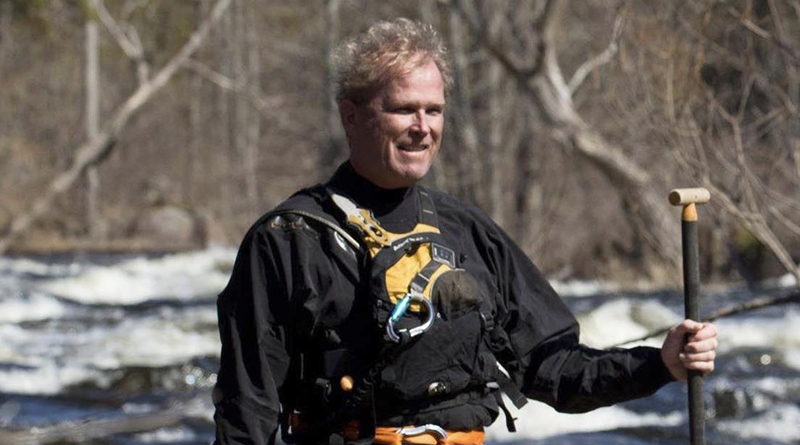






In an adventure that has come to define his life, Jim Coffey is celebrating his 40th year living and working along the mighty waters of the Ottawa River. The founder, owner and director of Esprit Rafting, Coffey has for decades been at the forefront of adventure tourism within the Pontiac. An avid environmental advocate, whose fervency for exploration has brought him around the world, Coffey has been a key player in developing the Ottawa River basin into a global whitewater nexus.
Coffey’s love for the outdoors was fostered through youthful summers spent amongst nature. A self-described “summer camp brat”, Coffey spent his formative years with a zest for adventure and a paddle in hand – finding a calling between the gunwales of a canoe or within the cockpit of a kayak.
As his love for paddling grew, so did his aptitude. With an ever improving paddling savvy, Coffey became involved in whitewater canoe and kayak racing. Wanting a job where he could work and train, he was drawn to the burgeoning whitewater scene along the Rocher Fendu section of the Ottawa River. Here, working as a raft guide during the bodacious summer of 84’, Coffeys decades long relationship with one of Canada’s most storied rivers began.
“I left my highschool graduation ceremony in June of 1984 and drove out here to the Ottawa Valley,” Coffey said. “I never moved back.”
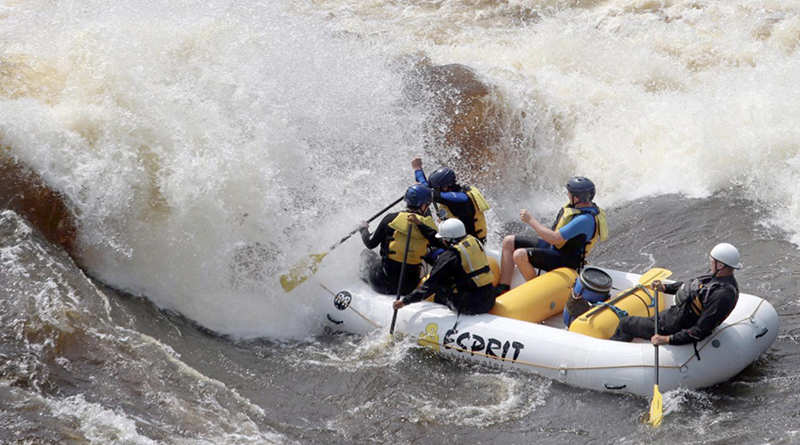
The Ottawa River is renowned globally for its whitewater. It is a river distinguished by volume – its water lurching into swelling waves that intimidate and excite. Blessed with warm water, an unplanned swim is not as frigid as on other popular rafting rivers. With its volume separating boats and swimmers alike from the rocks beneath its surface and calm pools at the end of most rapids, it is also regarded as a relatively safe river.
Spending his North American summers guiding rafts down the Ottawa, Coffey would travel abroad during the offseason. Guiding and instructing on rivers throughout the world, Coffey honed his craft and used his flourishing skillset to work and travel as a year-round outdoor adventure specialist.
“I went on the path to try and find fame and fortune in the adventure tourism industry, of which fortune is still elusive,” a tongue-in-cheek Coffey said.
A recession in 92’ provided the catalyst for what was to come. Now managing a whitewater rafting company on the Ontario side of the river, Coffey believed the business practices being introduced by ownership for the sake of its bottom line were “not in their business or the customers best interest.”
At odds with the company’s direction, and without really knowing what he would do next, Coffey resigned.
Mulling over possibilities, an idea overtook him. Applying all that he had learned from managing on the Ottawa and years guiding abroad, he would start his own rafting company. It would be different, it would be small and it would be on the Quebec side of the river. With these principles in mind, Esprit Rafting was born.
“I bought two rafts, 15 helmets, 15 lifejackets and an old kindergarten van,” Coffey said. “And that brought me down to $0 after that small investment to survive the rest of my life. Now I’ve been running Esprit for a little over 30 years based on taking that chance when I was a very young 26 year old who didn’t have much experience in the business world, but who knew what quality tourism was about.”
According to Coffey, at the time of his Quebec side move, even Pontiac locals were surprised. “Why are you moving to the Pontiac, there’s nothing here?” he recalls a baffled economic development officer saying. “Exactly,” Coffey replied.
What others saw as a sparsely populated, economically isolated region in rural Quebec, Coffey saw as an opportunity. Boasting vast stretches of untouched wilderness, the Pontiac lends itself well to adventure tourism. Characterized by thunderous rivers, craggy cliff sides, tranquil lakes and mighty forests, the Pontiac was waiting to be explored.
“I’ve worked in 50 countries worldwide in adventure tourism. Not only do I think this is a great spot, I think this is one of the best spots in the world for this type of activity,” Coffey asserted.
Esprit has always had a reputation for doing things different – an ethos inspired by Coffey himself. Introducing smaller, more maneuverable rafts to the Ottawa River, Esprit provided clients with a more intimate guide-to-rafter ratio. A river with two channels of whitewater, Esprit was the first to take rafters down both in a single day. With an understanding of the importance of safety and skill development, Esprit began offering a wide selection of wilderness first aid and swiftwater rescue courses. The extent and variety of the experiences Esprit offers are in no uncertain terms too numerous to list in this article. At each opportunity, Coffey innovated.
A lifetime spent working outside nurtured a strong spirit of social and environmental advocacy within Coffey. An ardent believer in grassroots nature stewardship, Coffey was a key contributor in the I Speak for Canadian Rivers campaign and is a trained ambassador for Climate Project, having worked with Dr. David Suzuki. With an innate appreciation of the power the natural world has in enriching lives, Coffey and his family founded Whitewater Healing, an organization that works to share river experiences with autistic children and their families.
Through it all there have been ups and downs. Esprit’s nearly century-old lodge burnt down in 2016. Regional flooding has periodically shut down business. The covid-19 pandemic presented unprecedented challenges. Coffey himself has had cancer twice.
And yet, regardless of the trials and tribulations life has presented, Coffey has kept his nose to the grindstone and moved forward.
“It helps that we have lofty goals,” Coffey said. “And our goal really is to provide the world’s greatest outdoor adventures, introducing people to this incredible region that we’re in. As long as we keep holding our standards high, I think we’re in a good position to be successful.”
“The Ottawa River and the Pontiac are definitely my home,” Coffey concluded. “There’s nothing quite like this region.”