





EMILY HSUEH
LUSKVILLE Feb. 24, 2021
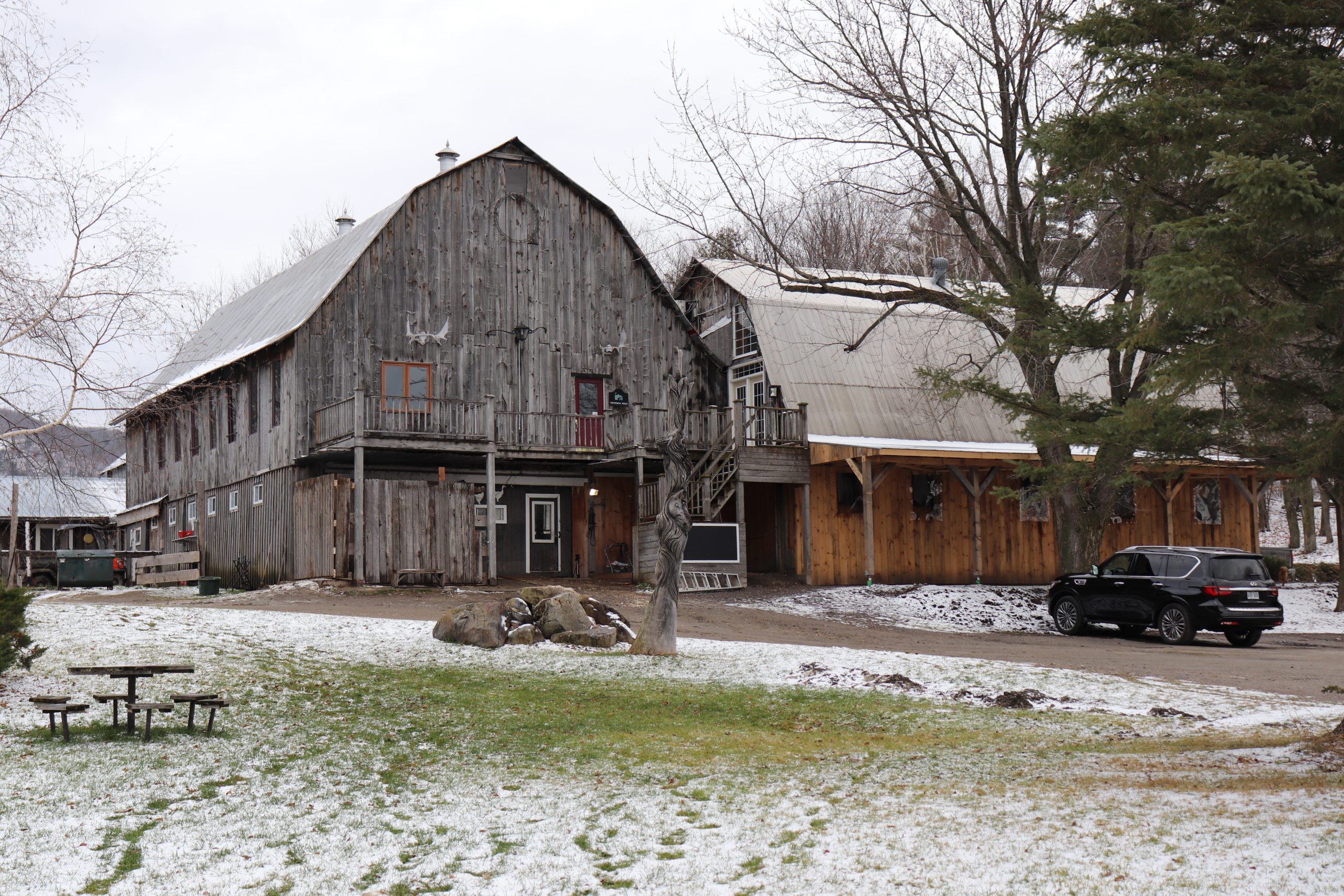
A horse farm in Luskville has been working around the clock after being struck by a deadly equine virus.
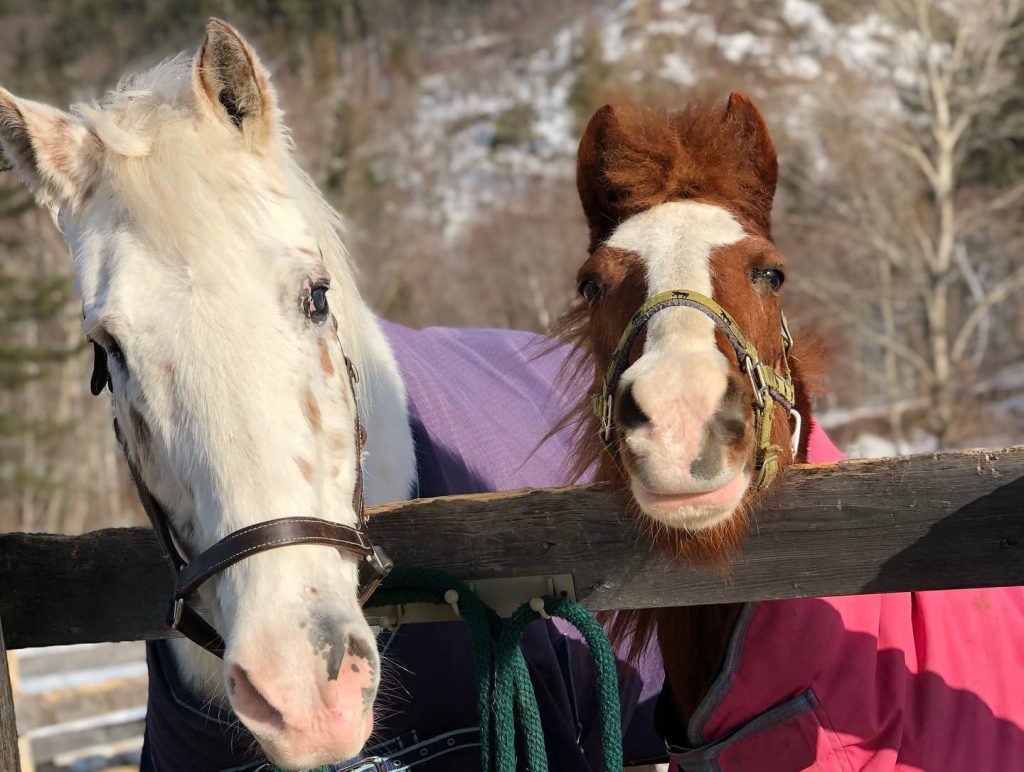
For the past month, Venturing Hills Farm has been battling an outbreak of equine herpesvirus 1 (EHV1), the neurological strain of a respiratory disease, which co-owner Rae Becke says is very similar to COVID-19.
The first appearance of the virus occurred on Feb. 3 involving a five-year-old quarter horse named Eddie, who began acting strangely.
“I was working night check and went to take one of our horses out to the paddock. And he walked out of the stall as if he was drunk,” Becke recalled. “He walked out and he wasn’t walking straight. We were trying to go forward, and we were going sideways. And I was like, ‘What is happening? What is going on?’ And immediately I knew something was really off.”
Becke called an emergency vet as well as Eddie’s owner, 18-year-old Sophie O’Connor, who had been saving for years to purchase him and had him for only eight months. Within 20 minutes, Eddie went from a drunken-like walk to needing ropes and seven staff members to support him, and ten minutes after that he could no longer stand and lost bladder control.
They made the difficult decision to let him go.
With the sudden symptoms Eddie had shown, their vet suggested a test be administered to determine the cause. The test came back positive for EHV1.
Becke believes the virus was transmitted through a new horse that was brought in from a farm in Toronto, where they are also experiencing an outbreak of the virus. The Toronto farm lost their first horse to EHV1 on Jan. 29, five days prior to the loss of Eddie, but did not inform Venturing Hills of their situation. Eddie shared a paddock with the new horse.
“I found out through social media it was them. The infection had really probably already spread around to most of the horses on the farm. There was no chance that we could take precautionary measures to contain it like we could have done days earlier if we’ve just been notified,” Becke explained. “So unfortunately at that point, we tried our best to quarantine any horses that were healthy.”
This included installing plastic shields between the stalls to try to prevent transmission. More recently, new quarantine stalls are being constructed on the property to keep the horses distanced. All staff must also wear biohazard suits, whether caring for infected or healthy horses. According to Becke, humans are more likely to spread the virus than anything else.
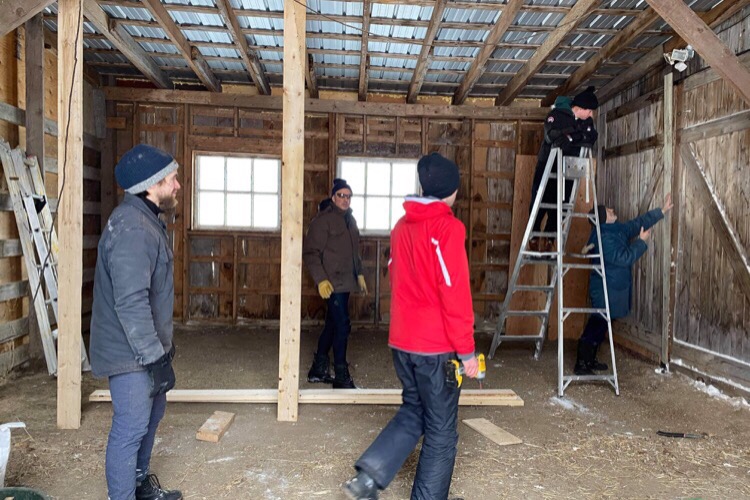
Currently, three horses at Venturing Hills Farm have passed away. They now have 14 sick horses, three asymptomatic and five healthy horses that are being isolated. Becke and her partner and co-coach Brodie Seabrook are taking care of the sick horses. They have help from Jamie and Jessica, who traveled from Waterloo and Orleans when they saw a call for help online.
Sophie O’Connor, Eddie’s owner, has also joined the fight to help ensure no more horses fall victim to the virus.
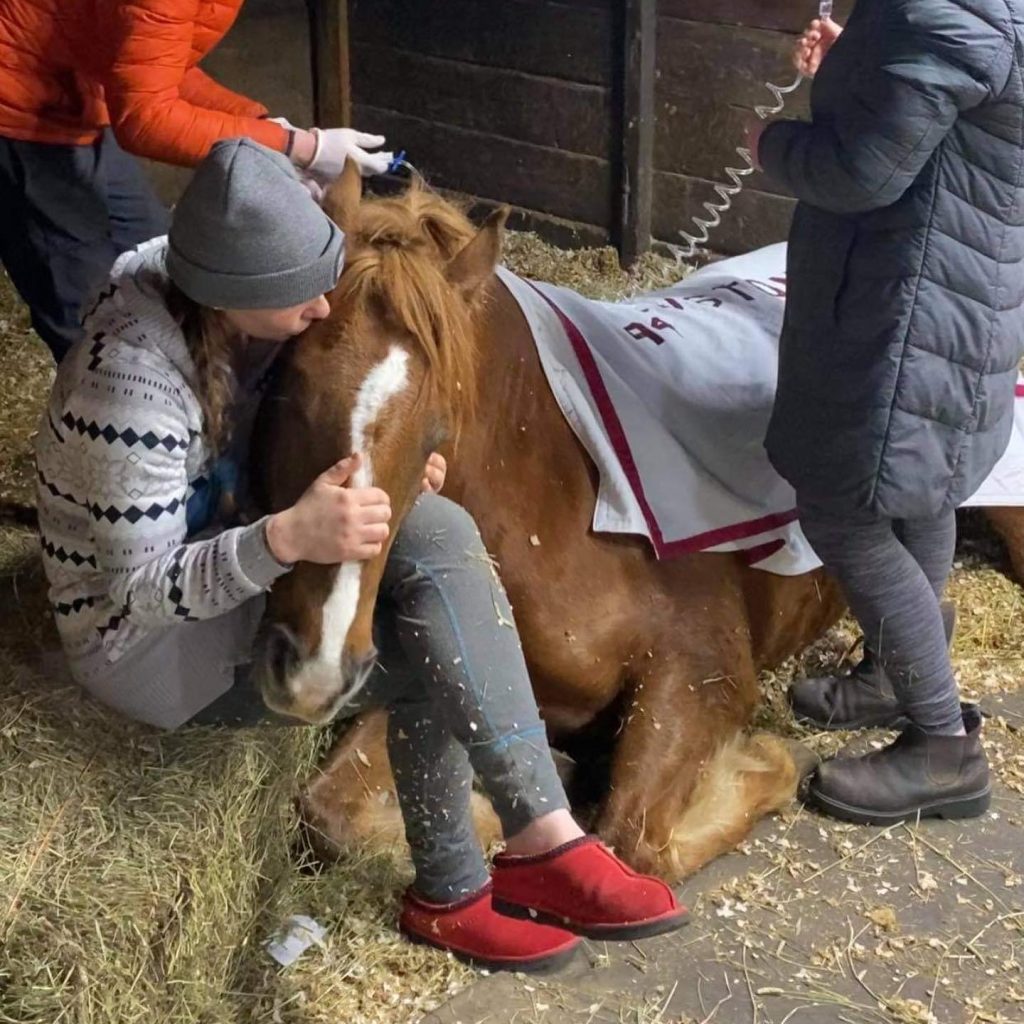
“As soon as she lost her horse, she was back here, 24 hours later. And she hasn’t left and is fighting with everything she has to protect and save all the other horses on the farm, including her family’s three, four other horses that they own.”
The staff are onsite nearly 24 hours a day, undergoing a gruelling routine of treatment preparation and administration. Becke lives on the farm, but rarely leaves the barn due to the round-the-clock care needed. On top of that, the treatment for each horse does not come cheap.
Every two hours, the team records the temperature of the horses and informs their owners and the vet of their status. They get antiviral pills three times a day which costs $2,000 per horse. Sick horses require a blood thinner called heparin to keep them from going neurologic, which are $80 each and each horse needs six shots. They also receive aspirin every 12 hours, and anti-inflammatories to keep spiking fevers down. Because the anti-inflammatories can cause ulcers and colic, which horses are prone to, they must also ingest a gastric product to prevent it.
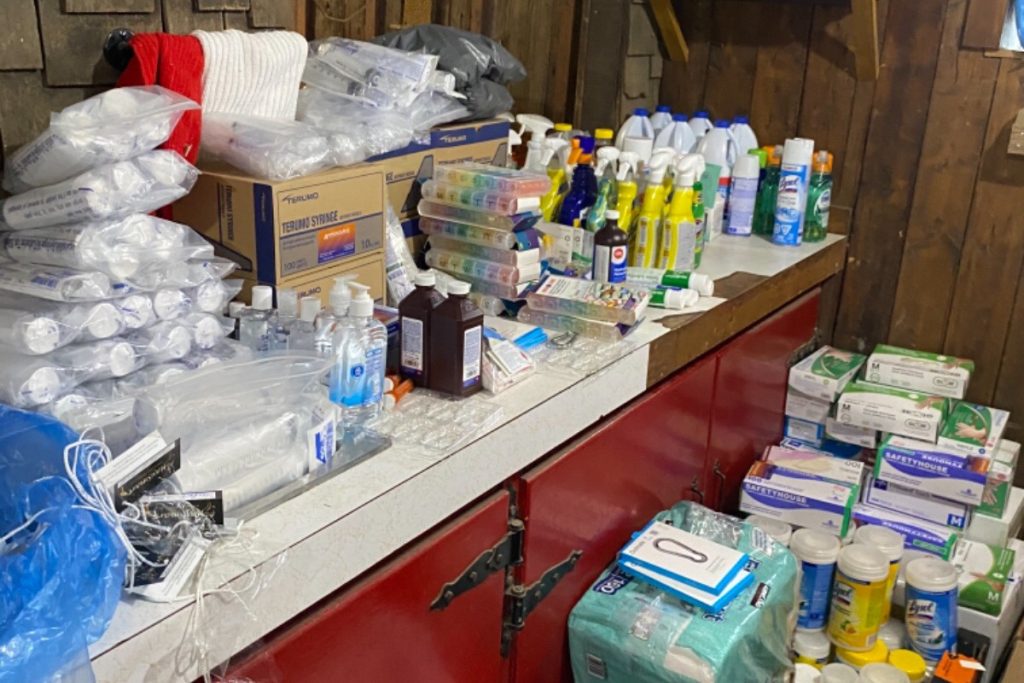
Additionally, the anti-inflammatories are hard on horses’ kidneys if they don’t drink, which they don’t do when they are ill. The team prepares hay pellets with water and salt to keep them hydrated. If any animal shows neurological symptoms, they are put on an IV and receive additional shots.
However, even after all the careful treatment, recovery is not guaranteed, as was the case with the second horse they lost, Iris.
“We administered every single possible potential care that we could for the horse since the first couple of hours of any symptoms that she had. She fought for four days and she was doing really well. We honestly thought she was going to be okay; she’d gotten fluids and everything that she needed,” Becke recalled. “And then it just happened so fast, like in a couple of hours, when the virus reaches their brain. You just never see something changed so fast … They don’t understand what’s happening. They can’t really process what’s going on anymore and everything just fades away in hours.”
In spite of the grim situation, Venturing Hill Farm has not had to brave it alone. News of the situation prompted a significant outpouring of support from the community within and outside of the Pontiac. The farm has received everything from a warm meal and new pairs of socks to whole shipments of medicine and sanitization products. Someone even helped with Becke’s laundry, which she said was greatly appreciated.
A GoFundMe page was set up with the initial goal of $10,000. It has now raised over $77,000 of its $100,000 goal with 950 backers at the time of publication. The campaign can be found here: https://tinyurl.com/d61z3hwx
“Any kind of food you can imagine has been brought to us. The amount of support that we have, it will bring me to tears if I talk about it too much more because we’re fighting and we’re fighting and we’re fighting inside,” said Becke. “It’s really depressing in the barn when you see how sick all the horses look. And then when we take a second to just lift our heads and try to catch our breath. We see how much support we have and it like it renews our energy to keep fighting.
“It is literally like living a nightmare,” Becke expressed. “But when we see the amount of people that are rooting for us … and we see the people who have lost their horses still here fighting for all those that are healthy. I mean, you can’t not try your 100% when you have that kind of backing going for you.”