





J.D. POTIÉ
QUYON Feb. 23, 2020
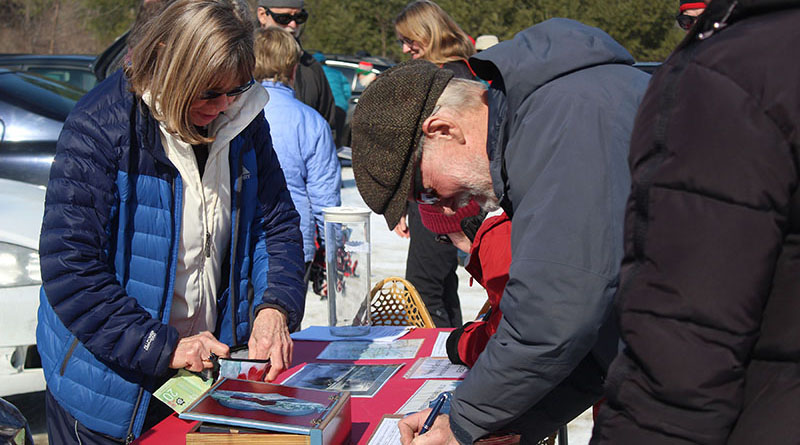
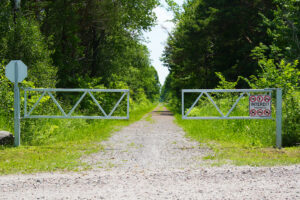
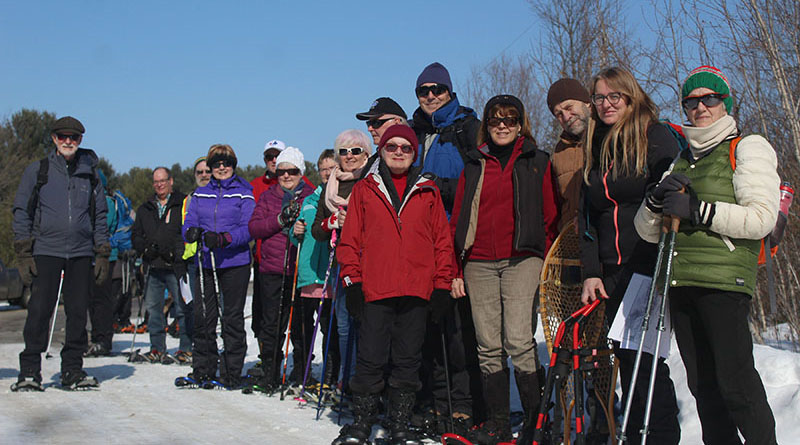
A group of over 30 people from the region gathered on Chemin du Canal in Quyon, on Sunday afternoon, for a snowshoe stroll through an ancient horse-drawn railway in the . . .
old Pontiac Village sector.
Organized by the Friends of Chat Falls, the event was an opportunity for people to discover the area that holds countless forgotten gems at just a stone’s throw away from where they live.
The event consisted of a two-hour, near-three km snowshoe walk with four stops in between.
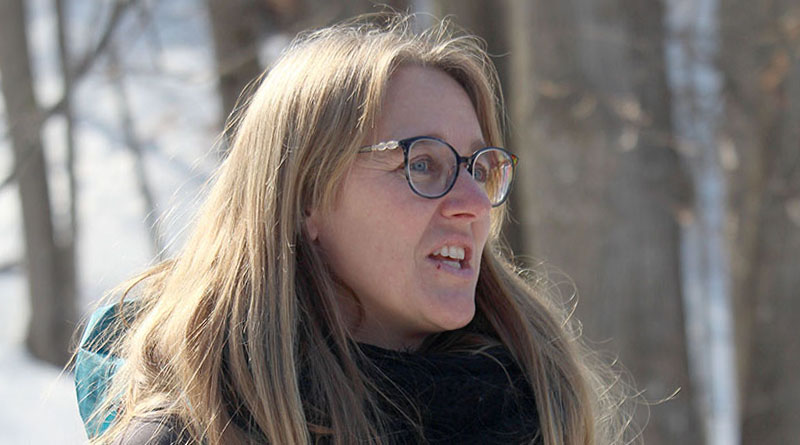
Led by Friends of Chat Falls secretary Robert Baser and board member Maude-Emmanuelle Lambert, both offered bilingual historical interpretations of the significance of certain parts of the area throughout the event.
According to Lambert, the walk allowed people to roam where once stood all sorts of indigenous campgrounds, portages and forestry infrastructures that played a big role in paving the way for the development of the region in its early years.
“Just a couple of steps away from home there are all sorts of little treasures in the Outaouais,” she said. “We’re really on an exceptional site in the Ottawa Valley because it’s like a small-scale reproduction of our history.”
“We’re very lucky to be able to raise awareness to preserve that heritage that has been a bit forgotten with time,” she added. “It’s important to remind people that it’s there and that this town was once a booming town of importance for people in the Ottawa Valley. People like Ruggles Wright and John Egan who built the region and even before that it was an incredible area of passage. It’s what allowed people to get into the landmass.”
The first stop was at a location where the Pontiac Village docks used to be, to give attendees an idea of where and how people landed their boats in the region and embarked on the horse-drawn railway.

The second stop was at the entrance of the canal – an area typically only visible by canoe in the summer – where participants visited a location where once stood an old water-powered saw mill owned by Pontiac pioneer John Egan, built in 1854.
For their third stop, the group headed behind the saw mill to check out a large basin where wood-workers used to store logs once they arrived at the site.
The fourth and final stop was at an ancient indigenous portage in the Pontiac Bay that was used long before Europeans settled in the region.
According to Baser, one of the most important things to appreciate about the adventure is the impact that indigenous Canadians have had on Canada’s development, to be conscious about treating them with respect.
“If they weren’t there, we wouldn’t have been able to penetrate into the continent, we wouldn’t have been able to carry on the fur trade and it would have delayed the development of Canada for about another two centuries,” he said. “We have Indigenous peoples to thank for helping Canada become a sovereign nation and supporting its economic well-being since its very moment of birth.”
“We have to be very generous in our thoughts about indigenous peoples and their rights because they helped us in our time of need when we were just trying to settle the North American continent and they invented very innovative technology like the snowshoe and the canoe, which we are paying homage to,” he added. “That’s a very important point with all the disputes going on in British Columbia right now.”