





J.D. POTIÉ
Bristol Feb. 23, 2020
A small group of people from the region convened at Pine Lodge in Bristol on Sunday morning for an interactive workshop on the ins and outs of . . .
show planning, hosted by the 100 Mile Arts Network.
According to Project Manager Kerstin Petersson, the event was part of the organization’s mandate of giving local event organizers the proper skills training to put together well-organized events, with the hope of expanding the number of entertainment avenues in the region.
“A lot of people want to do things but don’t quite know how,” she said. “People want to do fundraising and end up not having made much money because they’re just not organized enough.”
“It’s more for the communities really,” she added. “But the vehicle is of course the arts because they usually want to entertainment too. That’s how it all fits in.”
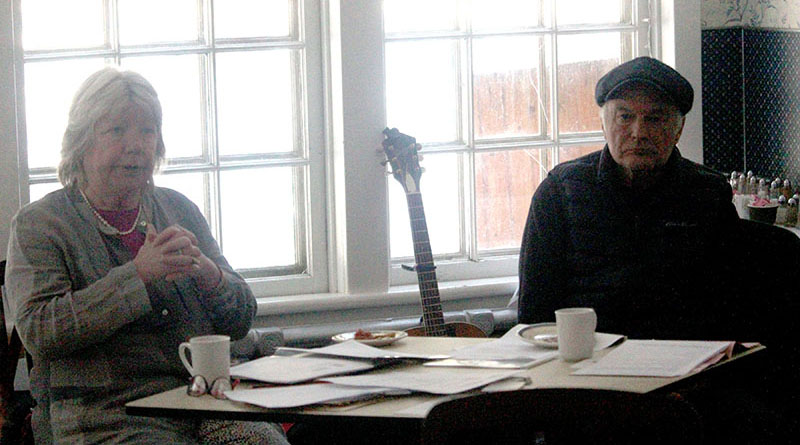
The event was led by Petersson along with an artist with the 100 Mile Arts Network, Ian Tamblyn, who kept the atmosphere relaxed by playing smooth acoustic melodies on his six-string.
While Petersson explained different aspects of event planning from an organizer’s perspective, Tamblyn addressed the topic from the point of view of an artist trying to book a gig.
Petersson opened the event with a word of welcome, thanking everyone for attending before diving into her background with the 100 Mile Arts Network and a 15-year tenure with Theatre Wakefield.
Tamblyn followed up by speaking about the 100 Mile Arts Network’s goal, which is to ultimately cut the divide between the Ottawa and Gatineau Valleys by uniting artists and organizations from both regions.

To keep anyone from going too hungry or thirsty, Pine Lodge offered free coffee along with a wide array of delicious-looking treats, including doughnuts, cookies and chopped fruits.
The event was the second part of a workshop held back in February that explained the fundamentals of event planning, managing and marketing.
This time, the presentation focused on the nuts and bolts that make great events happen, including finding venues, managing budgets and learning how to deal with technological issues.
With most organizing teams consisting of people with different types of responsibilities, Petersson said that the two workshops were very beneficial for event organizers because they collectively encompassed all the aspects needed to make an event successful.
For Tamblyn, the event is very important because it shows people that event organizing is a big task that requires a lot more blood, sweat and tears than some might expect before getting involved in them.
“Just to give you an example, today would start eight months ago, just the plan and working up to it,” he said. “It includes things like contracts, unions, the nitty gritty stuff, the tech stuff, arranging the sound check, what the sound check is. Everything from hospitality and dietary concerns, when you should expect to get paid. Those will all be covered.”