






Farmers have always been known to work long hours tilling their fields, planting crops, cutting hay, harvesting crops and tending their animals. All this while watching the weather and planning their many jobs to fit between rains.
Many years they did a lot of praying for rains when there had been no rain for weeks on end and crops were withering up. When this country was first settled; nearly everyone was either working harvesting the forest, clearing land and planting crops to feed their families and animals. If you were part of the fairer sex, you were looking after your kids and husband and tending a huge garden, making clothes, teaching children and if your husband went to the camp for the winter months to make a few dollars harvesting wood, you also tended the animals.
Large structures like houses and barns were too big a project to do alone and neighbours worked together to do these. The neighbour who had the most experience usually helped the owner plan the size and number of trees to cut to build the structure that was planned.
Early barns and houses were constructed of round logs. That winter, trees would be chosen to be cut by hand because there were no power saws or any other power equipment for our pioneers. When barns started to be larger and built of a frame construction, trees had to be tall, straight and large enough that when they were squared into square timber by hand with axe, broad axe, and adze there would be very little or no wane visible.
These frame barns were skillfully put together with the mortise and tenon method of construction held together with wooden pegs. All these jobs were accomplished with no power and only hand tools. Hand powered boring machines and hand chisels were skillfully used to make the square holes and the wooden pegs were also skived by hand.
The outside cladding was usually one inch boards sawed at a local sawmill. The bigger the trees used to saw into lumber the wider the boards were and the less square nails had to be purchased to nail on the cladding and roof strapping. Early roofs were cedar shingles sawn at a local shingle mill.
In the late 1800s many barns were two story barns with the animals on the ground floor and a loft above was used to store loose hay for feed and straw for bedding the animals. This two story construction became very popular because in the wintery snowy days, the farmer didn’t have to go to another barn to carry hay or straw back to the cow barn. Remember that everything had to be carried with a fork by hand. When feed and straw was above in the loft, farmers only had to open the hay hole and fork the hay or straw to the hole. This was all done under a roof with no rain or snow to make life difficult.
It was when these two story barns became popular that barn dances also became popular to celebrate the many long hours spent by many neighbours cutting trees, squaring and fitting timbers and pulling up the heavy frames all by hands, many hands. It was after the barn floor was down and the roof was finished that a barn dance was held to celebrate completing another fine structure that all were proud of.
Music was no problem because many neighbours played something. Someone could call squares and the whole neighbourhood gathered to dance til the wee hours of the morning. Many farmers arrived with a wee flask under the seat of the buggy.
In 2018, less than two per cent of our population are full time farmers. There are more barns falling down than there are being built. Those old two story barns were built when all feeding, cleaning and even milking was done by hand.
Today most feeding of animals, bedding and cleaning is accomplished while one is sitting in an air conditioned tractor which will not fit into these old barns. Most new barns are only one story barns with a cement floor and barn openings with a party and a dance are a rare occasion.
The biggest barn dance in the valley is held only once a year at Preston and Terry Cull’s farm on the last Saturday night before July first to celebrate Canada day.
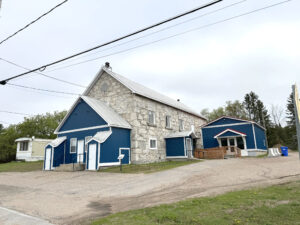
Luckily a few old frame barns in our county have been preserved and most are now used as restaurants, museums,and places where weddings and parties can be celebrated. If you can find an old timer that worked on the construction of one of these old frame barns or even played music at a barn dance, it could be a very interesting conversation.
Chris Judd is a farmer in Clarendon on land that has been in his family for generations. gladcrest@gmail.com