


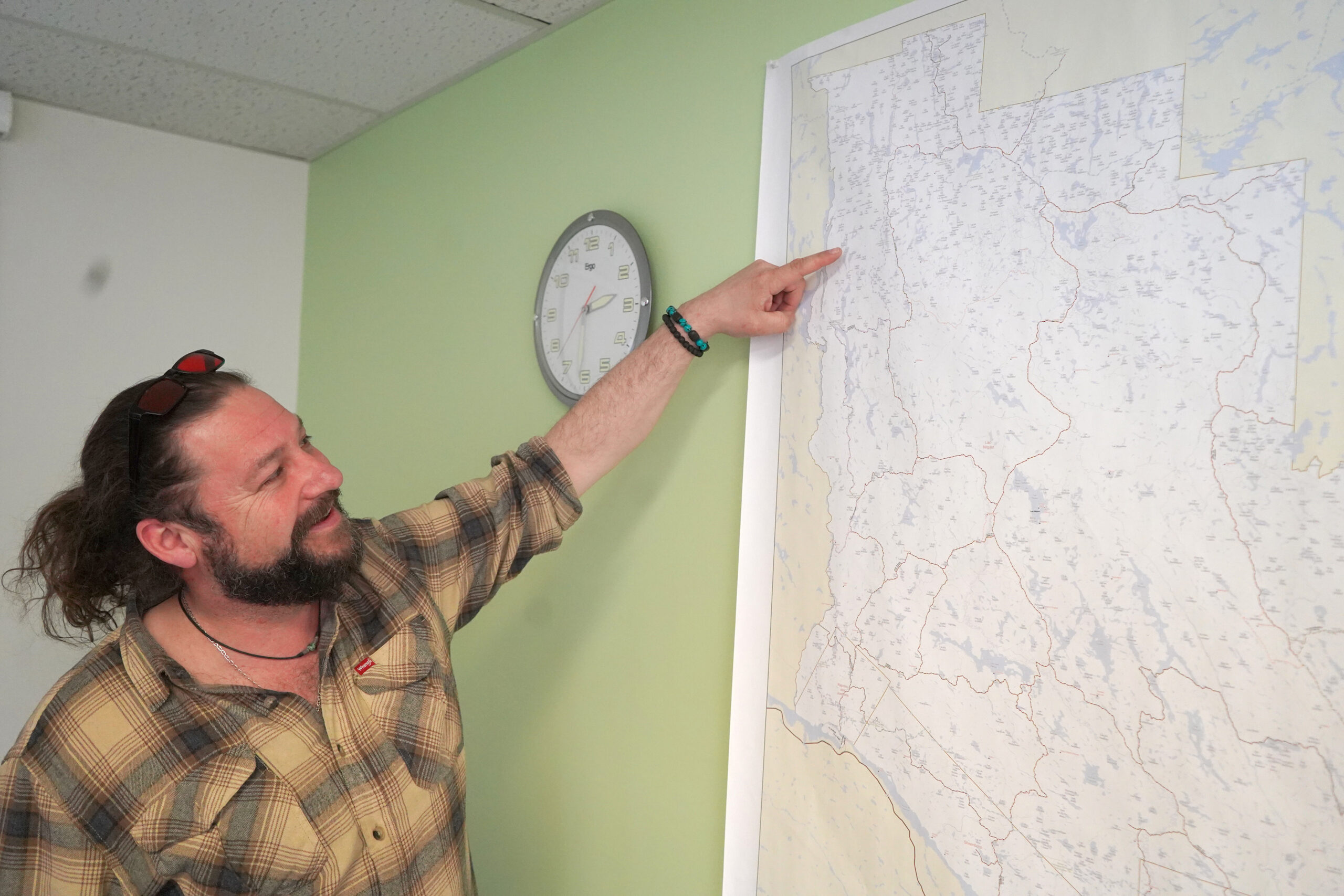



THE EQUITY sat down with two MRC Pontiac employees who spend a great deal of time thinking about and caring for the vast territory, known as the TNO Lac-Nilgaut, that stretches hundreds of kilometers north of this county’s main population centres.
Jason Durand, the MRC’s director of land use planning, and Richard Marenger, one of two regional inspectors, both know the territory like the back of their hand, because their jobs demand it, but also because for decades, they have spent much of their free time on one of its lakes or somewhere in its forests. Here is a condensed version of what they shared.
The TNO Lac-Nilgaut is an 8,646-square-kilometre expanse of wilderness within the borders of MRC Pontiac that stretches from the northern edges of the county’s municipalities all the way up to include a portion of La Vérendrye Wildlife Reserve, north of Maniwaki.
All in, this territory makes up over 70 per cent of the MRC’s land mass, with the remaining land split between the county’s 18 municipalities. It hosts a sprawling network of bush roads, some only fit for a four-wheeler, as well as a few main arteries that are maintained by the MRC.
About half of the territory is crown land, meaning it’s open to public use. About a dozen outfitters and three ZECs cover another third or so of the territory, and the rest of the land belongs to the wildlife reserve, one of the largest in Quebec.
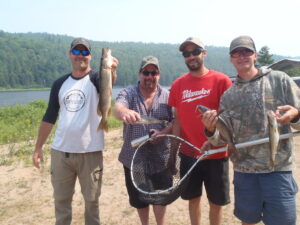
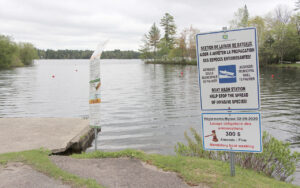
This massive expanse of wilderness is a paradise for hunting, fishing, and outdoor adventure. Anybody can camp on the crown land for free in a tent, or for a small fee (payable to the MRC) if setting up an RV or camper van. In the latter scenario, a permit is also required.
While the TNO (territoire non-organisé) has few permanent residents, it is home to over 1,200 off-grid hunt camps and cottages, some over 100 years old, that have been erected on land leased from the province.
Since 2014, MRCs have been responsible for administering these leases through an agreement with the provincial government that sees the MRC collect 50 per cent of the income collected from lease fees.
This work involves performing property evaluations for taxation purposes, and also tracking down and flagging illegal camps on the territory, set up without a proper lease. This task falls largely to Marenger.
Sometimes he spots one on Google Maps, and will have to venture hours into the TNO to track it down using GPS coordinates. Other times, if he’s lucky, he’ll catch a glimpse of one while he’s already out there on another job.

Once he’s flagged a camp with a special notice, its owner has seven months to remove it from the land without leaving a trace. If this doesn’t happen, the Ministry of Natural Resources adds the camp to the list it plans to burn to the ground come winter.
“There’s a place not far from Danford Lake that has been burned five times, and each time its owner starts to rebuild it,” he laughed.
The MRC also collects a road tax, paid by every lease holder in the TNO as a contribution to the cost of maintaining essential access roads.
Jason Durand, the MRC’s director of land use planning, emphasized the MRC’s budget for the TNO is very limited, especially given how many kilometres of roads would ideally get maintenance.
“There’s thousands and thousands of kilometres of roads,” he said. “So we only focus on the strategic routes, of which there’s about 375 kilometres, so that’s where we invest most of our money.”
Between the revenue from the lease fees, and the property and road taxes paid by lease holders, the MRC collects about $500,000 it puts back into maintaining the roads every year through grading and culvert repair. An additional $250,000 or so a year in provincial grants help with larger projects. This funding can cover basic repairs and upgrades, but when faced with massive washouts like those seen on Jim’s Lake Road this spring, the MRC needs more provincial support.
At war with the beavers
Working with a limited budget, the MRC’s TNO team takes great care to prevent washouts when it can. What this means, in reality, is going to war with the beavers, of which there are many.

Marenger spends at least 60 per cent of his time driving the key roadways to set traps and check whether beavers have built any new obstructions in culverts, and often they have.
If he keeps up with clearing them by hand, he can avoid needing to bring up heavier machinery, which can be costly.
For over a decade, the beaver population has been growing in the region because the price trappers can get for them plummeted. The TNO is divided into 164 traplines – pieces of land, about 40 square kilometres each, where one person, by way of a special lease, has exclusive trapping rights. To maintain a trapline with the government, that person has to catch at least 15 animals a year, and at least five different species.
“Marten and fisher cats, they pay way more and are easier and quicker to skin,” Durand said, as to why beavers have become less popular. “So the beavers, they’re heavy and they don’t pay that much.”
“A few years ago a big beaver cost $20,” Marenger added. “Maybe 60 years ago, you could sell a beaver for $100.”
Both Marenger and Durand have seen their fair share of chaos in the TNO – a car abandoned for years after hitting a moose; lost adventurers staying the night in a parked grader after they failed to find their way home.
“We have so many things to say about the TNO, and we don’t know where to start,” Durand said.
“There’s a lot of honey holes where people will try to keep that to themselves. So that’s part of the culture as well. [ . . . ] We’re just so lucky to have such a big territory that everybody can find their own little fish hole and think they’re the only ones that know about it.”
The Equity s’est entretenu avec deux employés de la MRC de Pontiac qui consacrent beaucoup de temps à réfléchir et à s’occuper du vaste territoire, connu sous le nom de TNO Lac-Nilgaut, qui s’étend sur des centaines de kilomètres au nord des principaux centres de population de ce comté.
Jason Durand, directeur de l’aménagement du territoire à la MRC, et Richard Marenger, l’un des deux inspecteurs régionaux, connaissent tous deux le territoire comme le fond de leur poche, parce que leur travail l’exige, mais aussi parce que, depuis des décennies, ils ont passé une grande partie de leur temps libre sur l’un de ses lacs ou quelque part dans ses forêts. Voici une version condensée de ce qu’ils ont partagé.
Le TNO Lac-Nilgaut est une étendue sauvage de 8 646 kilomètres carrés située à l’intérieur des frontières de la MRC de Pontiac qui s’étend des limites nord des municipalités du comté jusqu’à inclure une partie de la réserve faunique La Vérendrye, au nord de Maniwaki.
Au total, ce territoire représente plus de 70 pour cent de la masse terrestre de la MRC, le reste du territoire étant réparti entre les 18 municipalités du comté. Il abrite un vaste réseau de chemins forestiers, dont certains ne conviennent qu’aux véhicules tout-terrain, ainsi que quelques grandes artères qui sont entretenues par la MRC.
Environ la moitié du territoire est une terre de la Couronne, ce qui signifie qu’elle est ouverte à l’usage public. Une douzaine de pourvoiries et trois ZEC couvrent environ un autre tiers du territoire, et le reste du territoire appartient à la réserve faunique, l’une des plus grandes du Québec.
Cette vaste étendue sauvage est un paradis pour la chasse, la pêche et l’aventure en plein air. N’importe qui peut camper gratuitement sur les terres de la Couronne, sous une tente, ou pour une somme modique (payable à la MRC) s’il installe un VR ou une caravane aménagée. Dans ce dernier cas, un permis est également requis.
Bien que le TNO (territoire non-organisé) compte peu de résidents permanents, il abrite plus de 1 200 chalets et camps de chasse autonomes, certains ayant plus de 100 ans, qui ont été érigés sur des terres louées à la province.
Depuis 2014, les MRC sont responsables de l’administration de ces baux grâce à une entente avec le gouvernement provincial qui prévoit que la MRC perçoit 50 pour cent des revenus tirés des droits de location.
Ce travail implique l’évaluation des propriétés à des fins fiscales, ainsi que le repérage et la signalisation des camps illégaux sur le territoire, installés sans bail approprié. Cette tâche incombe en grande partie à M. Marenger.
Il arrive qu’il en repère un sur Google Maps, et qu’il doive s’aventurer des heures dans le TNO pour le localiser à l’aide de coordonnées GPS. D’autres fois, s’il a de la chance, il en apercevra un alors qu’il est déjà sur le terrain pour un autre travail.
Une fois qu’il a signalé un camp avec un avis spécial, son propriétaire dispose de sept mois pour le retirer du terrain sans laisser de trace. Si cela ne se produit pas, le ministère des Ressources naturelles ajoute le camp à la liste de ceux qu’il prévoit de brûler entièrement à l’arrivée de l’hiver.
« Il y a un endroit non loin du lac Danford qui a été incendié cinq fois, et chaque fois, son propriétaire commence à le reconstruire », a-t-il dit en riant.
La MRC perçoit également une taxe routière, payée par chaque locataire du TNO à titre de contribution aux coûts d’entretien des routes d’accès essentielles.
Jason Durand, directeur de l’aménagement du territoire de la MRC, a souligné que le budget de la MRC pour le TNO est très limité, surtout compte tenu du nombre de kilomètres de routes qui devraient idéalement être entretenues.
« Il y a des milliers et des milliers de kilomètres de routes, a-t-il dit. Nous nous concentrons donc uniquement sur les routes stratégiques, soit environ 375 kilomètres, c’est donc là que nous investissons la majeure partie de notre argent. »
Entre les revenus des droits de location et les taxes foncières et routières payées par les locataires, la MRC perçoit environ 500 000 $ qu’elle réinvestit chaque année dans l’entretien des routes par le nivellement et la réparation des ponceaux. Environ 250 000 $ supplémentaires par an en subventions provinciales aident à la réalisation de projets plus importants. Ce financement peut couvrir les réparations et les améliorations de base, mais face à des affouillements massifs comme ceux observés sur le chemin du lac Jim ce printemps, la MRC a besoin d’un soutien provincial accru.
En guerre contre les castors
Avec un budget limité, l’équipe du TNO de la MRC prend grand soin de prévenir les affouillements lorsque cela est possible. Ce que cela signifie, en réalité, c’est qu’elle est en guerre contre les castors, dont le nombre est considérable.
M. Marenger passe au moins 60 pour cent de son temps à parcourir les routes principales pour poser des pièges et vérifier si les castors ont construit de nouvelles obstructions dans les ponceaux, ce qui est souvent le cas.
S’il continue à les dégager à la main, il peut éviter d’avoir à utiliser de la machinerie plus lourde, ce qui peut être coûteux.
Depuis plus d’une décennie, la population de castors augmente dans la région parce que le prix que les trappeurs peuvent en tirer a chuté. Le TNO est divisé en 164 lignes de piégeage – des parcelles de terre d’environ 40 kilomètres carrés chacune, où une personne, au moyen d’un bail spécial, a des droits de piégeage exclusifs. Pour maintenir une ligne de piégeage auprès du gouvernement, cette personne doit attraper au moins 15 animaux par an, et au moins cinq espèces différentes.
« Les martres et les pékan, ça rapporte beaucoup plus et c’est plus facile et rapide à dépecer, a dit M. Durand, expliquant pourquoi les castors sont devenus moins populaires. Les castors sont lourds et ne rapportent pas beaucoup. »
« Il y a quelques années, un gros castor coûtait 20 $, a ajouté M. Marenger. Il y a peut-être 60 ans, on pouvait vendre un castor pour 100 $. »
M. Marenger et M. Durand ont tous deux été témoins de leur lot de chaos dans le TNO – une voiture abandonnée pendant des années après avoir heurté un orignal; des aventuriers perdus ayant passé la nuit dans une niveleuse stationnée après n’avoir pas réussi à retrouver le chemin de la maison.
« Nous avons tellement de choses à raconter sur le TNO, et nous ne savons pas par où commencer », a dit M. Durand.
« Il y a beaucoup de “coins secrets” que les gens essaient de garder pour eux. Cela fait aussi partie de la culture. [ . . . ] Nous avons tellement de chance d’avoir un si grand territoire que tout le monde peut trouver son petit coin de pêche et penser qu’il est le seul à le connaître. »