





While controlling the spread of the Eurasian milfoil weed may be dominating most invasive species conversations in the Pontiac this summer, there is another aquatic creature of growing concern in the Outaouais region that boaters and anglers should be aware of.
The province’s environment ministry has identified several Pontiac waterways it deems vulnerable to the spread of spiny waterfleas, an invasive species it says can have adverse impacts on local fish populations.
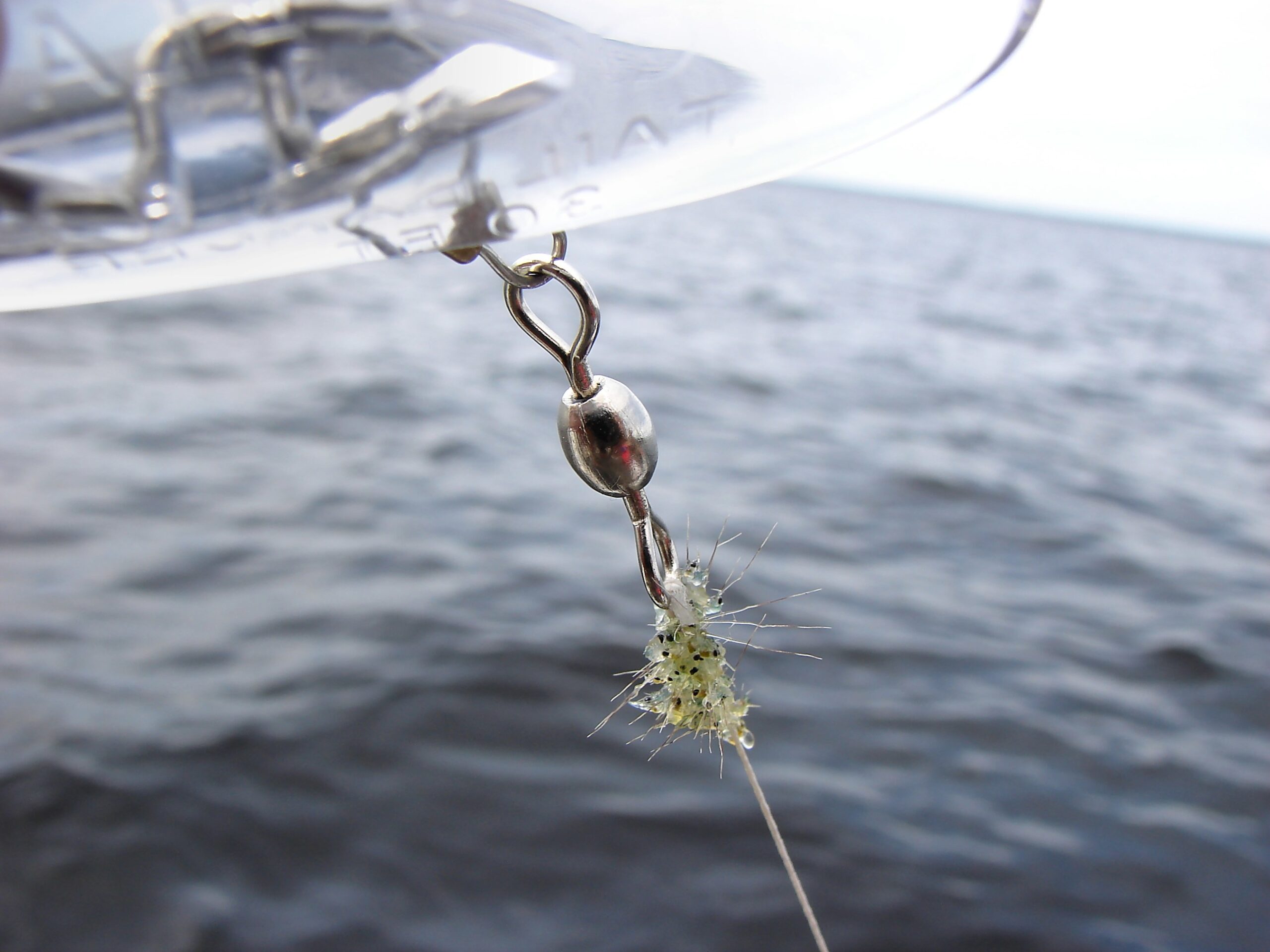
Part of the zooplankton family, these creatures are small crustaceans that can grow up to 1.5 cm in length. They are recognizable by their long spiny tail, which accounts for more than half of their body length. When clumped together, as they often appear in water bodies they have infested, they form a large gelatinous mass, speckled with tiny black dots.
The species competes for food with other zooplankton as well as fish larvae, reducing food availability and potentially affecting fish populations up the food chain in affected waterways.
These water fleas were first found in the Great Lakes in the early 1980s, but they’ve slowly been migrating to other bodies of water in southern Ontario and Quebec.
A 2023 study in Lake Champlain found that spiny waterflea invasions resulted in declines of native zooplankton populations. Researchers have also found the species to compete for food with popular fish species such as lake herring and walleye.
The ministry says the species has already been detected in the Ottawa River system, including in 2021 near Lac McConnell in Rapides-des-Joachims. The species has since been detected in the river at L’Isle-aux-Allumettes, Hull and Aylmer.
In Sept. 2024 the species was detected in the Baskatong reservoir by a fisher, leading to a complete inventory of the reservoir to better gauge its presence. Desrosiers wrote that the study will yield needed data on how the species evolves in the second and third year of its establishment. This year, the ministry will also conduct an inventory of the species along the Gatineau River, into which the Baskatong Reservoir flows.
“We judge that the species is probably present along the entire Ottawa River,” wrote ministry spokesperson Eve Morin Desrosiers.
The species is commonly spread by pleasurecrafters and fishers as they transfer unwashed vessels and equipment from one body of water to another.

In the Pontiac, the ministry has not confirmed widespread presence but has identified several lakes considered particularly vulnerable, including Leslie Lake, Johnson Lake, Usborne Lake, Lac à la Truite, Lac Jim, Lac Galarneau, Lac Dumont and Lac Lynch, given their popularity among pleasurecrafters and fishers.
“The lakes that are most at risk for propagation of the spiny waterflea are the lakes that are the most accessible and most frequented. The risk comes primarily from pleasurecrafters that move from a contaminated zone to the lakes of the Outaouais without properly washing their boat,” wrote Morin Desrosiers.
Ottawa Riverkeeper warns that in the past five years, invasive aquatic species have become more common throughout the watershed. A 2025 report on invasive species in the watershed found a large number of sightings in the Madawaska and Mississippi rivers, both tributaries of the Ottawa.
“Since they are nearly impossible to eliminate once established, invasive species prevention and early detection are key to preventing long-term ecological and economic impacts,” the report reads.
Ottawa Riverkeeper, as well as the Quebec environment ministry, are reminding boaters to clean their boats, gear and fishing equipment as a way to protect waterways. The ministry advises to inspect all gear that has touched the water and remove any organisms that are attached to it, then empty any water before leaving the vessel.
Boat-washing stations in the Pontiac are located in Otter Lake (15 av. Palmer), Alleyn-et-Cawood (10 ch. Jondee) and Sheenboro (4 ch. Schyan).