





As students return to school across the Pontiac this week, they will be forced to adapt to what, for some, may feel like a new world order, as they will no longer be allowed to use their cellphone on school grounds or during school hours.
This is because the province’s complete school cellphone ban, first announced in the spring, is now in effect.
The recommendation for a full ban was made by a special government committee that studied the impact of cellphones and social media on the health and development of young people.
It was one in a series of measures from the minister, all designed to “provide students and school teams with a safe, respectful environment where bullying and violence have no place,” according to the press release announcing these changes.
While the policy’s details were at first ambiguous, leaving students, educators and parents apprehensive as to what the ban would actually look like, the Ministry of Education has since provided greater clarity on where cell phones are allowed, and where they are not.
Simply put, students are not allowed to have their devices on them during the school day. Cellphones, if brought to school, need to stay in the student’s locker, and cannot be used during the lunch period.
“Students are allowed to bring them into the school, but they must remain in their locker for the duration of the school day,” reinforced Pontiac High School (PHS) principal Luke McLaren.
“We were quite afraid that they wouldn’t be allowed to have them on the bus. [ . . . ] A number of our students have very long bus rides, and that was an area of concern that we had identified,” he explained, noting he was relieved to learn phones were in fact allowed on school buses.
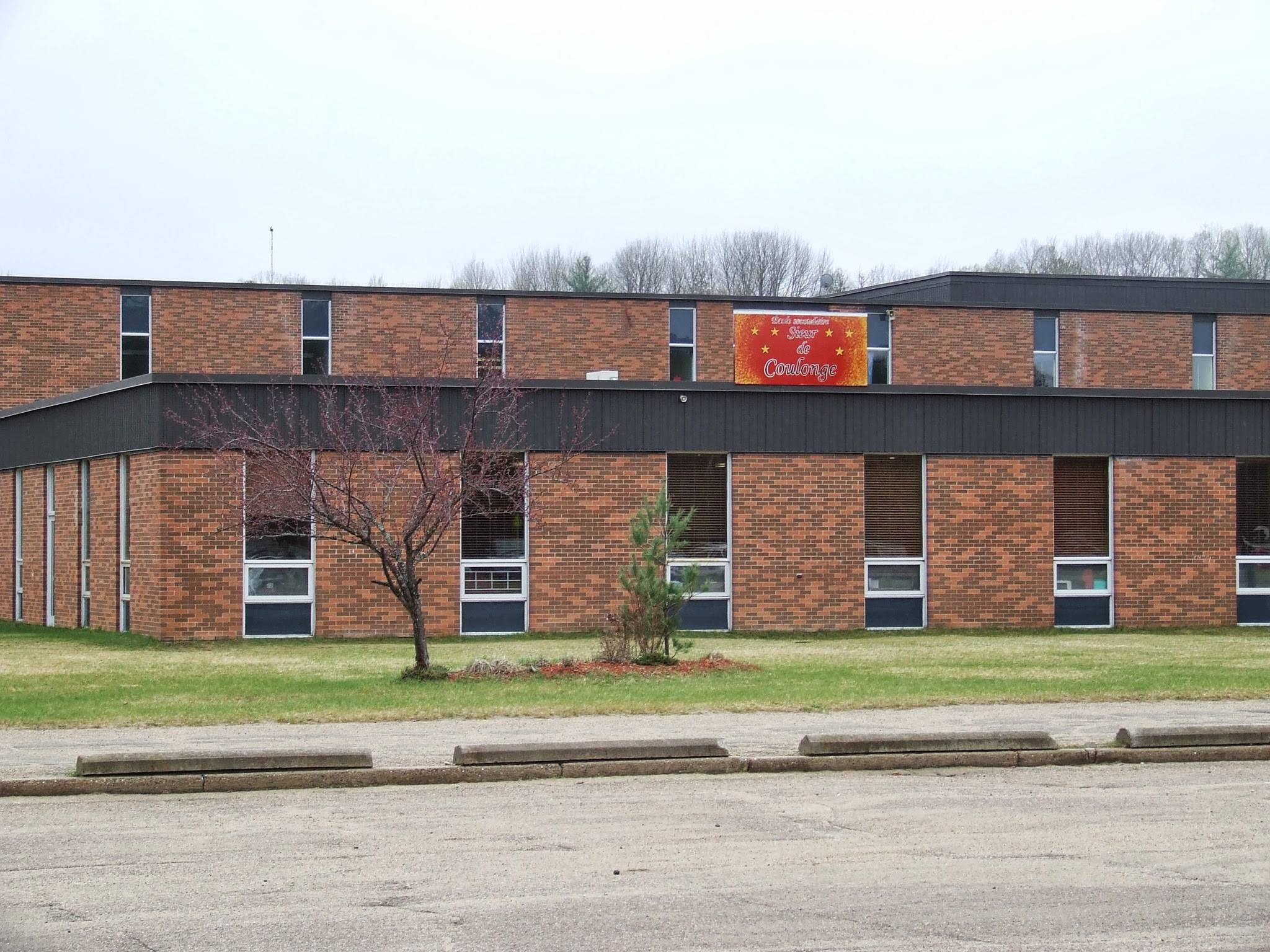
The Centre de services scolaire des Hauts-Bois-de-l’Outaouais, which runs École secondaire Sieur de Coulonge (ESSC) provided further details as to what the ban would involve in its schools.
Like at PHS, the use of cellphones and electronic devices is prohibited in all schools, students may keep their devices with them, but they must be turned off and stored in a bag or locker as soon as they arrive at school, and use is permitted only for educational purposes.
Exceptions related to special health or learning needs may be authorized by the school administration. On school buses, ESSC students may keep their devices with them, but they must remain turned off and may not be used to film, photograph, or broadcast content under any circumstances.
Joel Westheimer, a professor of education at the University of Ottawa, said while he is usually against top-down education policies, he supports this ban.
“The devices are too addictive, damaging to mental health, [and] academic achievement,” he said. “Top-down policies also give teachers cover rather than making them be the ‘bad guy’. There is also an epidemic of loneliness and cellphone and social media use has been shown to be implicated.”
Implementation questions
While supportive of the ban, Westheimer said thoughtfulness in how it is applied is still critical.
“Don’t make the ban punitive. It shouldn’t be the equivalent of metal detectors at the front door,” he said.
“Ideally, schools would hold community discussions on the bans and talk with students about what kind of community they want the school to be. [ . . . ] Talk about friendships and loneliness. Admit how addicted adults are too! It’s a broad society-wide problem.”
He also warned against implementing policy without introducing other reforms that would help build relationships between teachers and students and build friendships between students.
“It’s important to not ignore the role of social media in social connection – schools have to replace that with something.”
McLaren acknowledged the need for the school to offer alternative modes of connection for students during the lunch hour.
“The key for us is I think we really have to look at unstructured time, to make sure we have robust activities as an alternative to cellphones.”
He said while he appreciated the policy is clearer, and is in fact more or less aligned with a cellphone policy PHS’s own governing board had adopted in May of this year, there is still work to be done on how exactly the ban will be implemented.
“I do have some questions in my mind in terms of implementation,” he said. “So I’m going to be working with teachers, students, and the governing board, to come up with a plan for that. But as we do with every policy, I hope a plan would be in place where education would be the first and foremost on our minds, so if a student wasn’t complying, a conversation would hopefully be the place where a teacher, or me as a principal would start.”
Alors que les élèves reprennent le chemin de l’école dans le Pontiac cette semaine, ils devront s’adapter à ce qui, pour certains, pourrait ressembler à un nouvel ordre mondial, puisqu’ils ne seront plus autorisés à utiliser leur téléphone cellulaire sur le terrain de l’école ou pendant les heures de classe.
Ceci est dû au fait que l’interdiction complète des téléphones cellulaires dans les écoles de la province, annoncée pour la première fois au printemps, est maintenant en vigueur.
La recommandation d’une interdiction complète a été formulée par un comité gouvernemental spécial qui a étudié l’impact des téléphones cellulaires et des médias sociaux sur la santé et le développement des jeunes.
C’était l’une d’une série de mesures du ministre, toutes conçues pour « offrir aux élèves et aux équipes-écoles un environnement sécuritaire et respectueux où l’intimidation et la violence n’ont pas leur place », selon le communiqué de presse annonçant ces changements.
Alors que les détails de la politique étaient d’abord ambigus, laissant les élèves, les éducateurs et les parents dans l’incertitude quant à ce à quoi l’interdiction ressemblerait réellement, le ministère de l’Éducation a depuis apporté de plus grandes précisions sur les endroits où les téléphones cellulaires sont permis et ceux où ils ne le sont pas.
En termes simples, les élèves ne sont pas autorisés à avoir leurs appareils sur eux pendant la journée scolaire. Les téléphones cellulaires, s’ils sont apportés à l’école, doivent rester dans le casier de l’élève et ne peuvent pas être utilisés pendant la période du dîner.
« Les élèves sont autorisés à les apporter à l’école, mais ils doivent rester dans leur casier pendant toute la durée de la journée scolaire », a rappelé Luke McLaren, directeur de l’école secondaire Pontiac High School (PHS).
« Nous craignions qu’ils ne soient pas autorisés à les avoir dans l’autobus. [ . . . ] Plusieurs de nos élèves ont de très longs trajets en autobus, et c’était une source d’inquiétude que nous avions identifiée », a-t-il expliqué, notant qu’il était soulagé d’apprendre que les téléphones étaient en fait autorisés dans les autobus scolaires.
Le Centre de services scolaire des Hauts-Bois-de-l’Outaouais, qui gère l’École secondaire Sieur de Coulonge (ESSC), a fourni de plus amples détails sur ce que l’interdiction impliquerait dans ses écoles.
Comme à la PHS, l’utilisation des téléphones cellulaires et des appareils électroniques est interdite dans toutes les écoles, les élèves peuvent garder leurs appareils avec eux, mais ils doivent être éteints et rangés dans un sac ou un casier dès leur arrivée à l’école, et leur utilisation n’est permise qu’à des fins éducatives.
Des exceptions liées à des besoins particuliers en matière de santé ou d’apprentissage peuvent être autorisées par la direction de l’école. Dans les autobus scolaires, les élèves de l’ESSC peuvent garder leurs appareils avec eux, mais ils doivent rester éteints et ne peuvent en aucun cas être utilisés pour filmer, photographier ou diffuser du contenu.
Joel Westheimer, professeur en éducation à l’Université d’Ottawa, a déclaré que bien qu’il soit généralement contre les politiques éducatives descendantes, il soutient cette interdiction.
« Les appareils sont trop addictifs, nuisibles à la santé mentale [et] au rendement scolaire », a-t-il affirmé. « Les politiques descendantes offrent également une protection aux enseignants plutôt que de les faire passer pour les “méchants”. Il y a aussi une épidémie de solitude et l’utilisation des téléphones cellulaires et des médias sociaux s’est avérée être impliquée. »
Questions d’implantation
Bien que favorable à l’interdiction, M. Westheimer a souligné que la réflexion sur la manière dont elle est appliquée reste cruciale.
« Ne rendez pas l’interdiction punitive. Cela ne devrait pas être l’équivalent de détecteurs de métaux à l’entrée », a-t-il dit.
« Idéalement, les écoles organiseraient des discussions communautaires sur les interdictions et parleraient avec les élèves du type de communauté qu’ils souhaitent que l’école soit. [ . . . ] Parlez d’amitiés et de solitude. Admettez à quel point les adultes sont également dépendants ! C’est un vaste problème à l’échelle de la société. »
Il a également mis en garde contre la mise en œuvre de politiques sans introduire d’autres réformes qui aideraient à bâtir des relations entre les enseignants et les élèves et à tisser des liens d’amitié entre les élèves.
« Il est important de ne pas ignorer le rôle des médias sociaux dans la connexion sociale – les écoles doivent remplacer cela par quelque chose. »
M. McLaren a reconnu la nécessité pour l’école d’offrir des modes de connexion alternatifs aux élèves pendant l’heure du dîner.
« La clé pour nous, je pense, est que nous devons vraiment examiner le temps non structuré, pour nous assurer que nous avons des activités solides comme alternative aux téléphones cellulaires. »
Il a déclaré que s’il appréciait que la politique soit plus claire et qu’elle soit en fait plus ou moins alignée sur une politique de téléphone cellulaire que le conseil d’administration de la PHS avait adoptée en mai de cette année, il restait encore du travail à faire sur la manière exacte dont l’interdiction serait mise en œuvre.
« J’ai quelques questions en tête en ce qui concerne l’implantation », a-t-il dit. « Je vais donc travailler avec les enseignants, les élèves et le conseil d’administration pour élaborer un plan à cet effet. Mais comme nous le faisons avec chaque politique, j’espère qu’un plan sera mis en place où l’éducation sera la première et la plus importante de nos préoccupations, donc si un élève ne se conformait pas, une conversation serait, espérons-le, le point de départ pour un enseignant ou moi-même en tant que directeur. »