



Quyon’s United Church joined the village’s year-long 150th anniversary celebrations on Saturday by hosting a tour of the town’s rich built heritage.
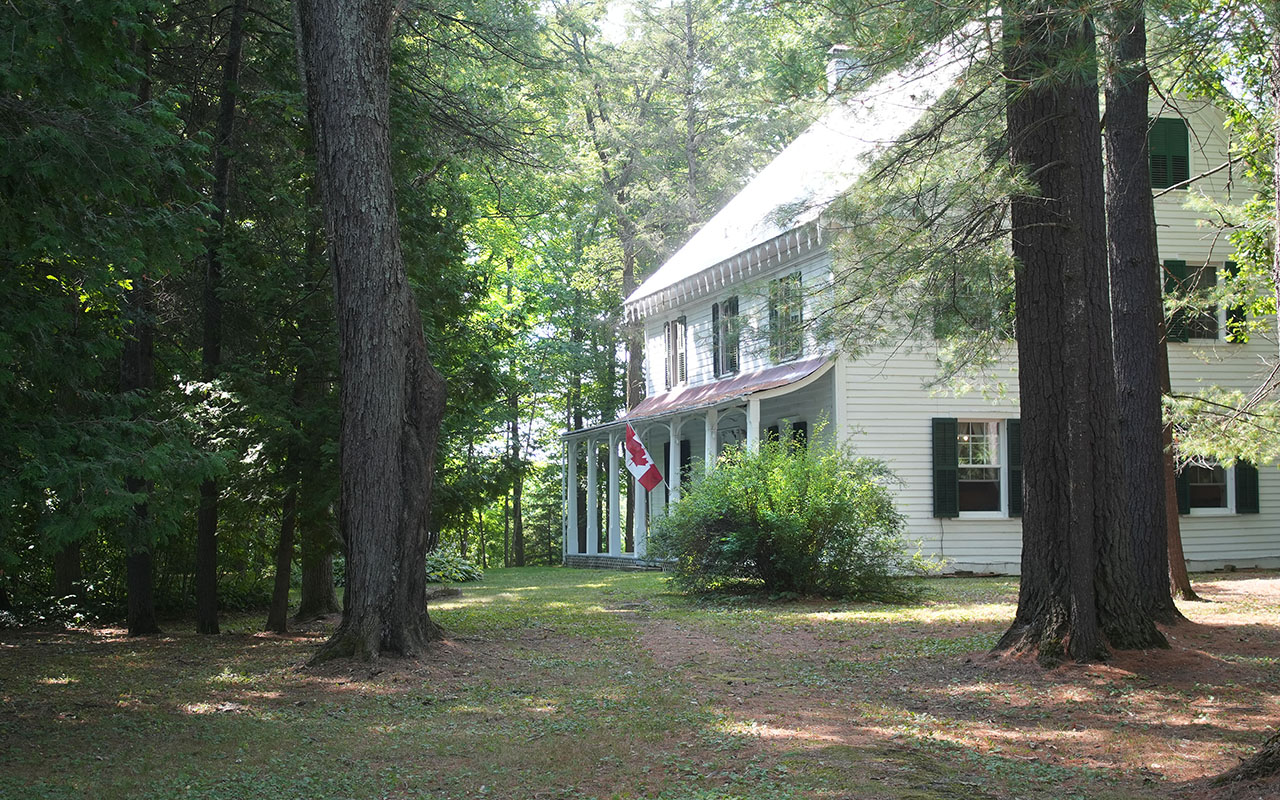
The self-guided tour featured stops at some of Quyon’s most notable sites, including the Egan Mill near the Quyon River and the Mohr House on Clarendon Street, where visitors were invited to tour the grounds and interior.
Nearby garden owners Eric and Katharine Fletcher, as well as Elwyn Lang and Heather Barr also opened their gardens to the public for tours as part of the event.
Organizer Elizabeth Young said the inclusion of the Mohr House offered a rare chance to peek inside one of Quyon’s oldest buildings.
“We decided, as another historical site in town, that we would ask them if we could also welcome people to go through there, and they were more than happy to accommodate us,” she said.
The Mohr House was built in 1862 by Walton Smith, assistant to lumber baron John Egan who later served as mayor of Onslow, mayor of Quyon and as warden of Pontiac County. In 1873 it was sold to William Mohr, son of pioneer John C. Mohr. The home has remained in the Mohr family as a summer residence for generations.
Jan Vuori and Liz Wichman, Mohr’s descendants and summer residents of the home, said it was a no-brainer for them to join the tour when members of the church approached them about the event.
“We had a connection to the church, and also we thought it would be a good idea for the town to be able to [see the house],” Wichman said.
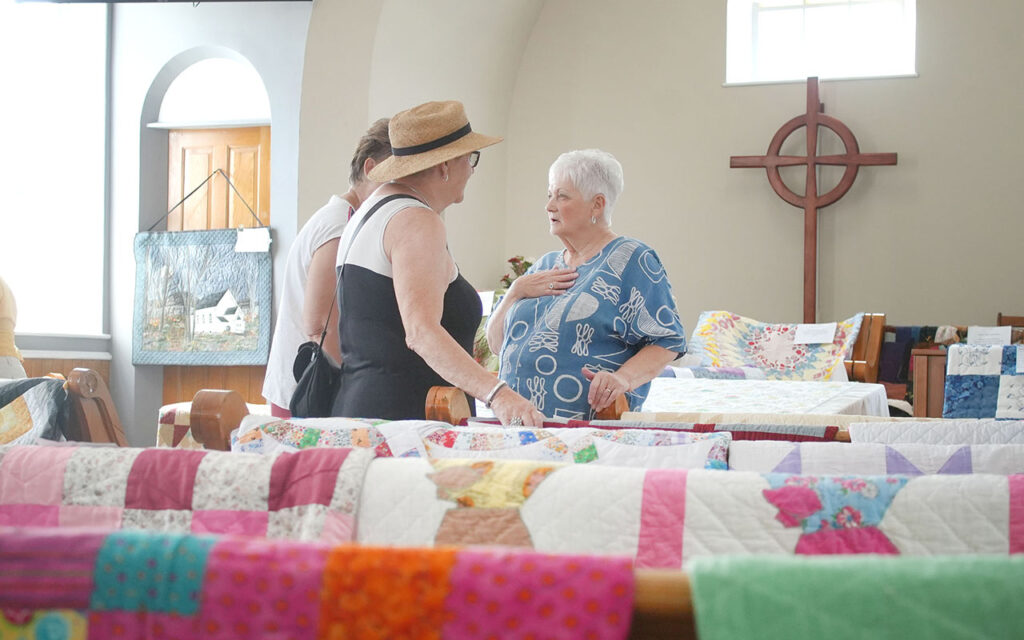
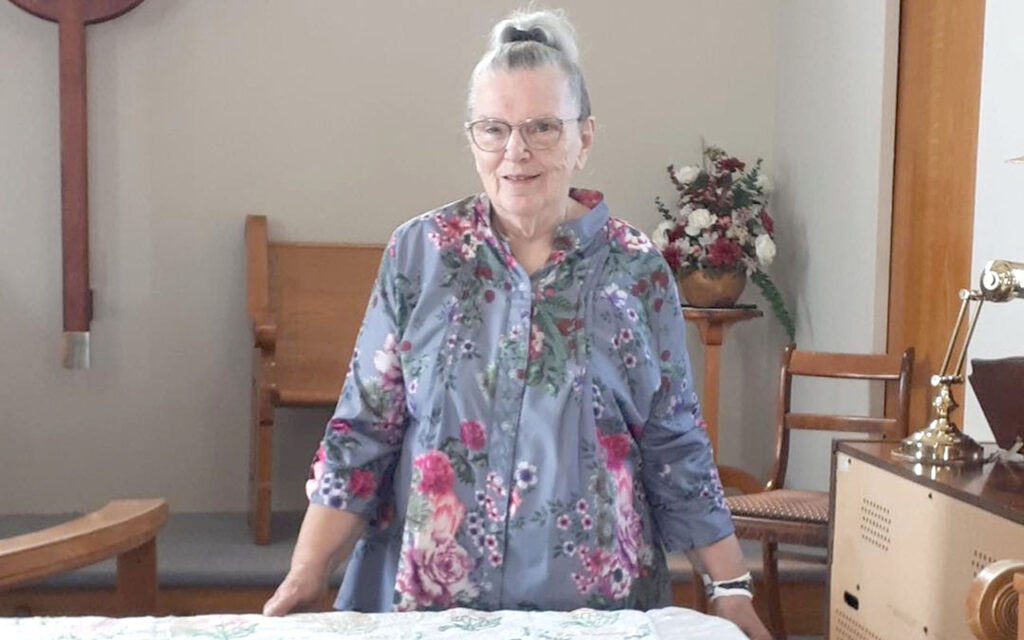
Saturday morning at the United Church, volunteers had a different kind of history on display – an array of quilts made by women in the community, draped over the pews.
One red-and-white quilt dated to the late 1800s. “It’s unique, it’s all handwork,” said Linda Hobbs, a local quilting expert who was able to identify the quilt as being made in the Hawaiian style.
“They’re not common today,” she said.
Another quilt, made in 1975 for the United Church’s 50th anniversary, features 84 embroidered squares, each made by a different woman in the congregation.
Young said most of the quilters have been identified, but about 10 remain unknown because the stitchwork is not clear enough to make out the names.
“We’re hoping family members might help us to identify the blocks,” she said.
Young said the thinking behind displaying the quilts was to show off the contributions women have made to the community and the church over the years.
“It’s the 150th anniversary of Quyon, and it’s the 100th of the United Church [of Canada], so we thought, ‘why not show off some of the quilts?”
Young said the United Church’s resiliency in Quyon has remained strong compared to other congregations in the area that may have lost members.
“We have more young people than most churches, and about 30 years ago we combined services in Quyon instead of splitting with Beechgrove. That’s helped us stay strong.”
L’Église Unie de Quyon a participé aux célébrations du 150e anniversaire du village, qui durent toute l’année, en organisant samedi une visite du riche patrimoine bâti de la ville.
La visite autoguidée comprenait des arrêts à certains des sites les plus remarquables de Quyon, y compris l’Egan Mill près de la rivière Quyon et la maison Mohr sur la rue Clarendon, où les visiteurs ont été invités à visiter les terrains et l’intérieur.
Les propriétaires de jardins voisins, Eric et Katharine Fletcher, ainsi qu’Elwyn Lang et Heather Barr, ont également ouvert leurs jardins au public pour des visites dans le cadre de l’événement.
L’organisatrice Elizabeth Young a déclaré que l’inclusion de la maison Mohr offrait une rare occasion de jeter un coup d’œil à l’intérieur de l’un des plus anciens bâtiments de Quyon.
« Nous avons décidé, en tant qu’autre site historique de la ville, de leur demander si nous pouvions également accueillir des gens pour visiter les lieux, et ils ont été plus qu’heureux de nous accommoder », a-t-elle déclaré.
La maison Mohr a été construite en 1862 par Walton Smith, adjoint du baron du bois John Egan, qui a ensuite été maire d’Onslow, maire de Quyon et préfet du comté de Pontiac. En 1873, elle a été vendue à William Mohr, fils du pionnier John C. Mohr. La maison est restée dans la famille Mohr comme résidence d’été pendant des générations.
Jan Vuori et Liz Wichman, descendants de Mohr et résidents d’été de la maison, ont déclaré qu’il était évident pour eux de se joindre à la visite lorsque des membres de l’église les ont approchés pour l’événement.
« Nous avions un lien avec l’église, et nous avons également pensé que ce serait une bonne idée pour la ville de pouvoir [voir la maison] », a déclaré Mme Wichman.
Samedi matin, à l’Église Unie, des bénévoles avaient un autre genre d’histoire à présenter : une série de courtepointes faites par des femmes de la communauté, drapées sur les bancs.
Une courtepointe rouge et blanche datait de la fin des années 1800. « C’est unique, c’est entièrement fait à la main », a déclaré Linda Hobbs, une experte en courtepointe locale qui a pu identifier la courtepointe comme étant de style hawaïen.
« Elles ne sont pas courantes aujourd’hui », a-t-elle dit.
Une autre courtepointe, faite en 1975 pour le 50e anniversaire de l’Église Unie, comporte 84 carrés brodés, chacun fait par une femme différente de la congrégation.
Mme Young a déclaré que la plupart des courtepointières ont été identifiées, mais une dizaine restent inconnues parce que les broderies ne sont pas assez claires pour distinguer les noms.
« Nous espérons que les membres de la famille pourront nous aider à identifier les blocs », a-t-elle déclaré.
Mme Young a ajouté que l’idée derrière l’exposition des courtepointes était de montrer les contributions que les femmes ont apportées à la communauté et à l’église au fil des ans.
« C’est le 150e anniversaire de Quyon et le 100e de l’Église Unie [du Canada], alors nous nous sommes dit : pourquoi ne pas exposer certaines des courtepointes ? »
Mme Young a déclaré que la résilience de l’Église Unie à Quyon est restée forte par rapport à d’autres congrégations de la région qui ont pu perdre des membres.
« Nous avons plus de jeunes que la plupart des églises, et il y a environ 30 ans, nous avons combiné les services à Quyon au lieu de nous séparer de Beechgrove. Cela nous a aidés à rester forts. »