


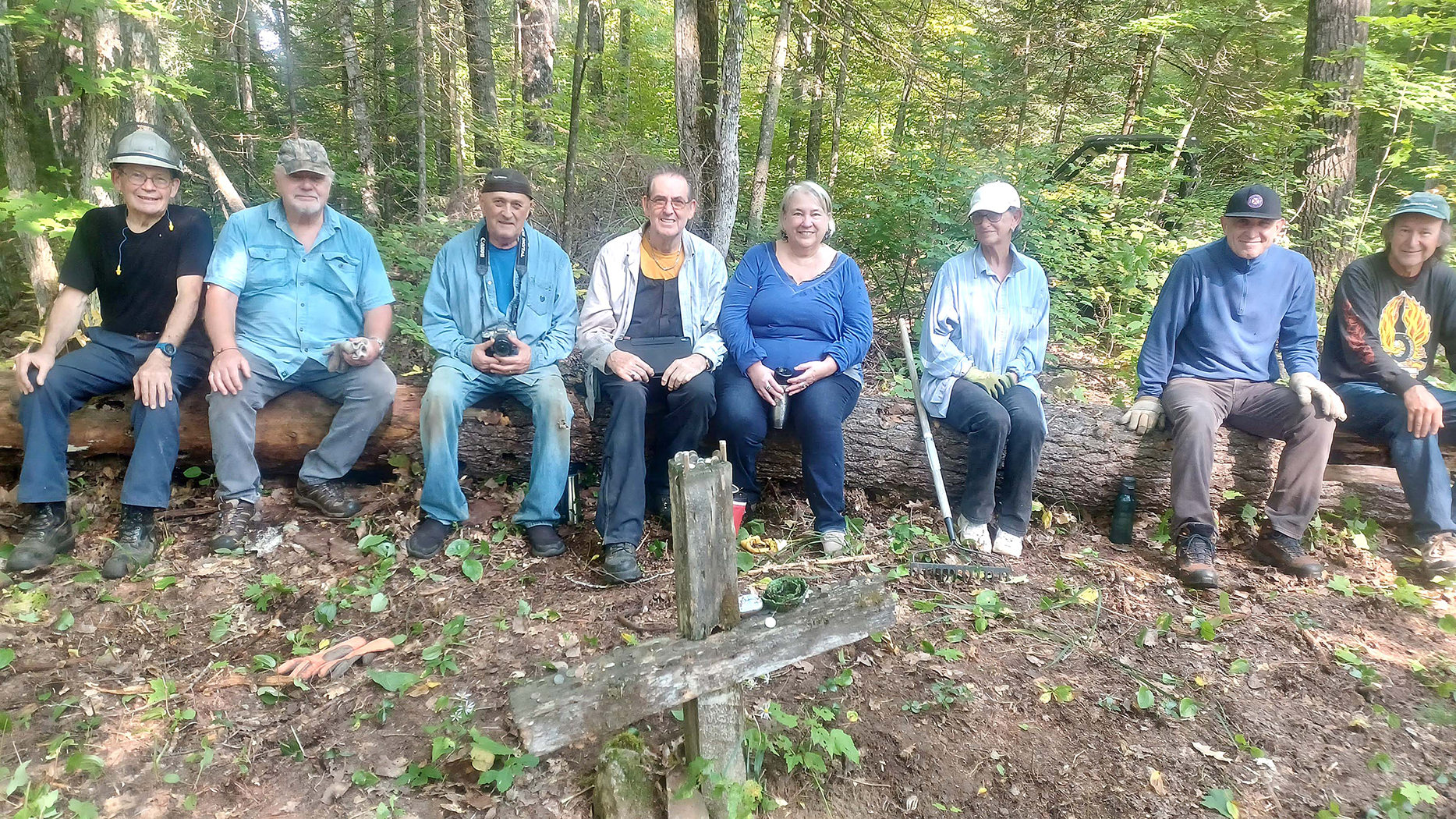



A tiny plot of land deep in the bush about 15 kilometres up the Black River Road received some long-overdue tender loving care over the weekend.
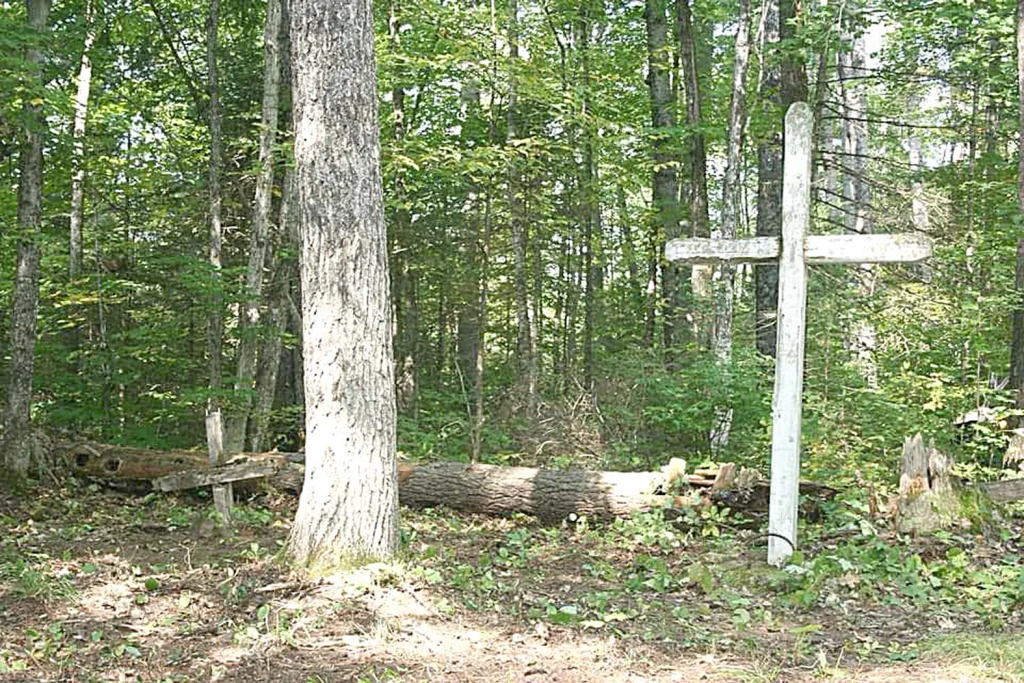
The clearing, easy to miss and marked only by two old wooden crosses set back against a wall of brush, is the final resting place of several members of the Lavoie family, who lived on a small settlement a stone’s throw from the graveyard for many decades, at least.
On Saturday, a small group of volunteers organized by Rudi VanWijngaarden and Andrée Pichette trekked out into the bush to clear the plot of old trees and make the grave places more accessible.
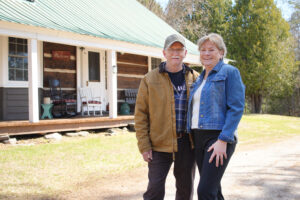
Calumet Island resident Mike Lamothe was designated the spokesperson for the cleanup effort. He married into the Lavoie family years ago, and while he and his wife have since parted ways, he has been visiting the graveyard for years.
“Because it was neglected and because it was my son’s ancestors, I would go up sometimes and spend a few hours brushing it out and taking out the dead trees,” Lamothe said. “And then finally, it was really something to see yesterday, 11 people getting together and working on it. It was crazy.”
According to information passed on to Lamothe from a man named Rheal Paul, who grew up next to the Lavoie family and belonged to the Métis Association of Fort Coulonge, the people buried there are Jean-Baptiste Lavoie Sr. (1864-1914), Delbert Lavoie (baby), unknown baby (not baptized), Kenny Lavoie, who died at three years old, Mary Lavoie, who died at four years old, Jean-Baptiste Lavoie Jr. (1897-1914) who was was apparently shot, and Philamen Lavoie (1902- 1928).
Lamothe said it’s difficult to track down some of the records of the younger children as they hadn’t yet been baptized when they passed away.
“They lived in the bush, and they didn’t go to town that often. When they did they would bring some kids to get baptized so they could get into the records.”
From his former mother-in-law, he learned her family had lived at the settlement until the early 1930s, when, as a four-year-old, she accidentally burned down the family home in the process of trying to make a smudge to keep the mosquitos out of the house.
At that point, Lamothe believes, the family moved away, and the land was left abandoned. He said he doesn’t know of any Lavoies still living in the area.
In 1986 Rheal Paul got a grant from the government to revitalize the graveyard so he poured a concrete slab in which he erected a wooden cross and built a wooden fence around the plot. Since then, Lamothe said, the graveyard has been neglected.

Lamothe said he’s heard from people who thought the graveyard was home to lumberjacks who died on the log drives on the Black River. Other times, when he’s been working in the yard, he said people have driven by who didn’t know there was a graveyard there at all.
“Because it is family, I just thought it would be nice to keep it clean and honour their memory,” Lamothe said, noting he would like to see some kind of plaque installed with the names of the family that would tell the story of their lives on that land.
“I’m glad that other people have taken an interest [ . . . ] I know the family, those that know about this, are quite happy with this.”