






Nikki Buechler
Pontiac Jan. 23, 2022
Snow is piled up all over the Pontiac, but Heritage College will help you plan for the inevitable thaw, offering a Backyard Beekeeping course starting March 1. Classes will be taught by veteran apiarist Bob Valcov. With 35 years of experience as a beekeeper, and 9 years in the classroom, Valcov speaks with a fluency and excitement about the subject that comes from a lifetime of dedication.
“Bees are incredibly important and they require specialized care — I would . . .
encourage anyone who is interested in helping or caring for bees to sign up for this class,” he explained in an interview on Saturday. “I’ve taught people who come with ambitions, who move on to become professional beekeepers, but the majority come to learn about the bees for backyard hives, and some just to learn about bees, with no intention of keeping any themselves,” he said.
Valcov is deeply committed to the welfare of these prolific pollinators, and his course, which is scheduled to meet twice a week for three weeks, aims to equip students with an understanding of bee biology, hive management, diseases and pests, and how to harvest honey and process beeswax. Valcov is an enthusiastic teacher, excited to impart knowledge, and generous when sharing his experiences.
This knowledge is important. Bees are crucial to the survival of all life on this planet, and we are seeing worrying trends in the health of bee colonies. “Apis mellifera is a super pollinator,” explained Valcov. “We are losing a lot of bees to disease. We can try to mitigate these problems by understanding bee behaviour and taking steps to mitigate the effects of parasites, such as varroa mites, and certain pesticides that negatively affect bee survival.” Valcov continued, “Modern honeybees are farm animals, and like a holstein cow, they are ubiquitous in captivity across North America. But we don’t see honeybees in nature, just like we don’t see holstein cows running around in nature. It wasn’t always the case, but in the present moment there are no feral bees; our domesticated honeybees simply cannot survive in the wild.”
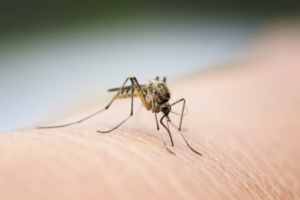
Keeping bees alive in sufficient numbers will require an increasing amount of effort. “When I started working with bees, there were feral bee colonies around — it was possible to come across undomesticated hives out in the woods.” The success of Apis mellifera, the Western honeybee, has changed the bee population across North America. Bees now rely on humans for survival. Our species’ codependence has been a big motivator for Valcov, but he also laments the lack of general bee knowledge amongst the general population. “Nowadays, when I get called to do a bee removal from someone’s home, it’s usually wasps. Oftentimes people can’t tell the difference, and they misidentify their yellowjacket infestation — bees get blamed for a lot of objectionable wasp behaviour.”
In educating people through Heritage College, Valcov hopes to give Pontiac residents the confidence to build a strong community of beekeepers. “If we have more hives in the community, the odds of survival are increased — we need enough colonies to make up for the ones that collapse.”
There are things we can all do to protect our pollinators, and even those who do not sign up for Valcov’s class are encouraged to contribute to these efforts. “I would ask everyone to stop killing dandelions and milkweed,” said Valcov. Dandelions in particular are excellent food for bees early in the season, and they need that,” he said. And chemicals we spray to remove nuisance plants and bugs are also harmful to bees — reducing our use of these would be beneficial. “We have been indoctrinated to think of milkweed and dandelions as weeds, but they are indigenous plants. We wonder why we don’t see any bees and butterflies anymore, but we’ve destroyed all of the plants they need to survive. So where are they supposed to live? We need to stop cutting down the plants that grow here naturally, because our pollinators need them.”
Our survival is intertwined with the survival of our pollinators, and we are heavily dependent on the Western honeybee. “We need to rethink our approach to lawn maintenance, and start allowing the natural environment to return,” encouraged Valcov. One generation is all it takes to remove an insect species from this earth. It would behoove us to learn from Valcov, as even outside of the classroom he is imparting wisdom. “If we reshape our view of indigenous plants, stop calling them ‘weeds’ and spraying chemicals on them, we can help our pollinators survive — because we really need them. To survive.”