





Carole St-Aubin
Chelsea Oct. 13, 2021
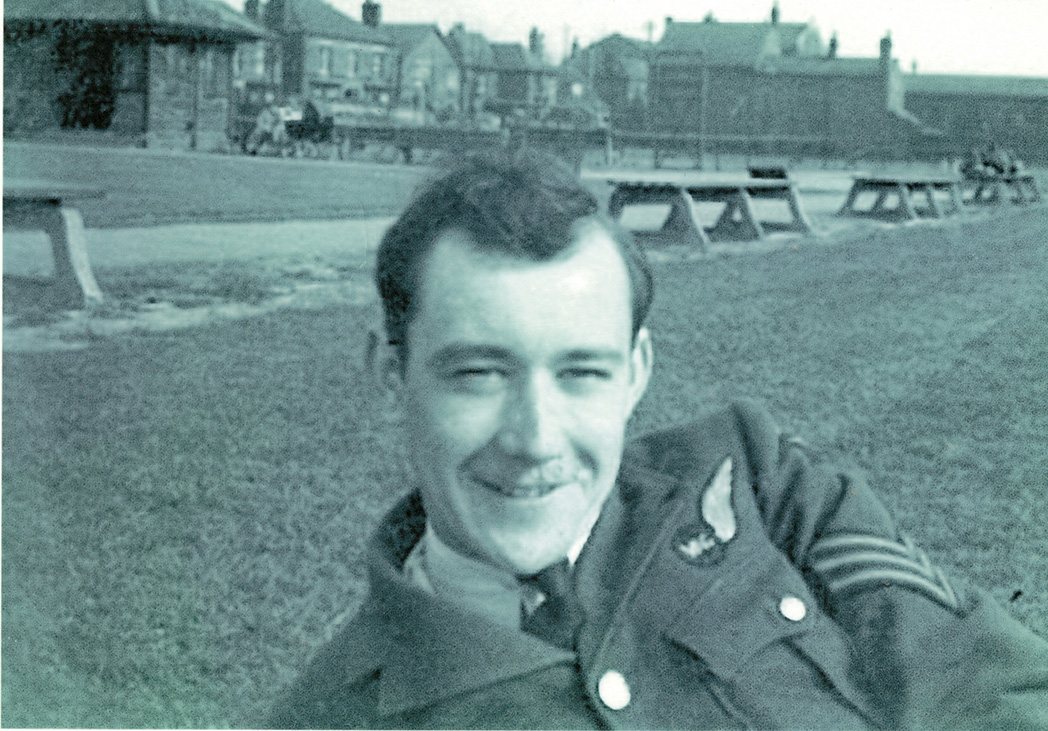
Centenarian John (Jack) Leslie Dods passed away on Sept.18 at the Perley and Rideau Veterans’ Health Centre in Ottawa. John was one of the last-known surviving D-Day Veterans.
Jack first tried to join the Royal Canadian Air Force at the age of 18, but was rejected because he was too slender, so he spent a summer cutting trees for Hydro Quebec to bulk up enough in order to qualify to become a pilot in 1939.
In 1945, when he got out of the Armed Forces just after the war, John married his childhood sweetheart Joy McGuire in Calgary. Together the couple, both Shawville natives, raised two sons; Deric and Daryl.
John then joined air traffic control and worked in Calgary for a couple of years before they moved to Winnipeg and then moved to Ottawa. The Dods lived in Ottawa for about a year and then settled in Manotick, their final homestead, according to his son Daryl.
John joined the Transport Canada Research and Development team while he worked at the air traffic tower in Ottawa, Daryl told THE EQUITY.
“Dad was instrumental in bringing air traffic control into the modern age with computers and the use of radar for air traffic control,” Daryl recounted, “and when he retired at the age of 77, he got his license to be a glider pilot,” he added.
Daryl remembers driving to Shawville every weekend to visit both sides of the family.
“We spent a lot of time in Shawville and we used to bug him in the car driving home, but he would always answer our questions with patience. He stayed away from the gory stuff but there were a lot of stories. That’s what a lot of his paintings are about, the things that happened,” said Daryl.
Having found an outlet, John had taken to painting a lot of his memories of being in the war, with some of them depicting his life when he grew up on the farm.
One of the things Daryl remembers is his dad saying how present day air traffic controllers felt they handled a heavy load if they got 200 to 300 flights a day.
“Dad when he was in Winnipeg, with all the training squadrons, bomber squadrons and reconnaissance squadrons and everybody flying out of Winnipeg, would basically deal with 1500 aircraft in the morning and maybe up to another 1500 in the afternoon,” Daryl told THE EQUITY.
“Then there was one story of my dad doing an air show in Winnipeg and with the air shows you got all the regular flights plus the airshow activity going on at the same time and dad was doing a full shift,” Daryl said.
![During the summer of 1943 while stationed at Gibraltar, arrangements were made to have aircrews of RAF 233 Squadron flying Hudsons to go on training trips in two submarines, Surf and Trucclant, and for some of their crews to come on real operational flights in our aircraft and also on training flights with their submarines. This was unusual but very productive. This painting is an attempt to show a training flight by our crew with Surf. [This is the caption behind the painting by John Dods]](https://theequity.ca/wp-content/uploads/2021/10/10-13dodds2-1024x749.jpg)
“It was a zoo, with massive numbers of aircraft going around, and when his relief came up to the control tower, dad said he took a look to the left where he saw nothing but aircraft coming in, and to the right all the ones lined up to take off. Then he took a look at dad with his microphone in one hand and his signal light in the other and he’s just like a guy directing a symphony. The guy looked at dad and said I quit, went back down the tower stairs that was the last day he ever saw the guy. So he called home and told Joy he was going to be a little late,” Daryl said, his voice filled with pride.
Daryl said his father was part of that generation that just did what had to be done, and thinks that this is kind of lost on present day generations. He believes it’s a trait comes from being on a farm, saying, “you can’t complain, you’ve got to deal with what has to be done on the farm because the animals can’t wait,”
The most remarkable thing people would notice about John, according to his son, was that he was a gentleman. He was polite with everybody and was happy to see anybody that dropped in to say hi, especially when visitors came from Shawville to see him, according to Daryl who said, “He was just a gentleman, a class act.”
“We grew up around airplanes, we’d go up to the tower every once in a while,” Daryl recalls, “some of the first books I read were aircraft identification books and dad would have us try to identify any type of aircraft by the sound of the engine from inside the house. Still today, if I’m golfing and I hear a plane, I have to stop and look up. It was ingrained in us. My brother Deric became a pilot as well,” he added.
Daryl said some of his dad’s days at the Perley Veterans’ Hospital were spent entertaining a lot of people and showing them his paintings which told their own stories.