





Farmers don’t think much about what words describe their occupation. A couple of years ago a friend said that his dad, who was a western farmer, once asked him this question. The first response to the question is usually that a farmer produces the food that we eat.
When farming started in this valley two centuries ago farmers had to be very self-sufficient because there were no tradesmen or any other specialized help at hand. In today’s modern world with a five-day work week, eight hour days, long weekends, holidays and most equipment dealers and repair services miles away; the farmer is again left to be self-sufficient many more hours and days than not!
Timeliness is automatic in the farmer’s mind. If an animal is sick or injured often minutes can save the animal’s life. First-aid must be administered as soon as possible. The farmer must keep a minimal supply of medication and first aid supplies on hand and have enough veterinary training to keep the animal alive and comfortable until the vet gets there.
With only a few days each spring to get the tillage and planting done between showers, a farmer must be a welder and mechanic. He must keep enough parts on hand to keep machinery working through periods when no one else is available to repair.
When the power goes off many modern barns depend on water, ventilation, lights and heating or cooling and cleaning which is all electrical. A farmer must be able to do emergency repairs and switch the farm over to be powered by a generator. When a plumbing problem arises, farmers have to fix the problem before animals need water. Most farmers are also excellent carpenters and tools are a necessity not a hobby.
When suppliers don’t get certain feeds delivered on time, the farmer must know enough about nutrition to adjust the feed ration to supply the same nutrients required to maintain growth and animal production until a new load of the purchased feed arrives.
Once farmers know what balance of feed can prevent nutrition related diseases, they soon adjust rations to prevent costly vet visits and late night emergency first-aid work by the farmer himself.
When new expensive buildings are needed on the farm usually an architect and engineer is consulted. But the farmer must understand the most efficient ways to select a site, handle traffic that will be around, dispose of waste and the safest way to move animals. The farmer must also do a financial analysis on every decision before starting. Today’s farmer must also be an environment engineer to assure that every decision will be environmentally friendly.
Someone on every farm must be a teacher who is able to train new employees and family members how to do each job most efficiently and with the least effort.
Today, farmers are only one per cent of the population and must take time to explain to a knowledge-hungry public why farmers do certain things certain ways. A basic knowledge of psychology is necessary both when dealing with people and animals.
Everything that a farmer produces is sold some day and market analysis is often the key to the survival of a farm. Grain is always highest in price in spring while beef prices are usually in cycles. Before growing anything, is there a market?
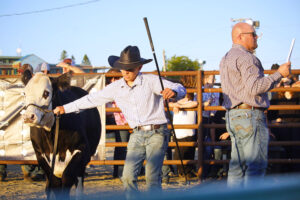
When you watch a farmer prepare an animal for the show ring at the fair it’s like getting a lady ready for a beauty contest. Doing a touch-up on the wife’s hair before going out Saturday night is a breeze!
I have known some farmers who have become excellent members of parliament but most farmers are happy to just keep the MPs that we do have educated in basic farming and problems related to farming that will eventually cost every taxpayer.
Farmers must be ever aware of problems like dust, pollen, toxic fumes, overexertion and items that are just too heavy. That’s when they are part-time doctor, physiotherapist and farm safety inspector.
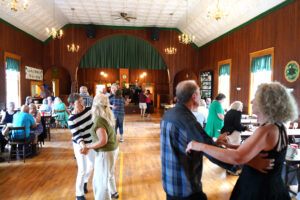
On the farm the animals come first! After they are fed, watered, milked, provided a nice well-bedded stall, the fences fixed and the milk cool, farmers enjoy a good party and sometimes help with the hall or even with the music. It’s years like this with a few too many rainy days that a farmer is reminded that weather and other things are beyond our control and he must not worry about what he has no control over but just provide the safest, healthiest food he can at the most economical price and hope that at the next step in the food chain, processors do the same!
Chris Judd is a farmer in Clarendon
on land that has been in his
family for generations.
gladcrest@gmail.com