Canadian Nuclear Laboratories is proposing the construction of an engineered facility for the permanent disposal of low-level waste at Chalk River Laboratories. The proposal is now before Canada’s nuclear regulator, which will make a final decision following public hearings that begin on May 30, 2022.
Chalk River Laboratories – the main campus of Canadian Nuclear Laboratories (CNL) – has been home to game-changing science for more than 70 years.
Research at the site has not only saved countless lives through the development of cancer . . .
therapies and medical isotopes, but it has advanced our understanding of the world around us through Nobel-prize winning research, and helped Canada fight climate change through innovations in clean energy.
Over the years, this work has also produced different forms of nuclear waste, some of which – in the past – was addressed using old and outdated practices. While this waste is safely managed and monitored, permanent solutions are necessary to reduce risks to CNL’s workforce, the public and the environment – especially the Ottawa River.
CNL employees live here in the Ottawa Valley, so we recognize the importance of the Ottawa River to our communities. It is an integral part of our daily lives, so any solution must fully protect this waterway today and into the future.
CNL has used its technical expertise to develop new and better technologies for waste management. The Near Surface Disposal Facility – or NSDF – is our proposed solution for the disposal of low-level radioactive waste.
If constructed, the NSDF will serve as a disposal facility specifically designed to isolate this waste from the environment. The NSDF will feature a multi-layer base liner and cover system that will prevent the release of contaminants, and an array of environmental monitoring systems surrounding the facility to ensure air, water and groundwater quality.
There are some fundamental reasons why CNL has proposed the NSDF:
It is designed to keep our environment safe. It will feature an engineered containment mound with barriers designed to keep the waste separate from the environment for hundreds of years. In fact, the facility will improve the current conditions of the site, as the engineering features of the project represent an increase in safeguards to protect the Ottawa River.
A new wastewater collection and treatment system will provide further protection by ensuring treated water is safe for people and the environment. CNL’s extensive environmental monitoring of the site will provide assurance that the facility is operating as intended.
It is proven technology. Engineered containment mounds have been demonstrated as a safe technique for managing low-level radioactive waste. CNL has successfully built and is managing similar facilities in the Lake Ontario communities of Port Hope and Port Granby. Internationally, the design has also been used successfully in the United States and the United Kingdom.
It has been studied. The proposal is consistent with regulatory requirements and international standards. Extensive studies demonstrate that the facility is appropriate for the low-level waste intended for disposal. The proposal has been independently reviewed by federal and provincial agencies, including Environment and Climate Change Canada as well as the Province of Quebec Ministère de l’Environnement et de la Lutte contre les changements climatiques. CNL has incorporated federal and provincial input and is now prepared to proceed to the CNSC licensing step.
It has been tested. Queen’s University tested the synthetic geomembrane to be used in the NSDF containment mound and concluded it will stay intact for more than a thousand years – well beyond the time it will take for the radioactivity to decay to a safe level found naturally in the environment.
And the NSDF also positions CNL for the future. CNL’s missions include restoring and protecting Canada’s environment, advancing clean energy technologies, and contributing to the health of Canadians through medical breakthroughs.
To accomplish these goals, CNL is modernizing the Chalk River campus through the construction of new, world-class research facilities, and the demolition of more than 100 aging structures.
The revitalization of the campus means that CNL will remain a stable, long-term partner and employer that will continue to rely on its skilled local workforce and supply chain, and generate new economic opportunities, for decades to come. And the NSDF is the facility that will enable this transformation.
But this project is personal to our employees, as well. We share your concerns about the Ottawa River – we live and work beside the river, we drink the water and swim in it, just like you. That is why we must address this waste now, instead of leaving it for future generations.
CNL has been actively engaging with Indigenous Communities and the public about the proposal through the environmental assessment process. We are encouraging anyone interested in this proposal to ask us questions, review the studies and get the facts. Contact us today or visit cnl.ca/nsdf for more information about why the NSDF is the right solution.
Kristan Schruder
General Manager & Deputy Vice President,
ERM, Decommissioning and Environmental Remediation
Canadian Nuclear Laboratories



NSDF: A modern solution to an old problem
NSDF: A modern solution to an old problem
Council of mayors holds special meeting to approve financial statements
Meet THE EQUITY’s new reporter
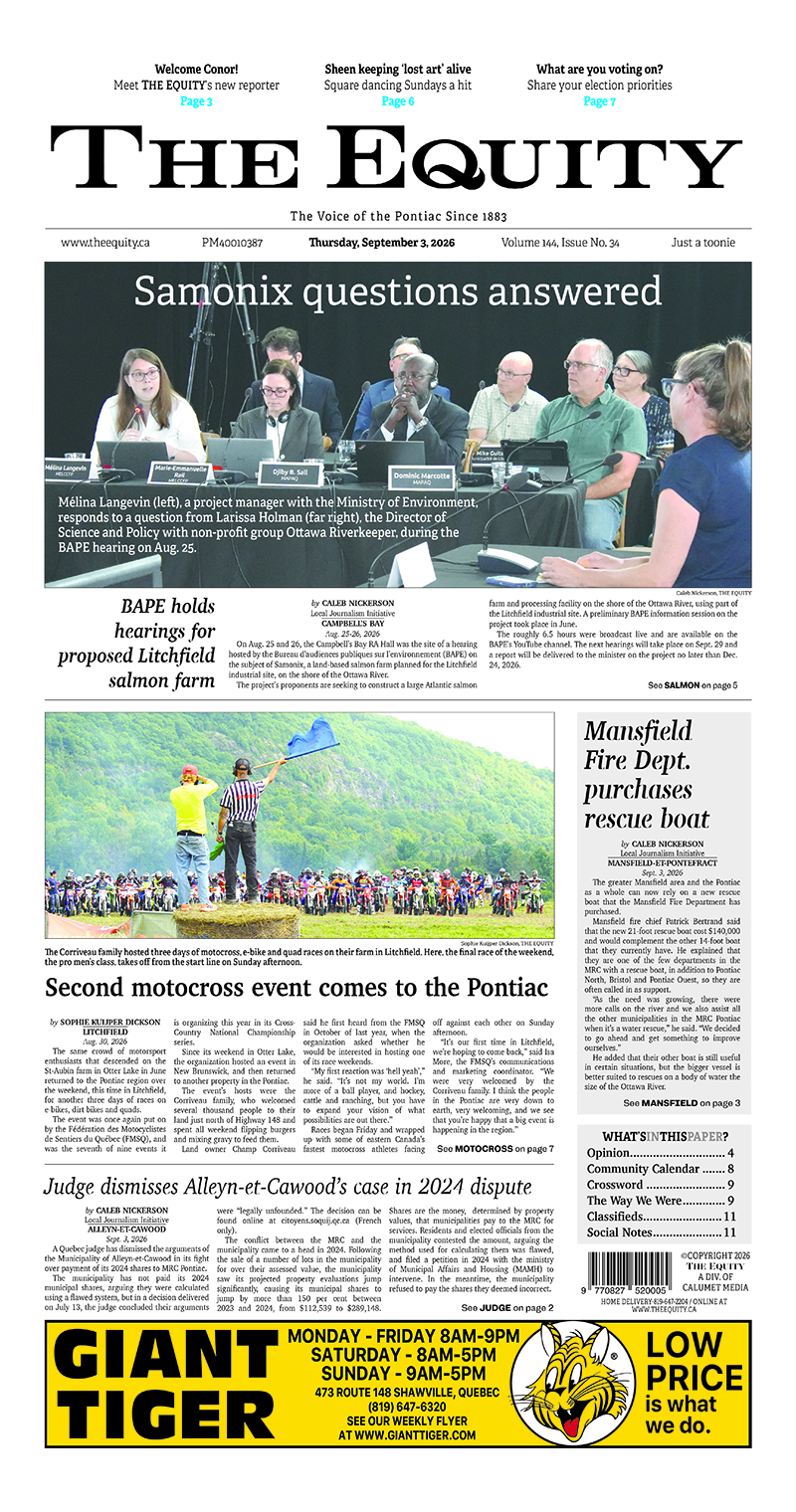
Mansfield Fire Dept. purchases rescue boat
Judge dismisses Alleyn-et-Cawood’s case in 2024 dispute
Thrift art sale
Sheen square dancers put their steps to the test
Second motocross event comes to the Pontiac
Shawville Fair highlights from over the years
Salmon farm proposal gets grilled
In Photos: Shawville Fairs Past (1977 – 2001)
Lions fire up the grill for St. Paul’s chicken dinner
Parti Québécois announces Pontiac candidate
Canadian Nuclear Laboratories is proposing the construction of an engineered facility for the permanent disposal of low-level waste at Chalk River Laboratories. The proposal is now before Canada’s nuclear regulator, which will make a final decision following public hearings that begin on May 30, 2022.
Chalk River Laboratories – the main campus of Canadian Nuclear Laboratories (CNL) – has been home to game-changing science for more than 70 years.
Research at the site has not only saved countless lives through the development of cancer . . .
therapies and medical isotopes, but it has advanced our understanding of the world around us through Nobel-prize winning research, and helped Canada fight climate change through innovations in clean energy.
Over the years, this work has also produced different forms of nuclear waste, some of which – in the past – was addressed using old and outdated practices. While this waste is safely managed and monitored, permanent solutions are necessary to reduce risks to CNL’s workforce, the public and the environment – especially the Ottawa River.
CNL employees live here in the Ottawa Valley, so we recognize the importance of the Ottawa River to our communities. It is an integral part of our daily lives, so any solution must fully protect this waterway today and into the future.
CNL has used its technical expertise to develop new and better technologies for waste management. The Near Surface Disposal Facility – or NSDF – is our proposed solution for the disposal of low-level radioactive waste.
If constructed, the NSDF will serve as a disposal facility specifically designed to isolate this waste from the environment. The NSDF will feature a multi-layer base liner and cover system that will prevent the release of contaminants, and an array of environmental monitoring systems surrounding the facility to ensure air, water and groundwater quality.
There are some fundamental reasons why CNL has proposed the NSDF:
It is designed to keep our environment safe. It will feature an engineered containment mound with barriers designed to keep the waste separate from the environment for hundreds of years. In fact, the facility will improve the current conditions of the site, as the engineering features of the project represent an increase in safeguards to protect the Ottawa River.
A new wastewater collection and treatment system will provide further protection by ensuring treated water is safe for people and the environment. CNL’s extensive environmental monitoring of the site will provide assurance that the facility is operating as intended.
It is proven technology. Engineered containment mounds have been demonstrated as a safe technique for managing low-level radioactive waste. CNL has successfully built and is managing similar facilities in the Lake Ontario communities of Port Hope and Port Granby. Internationally, the design has also been used successfully in the United States and the United Kingdom.
It has been studied. The proposal is consistent with regulatory requirements and international standards. Extensive studies demonstrate that the facility is appropriate for the low-level waste intended for disposal. The proposal has been independently reviewed by federal and provincial agencies, including Environment and Climate Change Canada as well as the Province of Quebec Ministère de l’Environnement et de la Lutte contre les changements climatiques. CNL has incorporated federal and provincial input and is now prepared to proceed to the CNSC licensing step.
It has been tested. Queen’s University tested the synthetic geomembrane to be used in the NSDF containment mound and concluded it will stay intact for more than a thousand years – well beyond the time it will take for the radioactivity to decay to a safe level found naturally in the environment.
And the NSDF also positions CNL for the future. CNL’s missions include restoring and protecting Canada’s environment, advancing clean energy technologies, and contributing to the health of Canadians through medical breakthroughs.
To accomplish these goals, CNL is modernizing the Chalk River campus through the construction of new, world-class research facilities, and the demolition of more than 100 aging structures.
The revitalization of the campus means that CNL will remain a stable, long-term partner and employer that will continue to rely on its skilled local workforce and supply chain, and generate new economic opportunities, for decades to come. And the NSDF is the facility that will enable this transformation.
But this project is personal to our employees, as well. We share your concerns about the Ottawa River – we live and work beside the river, we drink the water and swim in it, just like you. That is why we must address this waste now, instead of leaving it for future generations.
CNL has been actively engaging with Indigenous Communities and the public about the proposal through the environmental assessment process. We are encouraging anyone interested in this proposal to ask us questions, review the studies and get the facts. Contact us today or visit cnl.ca/nsdf for more information about why the NSDF is the right solution.
Kristan Schruder
General Manager & Deputy Vice President,
ERM, Decommissioning and Environmental Remediation
Canadian Nuclear Laboratories
More Local News
Council of mayors holds special meeting to approve financial statements
Meet THE EQUITY’s new reporter
Mansfield Fire Dept. purchases rescue boat
Judge dismisses Alleyn-et-Cawood’s case in 2024 dispute
Thrift art sale
Sheen square dancers put their steps to the test
Second motocross event comes to the Pontiac
Shawville Fair highlights from over the years
Salmon farm proposal gets grilled
In Photos: Shawville Fairs Past (1977 – 2001)
Lions fire up the grill for St. Paul’s chicken dinner
Parti Québécois announces Pontiac candidate
Council of mayors holds special meeting to approve financial statements
Meet THE EQUITY’s new reporter
Mansfield Fire Dept. purchases rescue boat
Judge dismisses Alleyn-et-Cawood’s case in 2024 dispute
Thrift art sale
Sheen square dancers put their steps to the test
Second motocross event comes to the Pontiac
Shawville Fair highlights from over the years
Salmon farm proposal gets grilled
In Photos: Shawville Fairs Past (1977 – 2001)
Lions fire up the grill for St. Paul’s chicken dinner
Parti Québécois announces Pontiac candidate
NSDF: A modern solution to an old problem