






Zainab Al-Mehdar
Campbell’s Bay Nov 17, 2021
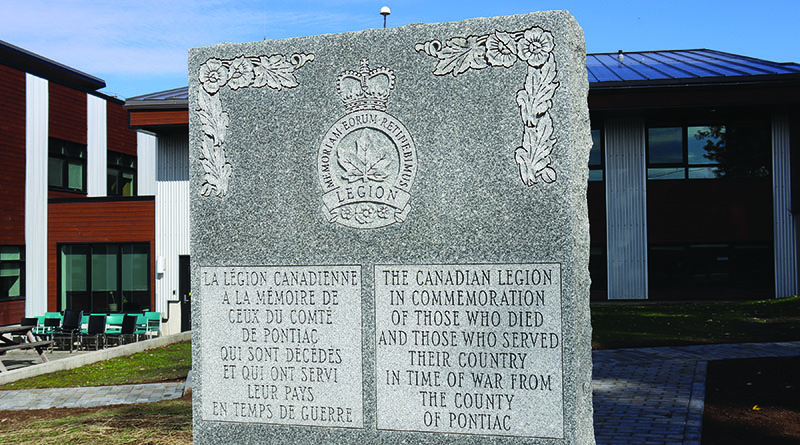
After World War I, veterans didn’t have a central place to go and gather with people who had seen what they had seen and been through what they had gone through. From that need, the Royal Canadian Legion was . . .
established in 1926. “The central role of why we’re doing it is to help veterans,” said Ronald Woodstock, the current president of the Pontiac Legion.
For Woodstock, the Legion is a place where people came to gather. Pre-COVID, the Legion located in Campbells Bay would also host suppers, and events so that folks are able to contribute in order to keep the doors open, allowing the Legion to have a poppy fund. Without donations “the poppy fund will no longer exist,” said Woodstock.
The non-profit organization, created to support veterans, has over 1, 350 branches from coast to coast to coast, with members volunteering to support their community.
The Legion started in Britain and made its way to Winnipeg. After the first World War there was no support for families who had lost fathers or brothers, Woodstock explained, and anyone suffering from PTSD had no services to help veterans with those issues and so the “only place those guys could go was to a Legion because [there were] other people with the same problems that they could talk to,” said Woodstock.
The chapter in Campbell’s Bay started in 1946 and serves the MRC Pontiac, according to Woodstock. It started for the same reasons because around WW2 there was still no government support for the veterans who came home. What ensued is the Poppy campaign geared towards collecting donations and using that money to support community members who are in “dire distress.”
Members of the Legion also volunteer to ensure the Legion can continue to serve the community.
“That’s our main goal as Legion members are to support this charity to keep this charity alive,” said Woodstock.
In the mid-60s, Woodstock was in the military for about three years during peacetime and although he didn’t go to war, being part of the Legion was important to him. He was a member since the 70s and continued to transfer his membership wherever he moved for work, but wasn’t active until recently when he retired.
One of the goals Woodstock told The Equity, is for the Legion to be housed in a bigger space to be able to host more activities with larger groups of people and events that can allow the organization to support more community members.
Along with a bigger space, Woodstock said it is hard to get young members, and hopes to create a space that young members want to be a part of because, “everybody in here is antique and everything on the wall is antique. You know, so they [young folks] don’t fit in,” said Woodstock. Having younger members will help bring in new ideas and make the place modern.
One of the services for veterans is the Ste. Anne’s Hospital in Sainte-Anne-de-Bellevue, Quebec. It serves veterans to this day and a percentage of the donations goes to the hospital which primarily serves long-term and geriatric care, and treats younger veterans for operational stress injuries and post traumatic stress disorder.
Woodstock is faced with the negative connotation around what the Legion does and stands for, he said the “Legions got the name of a place to go and drink,” and although that used to be the case for veterans that is not what he believes it to be. In large, that’s how veterans dealt with PTSD back in the days, said Woodstock, but he hopes he can change people’s views about the Legion to increase people’s involvement.
He said, “join events, join activities. Try it out, don’t turn it down before you try it.”
Community members involvement means a lot to Woodstock. Holding back tears and getting emotional he said “too many kids died.” Even though he didn’t go to war, when he was in the service he saw what went on in a battlefield and this is why he is committed to the Legion, it is why he said people need to support it. He sees the Legion as a pillar in the community to help people in need.
He quiets down and as he ponders and reflects on the way the world is, he said “if we can change the way people think of each other, regardless of race or colour. But I’ll never live long enough to do that,” said Woodstock as he wiped tears from his eyes. For Woodstock it is emotional talking about the war because of the images he saw when he was in the army and if it wasn’t for his family’s dairy farm and taking care of his father, he could have been enlisted.
Being located in Pontiac, Woodstock said it is a crossroads that makes it easy for people from the north to approach or from the south from Shawville to approach it. Everyone is welcome to join, he said whatever background, creed, religion. One of the ways he said he ensures people feel comfortable, is with his two rules: “You don’t discuss politics or religion. That way everybody fits in.”
As they continue to try to get more members, he said there is only so much they can do, “unless we can get the young people interested it’s always going to be in this state here, where a few seniors want to help but they’re limited to what they can do to help.”