





Law 2, the province’s restructuring of how doctors are paid across the province, has caused widespread outcry from the public and medical community, with protests taking place across the Outaouais.
The law would tie a percentage of doctor’s pay to performance metrics, and would also heavily penalize doctors who take part in concerted actions to oppose the change. The controversial legislation was forced through the National Assembly in late October, as the government invoked closure.
Over the weekend, there was a large rally in Wakefield to protest the law and its impacts on rural regions. CAQ minister responsible for the Outaouais Mathieu Lacombe told Radio-Canada that he would be open to adjustments of the law to take the region’s unique position into account.
This coming Sunday, there will be a local demonstration at the Pontiac Hospital from 1:30 p.m. to 2:30 p.m.
Jean Pigeon, of the healthcare advocacy group SOS Outaouais, said that the local response to the crisis has shown how deeply this impacts the community.
“It’s doctors themselves who are organizing these rallies, also the community and I think it’s really important to take into account that it’s very frightening, what’s coming up,” he said.
His group recently received some informal internal polling conducted by the regional direction of medical service professionals, as well as the regional council of doctors, dentists, pharmacists and midwives. Out of around 350 physicians with significant practices in the area, 108 responded, and around 73 per cent said that they were considering leaving. Out of the 108, 17 said that they had already secured a post outside the province, and 13 had resigned, though it was not clear whether that was due to the law or retirement.
Pigeon added that every doctor that leaves can have several hundred patients at least, and also said that there are also highly specialized doctors whose expertise in fields like radio-oncology or plastic surgery who will be extremely difficult to replace if they leave.
He said that the polling he referenced showed 68 per cent of specialists were considering leaving.
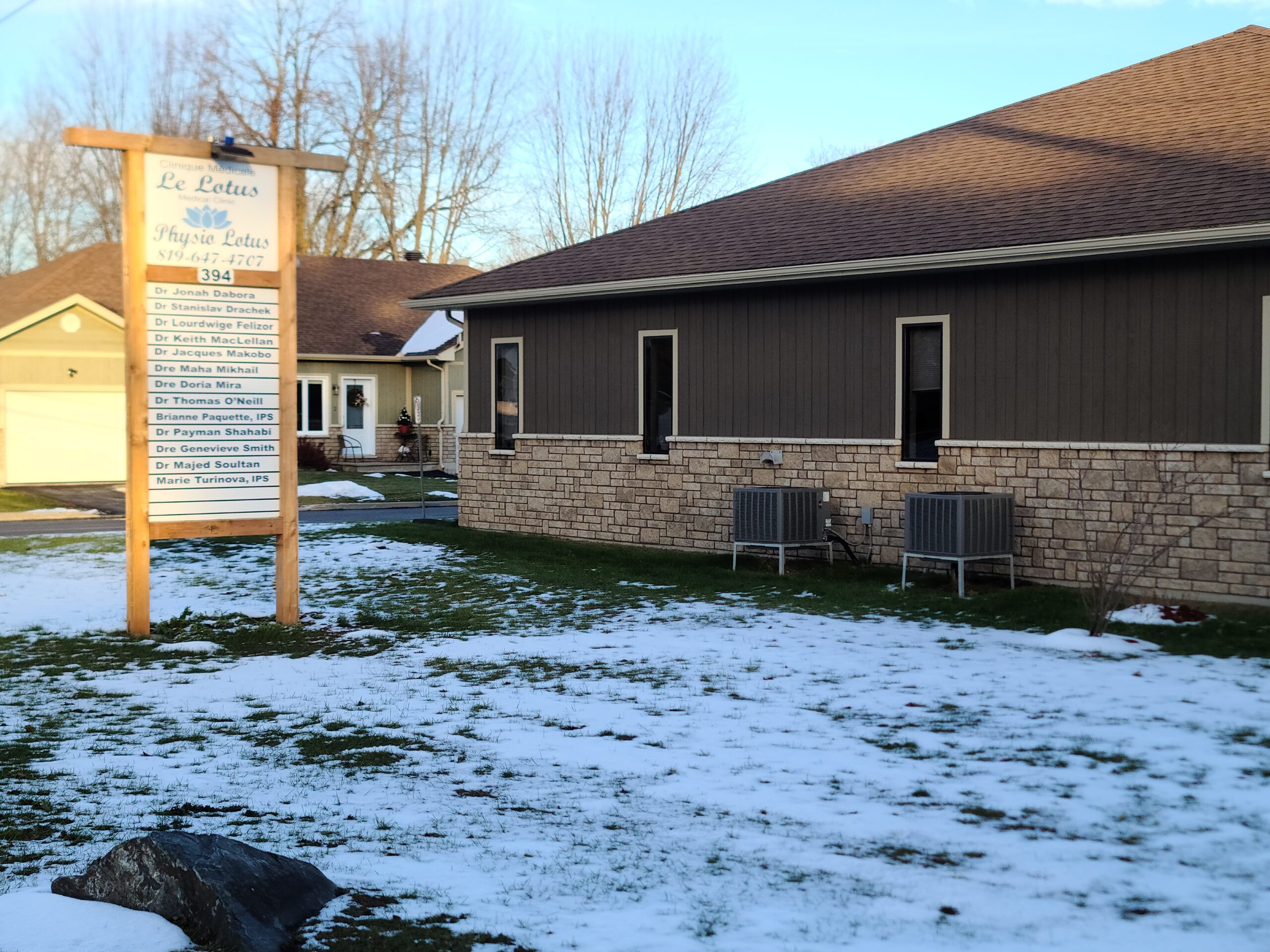
Joanne Romain, the owner of the Lotus Clinic in Shawville, said that she’s heard from several doctors at the clinic that the law was causing major unease.

“The way they’ve been treated, with that law being forced on them, they’re not robots, they’re humans, the way they’re asking them to work is not human,” she said. “It’s a mess.”
She said that depending on the practice, some doctors may be looking at a serious loss of income if the new law comes into effect, and said that it was difficult to say how the change would impact the local area.
“They don’t want to go. They’re hanging on right now because they don’t want to leave.”
La Loi 2, la restructuration provinciale de la rémunération des médecins dans la province, a provoqué un tollé généralisé au sein du public et de la communauté médicale, avec des manifestations se déroulant dans tout l’Outaouais.
La loi lierait un pourcentage de la rémunération des médecins à des indicateurs de performance, et pénaliserait également lourdement les médecins qui participent à des actions concertées pour s’opposer au changement. La législation controversée a été adoptée de force à l’Assemblée nationale fin octobre, le gouvernement ayant invoqué le bâillon.
Au cours du week-end, un grand rassemblement a eu lieu à Wakefield pour protester contre la loi et ses impacts sur les régions rurales. Le ministre caquiste responsable de l’Outaouais, Mathieu Lacombe, a déclaré à Radio-Canada qu’il serait ouvert à des ajustements de la loi pour prendre en compte la position unique de la région.
Ce dimanche, une manifestation locale aura lieu à l’Hôpital de Pontiac de 13 h 30 à 14 h 30.
Jean Pigeon, du groupe de défense des soins de santé SOS Outaouais, a affirmé que la réponse locale à la crise a montré à quel point cela touche profondément la communauté.

« Ce sont les médecins eux-mêmes qui organisent ces rassemblements, ainsi que la communauté, et je pense qu’il est vraiment important de prendre en compte que ce qui s’en vient est très effrayant », a-t-il déclaré.
Son groupe a récemment reçu les résultats d’un sondage interne informel mené par la direction régionale des professionnels des services médicaux, ainsi que par le conseil régional des médecins, dentistes, pharmaciens et sages-femmes. Sur environ 350 médecins ayant une pratique significative dans la région, 108 ont répondu, et environ 73 % ont déclaré envisager de partir. Sur les 108, 17 ont indiqué avoir déjà obtenu un poste à l’extérieur de la province, et 13 avaient démissionné, bien qu’il n’ait pas été précisé si cela était dû à la loi ou à la retraite.
Pigeon a ajouté que chaque médecin qui part peut avoir au moins plusieurs centaines de patients, et a également mentionné qu’il existe des médecins hautement spécialisés dont l’expertise dans des domaines comme la radio-oncologie ou la chirurgie plastique sera extrêmement difficile à remplacer s’ils quittent.
Il a affirmé que le sondage qu’il a cité montrait que 68 % des spécialistes envisageaient de partir.
Joanne Romain, propriétaire de la Clinique Lotus à Shawville, a déclaré avoir entendu de plusieurs médecins de la clinique que la loi causait un grand malaise.
« La façon dont ils ont été traités, avec cette loi qui leur a été imposée, ils ne sont pas des robots, ce sont des humains, la façon dont on leur demande de travailler n’est pas humaine », a-t-elle dit. « C’est un gâchis. »
Elle a affirmé que, selon la pratique, certains médecins pourraient subir une perte de revenu importante si la nouvelle loi entre en vigueur, et a déclaré qu’il était difficile de dire comment le changement impacterait la région locale.
« Ils ne veulent pas partir. Ils tiennent le coup en ce moment parce qu’ils ne veulent pas s’en aller. »