





While the U.S. president was seen on TV getting out of a giant helicopter in a long black trench coat as he gave a big fist pump to the camera, Canada’s leaders were around a big round table figuring out how to avoid anything with a U.S. tariff before it came on. While the U.S. is concerned about hydro shortages, Canada has already made plans to ensure that Canada’s vast hydro-electric network will supply all Canadian needs before any is shipped south. Canada has already found dedicated buyers of aluminum in Europe and Asia, while the U.S. supply of aluminum is fast dwindling away.
Recently, a beer can manufacturer complained that the lids of those aluminum beer cans were only made in the U.S., and there was a tariff charged two ways on the aluminum before the beer can was filled with beer. How much can a beer can lid machine cost compared to the total number of beer cans sold per year? A very large per cent of Canada’s autos have a foreign name, but many are built in Canada with Canadian parts and Canadian labour!
The U.S. dairy farmers have just gotten used to working with the CUSMA agreement on dairy trade that still has tariff-free quota that the U.S. has not used yet (after four years). The U.S. has sent many, many more dollars worth of dairy products into Canada than Canada sent south to the U.S.! The U.S. dairymen are very afraid about where they will market their surplus dairy if the present CUSMA is torn up. It looks like it’s the processors and food traders that like to control the dairy prices, rather than use the cost-of-production system that producers, processors, truckers, retailers, and consumers get to scrutinize in Canada before any price change.
Look at the shock waves that killing birds because of bird flu caused to U.S. egg prices! Canada had some laying hen losses too but because of the Canadian supply management system of marketing eggs, there was no shortage of eggs anywhere in Canada, and no price increase. Then there was how much of that $1.3 trillion dollar U.S. farm bill that went towards keeping those farmers from going bankrupt?
Mexico recently had a battle to keep non-GMO white corn which has been a tradition in historic Mexican food. Most of Europe just quietly moved away from all genetically modified foods. Consumers just stopped buying anything that might have any GMOs in it when they noticed a link between GMOs and cancer! Once the consumers stopped buying, the store stopped stocking the shelves with those products. Communist countries just declared that no GMO grains could be bought, sold, grown, or used in Russia with very strict penalties as punishment. China took a more political approach to keeping GMO grains out of China except maybe for ethanol production. Indian farmers went on strike for three years to stop the government from allowing GMOs into the country, (except cotton which is now used very little).
A year ago there was a very informative article in a veterinarian journal that mentioned the life expectancy of dogs had dropped greatly with the use of more grain in dog food. The use of GMO grains (soy, corn, canola, cotton seed, sugar beet pulp, and even wheat that was desiccated with roundup) has taken over the North American market, including pet food. With veterinary advice, some pet owners have switched to expensive “non-grain” pet food to get rid of itching, and other digestive pet problems. Just this week, I noticed an ad for non-GMO dog food on a baseball channel!
Closer to home. I have carried a box of doggie treats in every vehicle with me so every place I travel I now have a doggie friend waiting for a treat. Last week, Jeannie replaced the all-grain doggie treats with non-grain doggie treats. Now I’m really popular with my dog friends.
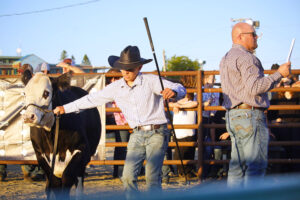
In Canada, the consumer likes to know what’s going on in food production. Canadian farmers wish that they had more time to inform consumers and tour them on real farms! Our farmer organizations should organize more farm tours starting from the local fairs to give consumers a chance to ask questions about how their food is grown. Maybe politicians would like to hop on too?
Chris Judd is a farmer in Clarendon on land that has been in his family for generations.