





When Clarendon farmers Kristine Amyotte and Robbie Beck converted a new piece of land from pasture into a crop field, they soon realized the toll it was having on the soil.
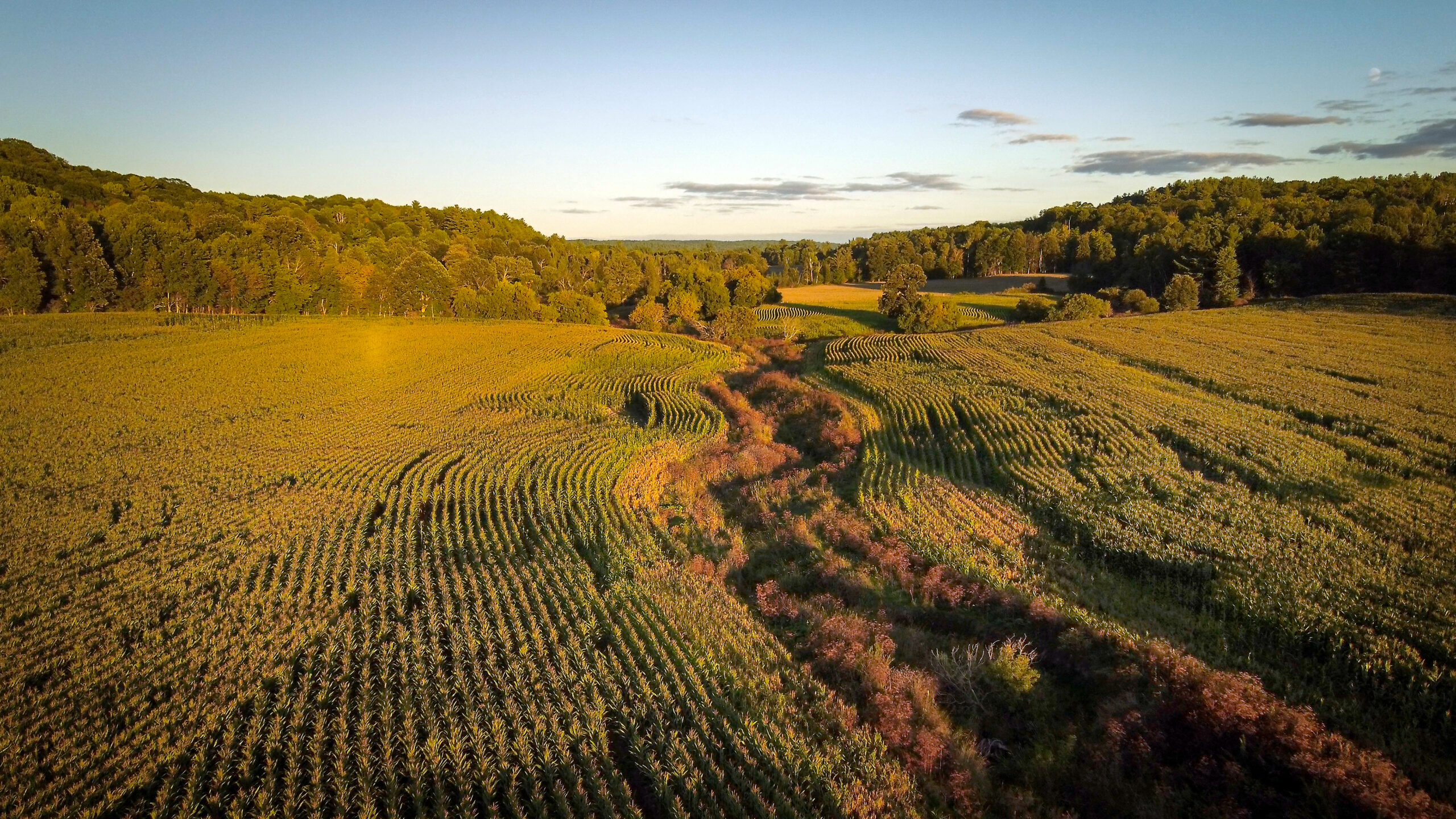
The land in question formed a valley, at the bottom of which lay a stream. During the spring thaw or heavy rains, the water would race down the fields towards the stream, where it then flowed out to the Ottawa River.
When the fields were pastured, the water was slowed by the grasses, but when they were converted to crop, the soil void of denser root systems, the water suddenly had a cleared path to its destination, and was quickly dragging the fields’ soil into the stream.
“We had just paid for this farmland and you could literally see you were losing it. The creek was eroding, the gap just kept getting wider and wider,” Amyotte said. “The regular riparian buffer, by law it’s three metres, well that just wasn’t holding.”
Amyotte and Beck wanted to find a natural solution to their erosion challenges, so reached out to ALUS, an organization that partners with farmers and ranchers to help them protect their land and its ecosystems.
ALUS – which stands for Alternative Land Use Solutions – was created in 2008, founded on the principle that farmers have a direct hand in caring for the natural world, and should be empowered as such. The non-profit works in communities across the country to understand farmers’ needs when it comes to managing the sustainability of their land, and connect them with funding and other resources to be able to do so.
While ALUS programs have been supporting farmers across the country since its inception, it was only introduced in the Outaouais in 2021. In its first five years here, it has developed projects on 64 farms across the Outaouais, setting 353 acres aside for projects that somehow protect the land or its inhabitants.
In MRC Pontiac, 17 farms have taken on ALUS projects to date, including 5.3 kilometres of riparian buffers, 78 acres where farmers are practicing delayed haying, to protect endangered species and 400 acres where cover crops are being used.
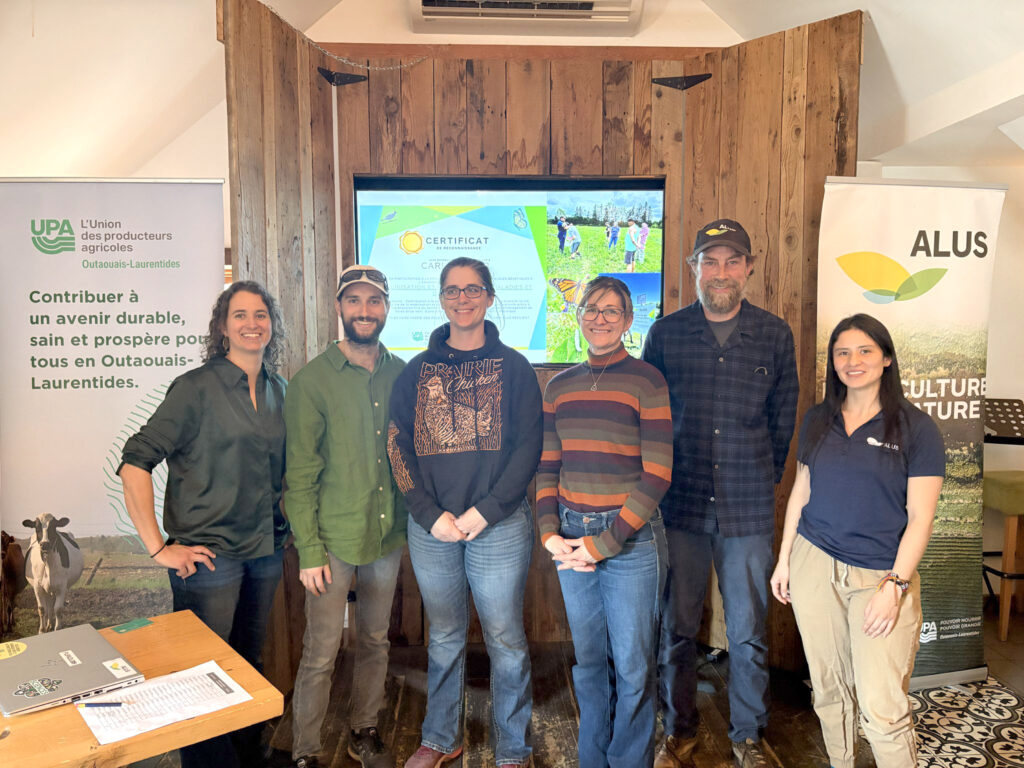
“Our goal is to protect water and protect the environment, of course, but it’s really to help farmers know their land better, and give them a bit of power back through recognizing what they already do, because sometimes they’re being so judged,” explained Maria José Maezo, the agro-environmental consultant hired by the UPA Outaouais-Laurentides to develop the ALUS program in this region.
“We walk the farm with them, answer lots of questions and see what they need and how we can help.”

Through the ALUS program, farmers are compensated for the land they set aside. In the Pontiac, a total of $49,500 has been allocated to farms running these projects.
“We pay per acreage of the projects that are put into the ground, so we recognize the value of the nature that they have to take care of,” José Maezo explained. “So instead of growing a crop you grow nature.”
Amyotte was invited to sit on ALUS Outaouais’ governing committee when it was founded. She said upon learning more about the organization, she realized it offered exactly the help she was looking for on her farm.
“I really love their theme, ‘Where farming and nature meet’. That really resonated with me,” Amyotte said.
She worked with José Maezo to develop a larger riparian buffer along the stream, grown using grasses indigenous to the area, to protect its shores from being swept away.
“In some areas, instead of a three-metre riparian buffer, we have 10,” she said, acknowledging that while this may seem excessive, it’s worth it to her to prevent the land from further eroding.
Amyotte was so satisfied with the success of the project that she spread the word to neighbours, including the Langs just down the road in Clarendon.
“Sometimes it’s a lot more work to do the government programs than it would be to just do it yourself, but ALUS has made it easy. They don’t make it super complicated,” said Kendal Lang, who works for her family cash-crop farm RM Lang.

She has worked with ALUS to commit to a delayed haying on a couple of fields to help protect the endangered Bobolink bird, and to develop a wider riparian buffer along a waterway that runs between a field and Highway 148 in Bristol.
“It’s still just getting going, it’s not where it should be yet, but it just takes time to get the watercourse developed,” Lang said.
José Maezo reinforced that core to ALUS’ mission is to support farmers, and not make their lives more difficult.
“We really take a friendly approach. There’s no regulations, there’s no risk about infractions, so they can feel free about asking questions and not being judged if they’re doing things not perfectly,” she said.
She noted the organization’s project priorities are constantly evolving depending on the funding they secure.
“When we started, it was species at risk related, because that was the major funding we had. So getting the farmers to know the species at risk on their land and how they can protect them was our first goal, in a way,” she said.
“But as we get to know the farmers and we document better the needs of the farmers themselves, we’re able to kind of work backwards and look for the funding the farmers are asking for.”
She said for the organization’s next five years, she hopes to increase its visibility in the community.
“Not only among farmers but around the community in general, because they need to know all the solutions farmers can provide to protect the environment.”
Lorsque les agriculteurs de Clarendon Kristine Amyotte et Robbie Beck ont converti une nouvelle parcelle de terre de pâturage en champ cultivé, ils ont vite réalisé les conséquences que cela avait sur le sol.
La terre en question formait une vallée, au fond de laquelle coulait un ruisseau. Lors du dégel printanier ou des fortes pluies, l’eau dévalait les champs vers le ruisseau, où elle se jetait ensuite dans la rivière des Outaouais.
Lorsque les champs étaient en pâturage, l’eau était ralentie par les herbes, mais lorsqu’ils ont été convertis en cultures, le sol étant dépourvu de systèmes racinaires plus denses, l’eau a soudainement eu un chemin dégagé vers sa destination, entraînant rapidement la terre des champs dans le ruisseau.
« Nous venions de payer pour cette terre agricole et nous pouvions littéralement voir que nous la perdions. Le ruisseau s’érodait, l’écart ne cessait de s’élargir », a déclaré Mme Amyotte. « La bande riveraine régulière, de trois mètres selon la loi, ne tenait tout simplement pas. »
Mme Amyotte et M. Beck voulaient trouver une solution naturelle à leurs problèmes d’érosion, alors ils ont contacté ALUS, une organisation qui s’associe aux agriculteurs et aux éleveurs pour les aider à protéger leurs terres et leurs écosystèmes.
ALUS – qui signifie Solutions de Rechange pour l’Utilisation des Terres – a été créé en 2008, fondé sur le principe que les agriculteurs ont un rôle direct à jouer dans la prise en charge du monde naturel et devraient être habilités en tant que tels. L’organisme sans but lucratif travaille dans les communautés à travers le pays pour comprendre les besoins des agriculteurs en matière de gestion de la durabilité de leurs terres, et les met en contact avec des fonds et d’autres ressources pour pouvoir le faire.
Alors que les programmes ALUS soutiennent les agriculteurs à travers le pays depuis leur création, ils n’ont été introduits en Outaouais qu’en 2021. Au cours de ses cinq premières années ici, l’organisme a développé des projets sur 64 fermes à travers l’Outaouais, consacrant 353 acres à des projets qui protègent d’une manière ou d’une autre la terre ou ses habitants.
Dans la MRC de Pontiac, 17 fermes ont entrepris des projets ALUS à ce jour, incluant 5,3 kilomètres de bandes riveraines, 78 acres où les agriculteurs pratiquent la fauche tardive pour protéger les espèces menacées et 400 acres où des cultures de couverture sont utilisées.
« Notre objectif est de protéger l’eau et l’environnement, bien sûr, mais c’est surtout d’aider les agriculteurs à mieux connaître leurs terres et à leur redonner un peu de pouvoir en reconnaissant ce qu’ils font déjà, parce que parfois ils sont tellement jugés », a expliqué Maria José Maezo, la consultante agroenvironnementale embauchée par l’UPA Outaouais-Laurentides pour développer le programme ALUS dans cette région.
« Nous visitons la ferme avec eux, répondons à de nombreuses questions et voyons ce dont ils ont besoin et comment nous pouvons les aider. »
Grâce au programme ALUS, les agriculteurs sont rémunérés pour les terres qu’ils mettent de côté. Dans le Pontiac, un total de 49 500 $ a été alloué aux fermes qui mènent ces projets.
« Nous payons par acre pour les projets mis en œuvre, nous reconnaissons donc la valeur de la nature dont ils doivent prendre soin », a expliqué Mme José Maezo. « Ainsi, au lieu de cultiver une récolte, vous cultivez la nature. »
Mme Amyotte a été invitée à siéger au comité directeur d’ALUS Outaouais lors de sa fondation. Elle a déclaré qu’en apprenant davantage sur l’organisation, elle a réalisé qu’elle offrait exactement l’aide qu’elle recherchait pour sa ferme.
« J’aime beaucoup leur thème : « Là où l’agriculture et la nature se rencontrent ». Cela a vraiment résonné en moi », a déclaré Mme Amyotte.
Elle a travaillé avec Mme José Maezo pour développer une bande riveraine plus large le long du ruisseau, cultivée à l’aide d’herbes indigènes à la région, afin de protéger ses rives d’être emportées.
« Dans certaines zones, au lieu d’une bande riveraine de trois mètres, nous en avons 10 », a-t-elle dit, reconnaissant que même si cela peut sembler excessif, cela en vaut la peine pour elle afin d’empêcher l’érosion supplémentaire des terres.
Mme Amyotte était si satisfaite du succès du projet qu’elle en a parlé à ses voisins, y compris les Lang qui habitent juste en bas de la route à Clarendon.
« Parfois, c’est beaucoup plus de travail de faire les programmes gouvernementaux que de le faire soi-même, mais ALUS a simplifié les choses. Ils ne les rendent pas super compliqués », a déclaré Kendal Lang, qui travaille pour la ferme de grandes cultures familiales RM Lang.
Elle a travaillé avec ALUS pour s’engager à une fauche tardive sur quelques champs afin d’aider à protéger le goglu des prés, un oiseau menacé, et à développer une bande riveraine plus large le long d’un cours d’eau qui passe entre un champ et l’autoroute 148 à Bristol.
« Cela ne fait que commencer, ce n’est pas encore là où ça devrait être, mais il faut du temps pour développer le cours d’eau », a déclaré Mme Lang.
Mme José Maezo a souligné que l’essentiel de la mission d’ALUS est de soutenir les agriculteurs, et de ne pas leur rendre la vie plus difficile.
« Nous adoptons vraiment une approche amicale. Il n’y a pas de règlements, pas de risque d’infractions, donc ils peuvent se sentir libres de poser des questions et de ne pas être jugés s’ils ne font pas les choses parfaitement », a-t-elle dit.
Elle a noté que les priorités de projets de l’organisation évoluent constamment en fonction du financement qu’ils obtiennent.
« Quand nous avons commencé, c’était lié aux espèces en péril, parce que c’était le financement principal que nous avions. Donc, amener les agriculteurs à connaître les espèces en péril sur leurs terres et comment ils peuvent les protéger était notre premier objectif, d’une certaine manière », a-t-elle dit.
« Mais à mesure que nous apprenons à connaître les agriculteurs et que nous documentons mieux les besoins des agriculteurs eux-mêmes, nous sommes en mesure de travailler à rebours et de chercher le financement que les agriculteurs demandent. »
Elle a dit qu’au cours des cinq prochaines années de l’organisation, elle espère accroître sa visibilité dans la communauté.
« Non seulement auprès des agriculteurs, mais aussi au sein de la communauté en général, car ils doivent connaître toutes les solutions que les agriculteurs peuvent apporter pour protéger l’environnement. »