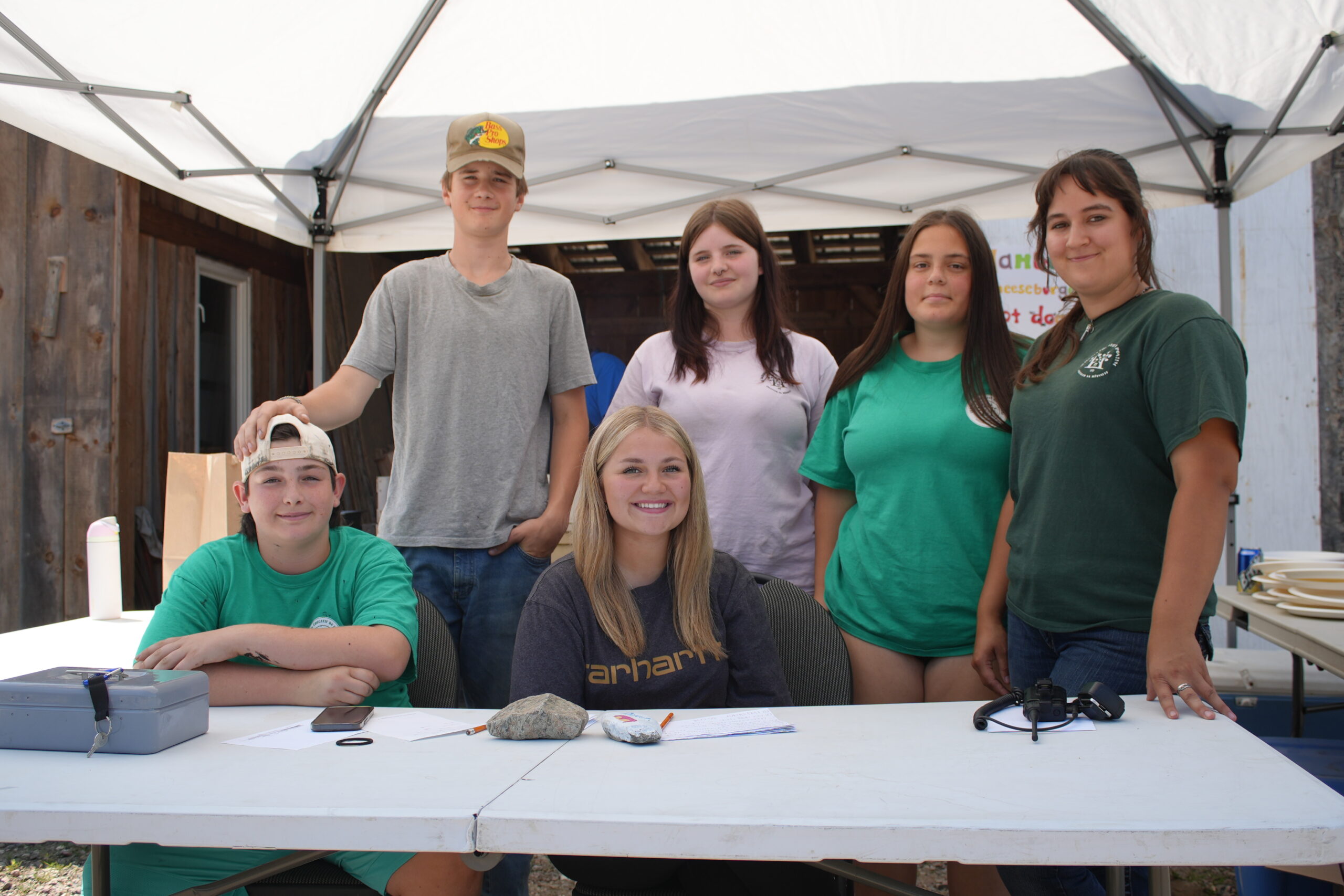



The Jardin Éducatif du Pontiac took a short break from its activities in the garden to grill burgers and sell salads at the organization’s annual summer barbecue on Wednesday.
The salads were made with vegetables from the garden located across the parking lot, and were prepared by employees and attendees of the summer camp, which offers an alternative way for at-risk youth to spend the summer months.
Melissa Langevin, head gardener and a longtime youth worker, said this year’s camp has 16 attendees, adding that they have returned to hiring a small group of the students while others are participants at the summer camp. She said it’s nice to see some of the kids return year after year so staff can see their progress.
“We really see them improve through the years, so that’s really nice, to have that possibility to see them grow,” she said, using the example of one teen who started working at the camp three years ago as a gardener.
“There were some major interventions with this young man, but last year he received an award for his evolution and he came back this summer [ . . . ] This year it’s his third year, now he knows he’s a role model for the youngest,” Langevin said.
Olivia Dyelle, who has worked on and off as a gardener at the Jardin, said she is getting a lot out of the experience, whether it’s growing tomatoes or learning about different plants.
“It’s relaxing. It’s nice, and you get to get some sun, and you learn about a bunch of plants. I used to know nothing about plants before I started working here and now I know a bunch of plants out in the wild.”
Langevin said this kind of experience is common among people who come work at the Jardin. She said many kids come into the summer camp not knowing anything about gardening, and end up with not only gardening skills but also various life skills that can be learned through gardening.
“The confidence that develops, it’s sure that when you work in a garden and you pick up things that you shouldn’t pick up, it can be stressful.”
Langevin, who has worked with teenagers in Montreal and the Pontiac for about 20 years, said among at-risk youth the ‘good news’ stories can be in the minority. But to see that the program is having a positive impact, she said, is rewarding.
“You hear stories from young people who really have baggage that make you say, ‘Young people shouldn’t experience these things.’ So when we have beautiful stories like that, it keeps up grounded in the ‘OK, that’s why I’m doing it.’”
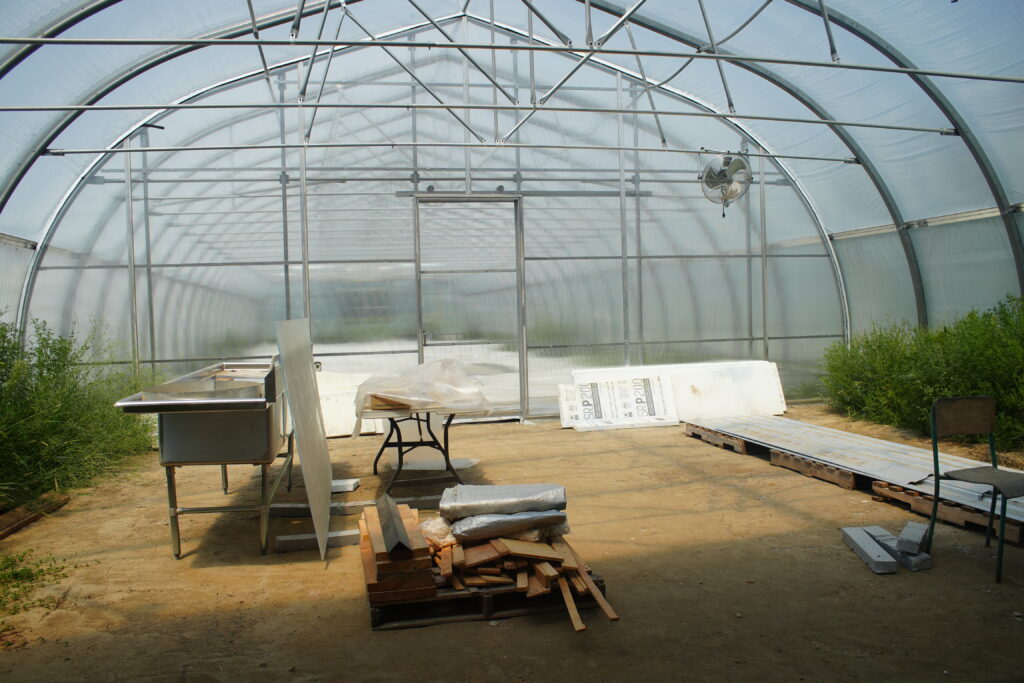
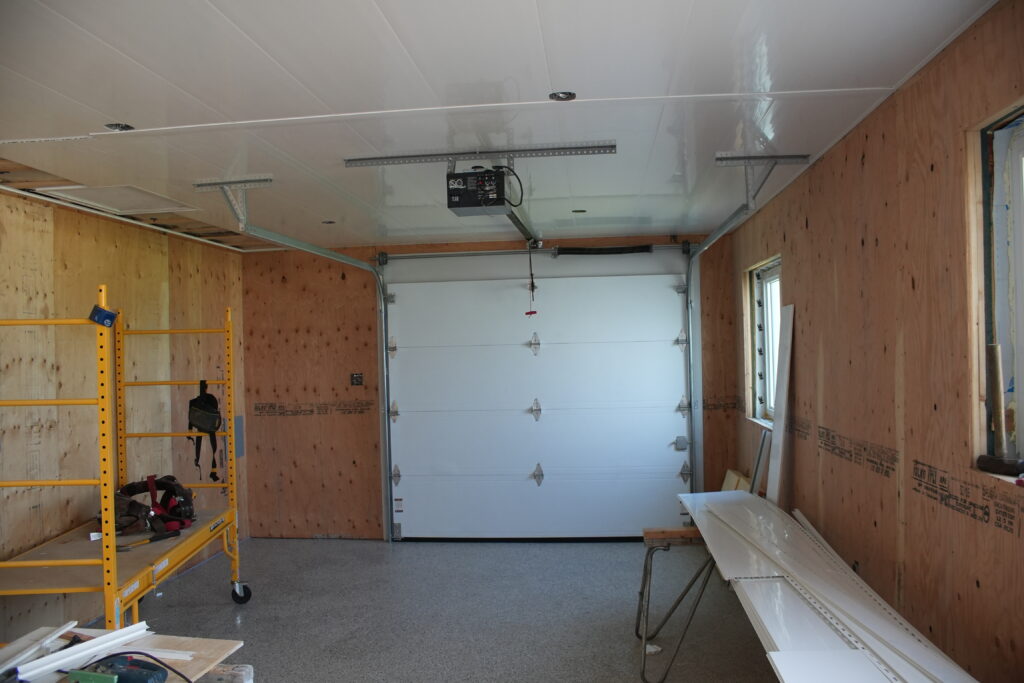
The Jardin has been in the process of constructing a greenhouse for a few years, as well as an adjoining building where it intends to have a food transformation hub, a loading bay and offices. Langevin said while the work is slow to advance, they hope it can be a space used not only by the Jardin but for other community groups and events.
“The barrier is that right now, it’s the director that’s been doing this for a long time. It’s a job in itself, an extra job.”
Jardin director Martin Riopel said the BBQ was a success and thanked everyone who came out to support.
Le Jardin Éducatif du Pontiac a fait une courte pause de ses activités dans le jardin pour faire griller des hamburgers et vendre des salades lors du barbecue estival annuel de l’organisme, mercredi.
Les salades étaient préparées avec des légumes du jardin, situé en face du stationnement, et ont été faites par les employés et les participants du camp d’été, qui offre une façon alternative aux jeunes à risque de passer les mois d’été.
Melissa Langevin, jardinière en chef et travailleuse auprès des jeunes de longue date, a déclaré que le camp de cette année compte 16 participants, ajoutant qu’ils ont recommencé à embaucher un petit groupe d’étudiants, les autres étant des participants au camp d’été. Elle a dit qu’il est agréable de voir certains des jeunes revenir année après année, ce qui permet au personnel de constater leurs progrès.
« On les voit vraiment s’améliorer au fil des ans, alors c’est vraiment agréable d’avoir cette possibilité de les voir grandir », a-t-elle déclaré, citant l’exemple d’un adolescent qui a commencé à travailler au camp il y a trois ans comme jardinier.
« Il y a eu des interventions majeures avec ce jeune homme, mais l’année dernière, il a reçu un prix pour son évolution et il est revenu cet été [ . . . ] Cette année, c’est sa troisième année, maintenant il sait qu’il est un modèle pour les plus jeunes », a déclaré Mme Langevin.
Olivia Dyelle, qui a travaillé par intermittence comme jardinière au Jardin, a déclaré qu’elle tire beaucoup de cette expérience, que ce soit la culture de tomates ou l’apprentissage de différentes plantes.
« C’est relaxant. C’est agréable, et on prend un peu de soleil, et on apprend plein de choses sur les plantes. Avant de commencer à travailler ici, je ne connaissais rien aux plantes, et maintenant je connais plein de plantes sauvages. »
Mme Langevin a déclaré que ce type d’expérience est courant parmi les gens qui viennent travailler au Jardin. Elle a dit que de nombreux jeunes arrivent au camp d’été sans rien connaître au jardinage, et finissent par acquérir non seulement des compétences en jardinage, mais aussi diverses compétences de vie qui peuvent être apprises par le jardinage.
« La confiance qui se développe, c’est sûr que quand tu travailles dans un jardin et que tu ramasses des choses que tu ne devrais pas ramasser, ça peut être stressant. »
Mme Langevin, qui a travaillé avec des adolescents à Montréal et dans le Pontiac pendant environ 20 ans, a déclaré que chez les jeunes à risque, les histoires de « bonnes nouvelles » peuvent être minoritaires. Mais voir que le programme a un impact positif, a-t-elle dit, est gratifiant.
« Tu entends des histoires de jeunes qui ont vraiment un bagage qui te fait dire : “Les jeunes ne devraient pas vivre ces choses.” Alors, quand on a de belles histoires comme ça, ça nous garde ancrés dans le “OK, c’est pour ça que je le fais”. »
Le Jardin est en train de construire une serre depuis quelques années, ainsi qu’un bâtiment adjacent où il prévoit d’aménager un centre de transformation alimentaire, un quai de chargement et des bureaux. Mme Langevin a déclaré que si les travaux avancent lentement, ils espèrent que ce sera un espace utilisé non seulement par le Jardin, mais aussi par d’autres groupes communautaires et pour des événements.
« L’obstacle, c’est qu’en ce moment, c’est le directeur qui fait ça depuis longtemps. C’est un travail en soi, un travail supplémentaire. »
Le directeur du Jardin, Martin Riopel, a déclaré que le barbecue était un succès et a remercié toutes les personnes venues les soutenir.