





Zainab Al-Mehdar
Pontiac March 2 2022
Groups of concerned citizens on both sides of the Ottawa River have identified multiple critical flaws in licencing documents regarding the proposed construction of a nuclear waste dump at Chalk River.
Prior to the first Canadian Nuclear Safety Commission (CNSC) hearing on Feb. 22, citizen groups from Ontario and Quebec provided President and CEO of CNSC Rumina Velshi with a document critiquing the CNSC’s case to approve a radioactive waste mound alongside the Ottawa River, as mentioned in the press release by citizen groups.
The 11-page critique outlines “critical flaws” in the CNSC’s 590-page licensing document, ranging from providing limited detailed information about what would go into the dump, as required under the Nuclear Safety and Control Regulations, and a lack of adequate information around choosing a proper site for the facility, according to the press release.
The critique highlights that the report done by CNSC has no information about wastes that would go in the mound, how it fails to mention Cobalt-60 commercial wastes, no mention of waste characterization, fails to address alternative facility types that would better contain the wastes, and speaks very little about human health risks. These are just some of the issues citizen groups raise in their assessment report.
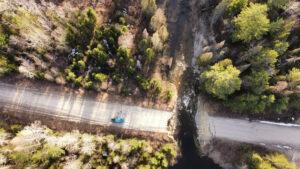
“The site is on the side of a hill, and is surrounded on three sides by wetlands that drain into the Ottawa River, a kilometre away. The water table is just inches under the surface at that location and the bedrock is highly fractured,” said Johanna Echlin of the Old Fort William Cottagers’ Association, in the press release.
The assessment was prepared by Concerned Citizens of Renfrew County and Area, the Old Fort William Cottagers Association, and Ralliement contre la pollution radioactive.
Physicist Ginette Charbonneau, a spokeswoman for the Ralliement, said that only low-level cobalt-60 sources could be accepted in an above ground mound and that the criteria for accepting such waste in the dump must be tightened.
If approved, the propsed facility would be an above-ground 60-foot-high mound for one million cubic meters of nuclear waste located one kilometer from the Ottawa River, upstream from Ottawa and Montréal and much of the Pontiac. Citizen groups emphasized that while the contents would remain radioactive for thousands of years, the mound itself is expected to last only a few hundred years, according to Canadian Nuclear Laboratories (CNL).
In addition, international safety standards prohibit disposing of long-lived radioactive wastes in landfills. To approve the near-surface-disposal facility (NSDF) is “so seriously flawed that CNSC Commissioners cannot make a sound licensing decision based on the contents of the documents,” said in the press release.
The Equity reached out to CNSC for a comment on the assessment report. In an emailed response, Kim Cunningham, CNSC’s Senior Communications Advisor, said “as this matter is now before the Commission, we cannot provide additional details or responses on behalf of CNSC staff at this time.”
The email reasserted points provided previously, including that only low-level radioactive waste consisting of contaminated building materials, soils, and operational equipment (for example protective shoe covers, clothing, rags, mops, equipment and tools) would be included in the waste facility.
Cunningham said that license applications only get approved once the Commission is satisfied that it is safe to the public and the environment, and that the Commission makes independent, fair and transparent decisions on licensing nuclear-related activities.
The CNSC’s role is to regulate the use of nuclear energy and materials to protect health, safety, security and the environment, Cunningham said.
“The CNSC will never compromise safety,” she said.
Toller Concerned
At the MRC Pontiac, Warden Jane Toller recalled that when she first heard about the proposal for a waste facility one kilometer from the Ottawa River and knowing there could be some incidents of leaching, Toller said “I was very concerned.”
In light of the concerns, Toller invited Joann McCann, a member of Old Fort William Cottagers’ Association and permanent resident of Sheenboro, to make a presentation on the issues around the NSDF.
McCann, put forth a motion that got passed by council members requesting the NSDF be located well away from the Ottawa River. “The nature of our resolution did not stipulate how far, we just said as far away as possible, and I think that’s clear,” said Toller
Asked by THE EQUITY last December how far “well away” would be, the warden responded that the CNL experts would have the answer to that.
One priority for her council, Toller noted, was to ensure the protection of the Ottawa, Coulonge and Black Rivers. “Hopefully with enough pressure, they will have to find another location. But if it has to stay in Chalk River, then we will do everything possible to ensure that it is not in the present site,” said Toller.
The council has depended on the expertise of the citizen groups to inform their decisions on the dangers of the NSDF, and Toller pointed out that neither she nor the mayors council have conducted any studies to inform their decisions.
“A facility like this should be nowhere near a body of water,” emphasized Toller.
Toller noted that at the March meeting they plan to launch a petition against the storage of nuclear waste close to the Ottawa River. She plans to present that petition at the next CNSC hearing, which she was asked to attend and represent the Pontiac.
She added that she hopes to “ensure that the [CNSC] hear about the MRC Pontiac being closest to the site and that the MRC is very concerned and does not accept the location currently planned.”
After the lengthy CNSC hearing, The Equity spoke to Ole Hendrickson, scientist and researcher for Concerned Citizens of Renfrew County, “There’s a huge number of issues that are going to have to be dealt with in much greater depth, and there was nothing that I heard that convinced me that this project should go forward.”
When asked about who else he would like to see speak up on the matter, Hendrickson, mentioned Pontiac MP Sophie Chatel. “I’d like to see a little more from Chatel. I know she’s commented but I think it would be good for her to take a stronger position noting the concerns that are widespread in the Pontiac.”
He mentioned that there is a lack of trust in the CNSC because of its record of always approving projects, as well as the influence the nuclear industry has over the CNSC. This particular environmental assessment process is exclusively being done by CNSC under the former Canadian Environmental Assessment Act, which was passed in 2012 by the Harper government. The CNSC is both a licensing panel and an environmental assessment panel.
“We have argued and written a letter saying that we need a separate Environmental Assessment hearing because there are too many significant concerns about environmental effects to just lump this together with the licensing process,” remarked Hendrickson.
He explained that citizen groups believe that the government should have a say as it is a decision that will set a precedent for other nuclear waste disposal projects, and should not be solely in the hands of an unelected, appointed commission.
“There’s a bit of a pretense of listening to the public, but no serious intent to take into account public concern,” he said and that’s been the case for the CNSC for many years, which presents a problem for a project like this, that might have consequences that will last for thousands of years, Hendrickson said.
The licensing hearings for the NSDF are taking place in two parts. Part 1 was held on February 22. Part 2 will start on May 31 and is expected to take several days as it will include presentations from Indigenous communities, municipal representatives, NGOs and members of the public. Toller was invited to represent the Pontiac during that hearing.
Requests to intervene in the hearings must be submitted in writing to the CNSC by April 11, 2022. For more information, see Notice of Public Hearing for details.