





Connor Lalande
Bristol March 8, 2023
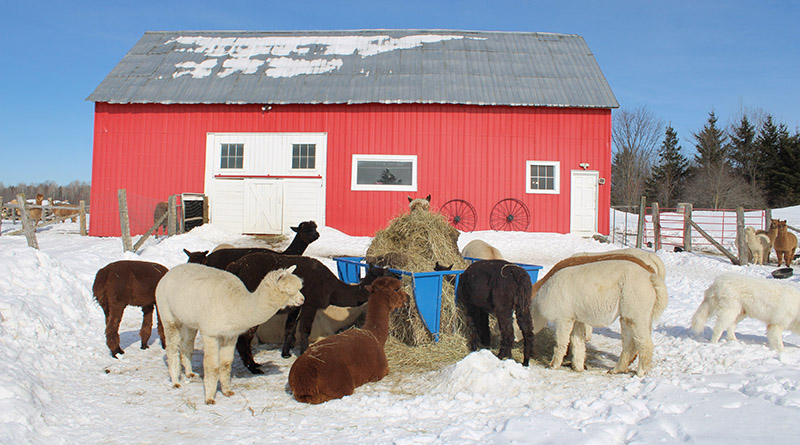
Nestled along Highway 148, just west of Bristol, there is a farm unlike any other within the Pontiac. After pulling off the highway and driving a short distance up the meandering driveway, a charming wooden farmhouse marks your entrance as a large white livestock guardian dog awakes from its lazy slumber to cheerfully celebrate your arrival. Once past the house, you are met with a vividly red farmhouse in the foreground. Here, circled around a large pile of hay, are dozens of alpacas munching away contently. You’ve arrived at Willow Lane Alpacas.
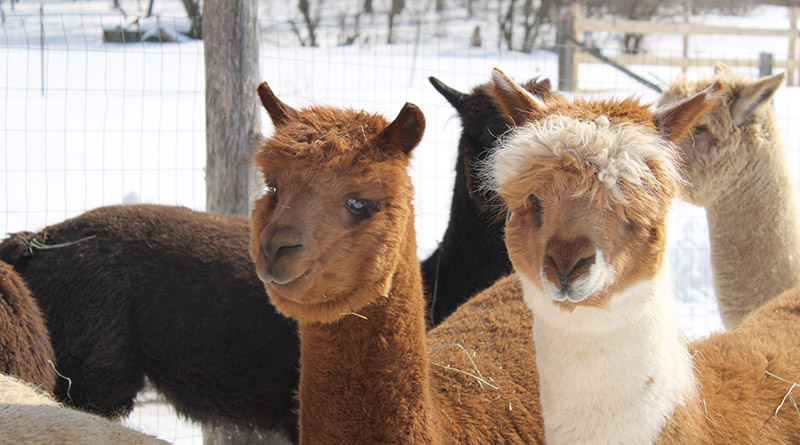
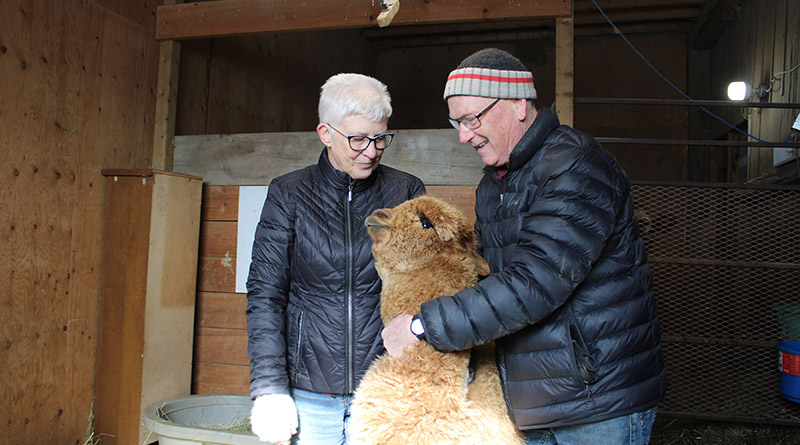
Gayle and Laird Graham, the owners and operators of Willow Lane Alpacas, walk out to meet you with a welcoming smile. Since 2007 they have built a successful farm employing the alpaca, a large mammal from South America, as their primary livestock. Although relatively uncommon within North America, the alpaca has long been valued for their soft, comfortable and warm fleece. Charming animals with long necks, slender bodies and radiant eyes, the Grahams warn that “alpacas will steal your heart.”
According to the Grahams, what was once a subsistence farm with pigs, cows, chickens and a sprawling garden changed dramatically the day 11 alpacas arrived from Stienbach, Manitoba. After exhaustive research, Gayle and Laird decided alpacas were ideal for their farm as they are quiet, intelligent animals who also produce eco-friendly fertiliser.
“I’ve chased everything down the highway – pigs, cows, horses” Gayle said with a laugh. “Alpacas are so smart though that we have them trained. We click our fingers and they just come back through the gate.”
From the initial herd of 11, Willow Lane Alpacas has flourished, and now boasts 34 alpacas. Once a year, during the second weekend of May, the Grahams have their alpacas sheared. An arduous process in itself, the shearing is just the beginning. Once the fleece is removed, it must be prepared for the mills that turn it into fabric. This stage, known as skirting, involves picking out all the dirt, straw, hay or any other debris from the fleece as the mill will not accept uncleaned fleece. According to Gayle, this process can take months.
“That’s the work of alpaca farming,” said Gayle. “It’s actually preparing the fibre to go off to the mills.”
With the taxing work of skirting completed, the fleece is shipped to a mill in New Brunswick where it is converted into yarn. From here it is reshipped to various locations to be fabricated into socks, mittens, insoles and all manner of alpaca products.
Gayle insists the benefits of alpaca products are extensive. According to Gayle, not only is alpaca fabric warmer and more durable than say cotton or sheep’s wool, but is also extremely comfortable.
“Being in our area, people are outside in the winter a lot,” said Gayle. “Many people in the region, whether hunters or other farmers, wear our products to keep warm and comfortable.”
In addition to alpaca products, the farm sells honey, eggs and offers guided tours to the public. During the tours, participants are walked through the process of alpaca farming and are afforded the opportunity to have an up close and personal experience with the animals. According to the Grahams, the alpacas’ gentle nature, intelligence and cleanliness make it an ideal animal to introduce young families and the general public to animal husbandry.
“If they don’t want to be touched, they just walk away,” said Gayle. “They are quiet and make a soft humming sound to speak with each other.”
“Agritourism is really important for the region,” explained Laird. “All of these small farming businesses are bringing people into the area, which is really good for the regional economy.”