





EMILY HSUEH
SHAWVILLE June 21, 2021
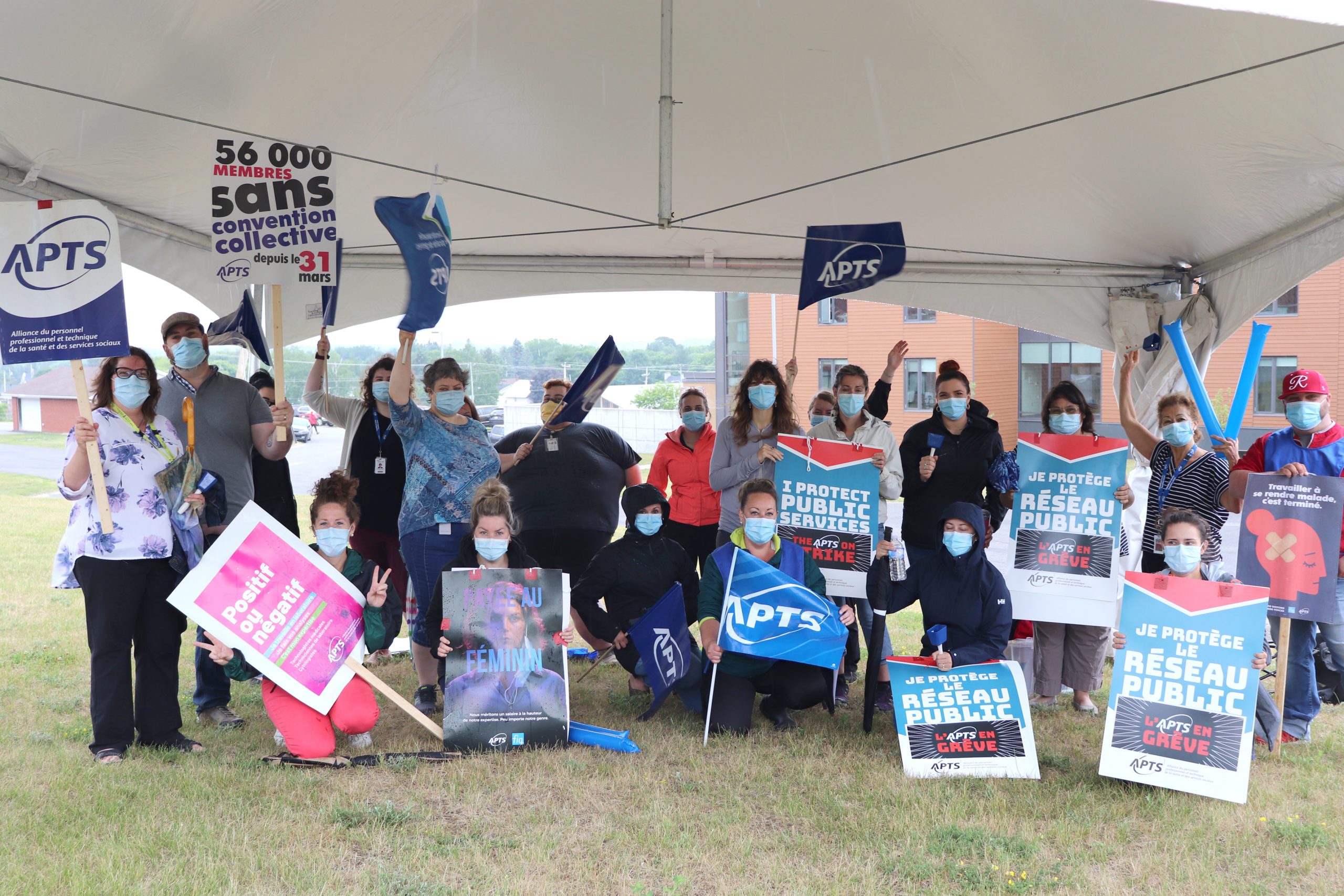
A group of around 20 people gathered at the Pontiac Community Hospital on June 21 carrying flags and signs bearing the logo of the Alliance du personnel professionnel et technique de la santé service sociaux (APTS).
They were made up of professionals and technicians in the province’s public health and social services system who were out on strike for. . .
the third time this month, with another day of striking taking place the following day, June 22. The workers at the hospital were all employees at the Pontiac establishment.
Previously, the workers took to the picket line on June 7 and 8 with the goal to “improve our working conditions so that our public health care and social services network is able to attract new employees, retain experienced staff, and eliminate the labour shortage that is currently putting services to Quebecers in jeopardy,” APTS communications manager Maxime Clément wrote in an email.
According to Clément, the APTS, who has been representing the workers, has been in bargaining talks with the Quebec Government for the last 18 months, and were forced to take action after no resolution was found. In total, 60,000 people went on strike across the province.
Though workers were on strike, the services at the hospital were not largely affected by the walkout.
“While our members are on strike, we’re making sure that the essential services are provided,” wrote Clément. “While some services will be stalled, we’re making sure emergencies are taken care of and no one should be left in a position where their physical or mental health is in danger.”
As for when an agreement will be reached, there is no clear answer. However, the APTS plans to maintain pressure on the government until one is reached.
“We’ve been working intensively at the bargaining table since last Thursday,” said Clément. “How long it will take depends mostly on the government’s will to work with our proposals and reach a deal that will benefit the professionals and technicians, but also the population who will be getting better and more accessible services.”