





The Federal Court of Appeal has upheld a court challenge filed by a Quebec First Nation and three environmental groups that seeks to protect species at risk from possible harm caused by the building of the nuclear waste disposal facility in Chalk River.
In 2024, Kebawoek First Nation, the Concerned Citizens of Renfrew County and Area, the Canadian Coalition for Nuclear Responsibility, and Sierra Club Canada Foundation filed for judicial review of the federal environment ministry’s decision to grant a Species at Risk permit to Canadian Nuclear Laboratories (CNL).
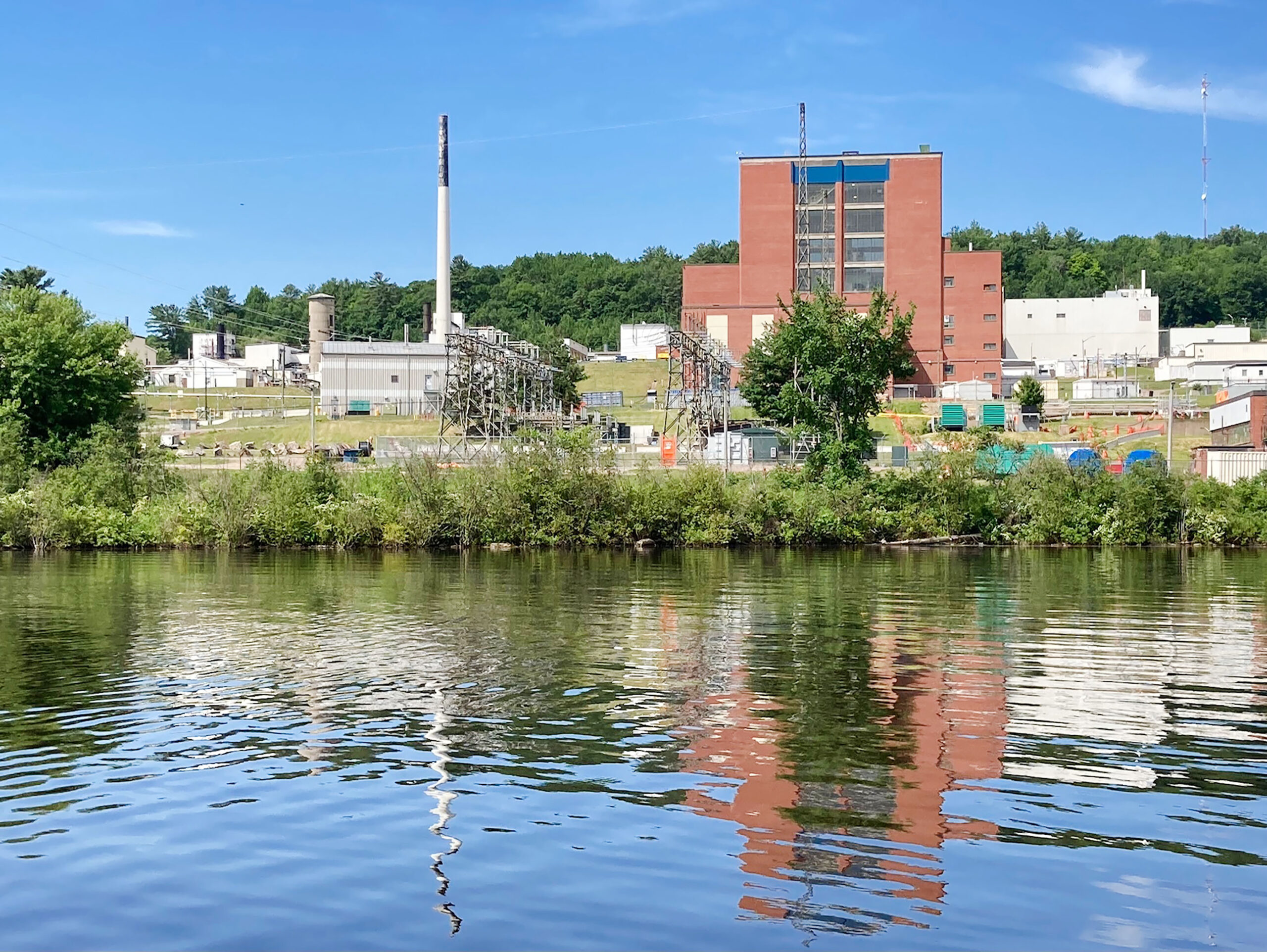
CNL needs the permit to build what it calls a “near-surface disposal facility” about a kilometre from the Ottawa River that it will use to dispose of what it claims is low-level radioactive waste that has accumulated at the Chalk River site.
The groups argued the ministry was wrong to grant CNL the permit as the proponent had not adequately considered other locations for the facility that would have less of an impact on three key species – the Blanding’s turtle and two species of bats.
Last year, the Federal Court upheld this challenge, ruling that in limiting the sites considered to properties already owned by crown corporation Atomic Energy of Canada Ltd., CNL was not properly considering alternative sites, and ordered the ministry to review its granting of this permit.
CNL then appealed this decision, making the case that this limitation brought certain advantages, among them not contaminating another site with radioactive waste.
But on May 28, the Court of Appeal dismissed CNL’s appeal, ruling the environment minister at the time, Steven Guilbeault, had not provided adequate transparency into why he concluded that all reasonable alternatives had been considered.
“While the Chalk River site may well be a defensible location for the disposal facility, the Minister’s reasons for issuing the permit failed to meet the applicable standards of transparency, intelligibility and justification,” writes Justice Monica Biringer in the decision.
“I have concluded that the Minister’s decision is unreasonable. I would therefore dismiss the appeal and remit the matter to the Minister for redetermination in accordance with these reasons.”
Kebaowek First Nation and the three environmental groups behind the challenge are celebrating the ruling.

“This decision reinforces what we have been saying from the beginning: decisions that threaten endangered species, sensitive ecosystems, and our sacred river must be based on a transparent, rigorous, and lawful process,” said Kebaowek chief Lance Haymond.
A joint press release from all four groups noted that beyond the Blanding’s turtle and two species of bat, the proposed site is also home to the Canada Warbler, the Golden-winged Warbler, the Whip-poor-will, the Eastern Wolf, and the Black Ash, all protected under the Species at Risk Act.
“The Court recognized that the public deserves meaningful explanations when decisions are made that could result in the destruction of endangered species and their habitats,” said Ole Hendrickson, spokesperson for Concerned Citizens of Renfrew County and Area. “The ecological value of this site is extraordinary, and it deserves careful consideration before irreversible damage is permitted.”
In a statement, Environment and Climate Change Canada said it is reviewing the decision and its implications carefully and will determine next steps as appropriate.
CNL said it is also taking the time to evaluate the court ruling and determine next steps.
“Through the appeal, CNL sought to obtain clarity in a complex regulatory environment as we work to responsibly address Canada’s legacy nuclear liabilities and minimize their impacts on the environment,” it said in a statement.
CNL says it currently has approximately 50,000 m3 of low-level radioactive waste stored at its site in above-ground storage containers that needs a permanent home, and that this storage system can support CNL’s plans over the next 10 years.
There are, however, many groups that have challenged the claim that only low-level waste will be put in the proposed disposal facility, including the Concerned Citizens of Renfrew County and the Canadian Coalition for Nuclear Responsibility. Former nuclear waste management employees at the site have also said that a lack of previous waste classification systems make it difficult to guarantee that only low-level waste will be put in the facility.

The appeal court’s decision is the first on two appeals made by CNL in response to Federal Court rulings on challenges brought forward against the nuclear waste facility.
Kebaowek also filed for judicial review of the Canadian Nuclear Safety Commission’s 2024 decision to grant CNL a license to build the facility on the grounds that the First Nation had not been adequately consulted. The Federal Court upheld this challenge. The nuclear safety commission renewed consultation efforts with Kebaowek, while CNL appealed the decision. The case is currently before the Federal Court of Appeal.
La Cour d’appel fédérale a confirmé une contestation judiciaire déposée par une Première Nation du Québec et trois groupes environnementaux qui vise à protéger les espèces en péril des dommages potentiels causés par la construction de l’installation de stockage de déchets nucléaires à Chalk River.
En 2024, la Première Nation de Kebaowek, les Citoyens préoccupés du comté de Renfrew et de la région, la Coalition canadienne pour la responsabilité nucléaire et la Fondation Sierra Club Canada ont déposé une demande de révision judiciaire de la décision du ministère fédéral de l’Environnement d’accorder un permis en vertu de la Loi sur les espèces en péril aux Laboratoires Nucléaires Canadiens (LNC).
Les LNC ont besoin de ce permis pour construire ce qu’ils appellent une « installation d’élimination en surface » à environ un kilomètre de la rivière des Outaouais, qu’ils utiliseront pour éliminer ce qu’ils affirment être des déchets radioactifs de faible activité qui se sont accumulés sur le site de Chalk River.
Les groupes ont fait valoir que le ministère avait eu tort d’accorder le permis aux LNC, car le promoteur n’avait pas suffisamment envisagé d’autres emplacements pour l’installation qui auraient eu moins d’impact sur trois espèces clés – la tortue mouchetée et deux espèces de chauves-souris.
L’année dernière, la Cour fédérale a confirmé cette contestation, statuant qu’en limitant les sites considérés aux propriétés déjà détenues par la société d’État Énergie atomique du Canada Limitée, les LNC n’avaient pas correctement examiné les sites alternatifs, et a ordonné au ministère de réexaminer l’octroi de ce permis.
Les LNC ont alors fait appel de cette décision, faisant valoir que cette limitation présentait certains avantages, dont celui de ne pas contaminer un autre site avec des déchets radioactifs.
Mais le 28 mai, la Cour d’appel a rejeté l’appel des LNC, statuant que le ministre de l’Environnement de l’époque, Steven Guilbeault, n’avait pas fourni une transparence adéquate quant aux raisons pour lesquelles il avait conclu que toutes les solutions de rechange raisonnables avaient été prises en compte.
« Bien que le site de Chalk River puisse être un emplacement défendable pour l’installation de stockage, les raisons du ministre pour la délivrance du permis n’ont pas satisfait aux normes applicables de transparence, d’intelligibilité et de justification », écrit la juge Monica Biringer dans la décision.
« J’ai conclu que la décision du ministre est déraisonnable. Je rejetterais donc l’appel et renverrais l’affaire au ministre pour une nouvelle décision conformément aux présentes raisons. »
La Première Nation de Kebaowek et les trois groupes environnementaux à l’origine de la contestation célèbrent la décision.
« Cette décision renforce ce que nous disons depuis le début : les décisions qui menacent les espèces en péril, les écosystèmes sensibles et notre rivière sacrée doivent être fondées sur un processus transparent, rigoureux et légal », a déclaré Lance Haymond, chef de Kebaowek.
Un communiqué de presse conjoint des quatre groupes a souligné qu’au-delà de la tortue mouchetée et de deux espèces de chauves-souris, le site proposé abrite également la paruline du Canada, la paruline à ailes dorées, l’engoulevent bois-pourri, le loup de l’Est et le frêne noir, tous protégés en vertu de la Loi sur les espèces en péril.
« La Cour a reconnu que le public mérite des explications significatives lorsque des décisions sont prises qui pourraient entraîner la destruction d’espèces en péril et de leurs habitats », a déclaré Ole Hendrickson, porte-parole des Citoyens préoccupés du comté de Renfrew et de la région. « La valeur écologique de ce site est extraordinaire, et il mérite un examen attentif avant que des dommages irréversibles ne soient autorisés. »
Dans un communiqué, Environnement et Changement climatique Canada a déclaré qu’il examine attentivement la décision et ses implications et qu’il déterminera les prochaines étapes au besoin.
Les LNC ont déclaré qu’ils prennent également le temps d’évaluer la décision du tribunal et de déterminer les prochaines étapes.
« Par cet appel, les LNC cherchaient à obtenir de la clarté dans un environnement réglementaire complexe alors que nous travaillons à gérer de manière responsable les passifs nucléaires historiques du Canada et à minimiser leurs impacts sur l’environnement », ont-ils déclaré dans un communiqué.
Les LNC affirment qu’ils ont actuellement environ 50 000 m3 de déchets radioactifs de faible activité stockés sur leur site dans des conteneurs de stockage en surface qui nécessitent un emplacement permanent, et que ce système de stockage peut soutenir les plans des LNC au cours des 10 prochaines années.
Il y a, cependant, de nombreux groupes qui ont contesté l’affirmation selon laquelle seuls des déchets de faible activité seraient placés dans l’installation d’élimination proposée, y compris les Citoyens préoccupés du comté de Renfrew et la Coalition canadienne pour la responsabilité nucléaire. D’anciens employés de la gestion des déchets nucléaires sur le site ont également déclaré qu’un manque de systèmes de classification des déchets antérieurs rend difficile de garantir que seuls des déchets de faible activité seront placés dans l’installation.
La décision de la cour d’appel est la première de deux appels interjetés par les LNC en réponse à des décisions de la Cour fédérale concernant des contestations déposées contre l’installation de déchets nucléaires.
Kebaowek a également déposé une demande de révision judiciaire de la décision de 2024 de la Commission canadienne de sûreté nucléaire d’accorder aux LNC une licence pour construire l’installation au motif que la Première Nation n’avait pas été suffisamment consultée. La Cour fédérale a confirmé cette contestation. La Commission de sûreté nucléaire a renouvelé les efforts de consultation avec Kebaowek, tandis que les LNC ont fait appel de la décision. L’affaire est actuellement devant la Cour d’appel fédérale.