


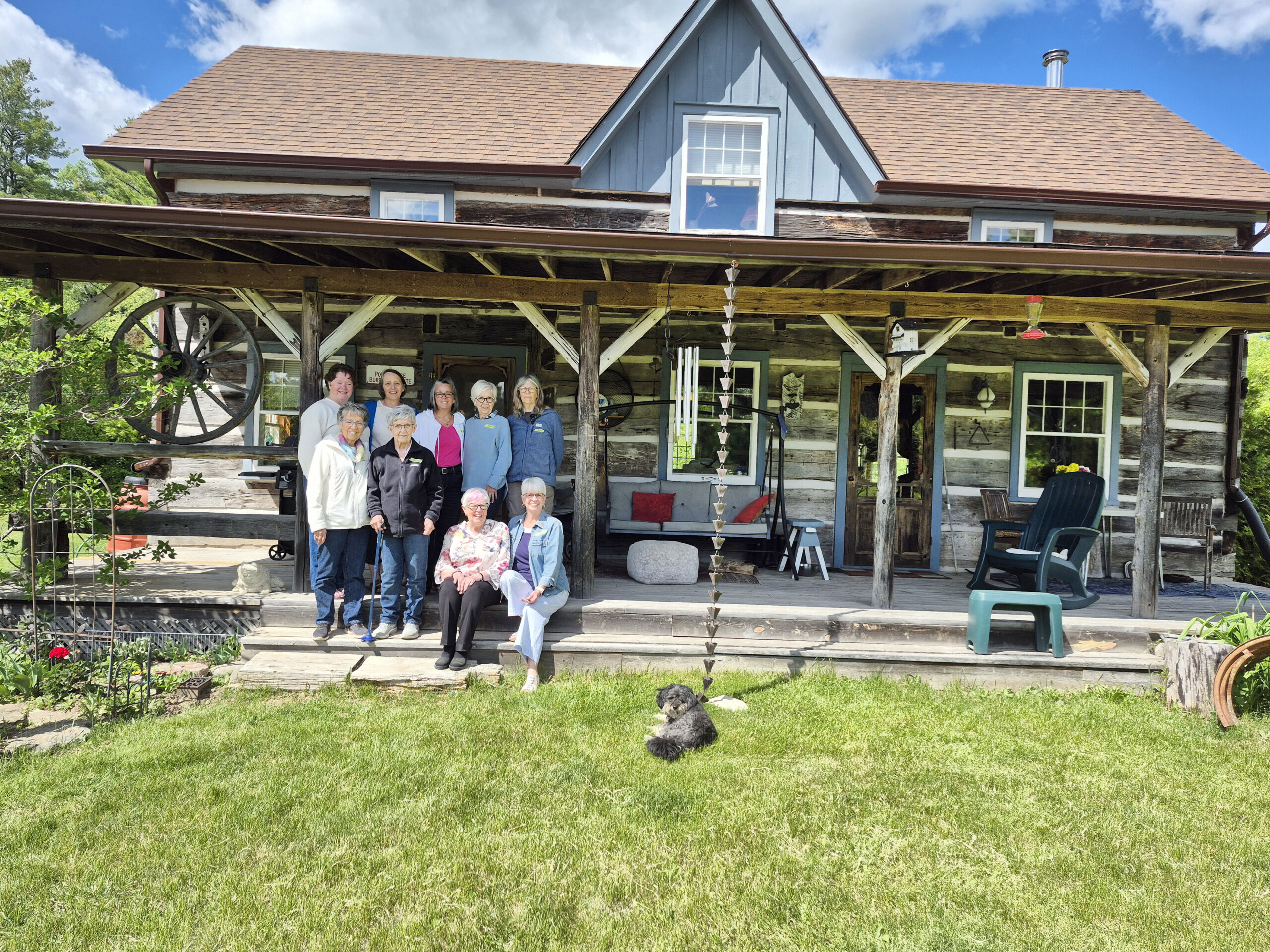



When Dari Haddon placed her finger on an ad in the Toronto Star advertising a log home for sale on L’Île-du-Grand-Calumet, she thought she was buying her dream country farmhouse.
Owner of a 100-acre lot in Castleton, Ont., Haddon planned to spend the rest of her days enjoying a slower pace of life in a rustic home. As the logs were dismantled, shipped and eventually reassembled on her little piece of paradise, that dream became a reality.
But what she didn’t realize was that she’d bought more than just an old house – it was a window into an entire family’s history.
A note from the seller traced the home’s roots back to Michael O’Hare, an Irish immigrant believed to have built the structure around 1845. The building had housed one of four post offices on the Island, before being decommissioned and living on as an O’Hare family home for generations.
With help from her sister Lynda, an amateur historian with a knack for researching old buildings, she soon realized that she now owned a piece of Pontiac history – one that would connect the sisters with descendents of the original family and the nearly 180 years of lives lived within its walls.
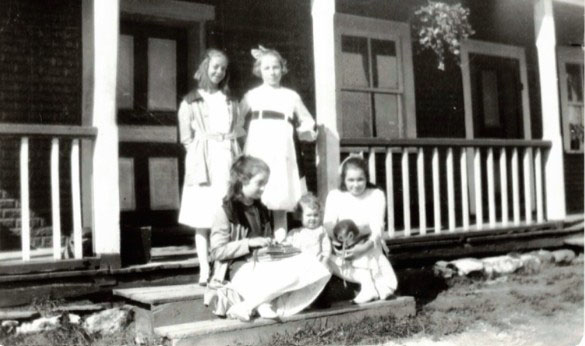
Family lore suggests Irish immigrant Michael O’Hare built the house around 1845 using timber cut on the property. He and his wife, Mary Tirrell, raised eight children there while operating a farm and eventually serving the community through the post office.
The postmaster role later passed to O’Hare’s son John, helping establish a family connection to the building that would last for generations. John and his wife Helen raised 11 children, many of whose descendants still reside in the area.
The house remained in the family’s hands until it was sold in 1991, ending nearly 150 years of ownership by the O’Hare family.
For descendent Colleen Hobbs, who lived in the house until she was 11 years old, the home is tied to stories passed down from generations prior. In one story, her grandmother, Carmel, pretended to be sick during an outbreak because everyone else was isolating and caring for each other in the attic, and she didn’t want to be left out.
“She went upstairs with all the others, but she didn’t last very long because they were quite delirious with fever, and I guess that was hurting her because she was just a little girl, so she always laughed about how quickly she recovered,” Hobbs said.

Hobbs said those stories, of early family life on the island, are what make the house special.
“We’re more than just dates, right? There are people, there’s lives, and there’s living, and there’s tragedy, and there’s joy, and there’s everything that happened within those logs.”
But once the property left the O’Hare family, the home sat unused for over a decade. The next owners used the building for storage, eventually selling it to local couple Allan Lachance and Adrienne Turgeon.
By then, years of neglect had taken a toll on the interior.
“It was a mess inside. Critters get in, and they make their nests, and they do their thing. It was pretty grungy,” Lynda Haddon told THE EQUITY, recalling an interview with log-home specialist Gavin Wilson, whom Lasalle and Turgeon hired to dismantle and relocate the logs.
Despite the condition of the interior, Wilson said the logs were still in remarkable shape.
Haddon, who spoke with Wilson in her research about the home, said that he considered it “the nicest and most unique log house that he had ever invested his time, money and energy in preserving.”
Lachance and Turgeon, who share an interest in local history, said they sold the logs because they had no use for them. Turgeon said she was pleased to learn the building’s story would continue at a new location.

“I was all happy and pleased because it’s their heritage, and they’re piecing it together,” said Turgeon.
Hobbs said she is grateful for their decision to give the home new life, adding that many buildings of the same vintage don’t meet the same fate.
“Too many of the old log homes, they’re either just sort of brought to the ground or are practiced for the volunteer fire departments in the area,” she said.
Once Wilson had tagged, numbered and transported the logs, he sold them to a specialist in Newcastle, where the home was reconstructed and an ad was placed in the Toronto Star.
When Dari Haddon purchased the home, she had never heard of L’Île-du-Grand-Calumet, let alone the O’Hare family. But after reading the note explaining the history of the building, she and her sister soon found themselves immersed in it.
Lynda, who had written three short-length books on the history of various buildings in Perth, Ont., researched and wrote a 26-page book on the history of the O’Hare family and the role it played in the community.
“And there’s so many unanswered questions. And if the walls could talk, of course you could fill in the blanks,” she said. “But it’s not going to happen. So I just put my pen to the paper.”
The research eventually led the sisters to descendants of the O’Hare family, whom they contacted to learn more about the building’s history. The families have become fast friends, bonding over this connection to a seemingly random building and a shared love of history.
In 2024, the Haddons visited L’Île-du-Grand-Calumet to meet several O’Hare descendents, as well as Lachance and Turgeon, each sharing stories about the house. For each of the past two years, the families reunited again in Castleton so family members could see the home in its new location.
Hobbs, who spent part of her childhood in the house, said it has been interesting to spend time in the building and reminisce about family lore. But she said the connections that have emerged from the project, whether with the Haddons or with extended family, have been the most rewarding parts.
“We’ve all met and it’s just been one of those magical stories where things just happen. Synchronicity is what brought everyone together.”
Haddon said she has appreciated getting to know the family and bringing the building’s history to life. She said those relationships have added another layer of meaning to the home.
“This house is so much richer to me, given that I know the story behind it, right from its origin. And knowing some of the people who have lived here or descendants from people who built it and lived here . . . There’s a whole story attached to it.”
Hobbs said she and other family members feel that their family home has a great caretaker in Dari, and that she hopes the house will last on the property for another 150 years.
“It’s nice to see that that building is living on now with Dari and her family, and it’s going to be filled with just equally beautiful memories.”
Quand Dari Haddon a posé son doigt sur une publicité dans le Toronto Star faisant la promotion d’une maison en bois rond à vendre sur L’Île-du-Grand-Calumet, elle pensait acheter la ferme de campagne de ses rêves.
Propriétaire d’un terrain de 100 acres à Castleton (Ont.), Mme Haddon avait prévu de passer le reste de ses jours à profiter d’un rythme de vie plus lent dans une maison rustique. Au fur et à mesure que les billes étaient démontées, expédiées et finalement réassemblées sur son petit coin de paradis, ce rêve est devenu réalité.
Mais ce qu’elle n’avait pas réalisé, c’est qu’elle avait acheté plus qu’une simple vieille maison — c’était une fenêtre sur l’histoire d’une famille entière.
Une note du vendeur a retracé les origines de la maison jusqu’à Michael O’Hare, un immigrant irlandais qui aurait construit la structure vers 1845. Le bâtiment avait abrité l’un des quatre bureaux de poste de l’île, avant d’être désaffecté et de devenir la maison familiale des O’Hare pendant des générations.
Avec l’aide de sa sœur Lynda, une historienne amateure douée pour la recherche sur les vieux bâtiments, elle a vite réalisé qu’elle possédait désormais un morceau de l’histoire du Pontiac — un morceau qui allait relier les sœurs aux descendants de la famille d’origine et aux près de 180 ans de vies vécues entre ses murs.
La tradition familiale suggère que l’immigrant irlandais Michael O’Hare a construit la maison vers 1845 en utilisant du bois coupé sur la propriété. Lui et sa femme, Mary Tirrell, y ont élevé huit enfants tout en exploitant une ferme et en servant finalement la communauté par l’intermédiaire du bureau de poste.
Le rôle de maître de poste est ensuite passé au fils de M. O’Hare, John, contribuant à établir un lien familial avec le bâtiment qui durerait des générations. John et sa femme Helen ont élevé 11 enfants, dont beaucoup de descendants résident encore dans la région.
La maison est restée entre les mains de la famille jusqu’à sa vente en 1991, mettant fin à près de 150 ans de propriété de la famille O’Hare.
Pour la descendante Colleen Hobbs, qui a vécu dans la maison jusqu’à l’âge de 11 ans, la maison est liée à des histoires transmises par les générations précédentes. Dans l’une d’elles, sa grand-mère, Carmel, a fait semblant d’être malade pendant une épidémie parce que tout le monde s’isolait et prenait soin les uns des autres dans le grenier, et qu’elle ne voulait pas être laissée pour compte.
« Elle est montée à l’étage avec tous les autres, mais elle n’a pas tenu très longtemps parce qu’ils déliraient de fièvre, et je suppose que cela lui faisait mal parce qu’elle n’était qu’une petite fille, alors elle a toujours ri de la rapidité avec laquelle elle s’est rétablie », a déclaré Mme Hobbs.
Mme Hobbs a déclaré que ces histoires, celles de la vie familiale précoce sur l’île, sont ce qui rend la maison spéciale.
« Nous sommes plus que de simples dates, n’est-ce pas ? Il y a des gens, il y a des vies, il y a de l’existence, il y a de la tragédie, il y a de la joie, et il y a tout ce qui s’est passé au sein de ces billes. »
Mais une fois que la propriété a quitté la famille O’Hare, la maison est restée inutilisée pendant plus d’une décennie. Les propriétaires suivants ont utilisé le bâtiment pour l’entreposage, le vendant finalement au couple local Allan Lachance et Adrienne Turgeon.
À ce moment-là, des années de négligence avaient fait des ravages à l’intérieur.
« C’était un désordre à l’intérieur. Les bestioles entrent, elles font leurs nids, et elles font leurs affaires. C’était plutôt crasseux », a déclaré Lynda Haddon à THE EQUITY, se remémorant une entrevue avec le spécialiste des maisons en bois rond Gavin Wilson, que M. Lasalle et Mme Turgeon avaient embauché pour démonter et relocaliser les billes.
Malgré l’état de l’intérieur, M. Wilson a déclaré que les billes étaient toujours en remarquable état.
Mme Haddon, qui s’est entretenue avec M. Wilson dans le cadre de ses recherches sur la maison, a déclaré qu’il la considérait comme « la plus belle et la plus unique maison en bois rond dans laquelle il ait jamais investi son temps, son argent et son énergie pour la préserver ».
M. Lachance et Mme Turgeon, qui partagent un intérêt pour l’histoire locale, ont déclaré qu’ils avaient vendu les billes parce qu’ils n’en avaient aucune utilité. Mme Turgeon a déclaré qu’elle était ravie d’apprendre que l’histoire du bâtiment se poursuivrait dans un nouvel endroit.
« J’étais tout à fait heureuse et ravie parce que c’est leur patrimoine, et ils le reconstituent », a déclaré Mme Turgeon.
Mme Hobbs a déclaré être reconnaissante de leur décision de donner une nouvelle vie à la maison, ajoutant que de nombreux bâtiments de la même époque ne connaissent pas le même sort.
« Trop de vieilles maisons en bois rond sont soit démolies, soit utilisées pour des exercices par les services d’incendie volontaires de la région », a-t-elle déclaré.
Une fois que M. Wilson eut étiqueté, numéroté et transporté les billes, il les a vendues à un spécialiste de Newcastle, où la maison a été reconstruite et une publicité a été placée dans le Toronto Star.
Lorsque Dari Haddon a acheté la maison, elle n’avait jamais entendu parler de L’Île-du-Grand-Calumet, et encore moins de la famille O’Hare. Mais après avoir lu la note expliquant l’histoire du bâtiment, elle et sa sœur s’y sont vite plongées.
Lynda, qui avait écrit trois courts livres sur l’histoire de divers bâtiments à Perth (Ont.), a effectué des recherches et rédigé un livre de 26 pages sur l’histoire de la famille O’Hare et le rôle qu’elle a joué dans la communauté.
« Et il y a tellement de questions sans réponse. Et si les murs pouvaient parler, bien sûr, on pourrait remplir les blancs, a-t-elle dit. Mais ça n’arrivera pas. Alors, j’ai juste mis ma plume sur le papier. »
Les recherches ont finalement mené les sœurs à des descendants de la famille O’Hare, qu’elles ont contactés pour en apprendre davantage sur l’histoire du bâtiment. Les familles sont devenues rapidement amies, se liant grâce à ce lien avec un bâtiment apparemment aléatoire et un amour partagé de l’histoire.
En 2024, les Haddon ont visité L’Île-du-Grand-Calumet pour rencontrer plusieurs descendants O’Hare, ainsi que M. Lachance et Mme Turgeon, chacun partageant des histoires sur la maison. Chacune des deux dernières années, les familles se sont de nouveau réunies à Castleton afin que les membres de la famille puissent voir la maison dans son nouvel emplacement.
Mme Hobbs, qui a passé une partie de son enfance dans la maison, a déclaré qu’il avait été intéressant de passer du temps dans le bâtiment et de se remémorer les récits familiaux. Mais elle a ajouté que les liens qui ont émergé du projet, que ce soit avec les Haddon ou avec la famille élargie, ont été les parties les plus gratifiantes.
« Nous nous sommes tous rencontrés et ce n’est qu’une de ces histoires magiques où les choses arrivent tout simplement. La synchronicité est ce qui a réuni tout le monde. »
Mme Haddon a déclaré qu’elle a apprécié de connaître la famille et de donner vie à l’histoire du bâtiment. Elle a ajouté que ces relations ont ajouté une autre couche de sens à la maison.
« Cette maison est tellement plus riche pour moi, étant donné que je connais son histoire, depuis son origine. Et connaître certaines des personnes qui y ont vécu ou des descendants des personnes qui l’ont construite et qui y ont vécu . . . Il y a toute une histoire qui y est attachée. »
Mme Hobbs a déclaré qu’elle et d’autres membres de la famille estiment que leur maison familiale a une excellente gardienne en la personne de Dari, et qu’elle espère que la maison durera sur la propriété pendant encore 150 ans.
« C’est agréable de voir que ce bâtiment perdure maintenant avec Dari et sa famille, et qu’il sera rempli de souvenirs tout aussi beaux. »