



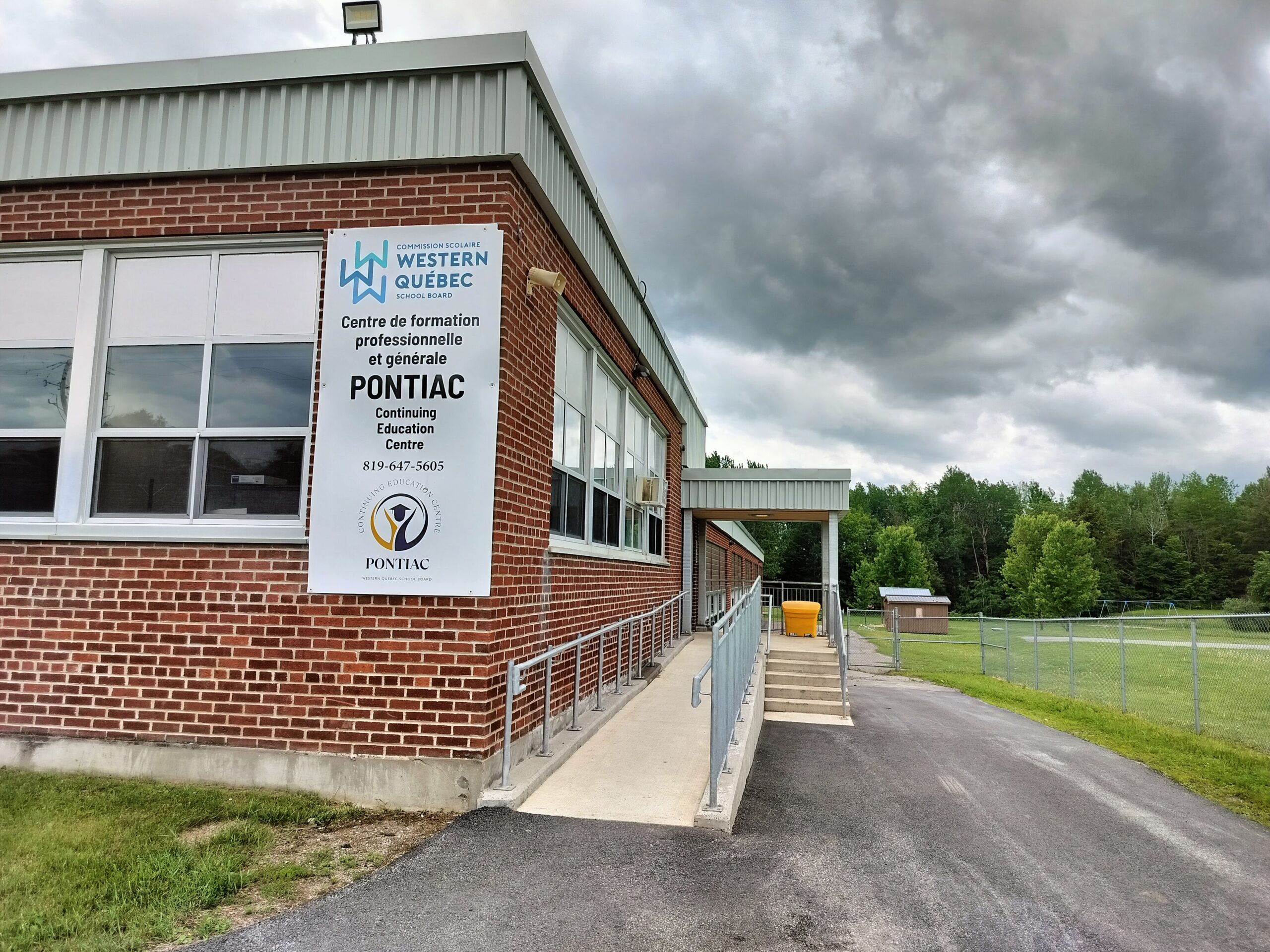



The head of the Western Quebec School Board (WQSB) is denouncing proposed changes to the province’s French language charter that would extend French-language instruction requirements to adult education and vocational training.
On June 4, French-language minister Jean-Francois Roberge tabled Bill 8, which would amend the Charter of the French Language (Law 101) to apply the province’s existing language-of-instruction rules to adult education and vocational training. The Coalition Avenir Québec (CAQ) government was trying to move this bill through the National Assembly before the summer break.
Under the proposed legislation, students would be required to study in French unless they qualify for English-language instruction under the Charter’s existing eligibility provisions. Under these regulations, the student or a sibling must have completed the majority of their elementary or secondary instruction in English in Canada, or one of their parents must have attended an English-language elementary school in Canada. These restrictions currently do not apply to adult education and vocational training.
WQSB director general Pascal Proulx denounced the proposed changes, calling them a “mistake.” He said there are many adult students across the school board who would not be eligible for English instruction under Bill 101, but who simply choose it because they are more comfortable.
“If I take the example of the nursing program, 50 per cent of our students are not Bill 101 eligible,” he said of the program, which has 30 students attending classes at both the Western Quebec Career Centre in Aylmer and the Pontiac Continuing Education Centre in Shawville.
He said the bill would prevent students from filling job openings in high-demand areas, such as nursing, accounting, welding and others.
“We know there’s a need right now for vocational training. The market is requesting more of those well-trained students,” he said.
He said the nursing program would be far from the only one affected. Because students are not asked questions on Bill 101 eligibility before enrolling in classes, Proulx said it is difficult to know exactly how many learners would be affected by the proposed changes.
The board operates six adult education and vocational training centres across the region, serving roughly 1,200 students each year.
French-language minister Roberge said in a press conference on June 4 that the measure is being taken to stop the decline of the French language in the province. He said that there are 27,000 students across the province in the adult and vocational sectors who are studying in English despite not being Bill 101 eligible. He said the trend needs to be reversed.

“There is a very strong correlation between the final diploma received, the language in which we receive that final diploma, and the language used at work, in communications, even in personal communications,” he said. “It’s a bill that is being added as a series of measures that are indispensable to reverse the decline of the French language.”
Proulx questioned the French service centres’ ability to absorb an additional 27,000 students, citing that some programs, particularly nursing, have a wait list in the French system. He said the French system also has a lack of available classroom space, calling into question whether students will be able to get the education they desire.
“They won’t have the capacity to accept those students [ . . . ] They won’t have the facilities or the teaching staff,” he said.
Quebec English School Board Association president Joe Ortona said in a press release on June 4 that the proposed change would create unnecessary barriers for learners while weakening pathways to employment.
“We believe there are more effective and constructive ways to strengthen and promote the French language without restricting access to education,” Ortona said.
“Enhancing French-language learning within vocational and adult education programs, while supporting practical bilingual training models would better serve both learners, Quebec’s labour market and the province’s economy.”
If this bill becomes law, the new rules would not come into effect before July 1, 2028, meaning that students currently being educated in the English system would be allowed to complete their education in English. Those who register after the bill is adopted are not eligible for the English system would have to move to the French system.
The bill did not move through the house before the National Assembly adjourned on June 12. The bill can continue through the legislative process when MNAs return in the fall. There is a provincial election on Oct. 4.

Le directeur général de la Commission scolaire de Western Quebec (CSWQ) dénonce les modifications proposées à la Charte de la langue française de la province qui étendraient l’application des exigences relatives à l’enseignement en français à l’éducation des adultes et à la formation professionnelle.
Le 4 juin, le ministre de la Langue française, Jean-François Roberge, a déposé le projet de loi 8, qui modifierait la Charte de la langue française (Loi 101) afin d’appliquer les règles existantes de la province en matière de langue d’enseignement à l’éducation des adultes et à la formation professionnelle.
Le gouvernement de la Coalition Avenir Québec (CAQ) espère faire adopter ce projet de loi à l’Assemblée nationale avant qu’elle ne suspende ses travaux pour l’été le 12 juin.
En vertu de la législation proposée, les étudiants seraient tenus d’étudier en français à moins qu’ils ne soient admissibles à l’enseignement en anglais en vertu des dispositions d’admissibilité existantes de la Charte. En vertu de ces dispositions, l’étudiant ou un frère ou une sœur doit avoir terminé la majorité de son enseignement primaire ou secondaire en anglais au Canada, ou l’un de ses parents doit avoir fréquenté une école primaire anglophone au Canada. Ces restrictions ne s’appliquent actuellement pas à l’éducation des adultes et à la formation professionnelle.
Le directeur général de la CSWQ, Pascal Proulx, a dénoncé les changements proposés, les qualifiant d’« erreur ». Il a déclaré que de nombreux étudiants adultes de la commission scolaire ne seraient pas admissibles à l’enseignement en anglais en vertu de la loi 101, mais le choisissent simplement parce qu’ils sont plus à l’aise en anglais.
« Si je prends l’exemple du programme de soins infirmiers, 50 pour cent de nos étudiants ne sont pas admissibles en vertu de la loi 101 », a-t-il déclaré à propos du programme, qui compte 30 étudiants suivant des cours à la fois au Centre de carrière de l’Ouest du Québec à Aylmer et au Centre d’éducation permanente du Pontiac à Shawville. Il a déclaré que le projet de loi empêcherait les étudiants de pourvoir des postes vacants dans des domaines en forte demande, tels que les soins infirmiers, la comptabilité, le soudage et d’autres.
« Nous savons qu’il y a un besoin actuel en formation professionnelle. Le marché demande davantage de ces étudiants bien formés », a-t-il déclaré. Il a déclaré que le programme de soins infirmiers serait loin d’être le seul touché. Parce que les étudiants ne sont pas interrogés sur leur admissibilité à la loi 101 avant de s’inscrire aux cours, Proulx a déclaré qu’il était difficile de savoir exactement combien d’apprenants seraient touchés par les changements proposés.
La commission scolaire exploite six centres d’éducation des adultes et de formation professionnelle dans toute la région, desservant environ 1 200 étudiants chaque année. Le ministre de la Langue française, Roberge, a déclaré lors d’une conférence de presse le 4 juin que la mesure est prise pour stopper le déclin de la langue française dans la province. Il a déclaré qu’il y a 27 000 étudiants dans toute la province dans les secteurs de l’éducation des adultes et de la formation professionnelle qui étudient en anglais bien qu’ils ne soient pas admissibles en vertu de la loi 101, une tendance qui, selon lui, doit être inversée.
« Il existe une très forte corrélation entre le diplôme final reçu, la langue dans laquelle nous recevons ce diplôme final, et la langue utilisée au travail, dans les communications, même dans les communications personnelles », a-t-il déclaré.
« C’est un projet de loi qui s’ajoute à une série de mesures indispensables pour inverser le déclin de la langue française. » Proulx a remis en question la capacité des centres de services en français à absorber 27 000 étudiants supplémentaires, citant le fait que certains programmes, notamment en soins infirmiers, ont une liste d’attente dans le système français.
Il a déclaré que le système français manque également d’espace de classe disponible, remettant en question la capacité des étudiants à obtenir l’éducation qu’ils désirent. « Ils n’auront pas la capacité d’accepter ces étudiants [ . . . ] Ils n’auront pas les installations ou le personnel enseignant », a-t-il déclaré.
Le président de l’Association des commissions scolaires anglophones du Québec, Joe Ortona, a déclaré dans un communiqué de presse le 4 juin que le changement proposé créerait des obstacles inutiles pour les apprenants tout en affaiblissant les voies d’accès à l’emploi.
« Nous croyons qu’il existe des moyens plus efficaces et constructifs de renforcer et de promouvoir la langue française sans restreindre l’accès à l’éducation », a déclaré Ortona. « Améliorer l’apprentissage du français au sein des programmes de formation professionnelle et d’éducation des adultes, tout en soutenant des modèles de formation bilingue pratiques, servirait mieux à la fois les apprenants, le marché du travail québécois et l’économie de la province. »
Si ce projet de loi devient loi, les nouvelles règles n’entreraient pas en vigueur avant le 1er juillet 2028, ce qui signifie que les étudiants actuellement formés dans le système anglais seraient autorisés à terminer leur éducation en anglais. Ceux qui s’inscrivent après l’adoption du projet de loi et qui ne sont pas admissibles au système anglais devraient passer au système français.
L’Assemblée nationale doit suspendre ses travaux pour l’été le 12 juin. Si la législation n’est pas adoptée avant cette date, elle pourra se poursuivre à travers le processus législatif lorsque les députés reviendront à l’automne. Il y a une élection provinciale le 4 octobre.