





Carole St-Aubin
Pontiac Sept. 29, 2021
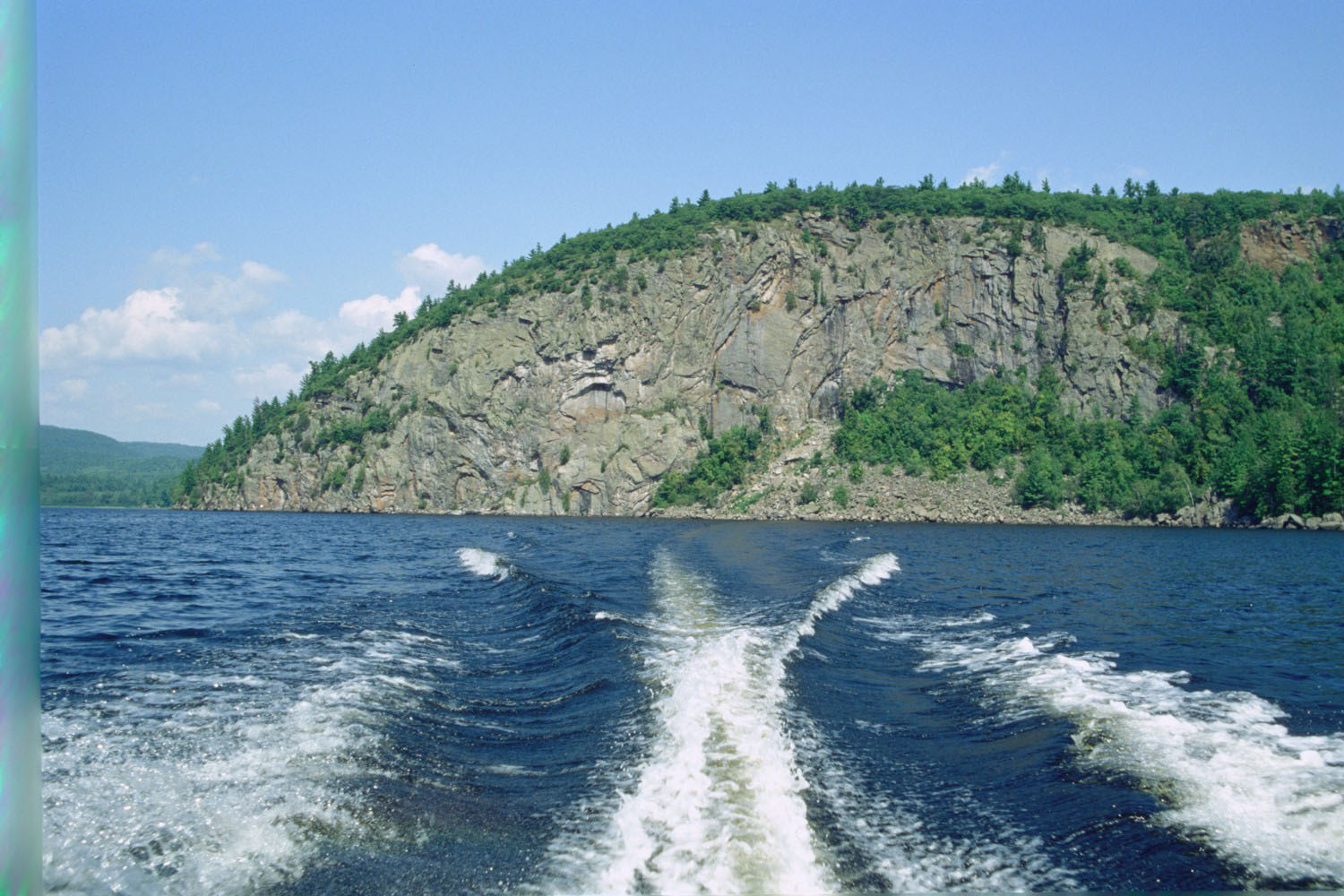
Oiseau Rock is a red ochre pictograph site rising majestically 150 metres above the Ottawa River near Sheenboro. It has been a witness to many river crossings as well as rituals and sacred tobacco offerings.
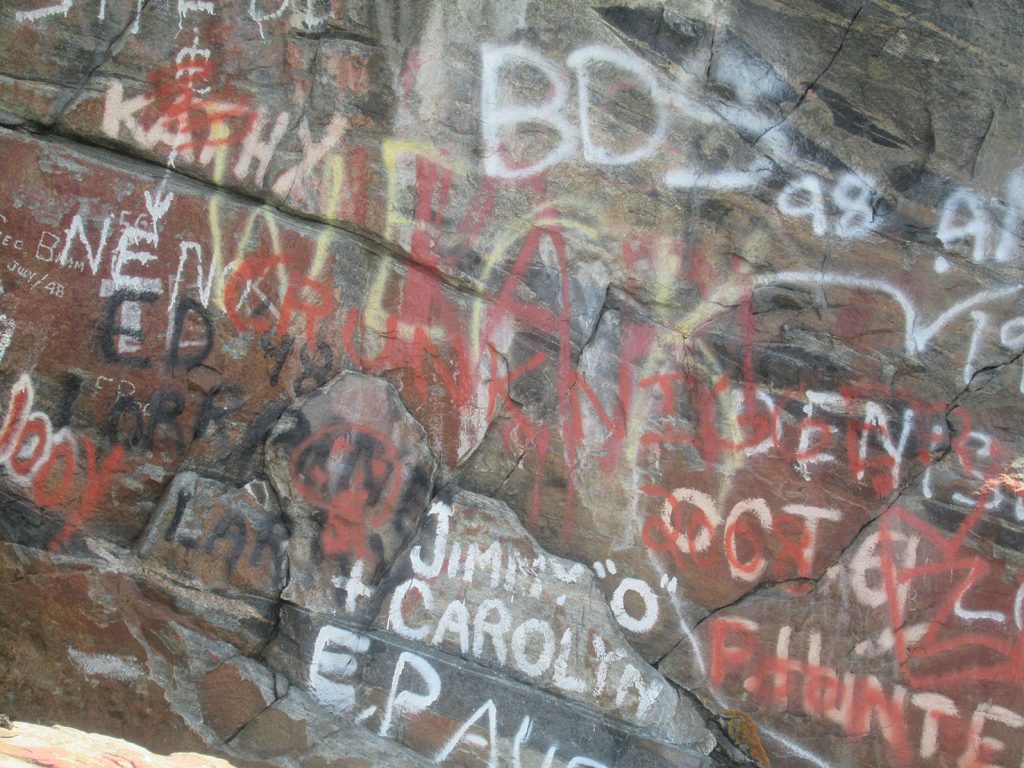
Of the five known rock art sites in the province, it is considered one of the largest of its kind in Quebec, but it has also recently been deemed one the worst graffiti-laden sites in Canada, according to recent studies conducted by the Ministry of Culture and Communications.
These pictographs, some possibly dating back several hundreds of years, are being desecrated, almost to the point of obliteration, according to Joann McCann who works as an independent historical researcher of First Nation land claims.
“I’ve been an advocate for the education, preservation and restoration of the site since the ‘60s,” said McCann who owns a cottage on the Ottawa River. “Once I saw them and the amount of graffiti, I realized something had to be done and I consulted experts,” she added.
McCann then formed a group called Friends of Oiseau Rock and lobbied for government intervention.
An archeological report by Selweyn Dewdney and Gilles Tassé done in the late 1970s highlights the depicted images of birds, fish, a canoe, a bear with dots to signify movement, and a humanlike figure believed to be that of Nanabozho.
In traditional teachings and storytelling, Nanabozho is also known as a trickster and shapeshifter who embodies and protects life and its various cycles.
He is customarily used in moral teachings, according to the Canadian Encyclopedia website.
Oiseau Rock is linked to the great Firebird, a symbol of strength and nobility. It is said to produce thunder with the flap of its wings, and lightning with the opening and closing of its eyes.
There are many other legends associated with the rock that are depicted in various forms and interpretations.
“This sacred geography is still very much a living spiritual site,” said McCann.
Members of both the Kitigan Zibi Anishinabeg and Pikwakanagan First Nations have often journeyed to the site in collaboration with various groups and individuals in the course of the ongoing efforts to raise awareness and preserve the landmark.
The site also receives a lot of attention recreationally, with a developed hiking trail leading up to the summit where a beautiful lake is nestled, a lookout at the summit, and a popular beach area at the base of the rock where many people enjoy a picnic.
In addition, the site possesses rare bird nesting sites and rare flora such as Alpine Milkvetch, Sedge, American stickseed and the Eastern Red Cedar, a tree that is known for longevity (up to 500 years), according to McCann.
If the spiritual aspect wasn’t enough in and of itself, the above-mentioned only serves to reiterate the importance of preserving the revered sacred site and its natural beauty.
While some work has been done with the development of the five km hiking trail, adding interpretational panels along the way, the erection of a sign on the face of the rock to explain its significance and adding an outhouse on the beach, McCann says she is still advocating for government to erect a bigger sign on the face of the rock in an effort to help preserve the sacred stories of the First Nations People. She would also like to see a public education campaign to protect the landscape that deserves respect.
“I would encourage the government to speak to the Algonquin communities and have the Elders talk about its spiritual significance where the place is not only an historical site but a current place where Anishnabe revere,” McCann concluded.