





STEPHEN RICCIO
PONTIAC Feb. 3, 2021
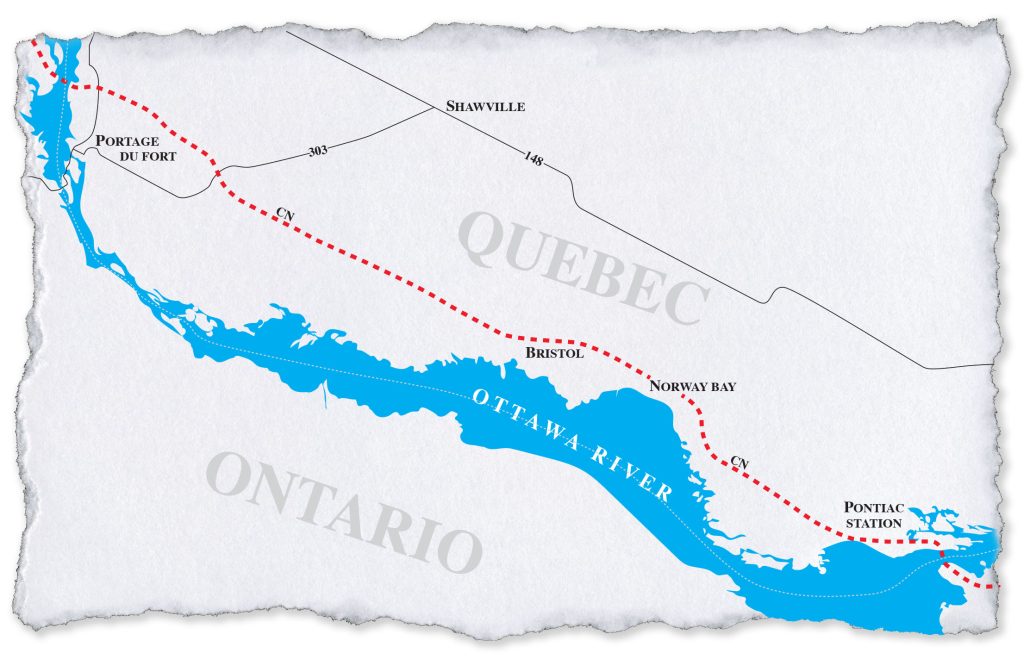
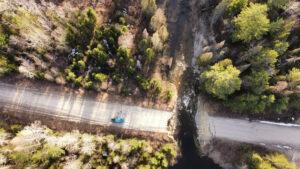
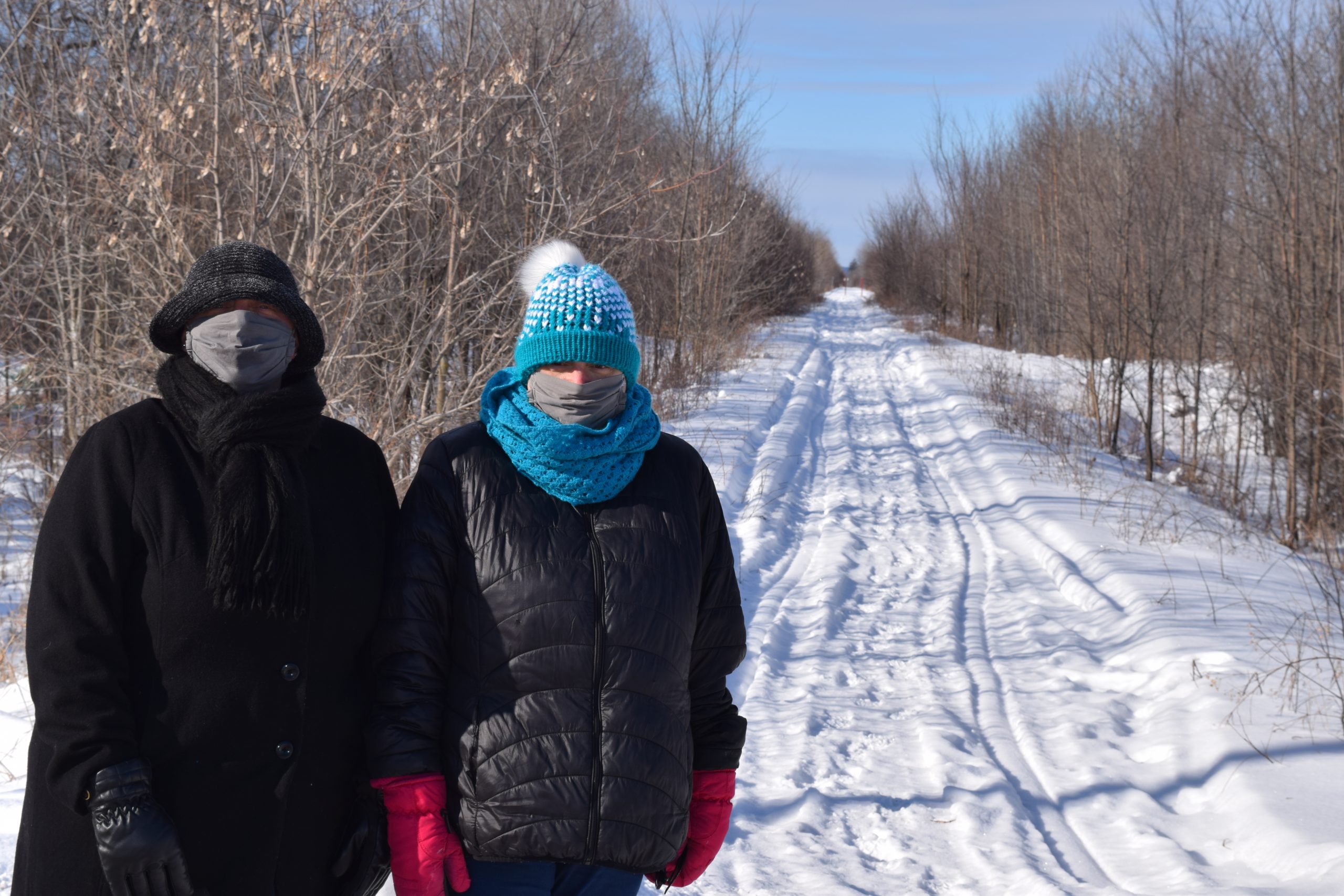
In December, the MRC council tabled a draft bylaw regarding the use of the old CN rail bed that runs parallel to the Ottawa River from Bristol to Portage du Fort. Since then, public discussion around snowmobiles and ATVs using the trail has produced a variety of perspectives.
That discussion carried into the MRC’s Jan. 20 meeting when Clarendon Mayor John Armstrong and Bristol Mayor Brent Orr asked that the official bylaw not be tabled as it was scheduled to be; they pointed out that further discussion with the snowmobile clubs and their constituents was needed.
However, according to those in the Pontiac Snowmobile Drivers Association (PSDA), the rail bed has been legally used by its members for the past four years with little issues, as the PSDA has a lease with CN Rail.
PSDA vice-president Ralph Young said that the use of the rail bed has been significant in boosting the club, as it coincided with linking the trail between Ontario and Quebec via the old Portage du Fort rail bridge. Since then, Young said membership has gone from 300 to over 800 riders.
“So this is not an insignificant venture, like it really has proven to be everything that we assumed it would be and all we’re trying to do is secure the fact that we have access, by passing laws through the MRC,” Young said. “And then it’s a done deal.”
The bylaw — which would allow the MRC to officially designate the railbed for snowmobile and ATV usage in the Municipalities of Bristol, Clarendon, Litchfield and Portage du Fort — is set to be tabled at a special meeting on Feb. 3. While none of the mayors spoke out in opposition to the bylaw during January’s meeting, some residents’ concerns were raised through a public consultation period and they were discussed during the meeting by land planner Alexandre Savoie-Perron and director of economic development Cyndy Phillips.
Residents of the Bristol community of Pontiac Station had submitted a concern regarding traffic through their community to the MRC during consultation.
PSDA President Alain Goulet said that the club’s goal is to maneuver the trail around the properties that exist within 100 metres of the rail bed in Pontiac Station, of which there are several. The club recently put in requests with the Quebec government and the Nature Conservancy of Canada to implement a bypass through those properties. Goulet explained that there is a bridge that connects the eastern end of the rail bed to Ontario near Fitzroy Harbour, so therefore finding a way through or around Pontiac Station is key for the club.
“The bridge did cost almost half a million dollars and we want to make sure that we can get to the bridge regardless of what those landowners say, hence why we may have to put the trail through Pontiac Station,” he said. “But the intent is to go around the village if we can.”
A similar bypass is set up in Bristol Village, as sisters Colleen and Cheryle Breton’s house stands within footsteps of the rail bed on chemin de Bristol.
Goulet said that the club’s agreement with [Colleen] Breton was good over the past four years, with riding members having been given a bypass trail with clear signage on a neighboring farm property to avoid filling the Breton’s house with noise throughout the day.
“I know there’s always a few delinquents, as in any sport there’s always going to be someone who doesn’t listen to the rules and not much we can do about that,” he said.
However, Colleen said that the situation has been a nuisance for her and her sister over the years. She explained that Goulet has tried to pile up heaps of snow where the trail is intended to connect near her house, but some riders plow right through it.
“Maybe it is people that are in the club that just don’t care, or maybe it’s rogue people are just deciding to take the track,” Colleen said.
“Before the curfew it was all hours of the night and day, it would start at eight in the morning and we’ve been awaken at [3 a.m.] even, because those two windows are our bedroom windows so you hear everything,” she continued, while pointing to the two windows closest to the trail. “But when [they do] the detour I don’t hear anything.”
Colleen said she understands that Goulet has tried his best to police the situation, but she felt the need to speak out because there has yet to be a sustainable solution. She also said that if the trail is to be used by ATVs in the summer, this will create further stress for her and her sister.
Goulet said that the club understands that Colleen has continued to deal with rogue riders, and he offered a solution.
“The club will probably install gates this year on that rail bed to stop unwanted use or to make it difficult to use in the offseason,” he said.
Colleen said that if Goulet does put up some barricades, she will be pleased.
Cheryle said that some people have asked why they didn’t have a problem with the noise of trains prior to the railway’s discontinuation.
“The train was essential bringing stuff to and from the cities,” she said, adding that its schedule was consistent and predictable, unlike snowmobile users.
Colleen explained how she was sent an anonymous letter shortly after sharing her thoughts on a Norway Bay Facebook group. The letter detailed a 2004 Quebec Superior Court ruling that awarded $1,200 per year in compensation to residents who lived within 100 metres of a highly-trafficked snowmobile trail in MRC des Laurentides. The MRC and the Quebec government were financially responsible and over 600 residents were eligible for the compensation. As a result of the lawsuit, snowmobile access became restricted along a 30 km stretch in the area.

She said that she has spoken with a Pontiac Station resident who shares her predicament. She added that if no solution was found down the road, she wouldn’t rule out banding with other residents to do something similar to that lawsuit.
With regard to the PSDA putting up barricades for the off-season months, Goulet said that it likely wouldn’t interfere with any ATV usage of the rail bed.
“As of right now the quad club doesn’t want it, we’ve been asking them to use it for years,” he explained. “There’s been a lot of back and forth about them using it but they back out at the end every time. It’s actually costing the snowmobile club over $1,000 more a year because we had our lease amended to allow the quad club to use it and they backed out at the last minute.”
Goulet clarified that he hasn’t had direct discussion with quad club representatives in nearly a year, but he hasn’t heard of them changing their stance since then.
Norway Bay quad driver Tracey Moore is hopeful that there will be dialogue between the two clubs, as she would love to have access to the rail bed.
“It would move me off the municipal roads onto a track where I don’t have to [risk hitting] any of the pedestrians or the dog walkers,” she said.
Moore explained that a yearly trail pass for a four-wheeler is $307, which just allows the driver to use various roads as trails.
Peter Niedre, a cottage-owner in Bristol and a snowmobile user himself, suggested that perhaps there could be a way to make the rail bed multi-use so as not just to accommodate snowmobiles and ATVs, but those who are running, biking, skiing, etc. Niedre mentioned examples such as Limerick Forest in Oxford Station, Ont. where motorized users share trails with others.
“I just see the whole Pontiac and certainly around Bristol, it’s an outdoor haven for both people on motorized vehicles and then as well people like myself and others who really appreciate non-motorized pursuits like skiing and mountain biking,” Niedre said.
“I have been on that trail on a mountain bike and it’s incredible,” he continued. “This one just accesses other places where that one [the PPJ] doesn’t, like you get close to the river, it’s just beautiful.”
Niedre said this past year was as good as any in terms of giving him opportunities to get on the rail bed for non-motorized use, as COVID-19 had him at his cottage far more frequently.
He added that he’s fully aware of why this might not be possible given safety concerns. But he explained how he never wears headphones on the trial and stays aware of his surroundings, and has stayed safe as a result.