





STEPHEN RICCIO
PONTIAC April 14, 2021
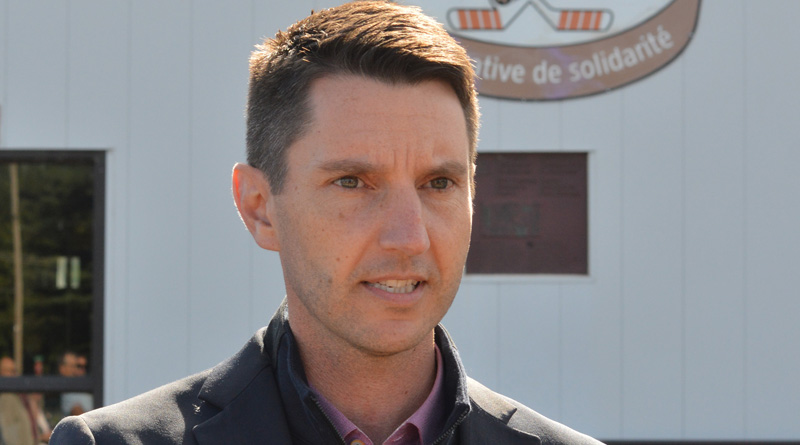
With the CAQ government unveiling the provincial budget for the 2021-22 fiscal year on March 25, Pontiac MNA and opposition finance critic André Fortin pointed out several different areas where he feels it falls short.
The government announced that it intends to . . .
balance the budget by 2027-28, an extension of two years past the previously stated goal of balancing it within five years. The budget includes a $12.3 billion deficit for 2021-22, with the debt standing at $219 billion as of March 31. The impact of the pandemic caused the government to increase its budget projection from March 2020 by 15 per cent.
Expenditures during the upcoming year will be increased by 5.4 per cent: a 5.8 per cent increase in health care and social services, a 4.6 per cent increase in education, an 8.2 per cent increase in higher education, a 4.7 per cent increase in other portfolios and a 12.4 per cent increase in debt service payments.
One of Fortin’s biggest points of criticism was the dated nature of the budget, as he said it “could have been written in the 1980s,” due to its lack of investing in critical areas such as the environment, agriculture and helping women recover in the workforce, and because of its lack of foresight at such an uncertain time.
“What the budget really did was put forward a very old style solution to relaunching the economy when we’re living through a very different recession than we always have,” he said.
He noted that women with jobs in the service sector were the most significantly impacted demographic in Quebec, yet the budget didn’t go out if its way to address that through providing resources and funding for retraining those women who are interested in making career changes.
Fortin also noted that while he and the rest of the provincial Liberal Party support delaying balancing the budget by seven years, even that promise might be too shortsighted.
“The budget is based on the scenario where the economy is on the upswing, and yet we’re living through a couple of weeks after the budget was put forward, we’re already living through shutdowns and restrictions, which will necessarily affect the economy and the inflow of government revenue,” he said.
He also stressed the need for a budget that has “a true vision on an environmentally based economy.” He said that while the budget mentions funding for municipalities to better their water infrastructure, it is lacking otherwise.
He did give credit to the government for lowering the small business tax rate to an equal rate of that in Ontario, down from 4 per cent to 3.2 per cent for the first $500,000 of income.
The government also announced that there would be no tax increases planned until the province reaches pre-COVID employment levels.
“In our region in the Pontiac, where businesses always have a choice to set up in Shawville or in Renfrew, in Fort Coulonge or in Pembroke, that’s an important consideration for many of them,” he added.
However, Fortin stopped short of giving any further credit in the context of the government helping integral aspects of the Pontiac’s economy, such as agriculture.
“There really is a complete misunderstanding on the part of CAQ government as to the reality of agriculture right now,” he said. “To have no investments whatsoever into that very strategic sector, and all the while government talking about the necessity to have food sovereignty and to be more independent in terms of where we get our food, it seemed to be counter to the discussions that we’ve had across Quebec for the last little bit.”
While focus on agriculture was limited, the CAQ’s budget included $92 million for regional infrastructure for farmers over the next 10 years.
In regards to spending on the continuation of the vaccine rollout and other COVID-related measures, he said that the government seems to have covered that fairly well.
However, he voiced his concerns surrounding the 150,000 Quebecers who have been awaiting non-essential surgeries due to the pressure of the pandemic on the health care system. While increased funding for regional health care authorities is being provided, he said he is worried about not having a specific budget-line allocated for those surgeries.
“I’m afraid that that money might be used for something else, for more pressing needs: for infrastructure needs, for anything that the regional health care unit might deem priority,” he said.
Regarding the provincial government’s plan to spend $1.255 billion on expanding high-speed internet over the next two years, Fortin said that the number is definitely sufficient.
“What will be interesting is how it happens in the rollout and the capacity of the internet providers to make those investments in such a short time period,” he said. “But the government did allocate the proper resources, it’s a matter of whether their rollout plan is realistic or not.”
Another area of the budget that is of particular relevance to the Pontiac is the investment of $103.6 million for the Office québécois de la langue française (OQLF) and protection of the French language.
“[This] basically means that there will be more enforcement to go along with the new regulations that are about to be proposed by government, which always has an impact here in the Pontiac … Premier Legault has repeatedly said he wanted to be more strict and stringent on the use of the English language across Quebec, and that very significant investment is certainly reflective of that,” Fortin said.