






STEPHEN RICCIO
SHAWVILLE Aug. 12, 2020
While the idea of living sustainably has become increasingly publicized, many people are held back by the constraints of modern living.
For Jennie Videto and Chris Lambert however, environmental sustainability is central to their way of life and it is manifested in . . .
their latest vegetable farming adventure, Catena Farm in Shawville.
“I took environmental sustainability in university and both Chris and I have been really involved with stuff like that and trying to live a sustainable life,” Videto told The Equity. “It just kind of made sense for us to grow our own food and we had the ability to do that, [it] just started out as a small hobby and snowballed from there.”
This summer is their second in the Pontiac since moving from Ottawa together and it’s a familiar area for Videto, as her mom grew up in Campbell’s Bay and her family owns a cottage on Lawless Lake.
With the high costs of owning land and farming, the couple decided to rent an acre from James McNair, owner of the Shawville Hotel.
Since then, the main source of income has been their weekly vegetable baskets sold online.
There are four different types of baskets they offer: a four-week spring share, a four-week fall share, a nine-week main season share and an 18-week main season share. Ordering of these baskets must take place between February and April.
Videto said that one of the things she hopes to do is encourage people to fall in love with eating seasonally, and this basket program helps with that.
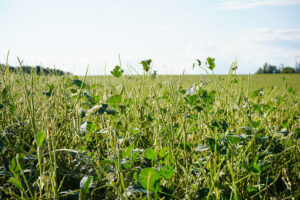
Currently, Catena has over 35 different types of vegetables growing, with planting of some crops beginning in February and growing extending to mid-November.
A big contributor to Videto and Lambert creating a sustainable farm has been their views towards the modern mass production-based food system.
“About maybe six years ago we kind of just started making a plan saying this is what we wanted to do for a living,” Videto explained. “We enjoyed it and thought it was a good way to give back to the community and be involved in the local food system, which in our opinion is pretty broken what with the amount of food we have to truck in and the pre-packaged food everyone wants to eat so we thought we could our part that way.”
“To be honest, I think because of the pandemic it’s kind of brought light to the local food system,” she added. “A lot of people are realizing most things in the grocery stores are coming from very, very far away.”
With COVID-19 initially closing the Lansdowne Market, they committed to avoiding it for the remainder of the year, instead now deciding to open a roadside stand right in front of their farm on Hwy. 148.
Their first day having the stand open was on Aug. 1, and Videto said that it was a resounding success.
“I was really amazed by the support. We had lineups of people and I just really wasn’t expecting it, I didn’t end up putting out as much produce as we would have sold because I wasn’t sure what to expect,” she said.
Videto said the stand won’t be open every Saturday, and that residents should stay in touch with their social media to find out when they’ll be selling.
Along with starting this new experience in the Pontiac, the couple has also used this summer as an opportunity to start a new journey in crop experimentation.
Having meticulously tilled their new land last year with a hand-held push tractor, they opted with a no till approach this year.
“We do a system called a deep mulch, so basically the first year it’s about six inches of compost on the top and then after that it goes down and down, less and less,” Videto explained. “The idea is you’re not disrupting the seed bank every time, you do disrupt it every time you till. If you don’t till you’re keeping that seed bank under the soil which is food.”
In addition to seed bank benefits, she said no tillage allows for a symbiotic relationship between the rest of the soil and the plants.
“There’s a lot of fungal networks under the soil that are really beneficial to plants. Every time you till it breaks.”
Every system has its ups and downs, but she said the increasingly popular approach of zero tillage is the method they plan on sticking to.
With several years of farming under their belts but the rest of their lives to look forward to, Videto said they hope to own an orchard and expand from just vegetables to fruit as well.
“Our goal is to stay small and only have one to two acres and do that no till for the rest of our lives,” she said.
The farm is situated right next to the Shawville Hotel at 921 Hwy. 148. Videto and Lambert can be reached at 873-354-5481 as well as by email at catenafarm@gmail.com.