





EMILY HSUEH
SHAWVILLE Nov. 26, 2020
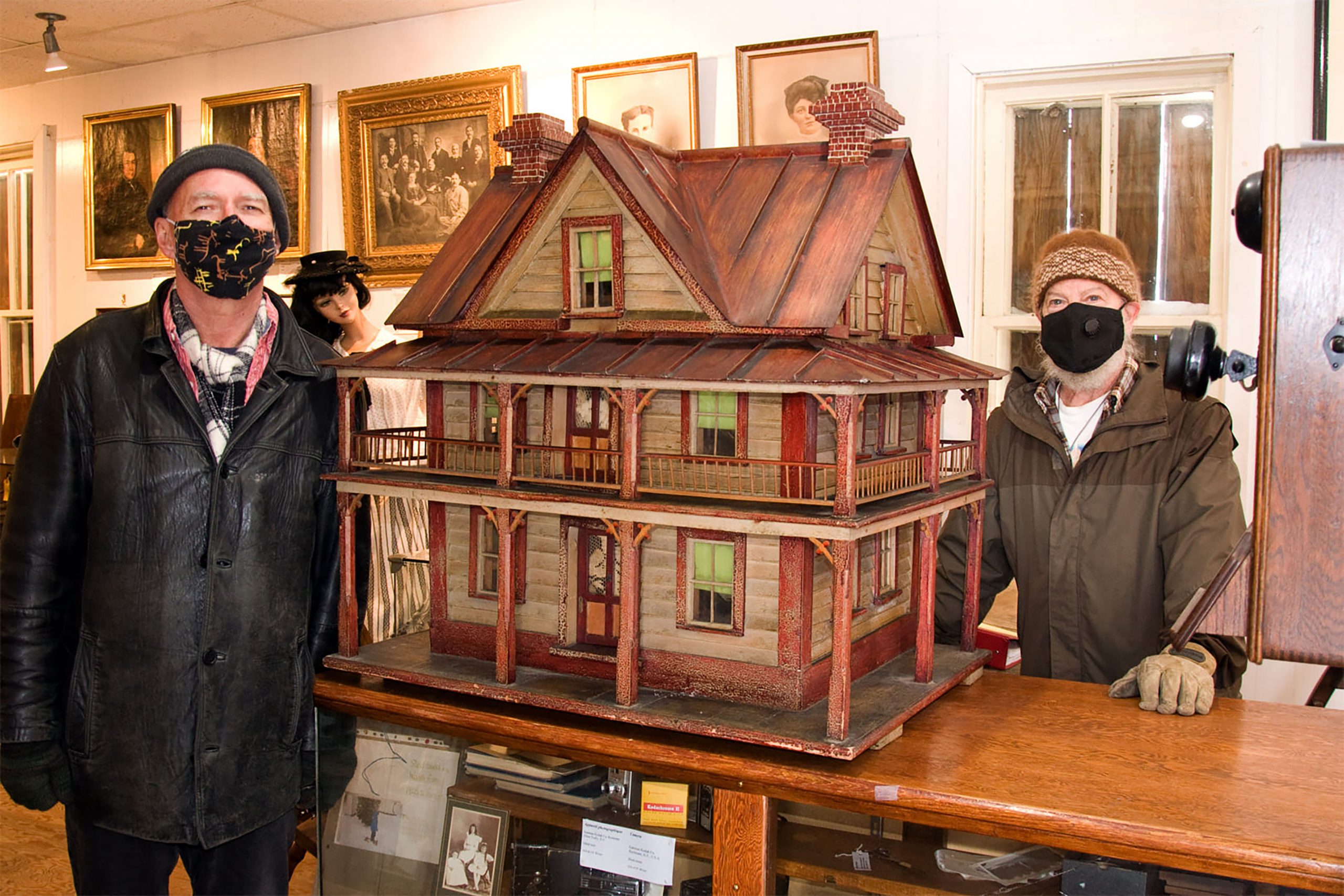
A historical model house has found its new home as the newest permanent exhibit at the Pontiac Museum.
The house is a scale model created in the 1880s by Portage du Fort jeweller and watchmaker Joachim Sauvé. It was inherited by the builder’s son J.N.D. Sauvé, an Ottawa lawyer, and was later purchased at auction by Glen Robinson following the younger Sauvé’s death in 1979. It had been . . .
on display in Robinson’s home since, except for the last six years which it spent in a storage facility. Robinson donated it to the museum and it arrived on Nov. 26.
Chris Seifried, the Pontiac Historical Society’s secretary and treasurer, reported that this acquisition is notable because it checked all the boxes of historical significance: it was created in the Pontiac or has close ties with it, it is not a massed-produced item and it “represents a style of domestic or vernacular architecture from the latter half of the 1800s.”
“Provenance — that’s a very important word in museums — is a good documentation of ownership of the object from the time it was created. So we know that this object was built by Joachim Sauvé, it was inherited by his son, J.N.D. Sauvé… It was purchased by Mr. Glen Robinson… In other words, that house has been owned by only three other people.”
Seifried has hosted historical walking tours in Portage du Fort in the past, and Sauvé’s house is one of the attractions. Curiously, the real house does not resemble the model, and was built in the decade before the model house was created, according to Seifried. He has two theories as to why this model was built.
“One of the common reasons for building architectural or building models is as a kind of prototype for the construction of an actual building. In this case, I’m not so sure that was the reason,” he said. “I suspect that the reason it was built was probably as a hobby. But I don’t have any proof of that. He wouldn’t have built this as an architectural model so long after he built his own house.
“It could have been just for decorative purposes,” he continued. “Apparently he had it on display in his workshop where he did his jewelry and watchmaking business, which was part of his house.”
Regardless of the reason it was constructed, Seifried was thrilled with the new acquisition, and is looking forward to residents of the Pontiac and beyond being able to see it in person when the museum reopens on July 1.
“Our team is very excited about this one,” said Seifried. “It’s in very good condition, it’s got such a well-documented history, it’s got an intimate connection with the Pontiac, and we’re sure that when it’s on display in our permanent exhibit, it’s going to one of our top attractions.”