





STEPHEN RICCIO
PONTIAC Oct. 7, 2020
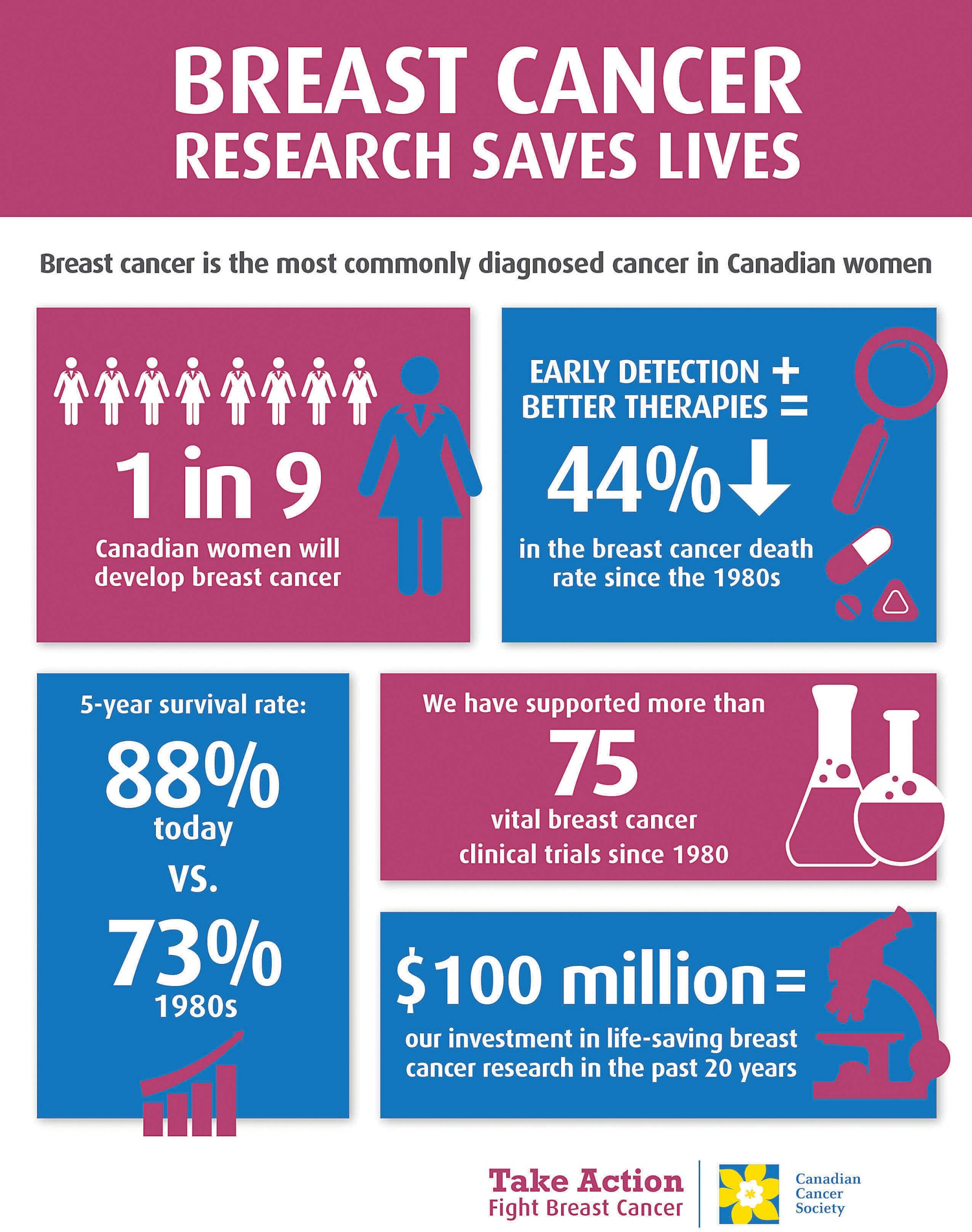
On any given day, there are 14 Canadian women who die from breast cancer. There are 75 women who are diagnosed with the disease every day.
A form of cancer that most commonly impacts women—according to the Canadian Cancer Society, there were 27,400 cases among women in 2020 compared to 240 among men—breast cancer occurs when . . .
breast cells begin to grow and divide abnormally, creating lumps.
Dr. Danielle Guérin, Gatineau-area advisor for the Quebec Breast Cancer Screening Program and a clinician at the regional breast cancer clinic, said that while breast cancer affects one out of eight Canadian women, the survival rate for the disease has increased significantly in the past couple decades.
“Over 90 per cent of women with breast cancer do survive, so that’s excellent news,” Guérin said. “[It’s] because of early detection and improvement in treatments of course.”
She said that while they do not know what specifically causes breast cancer, they do know what the risk factors are. The main risk factor for women is simply getting older, but there are additional factors such as hormonal activity.
“What we suggest is that women go for regular screening if they’re at an average risk population,” Guérin said.
“We suggest they go for screening mammograms every two years between 50 and 74. We also suggest that women be self-breast aware. We don’t suggest a self-breast examination anymore since 2002, because it hasn’t proven effective. We do suggest that women be self-breast aware to know their bodies, and if there’s any change, they should consult with their physician.”
The advice of getting a screening done every two years should only apply to women of average risk, Guérin said, as certain women who are at greater risk should take greater precaution.
“If a woman has specific risk factors like a family history of breast cancer, she should definitely consult with her physician. If you do have a family history of breast cancer, we might suggest that you start earlier and do yearly mammograms. If you’re at high risk, we have other tools for screening like MRIs as well.”
If the disease is not detected early on and can develop to an advanced stage without treatment, the cancer cells can spread to other organs in the body.
Guérin said this is why regular screening and body awareness are crucial.
Guérin said that the Outaouais deals with roughly 300 cases and 50 deaths every year because of breast cancer.
She also shared estimates for Quebec’s 2020 breast cancer data.
The province is expected to have 6,700 new cases of the disease and 1,300 total deaths this year.