





DARIUS SHAHHEYDARI
PONTIAC June 3 2020
Campgrounds in Pontiac were given the green light to reopen on June 1 under measures and restrictions set to help prevent the spread of COVID-19.
Parc Leslie, a campground in Otter Lake, is not open to weekend campers this year to avoid as much . . .
coming and going as possible, according to assistant director Carole St-Aubin. They are only offering spots to seasonal campers and other bookings for a week or longer.
Similarly, over at Base Macrocarpa, in Mansfield, co-owner Lionel Tessier said they are accepting seasonal campers only, since they know these campers now and this diminishes the uncertainty brought by COVID-19.
“Right now I have 20 of my sites rented out, which means about fifty people altogether,” said Tessier
Campers will be using their personal facilities in their trailers, and will be using the common facilities in the campground for its dumping station to empty their septic system.
“I will have the necessary products there for them to clean up,” said Tessier.
At Parc Leslie, each residence is also to be occupied by a sole family – there are no visitors allowed and the campers must come with an RV, since no tents will be allowed and Lac Leslie is not opening their public washrooms.
“So, basically, you must have your own facilities in your camper in order to be able to come and camp,” said St-Aubin.
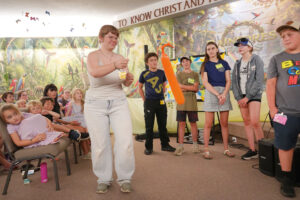
Some areas of the campground are either partially or fully off-limits. The children’s play area is inaccessible to everybody, as well as a covered area where Lac Leslie would have children’s camp groups occupy.
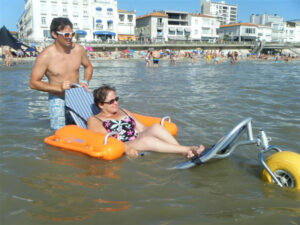
Their boat launch is not open to the public and the cottagers around their lake, who often come and spend the day at their park, can no longer do so. Furthermore, the beach on their campground will also not be open to the public.
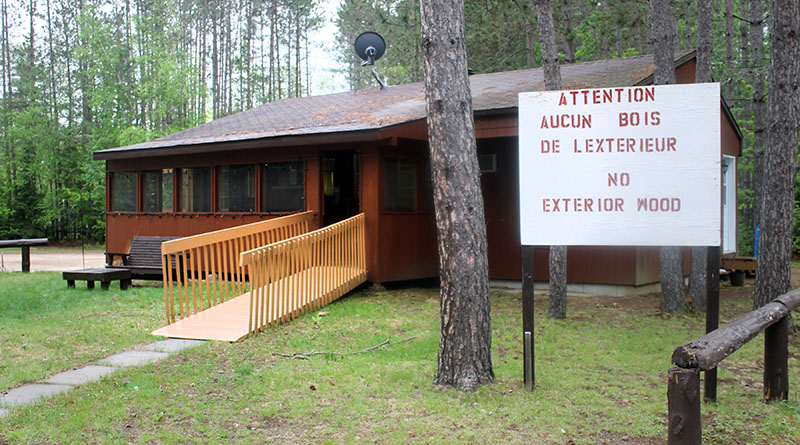
The beach convenience store remains open to campers and is set up the same way as the check-in place.
“There, again, you have to [follow] the same rules that you do when you go into any convenience store,” she said.
Life jackets are no longer handed out for those who rent boats, they must bring their own.
Ice, wood and other supplies are still available for the campers to purchase in the grounds – it is now a self-service, however.
Some activities, such as bubble foam and beach parties, that the campgrounds would organize are unable to take place this year.
“We used to do weekly barbecues, and we are probably still going to do that, but it will be different, in the sense that [the campers] will have to keep their distance,” she said. “Campers are going to be mainly in charge of their own entertainment. It’s going to be a different summer.”
When campers arrive for check-in, they come in through one door and leave through another, following markings on the floor and interacting with the staff through plexiglass.
“That’s, basically, the only contact we will be having with them,” she said.
When arriving at the desk, guests are asked to sign a form agreeing they will abide by the measures set due to COVID-19.
Behind the registration desk, the effects of the restrictions are also felt. Since the go-ahead was given for campgrounds to reopen, there was increased volume of calls at Parc Leslie.
St-Aubin said travel between provinces and across the border is restricted, so she expects there to be more local tourism this summer and tourists might consider staying longer because they have nowhere else to go.
Nonetheless, the increase in calls surprised St-Aubin, who said she did not think that many people wanted to go camping because of the pandemic.
“But [the campers] know our campground well and they know that it will be easy to [abide by] the distancing because of the lots – they are not stuck one on top of the other other,”
The lots at Lac Leslie are also split up, which ease physical distancing.
In addition to this, Parc Leslie plans to separate its beach into segments, with visual barriers, each of which is designated for one camping group and an employee, which normally patrols it, would make sure that physical distancing is met, without “hounding” the campers, according to St-Aubin.
The staff must wear personal protection equipment (PPE) when clients are not around, as well, like now when they are being trained for a newly updated software.
The software update supports the camp’s measure of ceasing to take cash for registration.
“We had to make changes to our registration systems, where we can enter the computer system and not the cash register, so we’re not using the cash register this year at all,” she said.
There were a lot of bookings for weekenders, so the staff called them back to ask them if they wanted to add more days to their bookings to make it the required minimum of a week.
“We didn’t know if we were going to open, so now it’s the rush to get everything ready,” she said.
St-Aubin said people are aware they are responsible for their health safety and they must obey the measures. Regardless, if there was to be a COVID-19 case confirmed in the campgrounds, they would probably close down until further notice.