



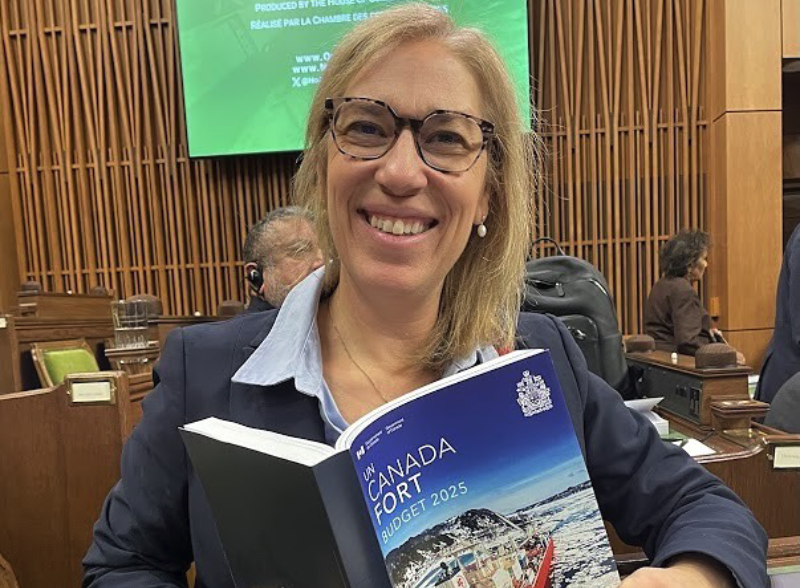



The federal government tabled its first budget under Prime Minister Mark Carney last week.
The budget proposes significant investments in housing, infrastructure and defence (to the tune of $81.8 billion), to be funded by an increased debt load as well as major cutbacks to the federal public service.
The Liberals plan to borrow $78.3 billion to finance this budget, almost double the $42.2 billion deficit the Liberals presented in the 2024 Fall Economic Statement.
The government claims this deficit will drop to $65 billion next fiscal year and that by 2029-30, it will be down to $57 billion.
In terms of cuts, the Liberals plan to significantly reduce the cost of running the government by $60 billion over five years, including cutting 40,000 jobs from the public service. This, it says, will enable it to balance its operational spending over the course of the next three years.
The Liberals are pitching this increased deficit to Canadians with the promise it will boost Canada’s economy over the long term by investing in industries and infrastructure that will generate wealth and jobs, instead of funding the day to day operations of this country.
“You should never borrow money to pay for groceries or pay for current expenses. You always try to manage your current expenses with your income. And that’s what this budget is intended to do,” said MP Sophie Chatel in a conversation with THE EQUITY about what this budget offers to people living in the Pontiac.
“You borrow money to buy a house. You borrow to build that facility, you borrow to buy the equipment. But that facility and equipment will produce a lot of goods you’ll be able to sell. [ . . . ] At a time when Trump is imposing significant tariffs, we need to invest in ourselves. We need to invest in our defense. We need to build homes. We need to invest in infrastructure that will grow our economy.”
The government has already survived two confidence votes in the House of Commons, triggered by Bloc Québécois’ call for the House to reject the budget.
Now the minority Liberal government is working to get the two more votes it needs to pass this budget later this month, and possibly as soon as Nov. 17.
As opposition MPs deliberate on whether to support this spending plan, or not, here is a breakdown of some of the ways this budget might support people in the Pontiac.
School food program made permanent
When it comes to measures designed to directly help Canadians with the cost of living, there is not much in this budget that had not already been announced prior to its tabling.
Chatel pointed to a one per cent tax cut for people earning under $100,000 annually, as well as the Liberal plan to make the National School Food Program permanent as two measures that will be felt in the wallets of Canadians.
The National School Food Program, put in place just a few months ago, was originally set to last until 2029. This budget makes it permanent, promising it will feed 400,000 kids every day, saving families money at the grocery store – as much as $840 a child annually, according to Chatel.
“Partly why you haven’t seen this yet in Quebec is because Quebec is the one who will deploy that program, and so they’re still negotiating with an organization that will deliver the food in schools,” she said.
“I’m very confident that very soon in Pontiac schools lunches will be delivered to children. What it means for families is the bill will be lower at the grocery because you won’t have to worry about your child getting healthy and nutritious lunches at school.”
Chatel said schools ranked 10, 9, 8, and 7 on Quebec’s Indice de milieu socioéconomique (IMSE) will be prioritized for the meal service. In some cases, schools ranked IMSE 6 may also be included.
Tax break for investments in manufacturing,
processing equipment
The budget proposes a tax deduction for businesses that invest in machinery or other infrastructure that will help them process or transform raw products.
“The idea is to process more of our foods here in Canada instead of shipping raw product abroad and buying it transformed. [ . . . ] All of our raw materials need to be processed and turned into finished products and that’s what that superdeduction is all about,” Chatel said.
She said businesses like the Egan Mill in Quyon, or the Laiterie de l’Outaouais would be examples of those that could benefit from this measure.
“In the Outaouais, this will support a growing agri-food processing sector,” she said.
Housing affordability
Last week’s budget puts forward several measures intended to increase the housing supply in Canada, including affordable housing.
Notably, it pledges to invest $13 billion over the next five years in Build Canada Homes, a new federal agency it has created with the sole task of dramatically increasing this country’s housing supply by investing in factory-built housing and offering tax rebates for developers building what the government calls “purpose-built” rental housing.
“What’s important too is the procurement. We will require that every product is from Canada, unless it’s unavailable – Canadian wood, Canadian steel, aluminium, technology, workers,” Chatel said.
In terms of making sure some of these homes end up in the Pontiac region, she said “municipalities that can organize to really identify the needs and the projects will be the ones that are the most successful.”
The budget also upholds the previously announced removal of GST on new homes under $ 1 million, a measure already before parliament in Bill C-4.
Money for municipal infrastructure
Included in this budget is a new fund which will invest $51 billion over 10 years to help municipalities fund major infrastructure projects needed to bring more housing development to their communities.
This money can be used for everything from roads and water systems to community centres, parks and public transit.
“We listened to municipalities that said, ‘Look, building more homes is great, but we need infrastructure and we don’t have it,’” Chatel said.
“The budget will invest massively in municipal infrastructure. Of course there will be discussions with Quebec on how it will be delivered, and it’s always taking a bit longer with Quebec than with other provinces [ . . . ] We hope that this will be finalized very soon, and help will be able to be deployed to municipalities who really need it.”
The budget also allocates $5 billion over three years to help provinces improve healthcare infrastructure.
“It will be up to the province [to decide what facilities receive the money], but it’s significant and it should really help to build more hospitals,” Chatel said.
“It’s a way to invest in health care but not in the delivery of services, which is an exclusive role and responsibility of the province.”
Le gouvernement fédéral a déposé son premier budget sous le premier ministre Mark Carney la semaine dernière.
Le budget propose des investissements importants dans le logement, les infrastructures et la défense (à hauteur de 81,8 milliards de dollars), qui seront financés par un endettement accru ainsi que par des réductions majeures dans la fonction publique fédérale.
Les libéraux prévoient d’emprunter 78,3 milliards de dollars pour financer ce budget, soit presque le double du déficit de 42,2 milliards de dollars que les libéraux avaient présenté dans l’Énoncé économique de l’automne 2024.
Le gouvernement affirme que ce déficit passera à 65 milliards de dollars au prochain exercice et qu’il sera réduit à 57 milliards de dollars d’ici 2029-2030.
En matière de coupes, les libéraux prévoient de réduire considérablement les coûts de fonctionnement du gouvernement de 60 milliards de dollars sur cinq ans, y compris la suppression de 40 000 postes dans la fonction publique. Selon eux, cela leur permettra d’équilibrer leurs dépenses opérationnelles au cours des trois prochaines années.
Les libéraux présentent ce déficit accru aux Canadiens en promettant qu’il stimulera l’économie du Canada à long terme en investissant dans des industries et des infrastructures qui généreront de la richesse et des emplois, au lieu de financer les opérations quotidiennes du pays.
« Il ne faut jamais emprunter de l’argent pour payer son épicerie ou ses dépenses courantes. On essaie toujours de gérer ses dépenses courantes avec ses revenus. Et c’est ce que ce budget vise à faire », a déclaré la députée Sophie Chatel lors d’une conversation avec THE EQUITY à propos de ce que ce budget offre aux habitants du Pontiac.
« On emprunte de l’argent pour acheter une maison. On emprunte pour construire cette installation, on emprunte pour acheter l’équipement. Mais cette installation et cet équipement produiront beaucoup de biens que l’on pourra vendre. [ . . . ] À un moment où Trump impose des tarifs douaniers importants, nous devons investir en nous-mêmes. Nous devons investir dans notre défense. Nous devons construire des logements. Nous devons investir dans des infrastructures qui feront croître notre économie. »
Le gouvernement a déjà survécu à deux votes de confiance à la Chambre des communes, déclenchés par l’appel du Bloc Québécois à rejeter le budget.
Maintenant, le gouvernement libéral minoritaire s’efforce d’obtenir les deux votes supplémentaires dont il a besoin pour adopter ce budget plus tard ce mois-ci, et peut-être dès le 17 novembre.
Alors que les députés de l’opposition délibèrent sur la question de savoir s’ils doivent ou non soutenir ce plan de dépenses, voici un aperçu de quelques-unes des façons dont ce budget pourrait soutenir les habitants du Pontiac.
Le Programme alimentaire en milieu scolaire rendu permanent
En ce qui concerne les mesures visant à aider directement les Canadiens face au coût de la vie, il n’y a pas grand-chose dans ce budget qui n’ait pas déjà été annoncé avant son dépôt.
Sophie Chatel a souligné une réduction d’impôt d’un pour cent pour les personnes gagnant moins de 100 000 $ par an, ainsi que le plan libéral de rendre permanent le Programme national d’alimentation scolaire, comme deux mesures qui se feront sentir dans le portefeuille des Canadiens.
Le Programme national d’alimentation scolaire, mis en place il y a seulement quelques mois, devait initialement durer jusqu’en 2029. Ce budget le rend permanent, promettant qu’il nourrira 400 000 enfants chaque jour, ce qui permettra aux familles d’économiser de l’argent à l’épicerie – jusqu’à 840 $ par enfant annuellement, selon Sophie Chatel.
« Si vous n’avez pas encore vu cela au Québec, c’est en partie parce que c’est le Québec qui déploiera ce programme, et ils sont donc toujours en négociation avec une organisation qui livrera la nourriture dans les écoles », a-t-elle déclaré.
« Je suis très confiante que très bientôt, dans les écoles du Pontiac, des dîners seront livrés aux enfants. Ce que cela signifie pour les familles, c’est que la facture sera moins élevée à l’épicerie parce que vous n’aurez pas à vous soucier de savoir si votre enfant reçoit des dîners sains et nutritifs à l’école. »
Sophie Chatel a précisé que les écoles classées 10, 9, 8 et 7 selon l’Indice de milieu socioéconomique (IMSE) du Québec seront prioritaires pour le service de repas. Dans certains cas, les écoles classées IMSE 6 pourraient également être incluses.
Allégement fiscal pour les investissements dans la fabrication,
et l’équipement de transformation
Le budget propose une déduction fiscale pour les entreprises qui investissent dans des machines ou d’autres infrastructures qui les aideront à transformer des produits bruts.
« L’idée est de transformer davantage de nos aliments ici au Canada au lieu d’expédier des produits bruts à l’étranger et de les racheter transformés. [ . . . ] Toutes nos matières premières doivent être transformées en produits finis et c’est à cela que sert cette superdéduction », a déclaré Sophie Chatel.
Elle a cité des entreprises comme la scierie Egan à Quyon, ou la Laiterie de l’Outaouais, comme exemples de celles qui pourraient bénéficier de cette mesure.
« En Outaouais, cela soutiendra un secteur de la transformation agroalimentaire en pleine croissance », a-t’elle ajouté.
Abordabilité du logement
Le budget de la semaine dernière propose plusieurs mesures destinées à augmenter l’offre de logements au Canada, y compris des logements abordables.
Notamment, il s’engage à investir 13 milliards de dollars au cours des cinq prochaines années dans Bâtir des logements Canada, une nouvelle agence fédérale qu’il a créée avec pour unique tâche d’augmenter considérablement l’offre de logements au pays en investissant dans des logements préfabriqués en usine et en offrant des rabais fiscaux aux promoteurs qui construisent ce que le gouvernement appelle des logements locatifs « conçus à cet effet ».
« Ce qui est important aussi, c’est l’approvisionnement. Nous exigerons que chaque produit provienne du Canada, à moins qu’il ne soit indisponible – bois canadien, acier canadien, aluminium, technologie, travailleurs », a déclaré Sophie Chatel.
En ce qui concerne la garantie que certains de ces logements se retrouvent dans la région du Pontiac, elle a déclaré que « les municipalités qui peuvent s’organiser pour vraiment identifier les besoins et les projets seront celles qui réussiront le mieux. »
Le budget maintient également la suppression précédemment annoncée de la TPS sur les nouvelles maisons de moins de 1 million de dollars, une mesure déjà soumise au Parlement dans le projet de loi C-4.
Argent pour les infrastructures municipales
Ce budget comprend un nouveau fonds qui investira 51 milliards de dollars sur 10 ans pour aider les municipalités à financer d’importants projets d’infrastructure nécessaires pour favoriser le développement de logements dans leurs communautés.
Cet argent peut être utilisé pour tout, des routes et systèmes d’eau aux centres communautaires, parcs et transports en commun.
« Nous avons écouté les municipalités qui ont dit : « Écoutez, construire plus de logements, c’est formidable, mais nous avons besoin d’infrastructures et nous n’en avons pas » », a déclaré Sophie Chatel.
« Le budget investira massivement dans les infrastructures municipales. Bien sûr, il y aura des discussions avec le Québec sur la manière dont cela sera livré, et cela prend toujours un peu plus de temps avec le Québec qu’avec d’autres provinces [ . . . ] Nous espérons que cela sera finalisé très bientôt, et que l’aide pourra être déployée auprès des municipalités qui en ont réellement besoin. »
Le budget alloue également 5 milliards de dollars sur trois ans pour aider les provinces à améliorer les infrastructures de santé.
« Ce sera à la province [de décider quelles installations recevront l’argent], mais c’est important et cela devrait vraiment aider à construire plus d’hôpitaux », a déclaré Sophie Chatel.
« C’est une façon d’investir dans les soins de santé, mais pas dans la prestation de services, ce qui est un rôle et une responsabilité exclusifs de la province. »