





Welcome to your Shawville Fair special feature!
Welcome to your special behind-the-scenes look at what’s in store for this year’s Shawville Fair. This newsroom has been hard at work over the past month to bring readers the stories of just some of the ways people across this county are gearing up for Pontiac’s biggest event of the year. And we’ve just barely scratched the surface when it comes to capturing the energy and love that goes into making this event happen.
From young 4-H members practicing for their first markets to veteran derby drivers putting the finishing touches on their entries for this year’s smash-up, we hope this special feature offers a glimpse into the quiet hustle that is building across the county as the fair weekend approaches.
This year’s five-day event will offer attendees a healthy mix of all that has become tradition for the “Valley’s most family friendly fair,” which dates back to 1856, as well as some new features the fairboard is introducing to ensure the event offers the best possible window into all that this community is capable of, and that crowds are kept entertained throughout the weekend.
There will be tractor pulls, horse pulls, sheep shearing, animal showing, produce judging, and so much more over the course of the five days designed to celebrate all things agriculture.
In the produce section, local green thumbs can now compete for the largest potato prize, and seed producers will be happy to learn the fair has expanded the number of classes in which it is a qualifier for the Ottawa Valley Seed Show. The homecraft section is also expanding to include several new sections. And beef shows for Simmental and Hereford breeds are now point shows for those cattle associations. Big moves!
The family entertainment planned for the weekend will once again include a canine circus show, a hypnotist, two magicians, and Dan the One Man Band for musical entertainment wherever you find yourselves on the fairgrounds.
Between heavy horse classes on Friday night and Saturday afternoon, a trick rider will be performing with her two horses and miniature horse, and will be performing tricks throughout the fairgrounds on Saturday as well. And those hoping to say hello to Marty the Clydesdale will be happy to learn he will once again be accepting visitors in the horse tent all weekend long.
Photo callout: We at THE EQUITY want to know what you get up to this Shawville Fair. Send your best photos from the weekend to editor@theequity.ca for a chance to have them published in our Sept. 3 newspaper.
Hello and welcome from your local reps
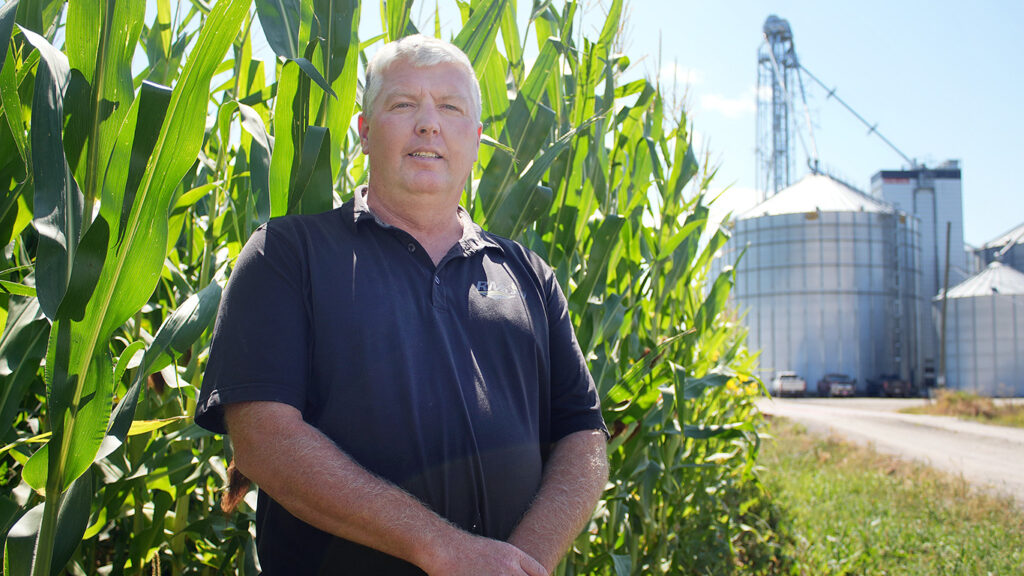
Ralph Lang – President of the Pontiac Agricultural Society
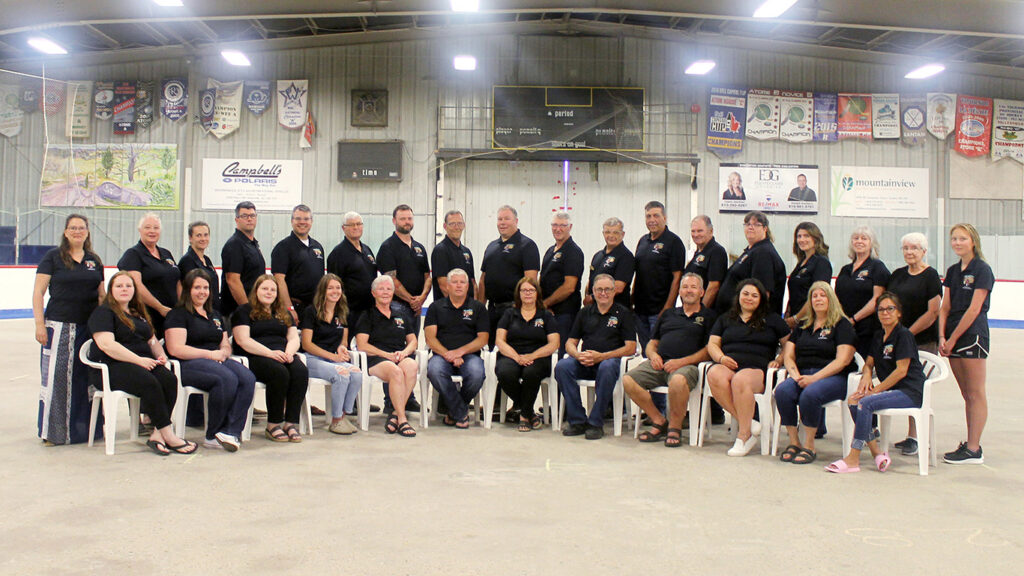
Jane Toller – Warden of MRC Pontiac

Sophie Chatel – MP for Pontiac-Kitigan Zibi
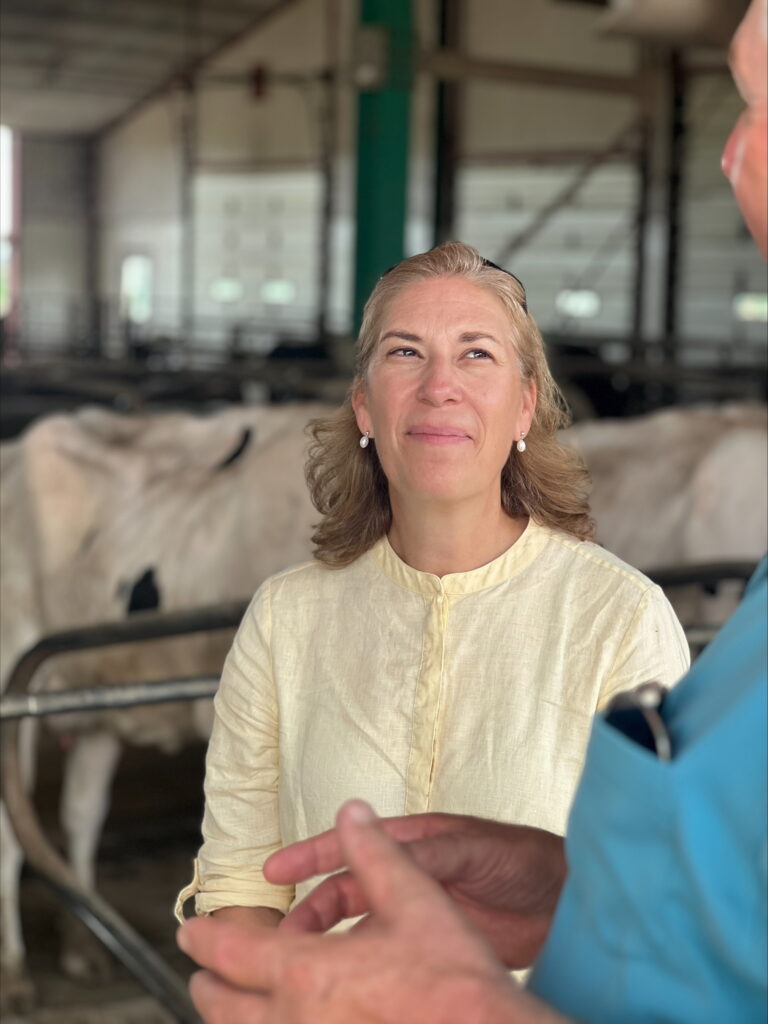
André Fortin – Pontiac MNA

Calling all Canucks! Help the Shawville Fair break a world record
On Friday, the grounds will double as a celebration of Canada, with activities and ceremonies to honour and commemorate this country, and those who protect it.
“We’re going to turn Friday into a real celebration of Canada,” said Mavis Hanna, general manager of the Pontiac Agricultural Society.
The tribute activities will begin with an attempt to create the world’s largest human maple leaf. The simple task of showing up around 6 p.m., wearing red, could help Shawville make history.
There will be a formal salute and a singing of the national anthem, followed by a live performance of Glass Tiger’s new song, “Canada’s Song (Free to Be)” by the band itself.
Hanna said when the fair board found out the classic Canadian band had recently released this song, it was an easy step to incorporate it into the celebrations.
“Shawville Fair has always supported Canadian, in terms of where we source things, and our entertainment, so this was a way to highlight that,” she said.
On Friday, all active members of the Petawawa Canadian Armed Forces will receive free admission as an appreciation for all they do.
Also, from 3 p.m. to 9 p.m. there will be a display of military vehicles and kits available at the fairgrounds to explore.
So come out to the grounds on Friday wearing your brightest red across your chest and heart to help Shawville celebrate our true north, strong and free.
First-time market goat shower preps for big day
by Sophie Kuijper Dickson
Eloise Thompson is one of 20 Shawville 4-H club members who have spent all summer raising, grooming, and training an animal so that it is ready to be sold in the club’s market at the Shawville Fair.
While many members are now familiar with the process of raising their animal of choice – whether it be a lamb, a goat, or a steer – to be sold off in the annual Labour Day weekend auction, Thompson is hoping to step into the market arena for the first time with her goat she has named The Rock.
Thompson bought The Rock from Clarendon goat farmer Meredith Closs this spring using $300 she had saved up in birthday money.
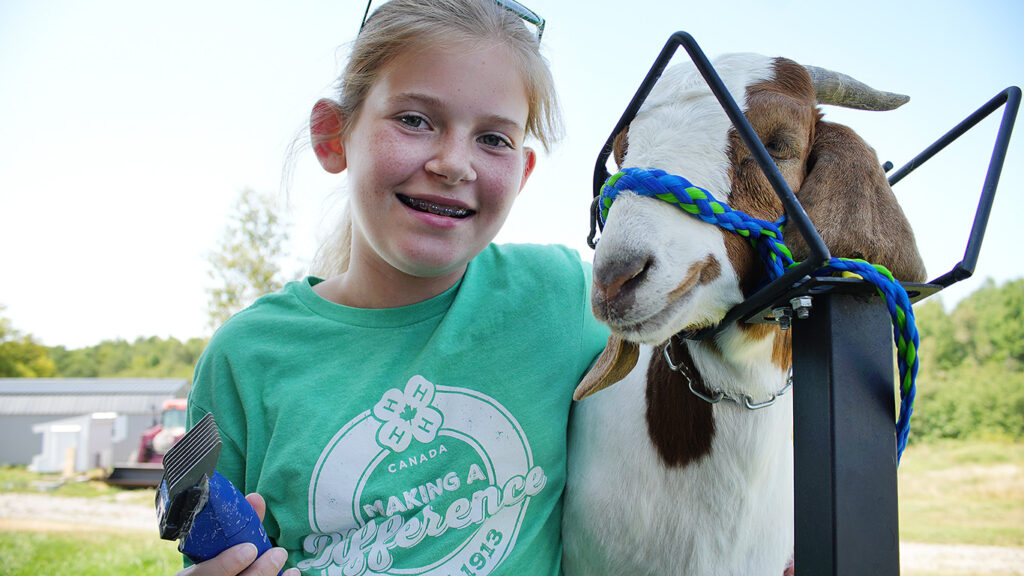
“I love goats, and I wanted to try a different aspect of [showing], like talking to more people and trying to socialize more. And I wanted something that would be a bit more involved,” Thompson said of her reasons to purchase a market goat this year.
At 12 years old, she’s been a member of the club for five years, and has shown many a goat over those years, so is familiar with the ins and outs of goat care. But this summer she has come to learn that raising a goat for market is a whole different can of worms.
In previous years, she has shown female goats, not for market. For this kind of showing, there is no weight minimum a goat needs to reach to be shown. But for market, it’s different.
“I’ll weigh him at the Shawville Fair, and if he doesn’t make 70 pounds, he can’t go into the market,” she said.
“I’m going against two of my cousins – Graham Vereyken and Rosie McCann – and their goats weigh 80 and 90 pounds,” she whimpered, with a smile, admitting there’s a chance The Rock won’t be accepted.
Thompson weighed The Rock the week of Aug. 11, and he came in at 64 pounds, still six pounds shy of the minimum.
“He started off with 75 pounds. I was like, ‘Great this is awesome, I’m going to make it!’ I was so pumped,” Thompson said, of her early days with The Rock.
“But then he dropped down to 58 pounds. The heat took a crazy toll on him. And then he got super sick. He had diarrhea and had to get dewormed. And then he went back up to 62 pounds. We weighed him again two days ago and he was 64 pounds.”
While his weight gain has been promising, Thompson was concerned The Rock’s participation in the 4-H club’s Achievement Day on Aug. 16 would cause him to lose some of the progress he was making.
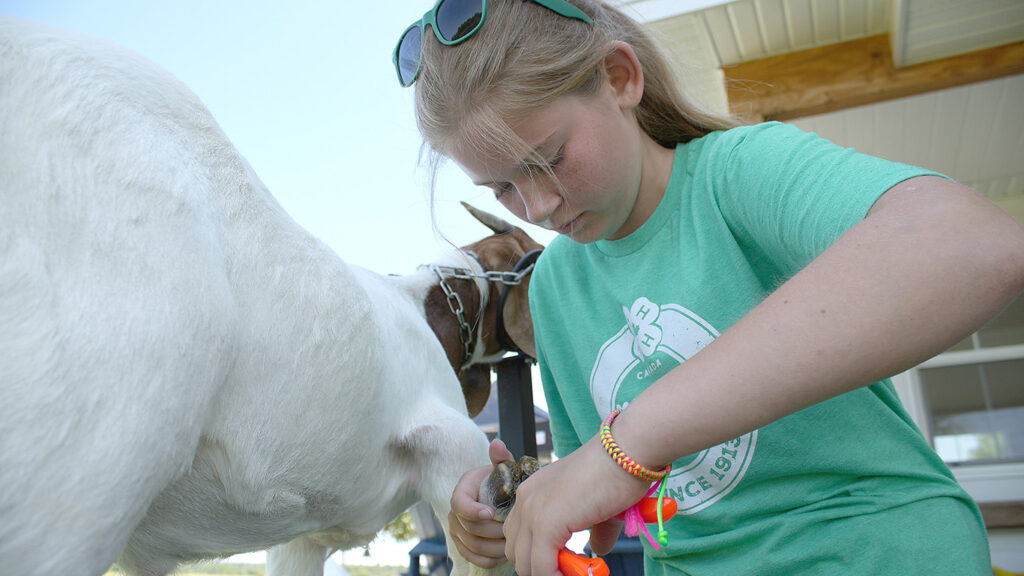
“We’ve been weighing him every two days now. And now we’re really on top of feed, and getting feed on him. And I’ve also been more on working with him because I want him to be more tame, because he’s a boy and usually they get more antsy,” she said.
Besides the weight gain challenges, Thompson said he is more or less ready for market. She’s managed to get him a lot calmer and more comfortable with being groomed, and has stayed on top of trimming his hooves and his coat.
All that’s left for her to do is to spread the word about her goat, and invite as many prospective buyers as she can to attend the market.
She said she’s nervous about the process of talking to people to sell her animal.
She has to share info about the animal, what the profits made will go towards, and convince people to try his meat, which Thompson herself has yet to try.
“I’ve been looking up some stuff, and apparently it’s really good for protein, and because he’s so young, it will also be tender,” Thompson said.
“I probably should try it before I pitch it, but I’m a bit of a picky eater so I’m scared to try it.”
Thompson said any profits she makes on the goat will go towards paying off her up front costs of raising him, and the rest will be saved for future 4-H projects, and maybe one day starting her own goat herd.
Mainstage magic and beer tent bangers
by Emma McGrath
This year’s highly anticipated entertainment lineup is sure to bring the beats, no matter what era of tunes you’re into. With headliners Glass Tiger, Parmalee, and the one and only Brett Kissel, you won’t want to be too far from the main stage.

Friday’s Grammy-nominated, JUNO-winning headliner Glass Tiger is “one of Canada’s most enduring and iconic bands” according to the Canadian Music Hall of Fame, into which it was just inducted this spring.
The band, originally from Newmarket, Ont., started playing together under the name Tokyo in 1981. Their debut album Thin Red Line became the fastest selling debut in Canadian music history with iconic tunes “Don’t Forget Me (When I’m Gone)” and “Someday” topping the charts soon after the album was released in 1986.
Their stardom may have begun over 40 years ago, but this is a cat that keeps coming back. This April, the band released a song dedicated to Canada, entitled “Canada’s Song (Free to be).”
“They’re a classic band. Everybody knows their songs. They’re going to be a great draw for us. Plus we were lucky they had a song come out that’s all about celebrating Canada,” Hanna said, explaining the fairboard’s choice to book the band.
“We’re going to turn Friday into a real celebration of Canada. [ . . . ] Canadian pride is huge now. When it just happened that Glass Tiger came out with that song, it really was an easy step to move into this.”
Warming the stage and crowd for Glass Tiger on Friday evening is Barrelhouse Tributes, a 10-piece tribute band that specializes in bringing audiences music by Dan Steely, the Allman Brothers, and The Beatles. This year, they will be bringing the Beatles to Shawville during their show, where they will be performing the Abbey Road Album, “note for note,” according to the band’s website.

Saturday’s musical entertainment will kick off with acountry set from Mark Mulligan in the beer tent. Moving over to the main stage at 7.30 p.m., Pontiac country musician and Grammy-nominated singer Danny Sylvester will get the evening’s entertainment going with his blended country-rock music mix.
Then at 9 p.m. he’ll be ceding the stage to four-man American country band Parmalee, which this year was nominated for the Favourite Country Duo or Group award at the American Music Awards. While the band didn’t win, its music is still making waves with top hits “Just the Way” and “Take My Name” from their 2021 album For You.
According to Hanna, Parmalee has never performed in eastern Canada until now, and their show at the Shawville Fair will be the band’s only performance in this corner of the country this year.
Sylvester fans will be thrilled to know Saturday’s party doesn’t stop with Parmalee, as Sylvester will keep it going on the beer tent stage well into the evening.

On Sunday, Ottawa-area cover wizards Bytown Brothers will get the jam going with interpretations of a variety of hits, old and new, from James Taylor to Green Day.
After that, the musical lineup will bring several Shawville Fair veterans back to entertain the crowds once again. First, local legend Phil Denault will be warming up the stage Sunday evening (and keeping the after party going in the beer tent afterwards) with his rockin’ country classics.
And then, a name that speaks for itself. Brett Kissel will be returning to close out the fair’s smashing entertainment lineup. The Canadian country superstar has 23 Canadian Country Music Awards (CCMA), three JUNOs, and 18 Top-10 radio hits, including “3,2,1,” “Airwaves,” and recently, “Cowboys and Dreamers.”
Brett Kissel has been to Shawville before, in 2016 and then again in 2019. Six years later, he is still as big of a deal as he ever was, and has been releasing music nonstop since his last show in town.
So if you missed his last local performance, or are ready to see more . . . “Take that chance, ‘cause you might not get another one.”
Attention super fans! Do you have a burning question for Glass Tiger, Brett Kissel, or Parmalee? We’re hoping to score live interviews with each of these bands before they go on stage, and we’d love to ask your question! Send them in to editor@theequity.ca by Wednesday, Aug. 27.
Building the perfect beater – One local derby champ on why he keeps coming back for more
by K.C. Jordan
You would think demolition derbies and jigsaw puzzles would attract two very different kinds of people – but not in the case of Jeremy Williams.
The punk-rockin’ owner of Jer’s Auto in Ladysmith is a five-time demolition derby champ at the Shawville Fair, and has been spending way too much time at the shop this summer playing with his latest puzzle of a build – an old Crown Victoria that, by fair weekend, he’ll have logged hundreds of hours planning, assembling, and testing.
And then he’s going to smash it.
Williams has craved the adrenaline-soaked feeling of derby driving since his teenage years at the fair. “There’s something surreal about that volume [ . . . ] you just hear the roar of everything the whole time,” he said at his shop earlier this month.
Sixteen years later, Williams still loves the thrill. But the derby is also where he gets to show off his building chops. As the mechanic gave THE EQUITY an exclusive tour of his sprawling graveyard of salvaged auto parts, he said this is where the process of building a derby car begins.

“It’s just full of parts and stuff that I’ve taken off scrap cars, or worn-out parts off of customers’ cars that I know I can cut up and use a piece of to make something else,” he said.
Once he’s got all the parts he needs for the build, he gets to work putting each one into place. Securing the fuel tank, reinforcing the tires, adding support bars so the driver doesn’t get trapped inside when the car gets smashed. Some choices are customized while many are for safety.
The job takes hundreds of hours, and he does it on top of his normal job and home life. “Someone will come to the house to see me and it’s derby season or tire season, and my wife says, ‘What do you expect? He’s a ghost.’ I don’t exist during derby season.”
Once the car is put together, it’s time to give it some personality – something Williams has in spades. Last year’s build, dubbed the “Spider-Man car”, featured a red-blue-white paint job and his former band’s name, Beyond Driven, spray-painted on the doors.
This is all part of the fun for Williams – the hours spent building, the assembling, the painting. “I almost have more fun building my car than I do driving it,” he said, adding that he takes time to admire others’ creations too.
“That’s why I enjoy walking around the pits before and after the derby, because you get to see everybody else’s creativity,” he said. “There’s definitely always more to do, more to learn, more to experience, and there’s a lot of guys that know a lot more than I ever will.”
Williams’ two young lads have been lapping up his wisdom in hopes of someday climbing into that coveted driver’s seat. Twelve-year-old Jackson Williams and 13-year-old Jax Mousseau have been helping him strip cars for derby parts and watching as he pieces the builds together.
Though they’re not old enough to drive just yet, Williams hopes someday the experience will help them be able to build their own cars. “They’re around for the whole thing,” he said.
Both boys are derbyheads and can usually be found ringside screaming their heads off as Williams tries not to get smashed up. “We want to see him win,” said Jax.
But just like many preteen boys, they both still crave the primal urge to go fast and smash stuff.
“What I’m going to do is just go full hammertime, I’m just gonna try to obliterate people,” said 12-year-old Jackson of his future strategy.
In the end, all the work that goes into the cars meets a sudden and violent end. But it’s all in good fun, Williams said, and it’s all for the benefit of the crowd. “You’re there for one reason and it’s to destroy your car.”
Two years ago he caught a nasty shot to his driver’s side door, bouncing the back end of his car nearly two feet off the ground. It was the hardest hit of his life, but all he could do was climb out and shake the guy’s hand for the sick hit.
“It’s the hit I would have wanted to make on another guy’s car,” he said.
Sometimes, even after all the time and money spent on a car, Williams still comes up short and has to start again from square one. “You live with the disappointment – and the debt.”
On Sept. 1 when defending champ Williams pulls the Crown Victoria into the ring, he won’t know what to expect. It’s an unpredictable sport, and any number of things can go wrong. He could get another door shot. His tire could get knocked out in the first round, or he could get pinned up against the fence.
And even if, by some stroke of derby-god luck he did win for a sixth time, that’s not the point. He’s just having fun ripping around the track, in the cool car he built with his boys. A trophy is just gravy.
The demolition derby will rip its way into the Shawville Fair Sept. 1 at noon.
Meet this year’s service award winners
by K.C. Jordan
Every year, the fair board chooses individuals who have given significant amounts of time to supporting the agricultural society and honours them with service awards at the opening ceremony for each Shawville Fair. This year’s winners are Rick Younge and Elwyn Lang, both longtime volunteers, board members and past presidents.
Rick Younge’s love affair with the Shawville Fair began as a young lad showing dairy cattle as part of Shawville’s 4-H club.
“Shawville Fair was the best weekend of the year. You’re back seeing your friends that you hadn’t seen all summer,” said the now-beef farmer at his very own Willow Hollow Farms.
Later, Younge started to see the fair as a chance to show off his region’s agricultural abundance, even to the city-slickers who didn’t know a Holstein from a Charolais.
“We got to show the city kids what we did and what our animals did, so they realized that eggs didn’t just come from the store.”
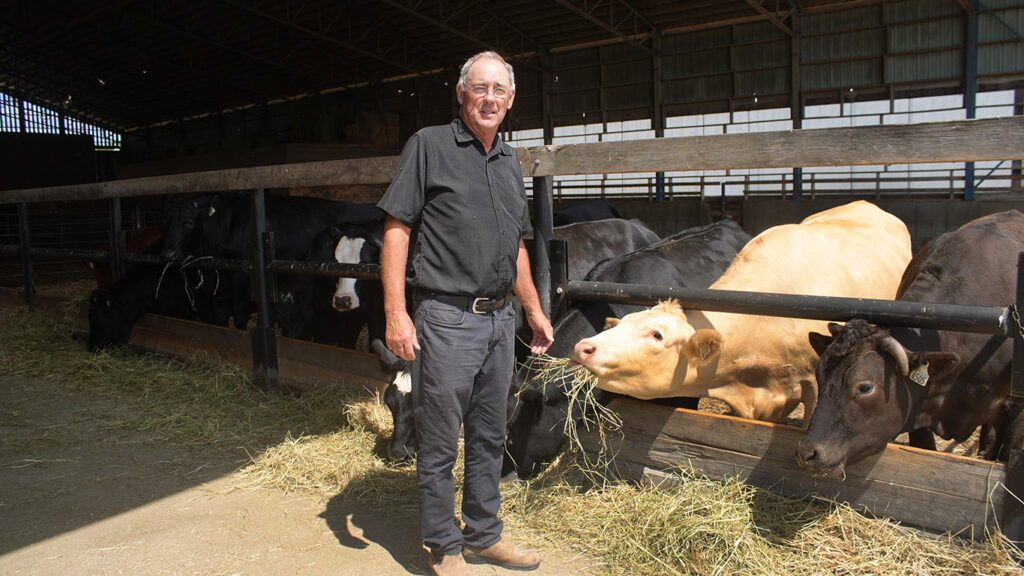
An active community volunteer in many groups, Younge started volunteering at the fair about 30 years ago, in the beef cattle section as well as setting up and tearing apart the grounds.
In 2007 he joined the fair board, and in 2010 and 2011 served as president – an experience he said allowed him to carry on the tradition his forefathers started before him.
“Ever since I was a small child, it was a dream of mine to be part of the fair, and when I was able to be president those people helped me make my dream come true to keep the fair in good stead.”
During Younge’s tenure, the fair acquired a property near the hospital that now acts as a campground during fair weekend. He said this helped to alleviate some of the parking problems that arose in town during the busy time.
“It was always a running joke that if a fair didn’t have a parking problem, it wasn’t much of a fair. We had a major parking problem, and we still have a major parking problem, but it’s a lot better because all those trailers are up there.”
When Younge got the call from the Pontiac Agricultural Society’s general manager Mavis Hanna saying he had won this year’s award, he was appreciative of the opportunity to be recognized with Shawville Fair royalty.
“I was humbled because to me it’s a great honour to be able to have my name amongst many of my mentors that came before me,” he said, listing a dozen or so names.
“They all had busy farms, but when it came to Shawville Fair you shut down the farm as much as you can [ . . .] and it was important to them to be able to have a place for people to come and learn.”
The learning aspect is still close to Younge’s heart. Every year he tours schoolkids around the fairgrounds, trying to instill in them the same passion for agriculture that intoxicated him as a young lad.
“Their eyes are just huge, it’s wonderful to see them,” he said.
Elwyn Lang started volunteering as a young kid, slinging hot dogs at the fair’s 4-H food stall. As he got older he got involved with the entertainment side of the fair, coordinating volunteers for everyone’s favourite “White Ride” – the beer tent.
In 1977, Lang stepped up as a board member, where he is proud to say he has served for nearly 50 years. But his tenure was marked by an early challenge, the 1989 fire that burned the old octagonal exhibition hall to the ground.
The fair board was forced to re-build a new hall from the ashes, which he said put them in some temporary financial trouble. But thanks to some generous community members they were able to pull themselves out.
“For a few years we’d run around collecting,” said Lang. “They asked people [not to] take prize money for a few years to help the fair survive.”
He said the new exhibition hall, as well as many other new buildings the board erected around the fairgrounds, made space for the fair’s different divisions.
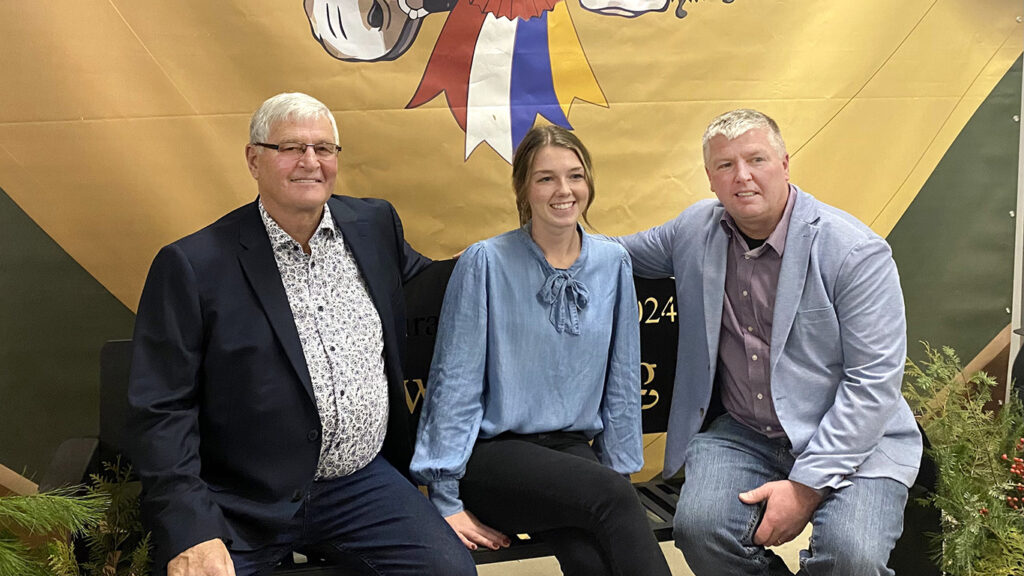
“That was a pretty big challenge. It changed the whole fair when they built the exhibition hall [because] we had somewhere to hold things and it was a venue for other opportunities.”
After a half-century in the biz, Lang has seen the fair take new forms over the years, and he has seen it grow. He said a commitment to top-tier entertainment and a shift to a one-price admission has helped attract more people as the “Valley’s most family-friendly fair.”
“We draw many more people because of our entertainment [ . . . ] I think that has grown the fair more than anything else. It’s a reasonable price for the day or the weekend. “
He said while he never sought to win any awards, this one is special because it’s a testament to those who work hard at the fair every year – and have a heck of a lot of fun while doing it.
“It’s humbling. There’s lots of people that have given their heart and soul to it [ . . . ] We’ve had a lot of hard work, but we’ve had a lot of fun.”
Lang still lends a hand in the beer tent, but this year is glad to see a fresh set of faces tending bar. He said it’s encouraging for the fair’s future to see people still volunteering.
“If you can get one volunteer that is a really good volunteer, you’ll get more of them,” he said.
He was able to coax in at least one more volunteer this year – his granddaughter Kendal, whose addition to the fair board now makes three generations of Langs.
Homecraft section keeping up with the times
by Emma McGrath
This year, the fair has introduced several new sections to the homecraft competitions: daycare crafts, charcuterie, and paint night creations.
“We have three new sections in the homecraft section, which means three new opportunities for people who are showing, or are new to showing,” said Mavis Hanna, general manager of the Pontiac Agriculture Society.
She said the board has removed some older classes and replaced them with these ones in an effort to tap into some of the ways crafting traditions have evolved over the years.
Ideas for this year’s additions to the section came during a brainstorming session between some of the homecraft directors.
“We thought, what can we take out to put in . . .
what’s new and upcoming,” said Lisa Coles, one of the directors. “We like to keep up with the new things happening.”
Hanna said charcuterie, for example, was added because it’s something that has become quite popular in recent years – a craft that people are already practicing.
“We have a whole section of classes for charcuterie trays, because charcuterie is big now, and everybody in their home life parties and events are doing charcuterie.”
Coles explained a section for daycares to enter was added to give the many daycares in the area an opportunity to make some crafts, win some prize money, and maybe get some future exhibitors hooked on the fair at a young age. The paint night section offers people who have already done the work to create the art at a local paint night a space to display their work.
“We’ve all been to those paint nights and have those projects that have come from those paint nights, and there’s nothing really to do with them,” Hanna said. “So now you can show it.”
Another section making its debut this year is macramé, a textile craft that involves knotting techniques, rather than weaving or knitting, to create various hanging shapes. And it’s made a “hot hot” comeback, according to Coles.
“If [ . . . ] you’re sitting doing macramé, hey, you know, put it in [the fair], you could win five, six bucks,” she said.
Charcuterie experts offer tips and tricks of the tray
While the word charcuterie technically refers to cured meat, it has come to used as a general term for a prepared tray holding a curated collection of different preserved foods – usually ready-to-eat meats, cheeses, dried fruits, and crackers.
This glamorous snack tray – the origins of which date back to 15th century France – has become a staple at most social gatherings because of the do-it-yourself approach it offers to building your own plate.
Would you like a fresh fig with a wedge of brie? Or perhaps a schmear of gorgonzola with a baby pickle? Or maybe yet, a classic cheddar on a cracker. The adventure is yours for the choosing.
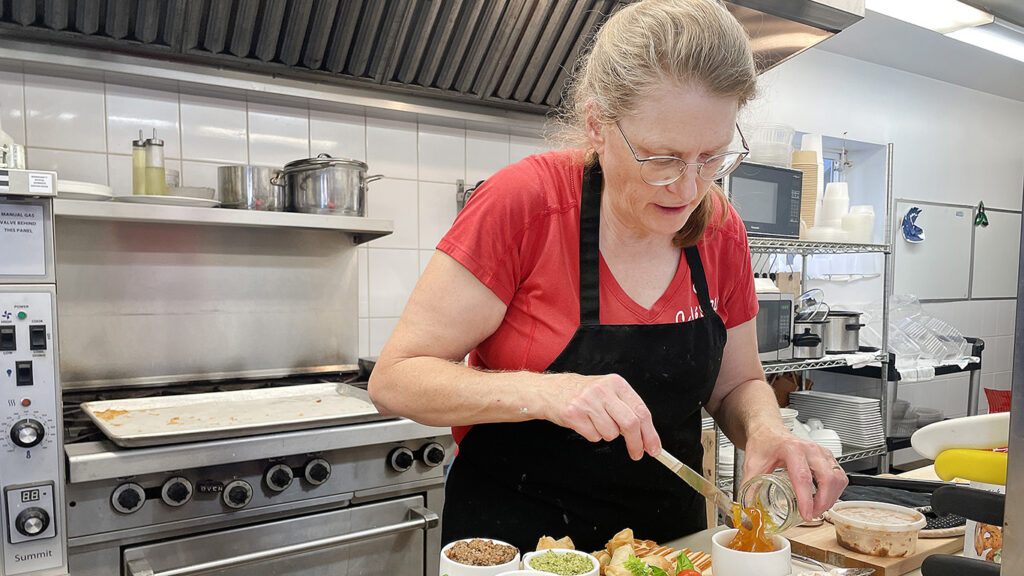
While hosts might figure the preparation of a charcuterie board to be simpler than whipping up a more complicated finger food, many would argue here is still an art to assembling and displaying the right combination of pairable pieces.
Determined to get the inside scoop on how to master the charcuterie assembly, THE EQUITY caught up with two local experts to harvest their tips and tricks for what makes the perfect board.
Jennifer Dale, owner of Shawville’s Little Red Wagon Winery, said some staple items she tries to include are a hard cheese, a soft cheese, maybe a goat cheese, a nice jam or jelly, pickles, olives, some thinly sliced cured meats, and crackers.
She said she will often add some fresh fruits such as grapes or apples, and dried fruits too, like figs, apricots, or mangoes, and a little green garnish to tie it all together.
Of critical importance to Dale’s charcuterie practice is the choice of surface used to display the gathered finger foods. She encourages using a board or plate “in a colour that makes everything pop,” which means opting for neutrals that will accent the colours of the foods, and adding either a matching or contrasting bowl for your olives, or anything else in need of some structure.
She also stresses the importance of including utensils for snack-browsers to gracefully gather their chosen pieces – a small fork to pick up the ingredients or a small knife to spread the soft cheeses and jams will elevate your board and make it easier to enjoy.
Only a stone’s throw from Dale’s headquarters at the winery, another charcuterie expert has been hard at work over the years refining her charcuterie practice at her restaurant in downtown Shawville.
Café 349 owner Ruth Hahn said she started to offer boards because there was an increasing demand for finger foods rather than full meals at the casual events she hosts.
For Hahn, charcuterie boards are a winning option because you can make them for any occasion – a belief she’ll be testing this week as she tries to assemble a breakfast board for the first time.
Hahn’s second tenet of a good board is that it uses whatever happens to be on hand in the kitchen.
“Easy to say because I am a restaurant owner,” she joked, noting she loves to work with textures and colours to fill in any gaps, such as some nuts, a nice sprig of green herbs, or some crackers.
But she shared that there ultimately are no rules to putting a board together, something she has learned over time.
“Just fill it with what you’ve got.”
A new gallery for paint night prodigies
Sheila O’Brien has been instructing paint nights at the Fort William hotel in Sheenboro for three summers now, and says their popularity is only growing.
A paint night is an event where an instructor leads a group of people, not necessarily painters, step by step through the process of painting a specific image.
O’Brien, a professionally trained artist who now teaches at Algonquin College in Pembroke, said she was looking for an opportunity to use her skills while offering the community a chance to connect during her quieter summer months.
“I think there was a big need for that [connection] following the pandemic,” she said, explaining her thinking behind launching her paint night events.
Nearby cottagers Dora and Mark Brazeau and their daughter Lindsay are among the dedicated followers of O’Brien’s paint nights.
“It’s something so different,” Dora said, adding that they love to do other family activities like karaoke, but that painting offers a new way to spend time together.
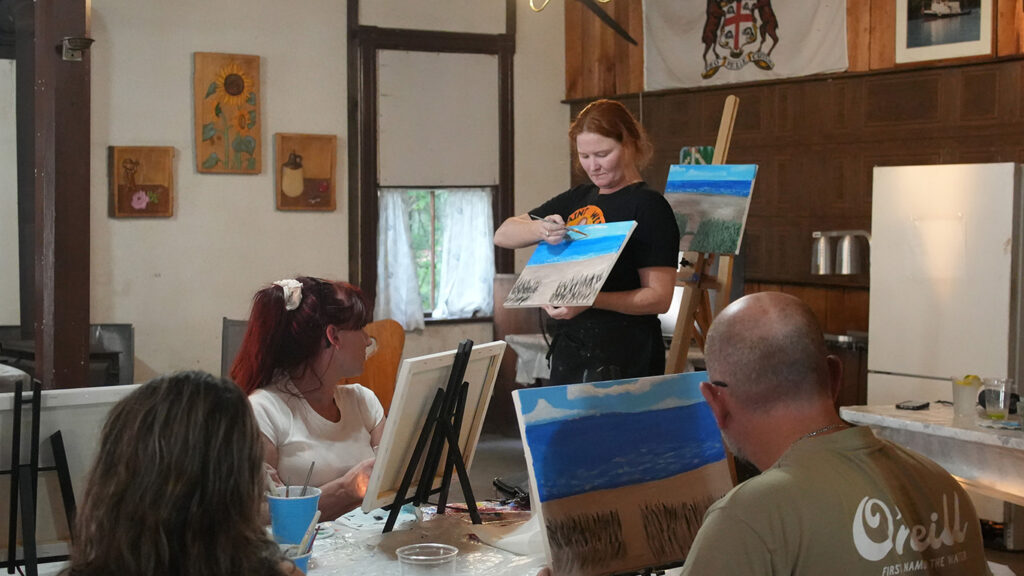
“I get to spend time with my daughter, and my wife, and it’s relaxing,” Mark added after they had all painted a beachy, sandy landscape.
None of the three Brazeau family members had plans to submit in the Shawville Fair’s paint night classes, new as of this year, but said they will likely give their paintings to their respective parents because they have collected a few paint night products themselves already.
For O’Brien, having a new fair category for paint night productions might be just the gallery space she believes some of her participants are looking for.
“I talked to a lot of artists through this Paint With Sheila that are so proud of their work,” O’Brien said. “But they don’t necessarily just want to bring it home and put it in a room where no one is going to see it. They want to get it out there.”
She said she sees paint nights as a natural extension of more traditional homecrafts.
“It’s like the 2025 version of quilting, where people would gather to create a quilt. Now, we’re gathering to create art. It definitely belongs.”
Starting them young
Over the last few weeks some little ones at daycares in the Pontiac could be found preparing for what will be for most, their first ever submission to the Shawville Fair, in the fair’s first ever homecraft section for daycare crafts.
Tanya Greer works at Kids Stop Care, a daycare in Bristol, where she spent some time crafting with her young group of little ones aged three and under to get their submissions ready for the big weekend.
“I thought it was a great idea, because it gets kids at a younger age used to what the fair is all about, and then maybe when they get older, they will actually put exhibits in,” she said. “It’s one way to get them used to the process and what’s involved.”
Also this month, burgeoning artists over at Bambinos Universe Early Childhood Center in Shawville were getting their craft on to prepare for their first submission to the fair.
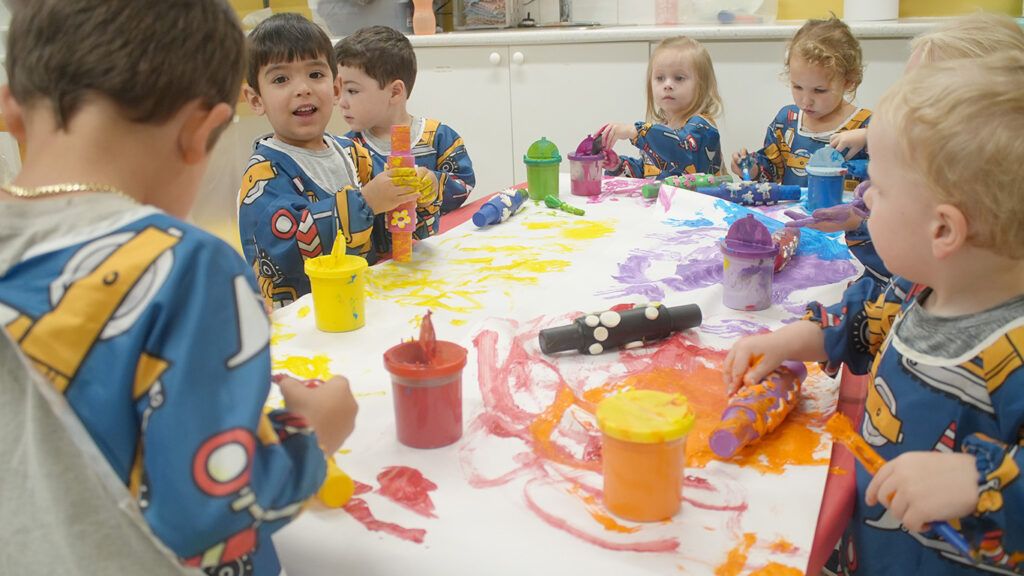
Head teacher at Bambinos Christa Kelly said every year the school, along with other schools in the area, are invited to tour the fairgrounds the Friday morning. Fair director Kendal Lang said that initiative is an opportunity for kids to explore the agricultural side of the fair before it gets busy, something that can get missed when they come with families.
Kelly said having something of their own on display will make this year’s trip to the fair “extra special.”
“They’re going to be so proud to show what they have done to their parents,” she said.
The instructions for each craft, including paper bag scarecrow or spooky square pumpkin, were left up to educators to plan, and the makers to execute, so every submission is sure to be one of a kind!
Thinking of entering in this year’s new homecraft categories, or those that have been around for decades? Here are some details.
To enter into the homecraft competitions, you must be a member of the Pontiac Agriculture Society. You can purchase a membership up until the beginning of the fair – with a deadline of Wed. Aug. 27, at 9 p.m. – from the fair board office at 215 Lang Street, Shawville.
Wool and pumpkins take the spotlight
by Emma McGrath
Expanding on an initiative that started last year, the fairboard is bringing two new interactive agricultural awareness installations to this year’s fair to provide an opportunity for local or visiting passersby to learn more about two lesser-known corners of Pontiac’s agricultural scene.
This year, the two installations will highlight pumpkin growing and wool production.
“It’s all about being an educator for agriculture for our visitors to the fair,” said Mavis Hanna, general manager of the Pontiac Agriculture Society.
“We want to make sure we are representing the industry and reflecting the changes in the industry.”
She said farmers in the area have grown to include more than just historically prominent dairy operations, to cash croppers, market gardeners, and sheep farmers.
“It opens up the conversation,” said Kendal Lang, one of the directors responsible for the installations, adding that the booths, set up in the ag awareness barn alongside the 4H projects, help make the conversation around agriculture a little more approachable and engaging.
The pumpkin installation will have an information banner that shares facts about how pumpkins are grown and walks you through the life of a pumpkin from start to finish, as well as a tic-tac-toe that uses small wooden pumpkins as pieces that directors hope will draw in fair go-ers.
The sheep installation will include a poster that will walk its readers through important stages in a sheep’s life, focusing on what it takes to make wool. Several mystery boxes will invite visitors to reach into them to feel their contents without being able to see them. Inside will be wool in different forms and products to touch.
A new way for wool waste
Clarendon sheep farmer Shauna McKenna is one local producer who has found some creative ways to use their wool, often deemed to be an agricultural waste product.
She started her flock of sheep back in 2019, with seven commercial sheep. Now, she tends to a flock of 60 at her home in Radford.
While she began sheep farming to be able to sell their meat, she has a particular passion for their wool, which is often thrown out, according to McKenna, a practice seen by many as a “necessary evil.”
“I used to be a producer who threw out wool, I’m not very proud to say that, but it would go into the manure pile because it was considered a waste product,” McKenna said.
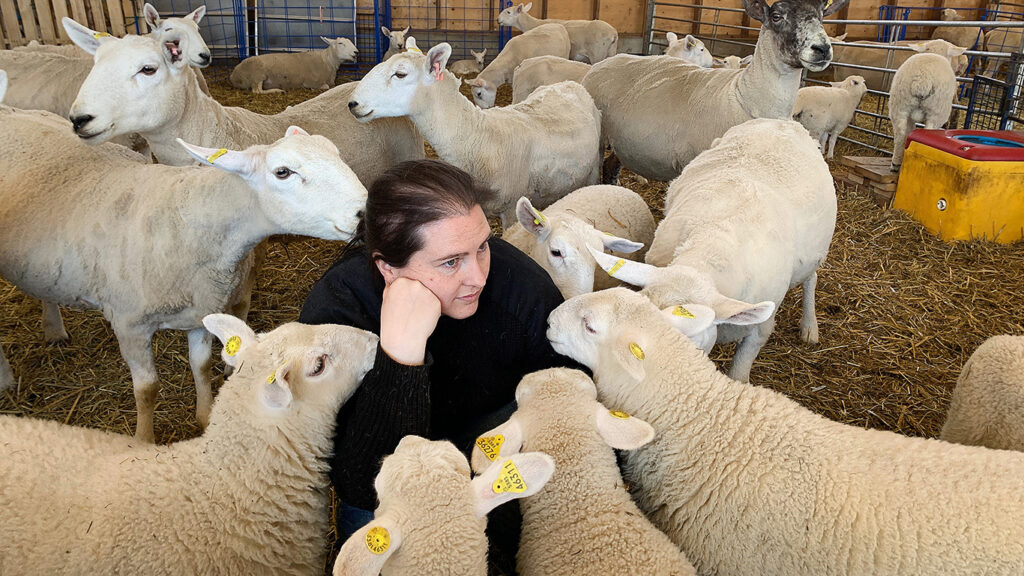
She started wool felting as a way to use some of the wool she produces, without having to process the wool into yarn.
“I fell in love with the creation part,” she said. “I can dye my own colours, I don’t have to buy it from the store, I can use my sheep, and just needle felt it and make something great.”
She uses about 70 per cent of the wool she produces for various different wool creations – including artwork on homemade greeting cards – and the rest of it goes to Leystone Farms, a Luskville operation that transforms sheep wool into pellets that are then sold as a natural garden fertilizer.
“I think [wool] is a product most Canadians think of as picky and not comfortable,” McKenna said. “But there are many different valuable things that you can do with wool rather than throw it in the manure pile.”
McKenna said right now she is noticing a shift in discourse around wool and its uses and the desire of consumers seeking natural fibres over synthetics for clothing and textiles.
“It’s a really positive thing that [the fair] chose sheep and wool this year rather than just sheep with meat. Obviously both products are really great, but it’s nice to see that wool is highlighted as a product that can be used in everyday use,” she said.
Last year’s champ offers tips for growing the plumpest pumpkin – by K.C. Jordan
Anyone seduced into pumpkin growing by the fair’s new ag exhibit should be sure to get in a visit with the giant pumpkin submissions on display in the agricultural hall to understand just what an attentive pumpkin whisperer can accomplish.
Mike Rusenstrom has been one such whisperer, winning the award for heaviest pumpkin at last year’s fair with an entry that clocked in at over 400 lbs.
Rusenstrom offered THE EQUITY a tour of his garden in Bristol as well as some tips for how to grow the plumpest pumpkin.
It all starts with the soil, he said, making sure it is healthy and alive – which can take a few years to get going.
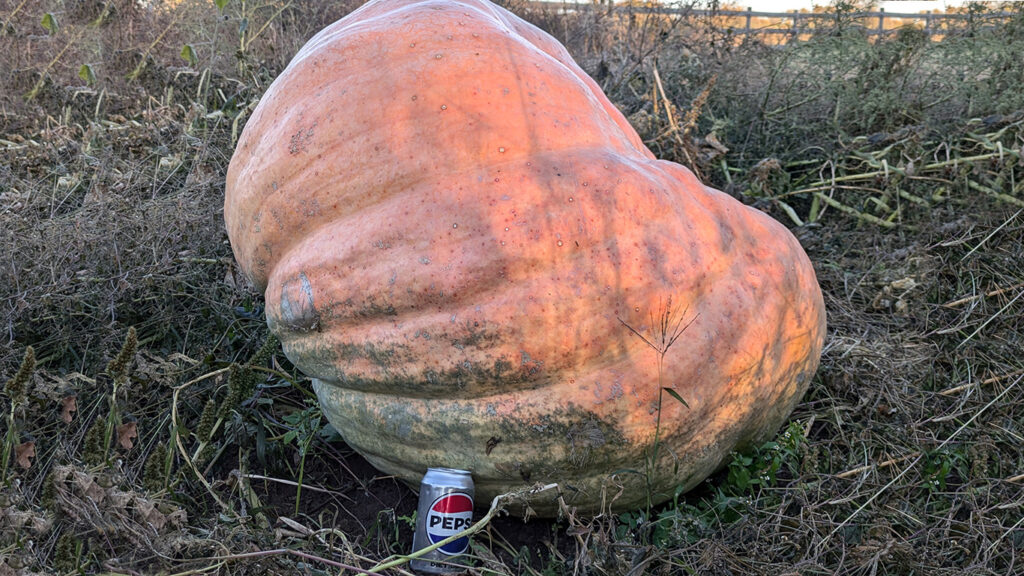
“Guys will have three piles of compost, and you have to let it break down properly before you actually add it into your garden,” he said.
Rusenstrom has come up with ways over the years to keep his soil healthy, such as growing buckwheat and other plants to help nourish the compost.
“It breaks down easily once you chop it and then you till it into the ground,” he said, adding that crushed-up seashells can also be added as a calcium source.
Then comes choosing the right seeds. To grow a champion pumpkin you can’t just use any old seeds – they are bred specifically for their sheer girth. Rusesnstrom got his seeds this year from local grower Todd Kline, a wily veteran who boasts a record 15 first-place pumpkins at the Shawville Fair.
Rusenstrom estimates a pumpkin can gain upwards of 40 lbs a day. “They grow fast,” he said, noting it takes a lot of water to feed them. “A plant can be a thousand square feet, so it could be an inch or two of water a day [because] there’s a whole root system there that is just absorbing it.”
Sometimes, he said, your efforts don’t bear fruit. The veggies he wanted to enter in this year’s fair got warped by two recent windstorms, squashing all hopes of a winning entry.
“I did my best to untwist it and it started growing out again, and then the next one was just enough damage that it started losing leaves.”
He said the unpredictability of the weather conditions is just the name of the game. “There’s only so much you can do to control it.”
Rusenstrom may not have an entry this year, but that won’t stop him from chasing what he calls the “Bristol record” – an ongoing battle with his neighbour Dr. Keith MacLellan, who lives two kilometres down the road and is one of the fair’s original large pumpkin growers.
“I need to be one pound heavier than whatever Dr. MacLellan grows, that’s the goal,” he said.
Costumed cowboys (and girls) to make a comeback
by Sophie Kuijper Dickson
Making a return to the fair for a second year is the gymkhana horse show. For folks who may not be familiar with this word, this event sees riders of all ages compete in a slew of races involving barrels that need to be circled, poles that need to be bent and eggs that need to be carried on spoons, to name just a few of the usual obstacles riders encounter. And this year there will even be a costume class, which used to be a regular component of the Western horse show, but didn’t happen last year.
Chomping at the bit to partake in this year’s races are Ladysmith cowgirls Grace and Claire Pasch, who were the only two riders in the peewee section of last year’s gymkhana competitions. The girls, who had already spent years riding, loved the games experience so much that they then dedicated themselves to the sport, participating in monthly gymkhana competitions and even traveling to North Bay with their family to take part in some Western games hosted there.
“The girls absolutely love it, they’re horse obsessed,” said their mother Molly McGuire. “It keeps them outside with fresh air, and gives them lots of responsibility. It all started at the Shawville Fair.”

PAS board member Kait Meilleur-Theriault has been involved with running the western and lighthorse show at the fair for the past 10 years, and three years ago was invited by the agricultural society to take on organizing the whole event.
“The board needed someone to organize the event and no one was able to do it, and if no one stepped up, there wouldn’t be a western or a light horse show,” she said. One of her first moves at the helm of this section was to bring back the gymkhana competition.
“Horsemanship is one of those things that doesn’t always get highlighted as much, so we wanted to bring something exciting that people would want to come and see.”
“Last year was our first time taking the Western pleasure [competitions] out of it, and really focusing on it being more of a game, a fun time for people to come and enjoy their horses and not have too much of the stress of having to be perfect,” she said.
And according to her, the crowds loved it.

“For spectators it was incredible. I don’t think we had a spot available in the arena. I was really shocked to see how many people came out, and really cheered everybody on.”
This year she said she’s hoping to draw more riders in the peewee/novice category. Riders have until Aug. 28 to register for these games. The races will take place starting at 3 p.m. on Sunday, Aug. 31.
Fair now a points show for two breeds of cattle
by Sophie Kuijper Dickson
Local cattle breeders have another incentive to show at the fair this year, as it is now an official points show for Hereford and Simmental breeds.
“So if you’re in the beef/cattle showing business, that’s big. It refers to the excellence of our show and the excellence of the cattle that come to our show that they would consider us a point show,” said Mavis Hanna, general manager of the Pontiac Agricultural Society.
“If you show a lot, and collect points throughout the year, then at the end of the year [the bread associations] have this big banquet and there’s overall winners. It’s a way for [breeders] to promote how good their livestock is.”
Hanna said for Simmental breeders, there is only one other points show in Quebec – Expo Boeuf in Victoriaville. She said for the fair to be a points show will put the Pontiac on the map as a region with high quality livestock, and will also draw beef producers from elsewhere looking to rack up some of their own points.
“For us it’s all about keeping agriculture strong in our fair, and these are the methods that we can use to do that,” Hanna said.
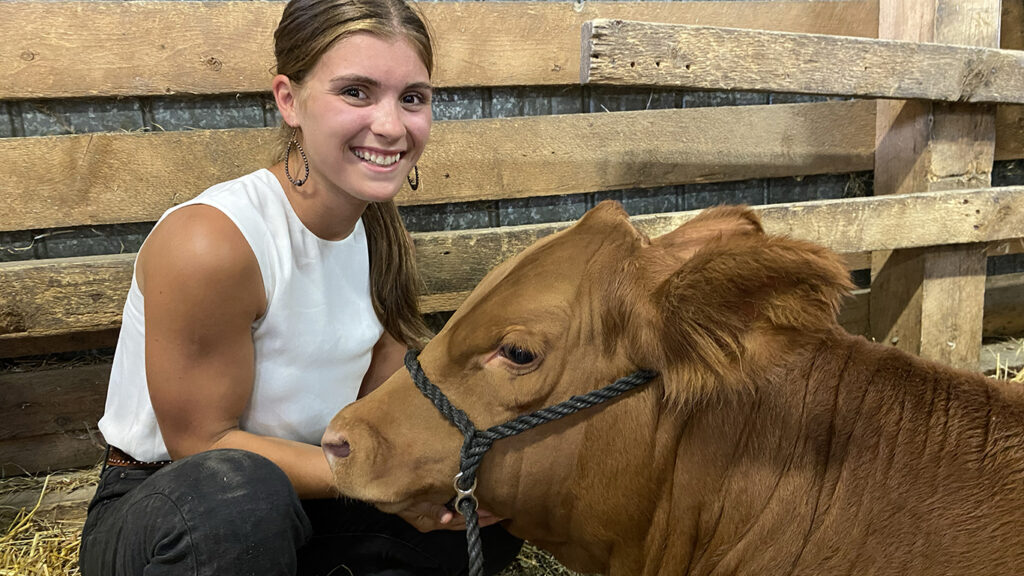
For young Pontiac cattle farmer Reese Rusenstrom, this is exciting news. She’s been showing Simmental at the fair for the past five or six years, and is looking forward to the elevated competition she expects will come from joining the circuit of points shows.
“It’s more of a motivation for people from further away as well, to come, because if our fair counts as a points show, they’ll be hopefully more interested in coming to get those points, and so the quality of our show will get better,” she said.
Rusenstrom, who has a 50-head herd of Simmental cattle, is showing a heifer calf and yearling heifer in this year’s shows, and she’s ready for the competition.
“She’s going really good,” she said, with regards to her calf Stormy. “Everywhere you go you’ve got to think there could be potential customers. If somebody sees a cattle that they really like, that could give you an opportunity to sell genetics off of those animals.”
Folks hoping to get a look at the young Stormy can do so during the open beef show on Saturday.
This year’s Shawville Fair is also, once again, a qualifying show for the Royal Winter Fair in Toronto.
“You have to apply each and every year,” Hanna said. “There’s no guarantee that you’re going to get it.”
Bienvenue à votre reportage spécial sur la Foire de Shawville !
Bienvenue dans ce regard exclusif derrière les coulisses de ce qui vous attend lors de la Foire de Shawville de cette année. Nos journalistes ont travaillé d’arrache-pied au cours du dernier mois pour présenter aux lecteurs les histoires de la manière dont certaines personnes, dans tout le comté, se préparent pour le plus grand événement de l’année dans le Pontiac. Et nous n’avons fait qu’effleurer la surface en termes de capture de l’énergie et de l’amour qui se dégagent de cet événement.
Des jeunes membres du Club 4-H qui s’entraînent pour leurs premiers marchés aux pilotes de démolition chevronnés qui peaufinent leurs engins pour le grand choc de cette année, nous espérons que ce reportage spécial vous donnera un aperçu de l’effervescence discrète qui monte dans tout le comté à l’approche du week-end de la foire.
L’événement de cinq jours de cette année offrira aux participants un juste mélange de tout ce qui fait la tradition de la « foire la plus familiale de la Vallée », qui remonte à 1856, ainsi que de nouvelles caractéristiques introduites par le comité organisateur pour garantir que l’événement offre la meilleure vitrine possible de tout ce dont cette communauté est capable et que les foules restent diverties tout au long du week-end.
Il y aura des concours de tracteurs, des concours de chevaux, des tontes de moutons, des expositions d’animaux, des jugements de produits et bien plus encore sur les cinq jours, conçus pour célébrer tout ce qui touche à l’agriculture.
Dans la section des produits, les mains vertes locales peuvent désormais concourir pour le prix de la plus grosse pomme de terre, et les producteurs de semences seront heureux d’apprendre que la foire a élargi le nombre de catégories pour lesquelles elle est qualifiante pour le Salon des semences de la vallée de l’Outaouais. La section artisanat s’élargit également pour inclure plusieurs nouvelles catégories. Et les expositions de bovins de race Simmental et Hereford sont désormais des expositions à points pour ces associations bovines. De grands changements !
Le divertissement familial prévu pour le week-end comprendra une fois de plus un spectacle de cirque canin, un hypnotiseur, deux magiciens et Dan, l’homme-orchestre, pour une animation musicale où que vous vous trouviez sur le site de la foire.
Entre les classes de chevaux de trait le vendredi soir et le samedi après-midi, une cascadeuse se produira avec ses deux chevaux et son poney, et fera des démonstrations sur le site de la foire le samedi également. Et ceux qui espèrent dire bonjour à Marty le Clydesdale seront heureux d’apprendre qu’il acceptera une fois de plus les visiteurs sous le chapiteau des chevaux tout le week-end.
Appel photo : Chez THE EQUITY, nous voulons savoir ce que vous avez fait pendant cette Foire de Shawville. Envoyez vos meilleures photos du week-end à editor@theequity.ca pour courir la chance de les voir publiées dans notre journal du 3 septembre.
Bonjour et bienvenue de la part de vos représentants locaux
Ralph Lang – Président de la Société d’agriculture du Pontiac
Bienvenue à la 169e édition de la Foire de Shawville, qui se déroulera du 28 août au 1er septembre 2025 ! Au nom du conseil de la Foire de Shawville, je suis ravi de vous inviter à vous joindre à nous pour célébrer notre communauté dynamique et notre riche patrimoine agricole.
La foire de cette année promet une expérience inoubliable pour tous les âges. Sous notre chapiteau de cirque, vous serez captivés par des spectacles vivants palpitants. Nous avons également le très populaire spectacle de chiens de cirque et la tente interactive de sensibilisation à l’agriculture. Des divertissements à vous donner le souffle coupé aux activités familiales, il y en a pour tous les goûts. Le vendredi 29 août, nous lancerons la foire avec des événements spéciaux pour célébrer notre fierté canadienne, notamment des spectacles patriotiques et des expositions célébrant l’esprit et l’unité de notre nation.
Le cœur de la foire réside dans notre profond engagement envers l’agriculture. Nos compétitions d’élevage et nos expositions agricoles mettent en valeur le talent, la passion et le travail acharné de nos agriculteurs locaux. Ces individus et ces familles dévoués sont le fondement de notre communauté, stimulant la durabilité et la prospérité grâce à leurs efforts inlassables. Nous honorons leurs contributions avec des expositions élargies cette année, présentant des expositions interactives et des opportunités d’apprentissage pratique pour inspirer la prochaine génération d’entrepreneurs agricoles, tout en enseignant à la communauté d’où proviennent leurs aliments.
La Foire de Shawville est plus qu’un événement – c’est une célébration de notre histoire commune, de nos réalisations actuelles et de nos aspirations futures. Que vous soyez un visiteur de longue date ou un nouveau venu, nous vous invitons à vous immerger dans la fierté qui définit cette tradition chérie. Explorez la foire animée, régalez vos papilles dans les stands de nourriture et rencontrez vos amis au kiosque de divertissement. Pour ceux qui ont pré-acheté des billets, veuillez utiliser l’entrée express pour un accès rapide et pratique au site de la foire.
Alors que nous nous préparons pour cette année marquante, j’exprime ma sincère gratitude aux innombrables bénévoles dont le dévouement et les centaines d’heures de service font de la Foire de Shawville un succès retentissant. Votre engagement rassemble notre communauté et assure que cette tradition prospère pour les générations à venir.
Rejoignez-nous pour célébrer le passé, le présent et l’avenir de la Foire de Shawville. Faisons de cette 169e édition une édition mémorable !
Profitez de la foire !
Jane Toller – Préfète de la MRC Pontiac
La Foire de Shawville est plus qu’une tradition – c’est une vitrine du travail acharné, de la résilience et de l’innovation des familles agricoles du Pontiac. Des compétitions d’élevage aux événements pour les jeunes, en passant par les expositions locales et les divertissements, la foire reflète la force de nos racines rurales.
Nous sommes également fiers d’abriter le plus grand club 4-H du Québec – un signe que l’avenir de l’agriculture est entre de bonnes mains. La foire nous rassemble et aide à éduquer les générations futures sur l’importance de l’agriculture et de la vie rurale.
Au nom de la MRC Pontiac, je souhaite la bienvenue à tous les visiteurs pour découvrir l’esprit de la Foire de Shawville.
Sophie Chatel – Députée de Pontiac–Kitigan Zibi
André Fortin – Député de Pontiac
Notre foire agricole nous permet de montrer qui nous sommes et comment nous vivons dans le Pontiac. Notre mode de vie rural est célébré à chaque coin du site de la foire. Des compétitions d’élevage aux expositions agricoles, en passant par les concours de tracteurs, les concerts et le toujours attendu démolition derby, il y en a pour tous les goûts ! Ce sera encore une édition où nous créerons des souvenirs avec nos amis, nos voisins, nos parents et grands-parents, nos enfants et petits-enfants. Pour beaucoup d’entre nous, les moments de la Foire de Shawville resteront toujours parmi nos souvenirs les plus précieux.
Les bénévoles qui gèrent la Foire travaillent sans relâche tout au long du week-end, mais aussi toute l’année au profit de notre communauté. Grâce à leur travail, les Pontiacais profiteront d’un excellent week-end, mais aussi d’avantages économiques considérables. Notre région accueillera des dizaines de milliers de visiteurs qui apporteront un formidable coup de pouce à nos entreprises locales. Sans les bénévoles de la foire, rien de tout cela ne serait possible, alors lorsque vous croiserez un bénévole ce week-end, prenez une seconde pour lui serrer la main et le remercier chaleureusement. Il appréciera.
Alors assurez-vous d’être là ce week-end ! Et invitez peut-être même un ami de l’extérieur de la ville. Les expositions sont impressionnantes. Les manèges sont amusants. La musique est excellente. C’est Shawville à son meilleur. Vos amis ne regretteront pas le voyage !
Appel à tous les Canadiens ! Aidez la Foire de Shawville à battre un record du monde
Le vendredi, le site se transformera en une célébration du Canada, avec des activités et des cérémonies pour honorer et commémorer ce pays et ceux qui le protègent.
« Nous allons faire du vendredi une véritable célébration du Canada », a déclaré Mavis Hanna, directrice générale de la Société d’agriculture du Pontiac.
Les activités d’hommage débuteront par une tentative de créer la plus grande feuille d’érable humaine du monde. La simple tâche de se présenter vers 18 h, vêtu de rouge, pourrait aider Shawville à entrer dans l’histoire.
Il y aura un salut officiel et le chant de l’hymne national, suivis d’une interprétation en direct de la nouvelle chanson de Glass Tiger, « Canada’s Song (Free to Be) » par le groupe lui-même.
Mme Hanna a déclaré que lorsque le comité organisateur de la foire a appris que le groupe canadien emblématique avait récemment sorti cette chanson, il a été facile de l’intégrer aux célébrations.
« La Foire de Shawville a toujours soutenu le Canada, en ce qui concerne nos sources d’approvisionnement et nos divertissements, c’était donc une façon de mettre cela en évidence », a-t-elle dit.
Le vendredi, tous les membres actifs des Forces armées canadiennes de Petawawa recevront une entrée gratuite en remerciement pour tout ce qu’ils font.
De plus, de 15 h à 21 h, il y aura une exposition de véhicules et d’équipements militaires sur le site de la foire.
Alors venez sur le site le vendredi, vêtu de votre rouge le plus vif sur votre poitrine et votre cœur, pour aider Shawville à célébrer notre vrai nord, fort et libre.
Première participation à la vente de chèvres se prépare pour le grand jour
par Sophie Kuijper Dickson
Eloise Thompson fait partie des 20 membres du Club 4-H de Shawville qui ont passé tout l’été à élever, toiletter et entraîner un animal afin qu’il soit prêt à être vendu au marché du club lors de la Foire de Shawville.
Alors que de nombreux membres sont désormais familiers avec le processus d’élevage de l’animal de leur choix – qu’il s’agisse d’un agneau, d’une chèvre ou d’un veau – pour qu’il soit vendu lors de la vente aux enchères annuelle du week-end de la Fête du Travail, Thompson espère faire son entrée dans l’arène du marché pour la première fois avec sa chèvre qu’elle a nommée The Rock.
Thompson a acheté The Rock auprès de l’éleveuse de chèvres de Clarendon, Meredith Closs, ce printemps, en utilisant 300 $ d’argent de fête qu’elle avait économisés.
« J’adore les chèvres, et je voulais essayer un aspect différent de [l’exposition], comme parler à plus de gens et essayer de socialiser davantage. Et je voulais quelque chose d’un peu plus impliquant », a dit Thompson à propos de sa décision d’acheter une chèvre de marché cette année.
À 12 ans, elle est membre du club depuis cinq ans et a exposé de nombreuses chèvres au fil des ans, elle connaît donc bien les tenants et aboutissants des soins aux chèvres. Mais cet été, elle a appris que l’élevage d’une chèvre pour le marché est une toute autre paire de manches.
Les années précédentes, elle a exposé des chèvres femelles, pas pour le marché. Pour ce type d’exposition, il n’y a pas de poids minimum qu’une chèvre doit atteindre pour être exposée. Mais pour le marché, c’est différent.
« Je la pèserai à la Foire de Shawville, et si elle ne pèse pas 70 livres, elle ne pourra pas participer au marché », a-t-elle dit.
« Je suis contre deux de mes cousins – Graham Vereyken et Rosie McCann – et leurs chèvres pèsent 80 et 90 livres », a-t-elle murmuré, avec un sourire, admettant qu’il y a une chance que The Rock ne soit pas acceptée.
Thompson a pesé The Rock la semaine du 11 août, et il pesait 64 livres, encore six livres sous le minimum.
« Il a commencé avec 75 livres. Je me suis dit : ‘Super, c’est génial, je vais y arriver !’ J’étais tellement excitée », a dit Thompson, à propos de ses débuts avec The Rock.
« Mais ensuite, il a chuté à 58 livres. La chaleur a eu un impact fou sur lui. Et puis il est tombé très malade. Il a eu la diarrhée et a dû être vermifugé. Et puis il est remonté à 62 livres. Nous l’avons pesé il y a deux jours et il pesait 64 livres. »
Bien que sa prise de poids ait été prometteuse, Thompson craignait que la participation de The Rock à la Journée de réussite du Club 4-H le 16 août ne lui fasse perdre une partie des progrès qu’il faisait.
« Nous le pesons tous les deux jours maintenant. Et maintenant, nous nous concentrons vraiment sur l’alimentation, et sur lui faire prendre du poids. Et j’ai aussi plus travaillé avec lui parce que je veux qu’il soit plus apprivoisé, parce que c’est un mâle et qu’ils deviennent généralement plus agités », a-t-elle dit.
Outre les défis de prise de poids, Thompson a dit qu’il était plus ou moins prêt pour le marché. Elle a réussi à le rendre beaucoup plus calme et plus à l’aise avec le toilettage, et elle a bien entretenu la taille de ses sabots et de sa toison.
Tout ce qui lui reste à faire est de faire passer le mot sur sa chèvre et d’inviter autant d’acheteurs potentiels que possible à assister au marché.
Elle a dit qu’elle était nerveuse à l’idée de parler aux gens pour vendre son animal.
Elle doit partager des informations sur l’animal, à quoi serviront les profits et convaincre les gens d’essayer sa viande, que Thompson elle-même n’a pas encore goûtée.
« J’ai cherché des choses, et apparemment c’est très bon pour les protéines, et comme il est très jeune, ce sera aussi tendre », a dit Thompson.
« Je devrais probablement l’essayer avant de le proposer, mais je suis un peu difficile en matière de nourriture, alors j’ai peur d’essayer. »
Thompson a dit que tous les profits qu’elle fera de la chèvre serviront à rembourser ses coûts initiaux d’élevage, et le reste sera économisé pour de futurs projets 4-H, et peut-être un jour pour démarrer son propre troupeau de chèvres.
Magie de la scène principale et succès du chapiteau à bière
par Emma McGrath
La programmation de divertissement très attendue de cette année ne manquera pas de faire vibrer, quelle que soit l’époque musicale que vous préférez. Avec les têtes d’affiche Glass Tiger, Parmalee et l’incomparable Brett Kissel, vous ne voudrez pas être trop loin de la scène principale.
Vendredi, la tête d’affiche nominée aux Grammy et lauréate d’un JUNO, Glass Tiger, est « l’un des groupes les plus durables et emblématiques du Canada », selon le Panthéon de la musique canadienne, dont il vient d’être intronisé ce printemps.
Le groupe, originaire de Newmarket, en Ontario, a commencé à jouer ensemble sous le nom de Tokyo en 1981. Leur premier album, Thin Red Line, est devenu le premier album le plus vendu de l’histoire de la musique canadienne, avec les chansons emblématiques « Don’t Forget Me (When I’m Gone) » et « Someday » en tête des palmarès peu après la sortie de l’album en 1986.
Leur célébrité a peut-être commencé il y a plus de 40 ans, mais c’est un chat qui ne cesse de revenir. En avril dernier, le groupe a sorti une chanson dédiée au Canada, intitulée « Canada’s Song (Free to be) ».
« C’est un groupe classique. Tout le monde connaît leurs chansons. Ils seront un grand attrait pour nous. De plus, nous avons eu la chance qu’ils sortent une chanson qui célèbre le Canada », a dit Mme Hanna, expliquant le choix du comité organisateur de réserver le groupe.
« Nous allons faire du vendredi une véritable célébration du Canada. […] La fierté canadienne est immense maintenant. Quand Glass Tiger est sorti avec cette chanson, ce fut une étape facile pour aller dans ce sens. »
Pour réchauffer la scène et la foule avant Glass Tiger, le vendredi soir, le groupe Barrelhouse Tributes, un groupe hommage de 10 musiciens, spécialisé dans l’interprétation de la musique de Dan Steely, les Allman Brothers et The Beatles. Cette année, ils présenteront The Beatles à Shawville lors de leur spectacle, où ils interpréteront l’album Abbey Road, « note pour note », selon le site web du groupe.
Samedi, le divertissement musical débutera par un spectacle country de Mark Mulligan dans le chapiteau à bière. En se déplaçant vers la scène principale à 19h30, le musicien country du Pontiac et chanteur nominée aux Grammy, Danny Sylvester, lancera le divertissement de la soirée avec son mélange de musique country-rock.
Puis, à 21 h, il cèdera la scène au groupe country américain de quatre membres, Parmalee, qui a été nominé cette année pour le prix du duo ou groupe country préféré aux American Music Awards. Bien que le groupe n’ait pas gagné, sa musique continue de faire des vagues avec ses succès « Just the Way » et « Take My Name » de son album 2021, For You.
Selon Mme Hanna, Parmalee n’a jamais joué dans l’est du Canada auparavant, et leur spectacle à la Foire de Shawville sera la seule performance du groupe dans ce coin du pays cette année.
Les fans de Sylvester seront ravis de savoir que la fête du samedi ne s’arrête pas avec Parmalee, car Sylvester continuera à animer la scène du chapiteau à bière jusque tard dans la soirée.
Le dimanche, les maîtres des reprises de la région d’Ottawa, les Bytown Brothers, lanceront le bal avec des interprétations d’une variété de succès, anciens et nouveaux, de James Taylor à Green Day.
Après cela, la programmation musicale ramènera plusieurs vétérans de la Foire de Shawville pour divertir à nouveau les foules. D’abord, la légende locale Phil Denault réchauffera la scène le dimanche soir (et animera la fête d’après-spectacle dans le chapiteau à bière par la suite) avec ses classiques country rocks.
Et puis, un nom qui parle de lui-même. Brett Kissel sera de retour pour clore la programmation de divertissement éblouissante de la foire. La superstar canadienne de la musique country compte 23 prix de la Canadian Country Music Association (CCMA), trois prix JUNO et 18 succès radio dans le Top 10, dont « 3,2,1 », « Airwaves » et, récemment, « Cowboys and Dreamers ».
Brett Kissel est déjà venu à Shawville, en 2016, puis de nouveau en 2019. Six ans plus tard, il est toujours aussi populaire qu’avant et publie de la musique sans interruption depuis son dernier spectacle en ville.
Alors si vous avez manqué sa dernière performance locale, ou si vous êtes prêt à en voir plus… « Saisissez cette chance, car vous pourriez ne pas en avoir une autre. »
Attention, super fans ! Avez-vous une question brûlante pour Glass Tiger, Brett Kissel ou Parmalee ? Nous espérons obtenir des interviews en direct avec chacun de ces groupes avant qu’ils ne montent sur scène, et nous aimerions poser votre question ! Envoyez-les à editor@theequity.ca avant le mercredi 27 août.
Construire le parfait tacot – Un champion local du démolition derby explique pourquoi il revient encore et encore
par K.C. Jordan
On pourrait penser que les démolitions derby et les casse-têtes attirent deux types de personnes très différents – mais pas dans le cas de Jeremy Williams.
Le propriétaire punk-rock de Jer’s Auto à Ladysmith est un quintuple champion de démolition derby à la Foire de Shawville, et il a passé beaucoup trop de temps à l’atelier cet été à jouer avec son dernier casse-tête – une vieille Crown Victoria qu’il aura consacrée des centaines d’heures à planifier, assembler et tester d’ici le week-end de la foire.
Et ensuite, il va la démolir.
Williams a recherché la sensation d’adrénaline des courses de démolition depuis son adolescence à la foire. « Il y a quelque chose de surréaliste dans ce volume […] vous entendez le rugissement de tout le temps », a-t-il dit dans son atelier plus tôt ce mois-ci.
Seize ans plus tard, Williams aime toujours le frisson. Mais le derby est aussi l’endroit où il peut montrer son talent de constructeur. Alors que le mécanicien nous a fait visiter en exclusivité son vaste cimetière de pièces automobiles récupérées, il a dit que c’est là que commence le processus de construction d’une voiture de démolition.
« Ce sont juste des pièces que j’ai retirées de voitures à la casse, ou des pièces usées des voitures de clients que je sais pouvoir découper et utiliser un morceau pour faire autre chose », a-t-il dit.
Une fois qu’il a toutes les pièces nécessaires pour la construction, il se met au travail pour les mettre en place. Fixer le réservoir de carburant, renforcer les pneus, ajouter des barres de support pour que le conducteur ne soit pas piégé à l’intérieur lorsque la voiture est détruite. Certains choix sont personnalisés tandis que d’autres sont pour la sécurité.
Le travail prend des centaines d’heures, et il le fait en plus de son travail normal et de sa vie de famille. « Quelqu’un viendra à la maison pour me voir et c’est la saison du derby ou la saison des pneus, et ma femme dit : ‘Qu’est-ce que tu t’attends ? C’est un fantôme.’ Je n’existe pas pendant la saison du derby. »
Une fois la voiture assemblée, il est temps de lui donner une personnalité – quelque chose que Williams possède en abondance. La construction de l’année dernière, baptisée la « voiture Spider-Man », comportait une peinture rouge-bleu-blanc et le nom de son ancien groupe, Beyond Driven, peint sur les portières.
Tout cela fait partie du plaisir pour Williams – les heures passées à construire, à assembler, à peindre. « J’ai presque plus de plaisir à construire ma voiture qu’à la conduire », a-t-il dit, ajoutant qu’il prend le temps d’admirer aussi les créations des autres.
« C’est pourquoi j’aime me promener dans les puits avant et après le derby, car vous voyez la créativité de tout le monde. Il y a toujours plus à faire, plus à apprendre, plus à expérimenter, et il y a beaucoup de gars qui en savent beaucoup plus que je ne le saurai jamais. »
Les deux jeunes fils de Williams ont absorbé ses conseils dans l’espoir de monter un jour sur ce siège conducteur convoité. Jackson Williams, âgé de douze ans, et Jax Mousseau, âgé de treize ans, l’ont aidé à démonter des voitures pour en récupérer des pièces de derby et l’ont regardé assembler les constructions.
Bien qu’ils ne soient pas encore assez vieux pour conduire, Williams espère que cette expérience les aidera un jour à construire leurs propres voitures. « Ils sont là pendant tout le processus », a-t-il dit.
Les deux garçons sont des fans de derby et se trouvent généralement au bord du ring, criant à pleins poumons pendant que Williams essaie de ne pas se faire démolir. « Nous voulons le voir gagner », a dit Jax.
Mais tout comme beaucoup de garçons pré-adolescents, ils ont toujours soif de l’instinct primaire d’aller vite et de tout casser.
« Ce que je vais faire, c’est y aller à fond, j’essaierai juste d’anéantir les gens », a dit Jackson, âgé de 12 ans, à propos de sa future stratégie.
En fin de compte, tout le travail consacré aux voitures prend fin soudainement et violemment. Mais c’est tout pour le plaisir, a dit Williams, et c’est pour le bénéfice de la foule. « Vous êtes là pour une raison et c’est de détruire votre voiture. »
Il y a deux ans, il a reçu un coup vicieux dans la portière côté conducteur, faisant rebondir l’arrière de sa voiture de près de deux pieds du sol. C’était le coup le plus dur de sa vie, mais tout ce qu’il pouvait faire était de sortir et de serrer la main du gars pour le coup vicieux.
« C’est le coup que j’aurais voulu donner à la voiture d’un autre gars », a-t-il dit.
Parfois, même après tout le temps et l’argent consacrés à une voiture, Williams échoue encore et doit recommencer à zéro. « Vous vivez avec la déception – et la dette. »
Le 1er septembre, lorsque le champion en titre Williams amènera la Crown Victoria dans l’arène, il ne saura pas à quoi s’attendre. C’est un sport imprévisible, et un nombre quelconque de choses peuvent mal tourner. Il pourrait recevoir un autre coup à la portière. Son pneu pourrait être crevé au premier tour, ou il pourrait être coincé contre la clôture.
Et même s’il gagnait pour la sixième fois, par un coup de chance des dieux du derby, ce n’est pas le but. Il s’amuse juste à faire le tour de la piste, dans la belle voiture qu’il a construite avec ses garçons. Un trophée n’est qu’une cerise sur le gâteau.
Le démolition derby fera vibrer la Foire de Shawville le 1er septembre à midi.
Rencontrez les lauréats des prix du service cette année
par K.C. Jordan
Chaque année, le comité organisateur de la foire choisit des personnes qui ont consacré beaucoup de temps à soutenir la société d’agriculture et les honore par des prix du service lors de la cérémonie d’ouverture de chaque Foire de Shawville. Les lauréats de cette année sont Rick Younge et Elwyn Lang, tous deux bénévoles de longue date, membres du conseil et anciens présidents.
L’histoire d’amour de Rick Younge avec la Foire de Shawville a commencé lorsqu’il était jeune garçon, exposant du bétail laitier dans le cadre du club 4-H de Shawville.
« La Foire de Shawville était le meilleur week-end de l’année. Vous retrouviez vos amis que vous n’aviez pas vus de tout l’été », a déclaré l’éleveur de bovins de boucherie, aujourd’hui, dans sa ferme Willow Hollow Farms.
Plus tard, Younge a commencé à voir la foire comme une occasion de montrer l’abondance agricole de sa région, même aux citadins qui ne distinguaient pas une Holstein d’une Charolaise.
« Nous pouvions montrer aux enfants de la ville ce que nous faisions et ce que faisaient nos animaux, afin qu’ils réalisent que les œufs ne venaient pas seulement du magasin. »
Bénévole actif dans de nombreux groupes communautaires, Younge a commencé à faire du bénévolat à la foire il y a environ 30 ans, dans la section des bovins de boucherie, ainsi qu’à l’installation et au démontage du site.
En 2007, il a rejoint le comité de la foire et, en 2010 et 2011, il en a été le président – une expérience qui, selon lui, lui a permis de perpétuer la tradition que ses ancêtres avaient commencée avant lui.
« Depuis que j’étais un jeune enfant, c’était mon rêve de faire partie de la foire, et quand j’ai pu en être le président, ces personnes m’ont aidé à réaliser mon rêve de maintenir la foire en bonne position. »
Pendant le mandat de Younge, la foire a acquis une propriété près de l’hôpital qui sert maintenant de terrain de camping pendant le week-end de la foire. Il a dit que cela avait contribué à atténuer certains des problèmes de stationnement qui survenaient en ville pendant cette période chargée.
« C’était toujours une blague que si une foire n’avait pas de problème de stationnement, ce n’était pas une grande foire. Nous avions un problème majeur de stationnement, et nous avons toujours un problème majeur de stationnement, mais c’est beaucoup mieux parce que toutes ces caravanes sont là-haut. »
Lorsque Younge a reçu l’appel de Mavis Hanna, directrice générale de la Société d’agriculture du Pontiac, lui annonçant qu’il avait remporté le prix de cette année, il a été reconnaissant de l’occasion d’être reconnu parmi la royauté de la Foire de Shawville.
« J’ai été humble parce que, pour moi, c’est un grand honneur de pouvoir avoir mon nom parmi plusieurs de mes mentors qui m’ont précédé », a-t-il dit, citant une douzaine de noms ou plus.
« Ils avaient tous des fermes occupées, mais quand il s’agissait de la Foire de Shawville, ils fermaient la ferme autant que possible […] et il était important pour eux d’avoir un endroit où les gens pouvaient venir apprendre. »
L’aspect éducatif est toujours cher au cœur de Younge. Chaque année, il fait visiter le site de la foire aux écoliers, essayant de leur inculquer la même passion pour l’agriculture qui l’a intoxiqué dans sa jeunesse.
« Leurs yeux sont juste énormes, c’est merveilleux de les voir », a-t-il dit.
Elwyn Lang a commencé à faire du bénévolat lorsqu’il était jeune garçon, vendant des hot-dogs au stand de nourriture du Club 4-H de la foire. En grandissant, il s’est impliqué dans le côté divertissement de la foire, coordonnant les bénévoles pour le « White Ride » préféré de tous – le chapiteau à bière.
En 1977, Lang est devenu membre du conseil, où il est fier de dire qu’il a servi pendant près de 50 ans. Mais son mandat a été marqué par un défi précoce, l’incendie de 1989 qui a réduit en cendres l’ancien hall d’exposition octogonal.
Le comité organisateur de la foire a été forcé de reconstruire un nouveau hall à partir des cendres, ce qui, selon lui, leur a causé des problèmes financiers temporaires. Mais grâce à de généreux membres de la communauté, ils ont pu s’en sortir.
« Pendant quelques années, nous nous sommes promenés à collecter », a dit Lang. « On demandait aux gens de [ne pas] prendre les prix en argent pendant quelques années pour aider la foire à survivre. »
Il a dit que le nouveau hall d’exposition, ainsi que de nombreux autres nouveaux bâtiments que le comité a érigés sur le site de la foire, ont créé de l’espace pour les différentes divisions de la foire.
« Ce fut un défi assez important. Cela a changé toute la foire quand ils ont construit le hall d’exposition [parce que] nous avions un endroit où tenir des événements et c’était une salle pour d’autres opportunités. »
Après un demi-siècle dans le métier, Lang a vu la foire prendre de nouvelles formes au fil des ans, et il l’a vue grandir. Il a dit qu’un engagement envers des divertissements de premier ordre et le passage à une admission unique ont contribué à attirer plus de monde en tant que « foire la plus familiale de la Vallée ».
« Nous attirons beaucoup plus de monde grâce à nos divertissements […] Je pense que cela a fait grandir la foire plus que tout le reste. C’est un prix raisonnable pour la journée ou le week-end. »
Il a dit que même s’il n’a jamais cherché à gagner des prix, celui-ci est spécial parce qu’il témoigne de ceux qui travaillent dur à la foire chaque année – et s’y amusent beaucoup.
« C’est humble. Il y a beaucoup de gens qui y ont mis cœur et âme […] Nous avons eu beaucoup de travail, mais nous nous sommes beaucoup amusés. »
Lang donne encore un coup de main au chapiteau à bière, mais cette année, il est heureux de voir de nouveaux visages au bar. Il considère qu’il est encourageant pour l’avenir de la foire de voir des gens faire encore du bénévolat.
« Si vous pouvez obtenir un bénévole qui est un très bon bénévole, vous en obtiendrez d’autres », a-t-il dit.
Il a réussi à convaincre au moins un bénévole de plus cette année – sa petite-fille Kendal, dont l’ajout au conseil de la foire fait maintenant trois générations de Langs.
La section artisanat évolue avec son temps
par Emma McGrath
Cette année, la foire a introduit plusieurs nouvelles catégories dans les concours d’artisanat : artisanat de garderie, charcuterie et créations de soirées peinture.
« Nous avons trois nouvelles catégories dans la section artisanat, ce qui signifie trois nouvelles opportunités pour les exposants, qu’ils soient nouveaux ou expérimentés », a déclaré Mavis Hanna, directrice générale de la Société d’agriculture du Pontiac.
Elle a dit que le conseil a supprimé certaines anciennes catégories et les a remplacées par celles-ci afin de tirer parti de certaines des évolutions des traditions artisanales au fil des ans.
Les idées pour les ajouts de cette année à la section sont venues lors d’une séance de remue-méninges entre certains des directeurs de l’artisanat.
« Nous nous sommes dit, que pouvons-nous retirer pour mettre… ce qui est nouveau et à venir », a dit Lisa Coles, l’une des directrices. « Nous aimons suivre les nouveautés. »
Mme Hanna a dit que la charcuterie, par exemple, a été ajoutée parce que c’est quelque chose qui est devenu assez populaire ces dernières années – un art que les gens pratiquent déjà.
« Nous avons toute une section de catégories pour les plateaux de charcuterie, car la charcuterie est très populaire maintenant, et tout le monde lors de ses fêtes et événements à la maison fait de la charcuterie. »
Coles a expliqué qu’une section pour les garderies a été ajoutée pour donner aux nombreuses garderies de la région une occasion de créer de l’artisanat, de gagner des prix, et peut-être d’accrocher de futurs exposants à la foire dès leur plus jeune âge. La section des soirées peinture offre aux personnes qui ont déjà fait le travail de création artistique lors d’une soirée peinture locale un espace pour exposer leur travail.
« Nous avons tous participé à ces soirées peinture et avons des projets qui en sont issus, et il n’y a pas vraiment grand-chose à faire avec », a dit Hanna. « Alors maintenant, vous pouvez le montrer. »
Une autre section qui fait ses débuts cette année est le macramé, un artisanat textile qui implique des techniques de nouage, plutôt que de tissage ou de tricot, pour créer diverses formes suspendues. Et cela a fait un retour « très tendance », selon Coles.
« Si […] vous êtes assis à faire du macramé, hé, vous savez, mettez-le [à la foire], vous pourriez gagner cinq ou six dollars », a-t-elle dit.
Les experts en charcuterie offrent trucs et astuces pour le plateau
Bien que le mot charcuterie se réfère techniquement à la viande salée, il est devenu un terme général pour un plateau préparé contenant une collection d’aliments conservés divers – généralement des viandes prêtes à manger, des fromages, des fruits secs et des craquelins.
Ce plateau de collations glamour – dont les origines remontent au XVe siècle en France – est devenu un incontournable de la plupart des réunions sociales en raison de l’approche personnalisée qu’il offre pour composer son propre assiette.
Souhaitez-vous une figue fraîche avec une tranche de brie ? Ou peut-être une cuillère de gorgonzola avec un petit cornichon ? Ou encore, un cheddar classique sur un craquelin. L’aventure vous appartient.
Bien que les hôtes puissent penser que la préparation d’un plateau de charcuterie est plus simple que celle de petits fours plus compliqués, beaucoup diraient qu’il y a encore de l’art à assembler et à présenter la bonne combinaison d’éléments assortis.
Déterminé à obtenir des informations privilégiées sur la façon de maîtriser l’assemblage de la charcuterie, THE EQUITY a rencontré deux experts locaux pour recueillir leurs trucs et astuces pour ce qui fait un plateau parfait.
Jennifer Dale, propriétaire du Little Red Wagon Winery de Shawville, a déclaré que certains produits de base qu’elle essaie d’inclure sont un fromage à pâte dure, un fromage à pâte molle, peut-être un fromage de chèvre, une bonne confiture ou gelée, des cornichons, des olives, de la viande fine tranchée et des craquelins.
Elle a dit qu’elle ajoute souvent des fruits frais comme des raisins ou des pommes, et des fruits séchés aussi, comme des figues, des abricots ou des mangues, et une petite touche de verdure pour lier le tout.
D’une importance capitale pour la pratique de la charcuterie de Dale est le choix de la surface utilisée pour présenter les amuse-gueules. Elle encourage l’utilisation d’une planche ou d’une assiette « dans une couleur qui fait ressortir tout », ce qui signifie opter pour des neutres qui accentueront les couleurs des aliments, et ajouter un bol assorti ou contrastant pour vos olives, ou tout ce qui nécessite une certaine structure.
Elle souligne également l’importance d’inclure des ustensiles pour que les amateurs de collations puissent gracieusement ramasser leurs choix – une petite fourchette pour ramasser les ingrédients ou un petit couteau pour étaler les fromages à pâte molle et les confitures élèvera votre plateau et le rendra plus facile à apprécier.
À quelques pas du siège de Dale, au vignoble, une autre experte en charcuterie a travaillé dur ces dernières années pour perfectionner sa pratique de la charcuterie dans son restaurant du centre-ville de Shawville.
Ruth Hahn, propriétaire du Café 349, a déclaré qu’elle avait commencé à proposer des plateaux car il y avait une demande croissante pour des amuse-gueules plutôt que des repas complets lors des événements décontractés qu’elle organise.
Pour Hahn, les plateaux de charcuterie sont une option gagnante car on peut en faire pour toutes les occasions – une conviction qu’elle testera cette semaine alors qu’elle essaiera d’assembler un plateau de petit-déjeuner pour la première fois.
Le deuxième principe de Hahn pour un bon plateau est qu’il utilise tout ce qui se trouve sous la main dans la cuisine.
« Facile à dire car je suis propriétaire de restaurant », a-t-elle plaisanté, notant qu’elle aime travailler avec les textures et les couleurs pour combler les lacunes, comme des noix, une belle branche d’herbes vertes, ou quelques craquelins.
Mais elle a partagé qu’il n’y a finalement pas de règles pour assembler un plateau, quelque chose qu’elle a appris au fil du temps.
« Remplissez-le simplement avec ce que vous avez. »
Une nouvelle galerie pour les prodiges des soirées peinture
Sheila O’Brien anime des soirées peinture à l’hôtel Fort William à Sheenboro depuis trois étés maintenant, et affirme que leur popularité ne cesse de croître.
Une soirée peinture est un événement où un instructeur guide un groupe de personnes, pas nécessairement des peintres, étape par étape dans le processus de peinture d’une image spécifique.
O’Brien, une artiste formée professionnellement qui enseigne maintenant au Algonquin College à Pembroke, a déclaré qu’elle cherchait une occasion d’utiliser ses compétences tout en offrant à la communauté une chance de se connecter pendant ses mois d’été plus calmes.
« Je pense qu’il y avait un grand besoin de cela [connexion] après la pandémie », a-t-elle dit, expliquant sa pensée derrière le lancement de ses événements de soirée peinture.
Les cottagers voisins Dora et Mark Brazeau et leur fille Lindsay font partie des fidèles adeptes des soirées peinture d’O’Brien.
« C’est quelque chose de tellement différent », a dit Dora, ajoutant qu’ils aiment faire d’autres activités familiales comme le karaoké, mais que la peinture offre une nouvelle façon de passer du temps ensemble.
« Je peux passer du temps avec ma fille et ma femme, et c’est relaxant », a ajouté Mark après qu’ils aient tous peint un paysage de plage sablonneuse.
Aucun des trois membres de la famille Brazeau n’avait prévu de participer aux classes de soirées peinture de la Foire de Shawville, nouvelles depuis cette année, mais ont dit qu’ils donneraient probablement leurs peintures à leurs parents respectifs car ils possèdent déjà quelques produits de soirées peinture.
Pour O’Brien, avoir une nouvelle catégorie de foire pour les productions de soirées peinture pourrait être la galerie qu’elle pense que certains de ses participants recherchent.
« J’ai parlé à beaucoup d’artistes lors de ces soirées Paint With Sheila qui sont très fiers de leur travail », a dit O’Brien. « Mais ils ne veulent pas nécessairement juste le ramener à la maison et le mettre dans une pièce où personne ne le verra. Ils veulent le mettre à l’extérieur. »
Elle a dit qu’elle considère les soirées peinture comme une extension naturelle des artisanats plus traditionnels.
« C’est comme la version 2025 du quilting, où les gens se réunissaient pour créer une courtepointe. Maintenant, nous nous réunissons pour créer de l’art. Cela a définitivement sa place. »
Démarrer les jeunes
Au cours des dernières semaines, certains petits de garderies du Pontiac ont pu être vus se préparant pour ce qui sera pour la plupart, leur première soumission à la Foire de Shawville, dans la toute première catégorie d’artisanat de la foire pour les travaux de garderie.
Tanya Greer travaille chez Kids Stop Care, une garderie à Bristol, où elle a passé du temps à créer avec son jeune groupe d’enfants âgés de trois ans et moins pour préparer leurs soumissions pour le grand week-end.
« J’ai pensé que c’était une excellente idée, car elle habitue les enfants à un plus jeune âge à ce qu’est la foire, et puis peut-être que quand ils seront plus âgés, ils exposeront réellement », a-t-elle dit. « C’est une façon de les habituer au processus et à ce qui est impliqué. »
Ce mois-ci également, les artistes en herbe du Bambinos Universe Early Childhood Center à Shawville se sont mis à l’œuvre pour préparer leur première soumission à la foire.
Christa Kelly, enseignante principale chez Bambinos, a déclaré que chaque année, l’école, ainsi que d’autres écoles de la région, sont invitées à visiter le site de la foire le vendredi matin. Kendal Lang, directeur de la foire, a déclaré que cette initiative est une occasion pour les enfants d’explorer le côté agricole de la foire avant qu’elle ne devienne bondée, ce qui peut passer inaperçu lorsqu’ils viennent en famille.
Kelly a dit qu’avoir quelque chose à eux exposé rendra la visite à la foire cette année « très spéciale ».
« Ils seront si fiers de montrer à leurs parents ce qu’ils ont fait », a-t-elle dit.
Les instructions pour chaque artisanat, y compris un épouvantail en sac en papier ou une citrouille carrée effrayante, ont été laissées aux éducateurs pour la planification et aux créateurs pour l’exécution, donc chaque soumission sera certainement unique en son genre !
Vous envisagez de participer aux nouvelles catégories d’artisanat de cette année, ou à celles qui existent depuis des décennies ? Voici quelques détails.
Pour participer aux concours d’artisanat, vous devez être membre de la Société d’agriculture du Pontiac. Vous pouvez acheter une adhésion jusqu’au début de la foire – avec une date limite le mercredi 27 août, à 21 h – auprès du bureau du comité organisateur de la foire, au 215, rue Lang, Shawville.
La laine et les citrouilles à l’honneur
par Emma McGrath
Développant une initiative lancée l’année dernière, le comité organisateur de la foire apporte deux nouvelles installations interactives de sensibilisation à l’agriculture à la foire de cette année pour offrir une opportunité aux passants locaux ou visiteurs d’en apprendre davantage sur deux coins moins connus du paysage agricole du Pontiac.
Cette année, les deux installations mettront en lumière la culture des citrouilles et la production de laine.
« Il s’agit de sensibiliser nos visiteurs de la foire à l’agriculture », a déclaré Mavis Hanna, directrice générale de la Société d’agriculture du Pontiac.
« Nous voulons nous assurer que nous représentons l’industrie et que nous reflétons les changements dans l’industrie. »
Elle a dit que les agriculteurs de la région sont passés des opérations laitières historiquement importantes aux producteurs de cultures de rente, aux maraîchers et aux éleveurs de moutons.
« Cela ouvre la conversation », a dit Kendal Lang, l’un des directeurs responsables des installations, ajoutant que les kiosques, installés dans la grange de sensibilisation agricole aux côtés des projets 4-H, aident à rendre la conversation sur l’agriculture un peu plus accessible et engageante.
L’installation sur les citrouilles comprendra une bannière d’information qui partage des faits sur la façon dont les citrouilles sont cultivées et vous guide à travers la vie d’une citrouille du début à la fin, ainsi qu’un jeu de tic-tac-toe utilisant de petites citrouilles en bois comme pièces, ce que les directeurs espèrent attirer les visiteurs.
L’installation sur les moutons comprendra une affiche qui guidera ses lecteurs à travers les étapes importantes de la vie d’un mouton, en se concentrant sur ce qu’il faut pour produire de la laine. Plusieurs boîtes mystères inviteront les visiteurs à y plonger leur main pour sentir leur contenu sans pouvoir le voir. À l’intérieur, il y aura de la laine sous différentes formes et des produits à toucher.
Une nouvelle façon d’utiliser les déchets de laine
Shauna McKenna, éleveuse de moutons de Clarendon, est une productrice locale qui a trouvé des moyens créatifs d’utiliser sa laine, souvent considérée comme un produit agricole résiduel.
Elle a démarré son troupeau de moutons en 2019, avec sept moutons commerciaux. Maintenant, elle s’occupe d’un troupeau de 60 à son domicile à Radford.
Bien qu’elle ait commencé l’élevage de moutons pour pouvoir vendre leur viande, elle a une passion particulière pour leur laine, qui est souvent jetée, selon McKenna, une pratique considérée par beaucoup comme un « mal nécessaire ».
« J’étais une productrice qui jetait de la laine, je ne suis pas très fière de le dire, mais elle allait sur le tas de fumier parce qu’elle était considérée comme un produit résiduel », a dit McKenna.
Elle a commencé le feutrage de laine comme moyen d’utiliser une partie de la laine qu’elle produit, sans avoir à la transformer en fil.
« Je suis tombée amoureuse de la partie création », a-t-elle dit. « Je peux teindre mes propres couleurs, je n’ai pas besoin de l’acheter en magasin, je peux utiliser mes moutons, et simplement la feutrer à l’aiguille pour en faire quelque chose de formidable. »
Elle utilise environ 70 % de la laine qu’elle produit pour diverses créations en laine – y compris des œuvres d’art sur des cartes de vœux faites maison – et le reste va à Leystone Farms, une exploitation de Luskville qui transforme la laine de mouton en granulés qui sont ensuite vendus comme engrais naturel pour jardin.
« Je pense que [la laine] est un produit auquel la plupart des Canadiens pensent comme étant piquante et inconfortable », a dit McKenna. « Mais il y a beaucoup de choses de valeur différentes que vous pouvez faire avec de la laine au lieu de la jeter sur le tas de fumier. »
McKenna a dit qu’elle constate actuellement un changement dans le discours autour de la laine et de ses utilisations, et le désir des consommateurs recherchant des fibres naturelles plutôt que synthétiques pour les vêtements et les textiles.
« C’est une très bonne chose que [la foire] ait choisi les moutons et la laine cette année plutôt que seulement les moutons pour la viande. Évidemment, les deux produits sont excellents, mais c’est bien de voir que la laine est mise en avant comme un produit qui peut être utilisé au quotidien », a-t-elle dit.
Le champion de l’an dernier offre des conseils pour cultiver la citrouille la plus dodue – par K.C. Jordan
Quiconque est séduit par la culture de citrouilles par la nouvelle exposition agricole de la foire devrait absolument visiter les soumissions de citrouilles géantes exposées dans le hall agricole pour comprendre ce qu’un chuchoteur de citrouilles attentif peut accomplir.
Mike Rusenstrom est l’un de ces chuchoteurs, ayant remporté le prix de la citrouille la plus lourde à la foire de l’année dernière avec une entrée qui dépassait 400 lb.
Rusenstrom a offert à THE EQUITY une visite de son jardin à Bristol ainsi que quelques conseils sur la façon de cultiver la citrouille la plus dodue.
Tout commence avec le sol, a-t-il dit, en s’assurant qu’il est sain et vivant – ce qui peut prendre quelques années pour se mettre en place.
« Les gars auront trois tas de compost, et vous devez le laisser se décomposer correctement avant de l’ajouter à votre jardin », a-t-il dit.
Rusenstrom a trouvé des moyens au fil des ans pour garder son sol sain, comme cultiver du sarrasin et d’autres plantes pour aider à nourrir le compost.
« Il se décompose facilement une fois que vous le hachez, puis vous le travaillez dans le sol », a-t-il dit, ajoutant que des coquilles d’huîtres broyées peuvent également être ajoutées comme source de calcium.
Vient ensuite le choix des bonnes semences. Pour cultiver une citrouille championne, vous ne pouvez pas utiliser n’importe quelles vieilles semences – elles sont spécifiquement sélectionnées pour leur circonférence impressionnante. Rusenstrom a obtenu ses semences cette année auprès du producteur local Todd Kline, un vétéran rusé qui se vante d’un record de 15 citrouilles de première place à la Foire de Shawville.
Rusenstrom estime qu’une citrouille peut gagner plus de 40 livres par jour. « Elles poussent vite », a-t-il dit, notant qu’il faut beaucoup d’eau pour les nourrir. « Une plante peut couvrir mille pieds carrés, donc cela pourrait être un pouce ou deux d’eau par jour [parce qu’] il y a tout un système racinaire qui l’absorbe. »
Parfois, a-t-il dit, vos efforts ne portent pas leurs fruits. Les légumes qu’il voulait présenter à la foire de cette année ont été déformés par deux récentes tempêtes de vent, écrasant tout espoir d’une entrée gagnante.
« J’ai fait de mon mieux pour le démêler et il a recommencé à pousser, puis le suivant a été juste assez de dégâts qu’il a commencé à perdre des feuilles. »
Il a dit que l’imprévisibilité des conditions météorologiques fait simplement partie du jeu. « Il n’y a pas grand-chose que vous puissiez faire pour le contrôler. »
Rusenstrom n’aura peut-être pas d’entrée cette année, mais cela ne l’empêchera pas de poursuivre ce qu’il appelle le « record de Bristol » – une bataille continue avec son voisin, le Dr Keith MacLellan, qui habite à deux kilomètres et est l’un des premiers producteurs de grosses citrouilles de la foire.
« Je dois être une livre de plus que ce que le Dr MacLellan cultive, c’est le but », a-t-il dit.
Les cowboys (et les filles) costumés font un retour
par Sophie Kuijper Dickson
Le spectacle équestre de gymkhana fait son retour à la foire pour une deuxième année. Pour ceux qui ne connaissent peut-être pas ce mot, cet événement voit des cavaliers de tous âges s’affronter dans une série de courses impliquant des tonneaux à contourner, des poteaux à slalomer et des œufs à transporter à la cuillère, pour ne nommer que quelques-uns des obstacles habituels que les cavaliers rencontrent. Et cette année, il y aura même une classe de costumes, qui était auparavant un élément régulier du spectacle équestre western, mais qui n’a pas eu lieu l’année dernière.
Impatients de participer aux courses de cette année sont les cow-girls de Ladysmith, Grace et Claire Pasch, qui étaient les seules cavalières dans la section poney de la compétition de gymkhana de l’année dernière. Les filles, qui montaient déjà à cheval depuis des années, ont tellement aimé l’expérience des jeux qu’elles se sont ensuite consacrées à ce sport, participant à des compétitions de gymkhana mensuelles et voyageant même jusqu’à North Bay avec leur famille pour participer à des jeux western organisés là-bas.
« Les filles adorent ça, elles sont obsédées par les chevaux », a dit leur mère Molly McGuire. « Cela les garde dehors avec de l’air frais, et leur donne beaucoup de responsabilités. Tout a commencé à la Foire de Shawville. »
Kait Meilleur-Theriault, membre du conseil de la PAS, est impliquée dans l’organisation du spectacle équestre western et de chevaux légers à la foire depuis 10 ans, et il y a trois ans, elle a été invitée par la société d’agriculture à organiser l’événement dans son ensemble.
« Le conseil avait besoin de quelqu’un pour organiser l’événement et personne ne pouvait le faire, et si personne ne se manifestait, il n’y aurait pas de spectacle western ou de spectacle de chevaux légers », a-t-elle dit. L’une de ses premières initiatives à la tête de cette section a été de ramener la compétition de gymkhana.
« L’équitation est l’une de ces choses qui ne sont pas toujours mises en avant autant, alors nous voulions apporter quelque chose d’excitant que les gens voudraient venir voir. »
« L’année dernière, nous avons retiré les compétitions de plaisir western pour la première fois, et nous nous sommes vraiment concentrés sur le fait que c’était plus un jeu, un moment amusant pour les gens de venir et d’apprécier leurs chevaux et de ne pas avoir trop le stress d’être parfait », a-t-elle dit.
Et selon elle, le public a adoré.
« Pour les spectateurs, c’était incroyable. Je ne pense pas qu’il y avait une place de disponible dans l’arène. J’ai été vraiment choquée de voir combien de personnes sont venues, et ont vraiment encouragé tout le monde. »
Cette année, elle espère attirer plus de cavaliers dans la catégorie poney/novice. Les cavaliers ont jusqu’au 28 août pour s’inscrire à ces jeux. Les courses débuteront à 15 h le dimanche 31 août.
La foire est maintenant une exposition à points pour deux races de bovins
par Sophie Kuijper Dickson
Les éleveurs de bovins locaux ont une incitation supplémentaire à exposer à la foire cette année, car il s’agit désormais d’une exposition à points officielle pour les races Hereford et Simmental.
« Donc, si vous êtes dans le secteur de l’élevage de bovins de boucherie, c’est important. Cela fait référence à l’excellence de notre exposition et à l’excellence des bovins qui viennent à notre exposition pour qu’ils nous considèrent comme une exposition à points », a déclaré Mavis Hanna, directrice générale de la Société d’agriculture du Pontiac.
« Si vous exposez beaucoup et que vous accumulez des points tout au long de l’année, alors à la fin de l’année [les associations de race] organisent ce grand banquet et il y a des gagnants généraux. C’est une façon pour [les éleveurs] de promouvoir la qualité de leur bétail. »
Hanna a dit que pour les éleveurs Simmental, il n’y a qu’une autre exposition à points au Québec – Expo Boeuf à Victoriaville. Elle a dit que pour que la foire soit une exposition à points, cela placera le Pontiac sur la carte en tant que région d’élevage de bétail de haute qualité, et attirera également des producteurs de bœuf d’ailleurs cherchant à accumuler quelques points.
« Pour nous, il s’agit de maintenir une agriculture forte dans notre foire, et ce sont là les méthodes que nous pouvons utiliser pour y parvenir », a dit Hanna.
Pour la jeune éleveuse de bovins du Pontiac, Reese Rusenstrom, c’est une nouvelle passionnante. Elle expose des Simmentals à la foire depuis environ cinq ou six ans et se réjouit de la compétition accrue qu’elle s’attend à voir en rejoignant le circuit des expositions à points.
« C’est une motivation supplémentaire pour les gens de plus loin également, de venir, car si notre foire compte comme une exposition à points, ils seront j’espère plus intéressés à venir pour obtenir ces points, et donc la qualité de notre exposition s’améliorera », a-t-elle dit.
Rusenstrom, qui possède un troupeau de 50 bovins Simmentals, présente une génisse et une génisse de yearling dans les expositions de cette année, et elle est prête pour la compétition.
« Elle se porte très bien », a-t-elle dit, en parlant de sa génisse Stormy. « Partout où vous allez, vous devez penser qu’il pourrait y avoir des clients potentiels. Si quelqu’un voit un bovin qu’il aime vraiment, cela pourrait vous donner une occasion de vendre la génétique de ces animaux. »
Ceux qui espèrent voir la jeune Stormy pourront le faire lors du spectacle bovin ouvert le samedi.
La Foire de Shawville de cette année est également, une fois de plus, une foire qualificative pour la Royal Winter Fair à Toronto.
« Vous devez postuler chaque année », a dit Hanna. « Il n’y a aucune garantie que vous l’obtiendrez. »