





A new study received in June by the Municipality of Shawville recommends almost $17 million in repairs and upgrades to the town’s arena, including work to the ice system the council says it needs to prioritize just to keep the facility operational.
This spring, faced with increased operational costs caused by old infrastructure and sometimes failing machinery, the municipality hired Ottawa engineering firm J.L. Richards & Associates, Ltd. to get a better picture of the cost of repairing the current arena versus building a new one.
The municipality will be hosting a meeting at the Shawville RA on Thursday, Sept. 18 at 7 p.m. to discuss the report.
The report was paid for using FRR component 4 funding, approved in fall 2023. The grant gave the municipality 90 per cent of the cost of the report, or $88,902 from the MRC Pontiac.
Shawville mayor Bill McCleary said about two years ago, Cimco, the company responsible for maintenance of the ice plant, said about $3.5 million in repairs were needed to the arena floor because the pipes that carry coolant under the ice surface were leaking.
McCleary said this was part of the reason why the municipality began to explore the option of repairing the arena versus building a new one.
“We just wanted a ballpark price. So as soon as I heard three and a half million, [I said] ‘Well, okay, how much more would it take to fix it? And how much would it cost to build new?” McCleary said.
According to the preliminary study the municipality received in June, which was based solely on a visual inspection of the arena, the cost of replacing the arena’s floor, boards, and all components of the refrigerant system would be more like $5 million.
Shawville councillor Richard Armitage said the ice system is the priority since it is required just to keep the arena functional. “If [it] goes down just shut the key off,” he said.
McCleary said if the floor goes unfixed, the brine leaks will cause holes in the cement that have to be filled with chemical sealant. “You have two years max that you have to do something,” he said.
The Pontiac Arena Fund committee has been working to raise money for some of the repairs to the arena since the committee’s inception earlier this year. The committee has already raised in excess of $100,000 for the arena, which will go toward paying for repairs to the ice plant.
But the ice system and floor repairs are only a portion of what the study says would be needed to bring the arena building up to code. Several other items in the arena were revealed to be not up to current building or fire codes, and the study recommends actions to fix them.
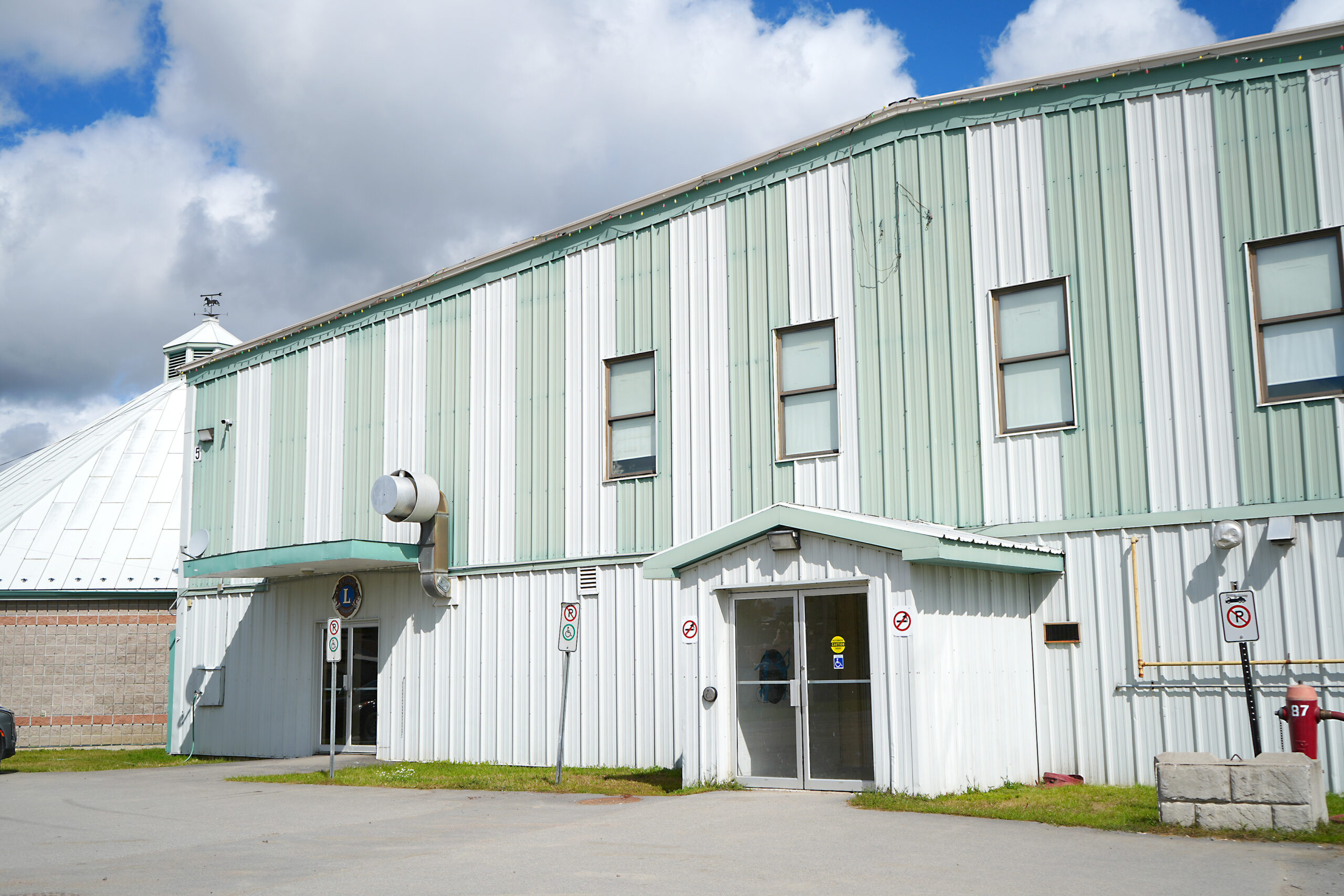
Recommendations include a complete rebuilding of the Lions Hall, which is constructed with wood joists and plywood and is therefore considered a fire hazard non-compliant with building code requirements; rebuilding the wooden bleachers using non-combustible materials; and making various areas of the arena more wheelchair accessible, including the washrooms, the arena seating area, and the whole second floor, which is currently only accessible by staircase.
Some of the items recommended in the report have already been addressed, such as repairs needed to the exterior walls of the arena, which had visible holes in them. This work, completed earlier this summer, was paid for jointly by the Pontiac Agricultural Society and the municipality’s rent contribution.
McCleary said the report gives the municipality what it needs to begin considering options for the future, including which items to address first, noting the municipality is not able to address all the code items right away because the ice system is what needs the most urgent repairs.
He said the arena gets visits from building inspectors several times a year, and if something is not up to code it is addressed.
“If something comes up, we address it,” he said, adding that codes change and the building was up to code when it was constructed in the ‘60s, but that major renovations would be needed to keep up with the most current building codes.
“You get into issues when you start one thing, then this is not up to code now [ . . . ] that’s the snowball effect,” said McCleary.
An alternative to doing these repairs is to build a new arena from scratch.
He said the municipality received an estimate from a preliminary study to build a new arena at $22 million, but he said it would be too small to suit the arena users’ needs.
“It would just be a bare-bones thing to practice and have maybe 100 people watch [ . . . ] $30 million might be closer to what we need,” he offered as an estimate because the municipality has not gone ahead with studies exploring the cost of a new arena.
He said grants are available if the municipality were to build new, but it has not heard back from its provincial liaison in the municipal affairs ministry on how much it could receive in grants and how much it would have to contribute itself.
More details would need to be collected by the firm in order to complete a fuller study of the arena.
Arena running $177K deficit
As the municipality considers the long-term future of the arena, increased maintenance required to the ice plant has left the municipality struggling with operational deficits.
The building that houses the arena is owned by the PAS. The municipality pays the society $25,000 in rent to use it, a number that increased this year from the $2,100/year it had paid for many years prior. According to the lease agreement, the municipality is responsible for the cost of repairs and maintenance to the mechanical aspects of the building, including the ice system.
The municipality has seen increased costs in recent years for the maintenance of the ice system. Last year, the arena ran a $177,236.16 deficit, with more money than ever going toward the repair and hydro costs of the system. The municipality brought in maintenance workers three separate times to fix issues related to the system.
“It gets more expensive every year,” said Armitage, adding that the deficit went up $50K in only four years.
“Now with the deficits in the hundreds, it’s just not feasible anymore,” said McCleary.
He said the council has been looking at ways to make up that deficit. Currently, Shawville ratepayers are paying a portion of their tax bill toward it. “Everyone
[ . . . ] is paying $215.88 off their tax bill,” he said.
On top of taxpayer contributions, each non-Shawville user of the arena pays an annual user fee. Last year, the municipality increased the fee from $150 to $250 – and McCleary said it may have to consider another increase this year.
“We had more repairs than normal because the plant is aging, but we didn’t really know what to budget or what to ask for a user fee. We were hoping it would cover, but it didn’t,” said McCleary.
To fully eliminate the deficit through user-based contributions alone, each of the arena’s 301 minor hockey and figure skating users would need to contribute $588. But Armitage said that is a highly unlikely scenario.
“It’s just not feasible to think that we’re going to recover that deficit all through increased user fees. The numbers of children going out on that ice will drop substantially,” Armitage said.
Last year, across minor hockey and figure skating the arena had 118 arena users from the Municipality of Pontiac, 68 from Shawville, 49 from Clarendon, 33 from Bristol, while several other municipalities had less than 10. By this usage distribution, Shawville’s share of the total deficit is $39,984.
Armitage and McCleary said they are hoping other municipalities will step up to pay into the use of the arena. This could either come through payments to cover the user fees for each municipality’s users, or via a partnership agreement where the parties split costs associated with arena operations.
“We can no longer continue to fund the whole deficit as one municipality,” said Armitage. “We’re hopeful that parents will go to their respective councils and say, ‘Look, you guys have to step up a bit.’”
McCleary said there are other things council can do to try and increase the arena’s revenue, including increased hours for the canteen and more valuable advertising.
“We need to look at fundraising, we need to look at maybe cutting some expenses, we need to look at bringing partners in to help us manage the arena itself,” he said.
Meeting on the arena’s future
McCleary said the municipality will be holding a meeting on Sept. 18 at the Shawville RA building to hear the public’s opinion on the future of the arena.
“What does the public want? Does the public want us to fix what we have? Does the public want new?” he said of the meeting’s goal.
PAS president Ralph Lang told THE EQUITY he is opposed to the construction of a new arena, and believes the municipality should not seek grants for the work because he believes it can be done for less money than the $17 million listed on the report. Lang said he will attend Thursday’s meeting to contest the idea of a new arena.
“I’m disappointed we have not had discussions about this study that came out in June. We have not received a copy nor were we invited personally to the public hearing,” he said.
McCleary said there is no current plan to build a new arena, but there could be some long-term financial benefits to doing so.
“With newer equipment, the maintenance costs aren’t as high, the energy costs aren’t as high, so there will be some savings hopefully in the operations, but a how-many-year payback?” he said.
Armitage said the goal of the exercise is to make sure the municipality can continue operating an arena for its current and future users.
“My worst nightmare since I came on council and realized the shape of this arena that it’s in, is that the first of February it goes down. And figure skating’s halfway through the seasons, minor hockey’s halfway through the season, what do those kids do?” he said.
With the municipal election nomination period opening this week, Armitage said not much traction can be made for now on whichever route the municipality decides to take.
“It would depend on the next council’s thought on which one of those options they’re going to go with,” said Armitage.
The full report is available on the Municipality of Shawville’s website by following the link here.
Correction: Sept. 19, 2025: This article previously incorrectly reported that before the annual rent paid by the Municipality of Shawville to the Pontiac Agricultural Society was hiked to $25,000 a year in 2025, Shawville paid $1,000 a year. In fact, the annual rent paid in the previous 10-year lease agreement was $2,100 a year.
Further, it reported Shawville councillor Richard Armitage to be chair of the municipality’s arena committee, when in fact councillor Julien Gagnon fills this position.
Une nouvelle étude reçue en juin par la Municipalité de Shawville recommande près de 17 millions de dollars en réparations et en améliorations à l’aréna de la ville, incluant des travaux au système de glace que le conseil estime devoir prioriser juste pour maintenir l’installation opérationnelle.
Ce printemps, face à l’augmentation des coûts d’exploitation causée par des infrastructures vieillissantes et des machines parfois défaillantes, la municipalité a embauché la firme d’ingénierie d’Ottawa J.L. Richards & Associates, Ltée, afin d’obtenir une meilleure idée du coût de la réparation de l’aréna actuel par rapport à la construction d’un nouvel aréna.
La municipalité tiendra une réunion au RA de Shawville le jeudi 18 septembre à 19 h pour discuter du rapport.
Le rapport a été financé par le volet 4 du FRR, approuvé à l’automne 2023. La subvention a couvert 90 % du coût du rapport pour la municipalité, soit 88 902 $ de la part de la MRC de Pontiac.
Le maire de Shawville, Bill McCleary, a déclaré qu’il y a environ deux ans, Cimco, l’entreprise responsable de l’entretien de la centrale de réfrigération, a indiqué qu’environ 3,5 millions de dollars en réparations étaient nécessaires au plancher de l’aréna parce que les tuyaux qui transportent le liquide de refroidissement sous la surface de la glace fuyaient.
M. McCleary a affirmé que c’était en partie la raison pour laquelle la municipalité a commencé à explorer l’option de réparer l’aréna plutôt que d’en construire un nouveau.
« Nous voulions juste un prix approximatif. Dès que j’ai entendu trois millions et demi, [j’ai dit] : « Eh bien, d’accord, combien de plus faudrait-il pour le réparer? Et combien coûterait la construction d’un nouveau? » a dit M. McCleary.
Selon l’étude préliminaire que la municipalité a reçue en juin, qui était basée uniquement sur une inspection visuelle de l’aréna, le coût de remplacement du plancher de l’aréna, des bandes et de tous les composants du système de réfrigération s’élèverait plutôt à 5 millions de dollars.
Le conseiller de Shawville, Richard Armitage, a déclaré que le système de glace est la priorité puisqu’il est nécessaire pour maintenir l’aréna fonctionnel. « S’il tombe en panne, il suffit de couper la clé », a-t-il dit.
M. McCleary a déclaré que si le plancher n’était pas réparé, les fuites de saumure causeraient des trous dans le ciment qui devraient être remplis avec un scellant chimique. « Vous avez deux ans maximum pour faire quelque chose », a-t-il dit.
Le comité du Fonds de l’aréna de Pontiac s’efforce de recueillir des fonds pour certaines réparations à l’aréna depuis la création du comité plus tôt cette année. Le comité a déjà recueilli plus de 100 000 $ pour l’aréna, qui serviront à payer les réparations de la centrale de réfrigération.
Mais le système de glace et les réparations du plancher ne représentent qu’une partie de ce que l’étude estime nécessaire pour mettre le bâtiment de l’aréna aux normes. Plusieurs autres éléments de l’aréna se sont révélés non conformes aux codes du bâtiment ou de prévention des incendies actuels, et l’étude recommande des mesures pour y remédier.
Les recommandations incluent une reconstruction complète du Lions Hall, qui est construit avec des solives en bois et du contreplaqué et est donc considéré comme un risque d’incendie non conforme aux exigences du code du bâtiment; la reconstruction des gradins en bois avec des matériaux non combustibles; et la rendre diverses zones de l’aréna plus accessibles aux fauteuils roulants, y compris les toilettes, la zone des sièges de l’aréna et l’ensemble du deuxième étage, qui n’est actuellement accessible que par un escalier.
Certains des éléments recommandés dans le rapport ont déjà été traités, tels que les réparations nécessaires aux murs extérieurs de l’aréna, qui présentaient des trous visibles. Ces travaux, achevés plus tôt cet été, ont été financés conjointement par la Société agricole de Pontiac et la contribution locative de la municipalité.
M. McCleary a déclaré que le rapport donnait à la municipalité ce dont elle avait besoin pour commencer à envisager des options pour l’avenir, y compris quels éléments traiter en premier, soulignant que la municipalité n’est pas en mesure de traiter tous les éléments du code immédiatement parce que le système de glace est ce qui nécessite les réparations les plus urgentes.
Il a dit que l’aréna reçoit la visite d’inspecteurs en bâtiment plusieurs fois par an, et si quelque chose n’est pas conforme aux normes, on s’en occupe.
« Si quelque chose survient, nous nous en occupons », a-t-il dit, ajoutant que les codes changent et que le bâtiment était conforme aux normes lorsqu’il a été construit dans les années 60, mais que des rénovations majeures seraient nécessaires pour se conformer aux codes du bâtiment les plus récents.
« On a des problèmes quand on commence une chose, puis ça n’est plus aux normes maintenant [ . . . ] c’est l’effet boule de neige », a déclaré M. McCleary.
Une alternative à ces réparations est de construire un nouvel aréna à partir de zéro.
Il a déclaré que la municipalité avait reçu une estimation d’une étude préliminaire pour construire un nouvel aréna à 22 millions de dollars, mais qu’il serait trop petit pour répondre aux besoins des utilisateurs de l’aréna.
« Ce serait juste une chose de base pour s’entraîner et peut-être 100 personnes pour regarder [ . . . ] 30 millions de dollars seraient peut-être plus proches de ce dont nous avons besoin », a-t-il proposé comme estimation parce que la municipalité n’a pas poursuivi d’études explorant le coût d’un nouvel aréna.
Il a dit que des subventions sont disponibles si la municipalité devait construire un nouvel aréna, mais qu’elle n’a pas eu de nouvelles de son agent de liaison provincial du ministère des Affaires municipales sur le montant des subventions qu’elle pourrait recevoir et sur le montant qu’elle devrait elle-même contribuer.
Plus de détails devraient être recueillis par la firme afin de réaliser une étude plus complète de l’aréna.
L’aréna affiche un déficit de 177 000 $
Alors que la municipalité envisage l’avenir à long terme de l’aréna, l’augmentation de l’entretien nécessaire à la centrale de réfrigération a laissé la municipalité aux prises avec des déficits d’exploitation.
Le bâtiment qui abrite l’aréna appartient à la PAS. La municipalité paie 25 000 $ à la société en loyer pour l’utiliser, un montant qui a augmenté cette année par rapport aux 2 100 $/an qu’elle avait payés pendant de nombreuses années auparavant. Selon le contrat de location, la municipalité est responsable du coût des réparations et de l’entretien des aspects mécaniques du bâtiment, y compris le système de glace.
La municipalité a constaté une augmentation des coûts ces dernières années pour l’entretien du système de glace. L’année dernière, l’aréna a enregistré un déficit de 177 236,16 $, avec plus d’argent que jamais auparavant consacré aux coûts de réparation et d’hydroélectricité du système. La municipalité a fait appel à des travailleurs d’entretien à trois reprises distinctes pour régler des problèmes liés au système.
« Ça coûte plus cher chaque année », a déclaré Armitage, ajoutant que le déficit a augmenté de 50 000 $ en seulement quatre ans.
« Maintenant, avec des déficits de plusieurs centaines de milliers de dollars, ce n’est tout simplement plus faisable », a déclaré M. McCleary.
Il a dit que le conseil cherchait des moyens de combler ce déficit. Actuellement, les contribuables de Shawville paient une partie de leur facture de taxes pour cela. « Tout le monde
[ . . . ] paie 215,88 $ de sa facture de taxes », a-t-il dit.
En plus des contributions des contribuables, chaque utilisateur de l’aréna qui ne vient pas de Shawville paie une redevance annuelle. L’année dernière, la municipalité a augmenté la redevance de 150 $ à 250 $ — et M. McCleary a dit qu’elle pourrait devoir envisager une autre augmentation cette année.
« Nous avons eu plus de réparations que la normale parce que l’usine est vieillissante, mais nous ne savions pas vraiment quel budget allouer ou quel montant demander pour une redevance d’utilisateur. Nous espérions que cela couvrirait les coûts, mais ce ne fut pas le cas », a déclaré M. McCleary.
Pour éliminer complètement le déficit uniquement par les contributions des utilisateurs, chacun des 301 utilisateurs de l’aréna, membres du hockey mineur et du patinage artistique, devrait contribuer 588 $. Mais Armitage a déclaré qu’il s’agissait d’un scénario très improbable.
« Il n’est tout simplement pas faisable de penser que nous allons récupérer tout ce déficit uniquement par des augmentations de redevances d’utilisateur. Le nombre d’enfants qui iront sur cette glace diminuera considérablement », a déclaré Armitage.
L’année dernière, pour le hockey mineur et le patinage artistique, l’aréna comptait 118 utilisateurs de la Municipalité de Pontiac, 68 de Shawville, 49 de Clarendon, 33 de Bristol, tandis que plusieurs autres municipalités en avaient moins de 10. Selon cette répartition de l’utilisation, la part de Shawville du déficit total est de 39 984 $.
Armitage et McCleary ont dit qu’ils espéraient que d’autres municipalités interviendraient pour contribuer à l’utilisation de l’aréna. Cela pourrait se faire par des paiements pour couvrir les redevances d’utilisateur pour les usagers de chaque municipalité, ou par un accord de partenariat où les parties partagent les coûts associés à l’exploitation de l’aréna.
« Nous ne pouvons plus continuer à financer l’ensemble du déficit en tant que seule municipalité », a déclaré Armitage. « Nous espérons que les parents iront voir leurs conseils respectifs et diront : “Écoutez, vous devez faire un effort.” »
M. McCleary a dit qu’il y avait d’autres choses que le conseil pouvait faire pour tenter d’augmenter les revenus de l’aréna, y compris des heures d’ouverture prolongées pour la cantine et une publicité plus lucrative.
« Nous devons envisager la collecte de fonds, nous devons envisager de réduire certaines dépenses, nous devons envisager d’attirer des partenaires pour nous aider à gérer l’aréna lui-même », a-t-il dit.
Réunion sur l’avenir de l’aréna
M. McCleary a déclaré que la municipalité tiendrait une réunion le 18 septembre au bâtiment du RA de Shawville pour entendre l’opinion du public sur l’avenir de l’aréna.
« Que veut le public? Le public veut-il que nous réparions ce que nous avons? Le public veut-il du neuf? » a-t-il dit à propos de l’objectif de la réunion.
Le président de la PAS, Ralph Lang, a déclaré à THE EQUITY qu’il s’oppose à la construction d’un nouvel aréna et estime que la municipalité ne devrait pas demander de subventions pour les travaux car il pense que cela peut être fait pour moins d’argent que les 17 millions de dollars indiqués dans le rapport. M. Lang a dit qu’il assisterait à la réunion de jeudi pour contester l’idée d’un nouvel aréna.
« Je suis déçu que nous n’ayons pas eu de discussions concernant cette étude parue en juin. Nous n’avons pas reçu de copie et nous n’avons pas été invités personnellement à l’audience publique », a-t-il dit.
M. McCleary a déclaré qu’il n’y avait pas de plan actuel pour construire un nouvel aréna, mais qu’il pourrait y avoir des avantages financiers à long terme à le faire.
« Avec de nouveaux équipements, les coûts d’entretien ne sont pas aussi élevés, les coûts énergétiques ne sont pas aussi élevés, donc il y aura des économies, espérons-le, dans les opérations, mais un retour sur investissement de combien d’années? » a-t-il dit.
Armitage a déclaré que l’objectif de l’exercice était de s’assurer que la municipalité puisse continuer à exploiter un aréna pour ses utilisateurs actuels et futurs.
« Mon pire cauchemar depuis que je suis au conseil et que j’ai réalisé l’état de cet aréna, c’est que le premier février, il tombe en panne. Et le patinage artistique est à mi-chemin de ses saisons, le hockey mineur est à mi-chemin de sa saison, que feront ces enfants? » a-t-il dit.
Avec l’ouverture de la période de candidature aux élections municipales cette semaine, Armitage a déclaré que peu de progrès pouvaient être réalisés pour l’instant, quelle que soit la voie que la municipalité décidera d’emprunter.
« Cela dépendrait de l’avis du prochain conseil sur l’option qu’il choisira », a déclaré Armitage.
Le rapport complet est disponible sur le site web de la Municipalité de Shawville en suivant le lien ici.
Correction : 19 sept. 2025 : Cet article rapportait précédemment, et de manière incorrecte, qu’avant que le loyer annuel versé par la Municipalité de Shawville à la Société agricole de Pontiac ne soit augmenté à 25 000 $ par an en 2025, Shawville payait 1 000 $ par an. En fait, le loyer annuel payé dans le précédent contrat de location de 10 ans était de 2 100 $ par an.
De plus, il indiquait que le conseiller de Shawville, Richard Armitage, était président du comité de l’aréna de la municipalité, alors qu’en fait, le conseiller Julien Gagnon occupe ce poste.