






J.D. Potié
FORT COULONGE
May 22, 2019
On May 22, crowds of flood evacuees from Mansfield et Pontefract and Fort Coulonge collected inside the Fort Coulonge Lions Hall seeking financial relief after being forced out of their homes around a month ago.
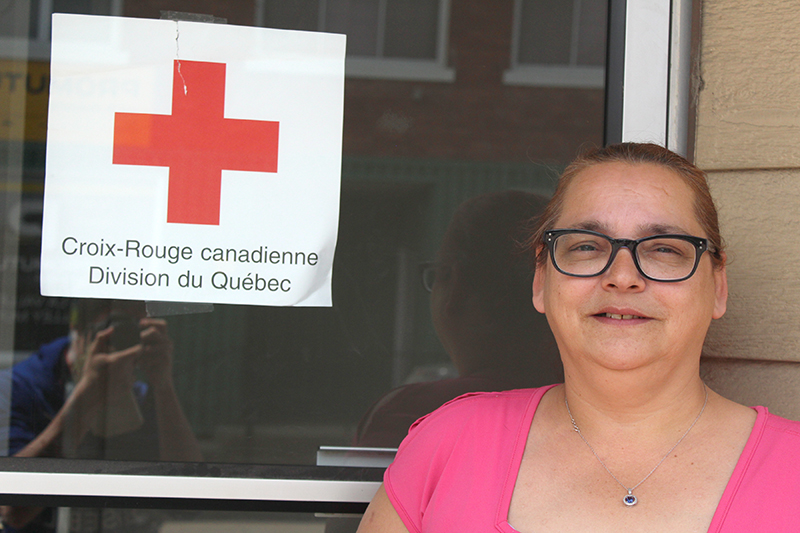
With several volunteers from the Canadian Red Cross on site, local residents registered with the organization’s financial relief plan were invited to complete their registration in order to receive their respective compensation via e-transfer.
In the hall, over a dozen evacuees sat and socialized while waiting for their number to come up, as Red Cross representatives met with evacuees individually to assess the state of their situation.
In most cases, waiting periods reached upwards of two hours, to the frustration of those most in need.
For Fort Coulonge resident Diane Lachance, the lack of information being promoted throughout the town regarding services for evacuees has been infuriating.
Living in a property on rue Desrochers in Fort Coulonge, Lachance has been evacuated since late April when the floods started pouring into the municipality, leaving her entire street looking like a pond.
While the water hasn’t found its way inside her home, she noted that it came up as high as the building’s windows on the first floor.
With no access to internet, television or electricity, Lachance said she only heard about the availability of the Red Cross’ services via word of mouth when talking to her co-workers.
“No one is giving us any information,” she said. “We’d like to know where the information is. We don’t have hydro. We don’t have Internet.”
Having been registered online with the Red Cross’ relief fund for a couple of weeks, making countless phone calls with no answer, Lachance attended the organization’s reception to see if she can receive the $600 being offered and hopefully more depending on what she’s eligible for.
“When you haven’t been home for a month and you’re paying for a place to stay, the bills are still coming in,” she said.
With no access to internet, Lachance said she’s been constantly contacting the Ministry of Public Security by phone to get additional help, but hasn’t found any luck doing so.
“They tell me no, they don’t have service,” she said. “Then, they transfer me to another [person] and another and so on.”
She believes the quality of service from the Red Cross and the provincial government has been shoddy and unhurried. However, she understands that the majority of the work is being done by volunteers who aren’t paid for their efforts.
“It’s been slow,” she said. “It should move a little more. I know it’s just volunteers but it’s taking a lot of time.”
For Fort Coulonge resident Joanne Corrigan, the Red Cross’ services have been excellent and she’s thrilled with the $600 allocated to assist her financially.
Helping her elderly father with the registration process, Corrigan attended the session to seek financial aide from the Red Cross to help pay for his expenses while he remains away from his property following his evacuation.
“It’ll help pay his bills, like laundry, his pumps, his water and all that” she said.
Her father was forced out of his home on rue Miron, after water filled his basement and the town’s sewer systems were eventually shut down. While the damage isn’t overly severe, Corrigan said the money will certainly help to provide them some sort of benefit.
After record-breaking floods devastated a number of riverside sectors in the region this spring, the Red Cross has been dispatching crews of volunteers throughout various part of the Outaouais in the last month to meet with evacuees who haven’t registered with their financial aid program.
According to Red Cross communications representative Carl Boisvert, all families affected by the floods who were registered with the plan were eligible to be allocated a total of $600 from the organization.
Kicked off on Easter Sunday, around $3 million was donated to the Red Cross for a relief fund dedicated to all flood evacuees in the province.
When coming up with the plan’s specifications on monetary distribution, the Red Cross determined that around 5,000 families in Quebec would potentially need the organization’s financial aid. That’s how they came up with $600 dollars per household.
“At that time, we had $3 million,” he said. “So, we did that divided by 5,000 people, which gives us around $600 that we’re offering to victims.”
For victims who have yet to return to their homes, living with friends or relatives in the meantime, the Red Cross has also been examining evacuees’ individual necessities to ensure to provide assistance beyond the $600, including groceries or housing among other forms of assistance, Boisvert said.
“There’s more specific help that can be offered,” he said. “That’s why we’re inviting people to present themselves, analyze their needs and then we’ll be able to see how we can help them.”
According to Mansfield et Pontefract Director General Eric Rochon, the purpose of the reception site was largely to verify the identities of people who registered. On-site registration was also available for victims who weren’t able to get it done in advance.
“When you register online, you need to confirm your identity so that’s why they’re open,” said Rochon.
Evacuated residents are called on to register for the Red Cross’ financial aid on the organization’s website or by calling 1-800-863-6582 to speak with one of their representatives. To be eligible, residents must fill out a survey asking them about their situation on whether or not they’ve been evacuated. Which parts of their home have been most severely affected.
“On a number of points, we’re asking questions to ensure that these people are very well evacuated or affected,” said Boisvert. “So, it’s not Mr. and Ms. Everyone who can register.”
“We’re verifying if they’re actually in an affected zone, to make sure that they need help,” he added. “And we’re analyzing the home, how many people are inside, how many adults, how many kids to then determine if they need a place to stay or if they need food.”
Having served evacuees in the region ever since rising waters started devastating certain sectors of the Pontiac in late April, the Red Cross made its second appearance in the municipality in the last month because the need for their assistance for locals was imminent, Rochon said.
“It’s the same service,” he said. “The same reason why they’re back. They had a bunch of people that needed to have their identities checked. The need was there so they said that they had to do another day.”
In the Municipality of Pontiac, the Red Cross has been present in the last month, since the town declared a state of emergency on Good Friday.
Making a number of appearances at the Luskville Community Centre on Hwy. 148, to help out affected residents, the Red Cross’ purpose is to allocate compensation funds for victims as well as housing and food for those who need it the most, according to Mayor Joanne Labadie.
“It’s worked out fine,” she said. “We’ve had a great relationship with the Red Cross since the very beginning.”
For people wanting to contribute to the Red Cross’ relief fund, they can do so by donating money via their website or over the phone by calling 1-800-418-1111. The organization isn’t accepting any material-based donations because of their lack of storage and employees to store them, Boisvert said.
Once the regional registration process is complete in all affected sectors, any additional dollars from the fund will go towards the most vulnerable families affected by the natural disaster, Boisvert said.